 Bellingham Roofing
 Roofing Built for Cordata's Corner of Whatcom County
Cordata sits in north Bellingham, close enough to the water and the lowland weather patterns that roll in off the Salish Sea that its homes take on the same climate stress as the rest of Whatcom County, just with its own local wrinkles. It's a mix of newer subdivisions, multi-family buildings, and older single-family homes, which means roof age, roof type, and roof condition vary a lot block to block. There isn't a single "Cordata roof" — there's a range of roofs at different points in their service life, all facing the same weather.
We work on roofs across Bellingham and Whatcom County, and Cordata is a regular part of that route. That matters more than it sounds like it should. A crew that's been on dozens of roofs in this specific area knows what the moss pressure looks like under the tree cover here, how the wind behaves coming off open ground near the edges of the neighborhood, and which roof types tend to age well versus which ones need more attention sooner. That's not something you get from a general contractor who occasionally works this far north.
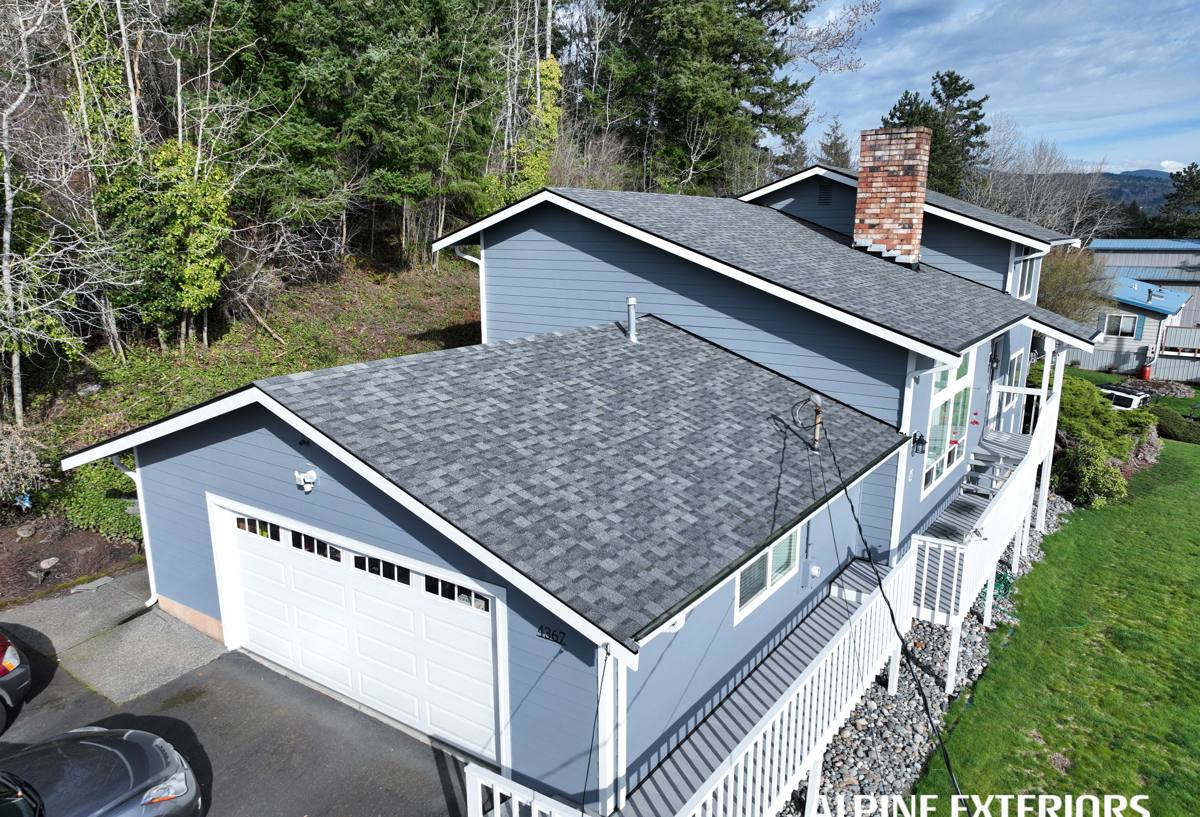
What the Climate Actually Does to a Cordata Roof
Northwest Washington roofs don't fail dramatically very often. They wear down slowly, from a combination of moisture, salt, and shade that never really lets up for more than a few months a year. Understanding those forces is most of what separates a roof that lasts its full expected lifespan from one that needs early repairs.
Salt Air and Corrosion
Bellingham's proximity to Bellingham Bay means salt-laden air moves inland more than people expect, and it doesn't stop at the waterfront neighborhoods. Metal roofing components, flashing, fasteners, gutters, and any exposed hardware are the parts most affected. Lower-grade fasteners and untreated metal will corrode faster here than in a dry inland climate, and once a fastener starts to go, it can loosen the material around it and create a path for water. This is why fastener and flashing quality matters more here than the shingle brand printed on the wrapper.
Driving Rain and Wind-Driven Water
Whatcom County doesn't usually get the kind of severe wind events that rip roofs apart, but it gets something roofs actually struggle with more over time: sustained, wind-driven rain that comes in at an angle rather than straight down. That kind of rain finds weaknesses that vertical rain never would — poorly lapped flashing, undersized drip edges, valleys that weren't detailed correctly, and roof-wall intersections where the water gets pushed sideways instead of shed downward. Most of the leaks we find in this region trace back to a detail like this, not to the field of the roof itself.
Moss, Shade, and the Long Wet Season
Cordata has enough tree cover and enough overcast, damp stretches of the year that moss and algae growth is a near-constant maintenance issue rather than an occasional one. Moss doesn't just look bad — it holds moisture against the roofing material, lifts shingle edges as it grows, and can work its way under laps over a few seasons if it's never removed. North-facing slopes and roof sections that stay shaded most of the day are the areas that need the closest attention.
Roof Types We See (and Recommend) in Cordata
There's no universally "best" roofing material — the right choice depends on the home, the budget, the roof's exposure to shade and wind, and how long the owner plans to stay in the house. Here's how the common options compare for this specific climate.
| Material | Typical Lifespan Here | Climate Trade-Offs |
|---|---|---|
| Asphalt composition shingle | 20-30 years | Cost-effective and widely used; needs regular moss removal and quality underlayment/flashing to perform well in wind-driven rain |
| Standing seam metal | 40-50+ years | Sheds moss and moisture well due to smooth surface; fastener and coating quality matters more near the water due to salt exposure |
| Cedar shake | 20-30 years with upkeep | Traditional Northwest look; higher maintenance burden in a wet, shaded climate and more susceptible to moss without regular care |
| Synthetic/composite shingle | 30-50 years | Resists moisture and moss better than wood; higher upfront cost, installation quality is critical to warranty performance |
For most Cordata homes we're weighing shingle roofs that are reaching the back half of their lifespan against a full replacement, or evaluating whether a metal roof upgrade makes sense given how much shade and moisture a particular roof deals with. We'll walk through the honest trade-offs for your specific roof rather than pushing one material as the default answer.
Signs Your Cordata Roof Needs Attention
Most roof problems in this area show up gradually. Catching them early is almost always cheaper than waiting for a leak to show up inside the house.
- Moss or dark algae streaking on north-facing or shaded slopes
- Granules collecting in gutters or at downspout outlets
- Shingle edges that look curled, lifted, or cupped
- Rust staining near flashing, vent boots, or metal fasteners
- Soft spots or sagging when walked on (assessed by a professional, not the homeowner)
- Daylight visible through the attic roof deck
- Water stains on interior ceilings, especially after a heavy wind-driven rain event
- Gutters pulling away from the fascia or overflowing during normal rain
None of these mean a roof needs to be replaced immediately. Some are simple maintenance items. But they're worth a professional look before the next wet season rather than after.
How We Approach a Roofing Project Here
Inspection First
Every job starts with an actual look at the roof, not a guess based on age alone. We check the field material, the flashing details around chimneys, skylights, and roof-wall intersections, the condition of the decking underneath where accessible, and the ventilation. A roof that's well-ventilated ages differently than one that isn't, and that's easy to miss from the ground.
Materials Matched to Conditions
Given the salt air and wet season here, we lean toward corrosion-resistant fasteners and flashing, proper underlayment for wind-driven rain protection, and material choices that account for how much shade and moss pressure a given roof actually gets rather than a one-size answer for the whole neighborhood.
Installation Details That Matter
Most roofing failures we see aren't material failures — they're installation shortcuts. Improper nailing patterns, skipped ice-and-water shield in valleys, undersized flashing, or inadequate overlap in high-exposure areas. We build roofs to hold up specifically against sustained rain and moss pressure, not just to meet a minimum code standard.
Beyond the Roof: Siding, Windows, and Decks
The same weather that wears down a roof works on the rest of a home's exterior at the same time, which is why we handle siding, windows, and decks alongside roofing rather than treating them as separate trades. A few ways they connect:
- Siding and roof flashing intersect at every wall-roof junction — a mismatch between the two is a common source of hidden leaks
- Window flashing and roof drainage both need to move water away from the structure, not just off the roof
- Deck framing and ledger board attachment face the same moisture exposure as roof decking, and often get less attention
- Gutters and downspouts protect siding and foundation drainage as much as they protect the roof edge
Having one crew look at all of it means fewer gaps between trades and a more complete picture of how water is actually moving around your home.
Why a Local Crew Matters in Cordata
A roofing crew that only shows up in Whatcom County occasionally will treat every roof as a generic case. A crew that works this area regularly knows the difference between moss pressure on a shaded Cordata lot and moss pressure on an open, sun-exposed roof across town, knows how local permitting and inspection processes work, and can speak to what's realistic for a given roof without guessing. Being local also means being reachable after the job is done — for questions, for warranty follow-up, or for the next maintenance check, without the runaround of an out-of-town office.
Maintenance Between Service Calls
A roof doesn't need constant attention, but a little seasonal upkeep goes a long way in this climate:
| Task | Frequency | Why It Matters Here |
|---|---|---|
| Gutter cleaning | 2x per year (fall and spring) | Prevents overflow during heavy rain and keeps water away from fascia and siding |
| Moss treatment/removal | Annually, more on shaded slopes | Moss holds moisture and lifts shingles over time if left unchecked |
| Visual inspection | After major windstorms | Catches lifted flashing or shingle damage before it leads to a leak |
| Attic ventilation check | Every few years | Poor ventilation accelerates moisture damage from the underside of the roof |
Getting Started
If you're not sure whether your Cordata roof needs a repair, a maintenance visit, or a full replacement, that's a normal place to start from — most homeowners aren't sure until someone actually gets up there and looks. We're happy to come take a look, explain honestly what we see, and put together a free, no-pressure estimate using the form below.