 Bellingham Roofing
 Windows Built for Cordata's Coastal Climate
Cordata sits in one of the wetter, windier stretches of Whatcom County, and the windows on most homes here are working harder than homeowners realize. Between salt-laden air rolling in off Bellingham Bay, driving rain that comes in sideways during fall and winter storms, and a moss season that stretches for months under gray, damp skies, window frames, seals, and glazing take a steady beating year after year. A window replacement done right in Cordata isn't the same job as one done in a dry inland climate — the materials, the flashing detail, and the sealing method all need to account for what this specific area throws at a house.
This page covers what Cordata homeowners should know before replacing windows: what the local climate actually does to windows over time, what a correct installation involves, how our process works from estimate to cleanup, and why it matters to hire a crew that already works in this neighborhood rather than one passing through.
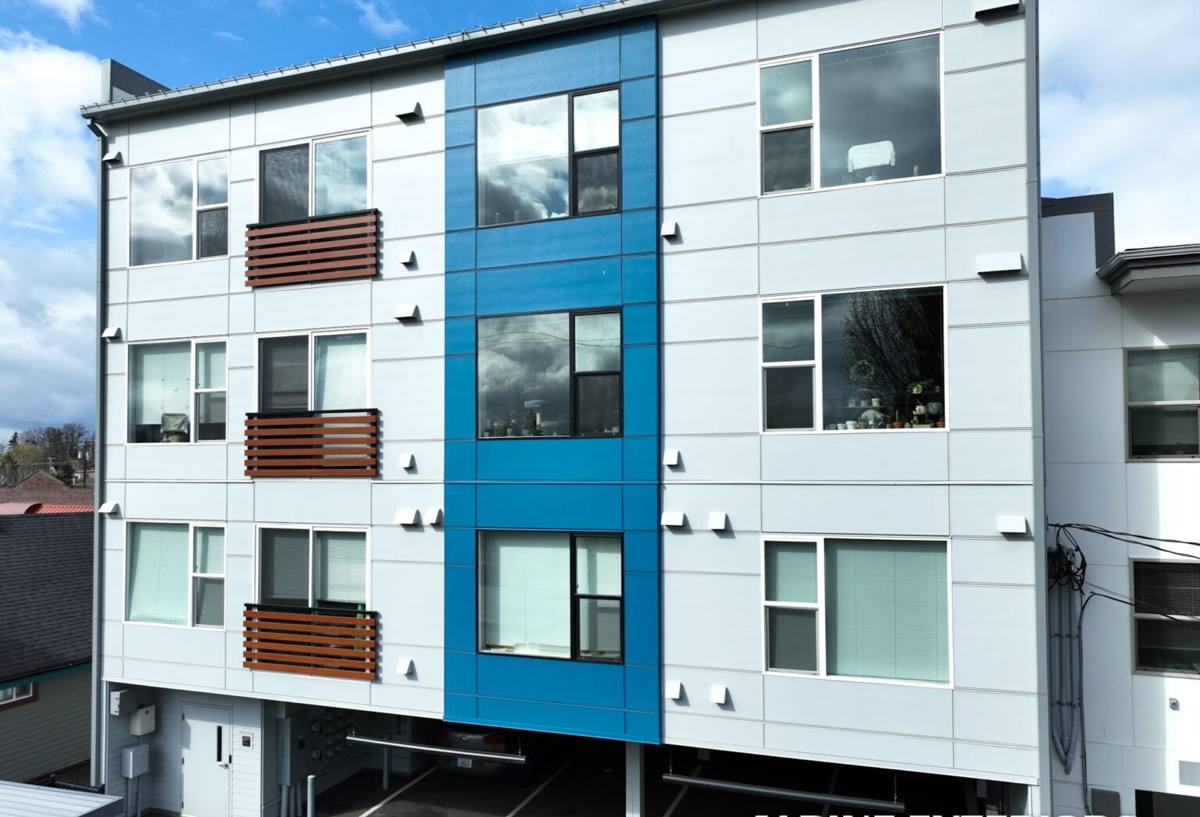
What Cordata Homes Are Up Against
Salt Air and Slow Corrosion
Even homes that aren't waterfront still pull in salt-carrying air from Bellingham Bay, especially on windy days. Over years, that salt content accelerates corrosion on window hardware — hinges, locks, balance mechanisms, and screws — and it degrades certain finishes faster than a homeowner would expect from the window's age alone. Aluminum components without a marine-grade coating are especially vulnerable, and once corrosion starts on a hinge or lock, the window often stops closing tight, which opens the door to further water and air intrusion.
Wind-Driven Rain and Water Intrusion
Whatcom County storms don't just drop rain straight down — they push it sideways into wall assemblies and window openings. A window that would perform fine in a calm-weather climate can still fail here if the flashing and sealant details weren't built for wind-driven rain. Water finds the smallest gap at a corner seal, a poorly lapped flashing layer, or a caulk line that's dried out and cracked, and once it's behind the siding or trim, the damage is happening inside the wall where nobody sees it until there's a stain, soft spot, or musty smell.
Moss Season and Persistent Moisture
The long stretch of damp, low-light months isn't just a roof problem — it affects window sills, trim, and the wood framing around older windows too. Moss and algae can take hold on horizontal surfaces like sills and sloped trim boards, holding moisture against wood longer than it would otherwise sit. On older wood-framed windows especially, that sustained dampness is what leads to soft, rotting sills and swollen sashes that no longer operate smoothly.
Signs Your Windows Are Due for Replacement
Not every window problem means full replacement — sometimes a reseal or hardware repair solves it. But in this climate, certain signs mean the window's ability to keep water and air out has already been compromised.
- Visible fog or moisture trapped between panes of double-pane glass (a failed seal, not fixable by cleaning)
- Soft, spongy, or discolored wood at the sill or lower frame corners
- Windows that are difficult to open, close, or lock, especially after being fine for years
- Noticeable draft or cold spot near the window frame in winter
- Paint or finish that's bubbling, peeling, or cracking around the frame
- Visible mold, mildew, or a musty smell near the window when it rains
- Rising heating bills with no other explanation
- Condensation forming on the inside of the glass regularly, especially at the edges
If you're seeing one or two of these, it's worth an inspection before deciding between repair and replacement. If you're seeing several at once, especially on the sides of the house that catch the most weather, replacement is usually the more honest recommendation.
What a Correct Window Replacement Job Involves
Removal and Inspection
Every proper replacement starts with removing the old window carefully and inspecting the rough opening underneath — the framing, sheathing, and any existing flashing. This is the step that gets skipped by crews trying to move fast, and it's also the step that catches hidden rot or water damage before a new window gets installed over a problem instead of fixing it. In a climate like this one, finding a soft spot in the sheathing at this stage is common enough that we plan for it rather than treat it as a surprise.
Flashing and Weatherproofing
This is the part of the job that determines whether a window will actually stay dry for the next twenty years. Correct flashing means water that gets behind the siding is directed back out and away from the wall assembly, not trapped against it. That includes a sill pan at the bottom of the opening, properly lapped flashing tape at the sides and top, and a weather-resistive barrier that integrates with the existing wall wrap rather than just butting up against it. Skipping or rushing this step is the single most common cause of window-related water damage we see in older Whatcom County homes.
Installation and Sealing
The new window gets set plumb, level, and square — even a slight misalignment can strain the frame and cause premature seal failure. Shimming is done at the manufacturer's specified points, not just wherever's convenient, and fasteners go in per the window's installation instructions to preserve any wind-load or water-resistance rating. Exterior sealant gets applied at the right joints, with weep holes left clear so any incidental moisture can still drain out rather than pool.
Trim and Finish
Interior and exterior trim gets reset or replaced, gaps get insulated (not overpacked, which can bow the frame), and everything gets a final check for smooth operation — opening, closing, locking — before we call it done.
Choosing the Right Window for Cordata Homes
There's no single "best" window material for every house, but in a climate with salt air, driving rain, and heavy moisture, some materials hold up with less maintenance than others. Here's how the common options compare for this specific area:
| Frame Material | Moisture & Salt-Air Behavior | Maintenance | Typical Cost Tier |
|---|---|---|---|
| Vinyl | Doesn't corrode or rot; performs well in salt air and rain if seams and welds are quality-made | Low — occasional cleaning, no painting or sealing | Lower to mid |
| Fiberglass | Excellent dimensional stability, resists moisture and corrosion, holds up well long-term in this climate | Low | Mid to higher |
| Wood | Warm appearance but vulnerable to rot and swelling without diligent upkeep in a wet climate | High — regular painting or staining and sealant checks | Mid to higher |
| Wood-Clad (wood interior, exterior cladding) | Cladding protects the exterior face from weather; still requires good flashing at the frame | Moderate — interior wood still needs occasional attention | Higher |
| Aluminum | Prone to corrosion in salt air unless marine-grade coated; conducts cold and can promote condensation | Moderate to high | Varies |
We'll talk through these trade-offs honestly based on your specific house, budget, and which sides of the home take the worst weather — a south or southwest-facing wall that catches the prevailing storms is a different conversation than a sheltered, shaded elevation.
Our Process, From Estimate to Cleanup
- Free on-site assessment — we walk the exterior and interior, check the windows in question, and look at the surrounding siding, trim, and framing for any existing moisture damage.
- Honest recommendation — repair versus replace, and if replacement, which materials make sense for that window's exposure and your budget, with no upsell pressure.
- Written estimate — clear pricing, timeline, and what's included, so there are no surprises once work starts.
- Removal, inspection, and any needed repair — if we find rot or damage in the opening, we tell you before proceeding, not after the fact.
- Flashing, installation, and sealing — done to manufacturer specification, built for this climate's wind-driven rain.
- Trim, finish, and operation check — every window opens, closes, and locks smoothly before we consider it complete.
- Cleanup and walkthrough — job site cleared of debris, and we walk you through the finished work.
Cost Factors Worth Understanding
We won't quote a number without seeing the job, but these are the main factors that move the price up or down, so you're not guessing in the dark:
| Factor | Why It Matters |
|---|---|
| Number of windows and sizes | Larger openings and custom sizes cost more in both materials and labor |
| Frame material chosen | Vinyl is typically the most budget-friendly; fiberglass and wood-clad run higher |
| Condition of the existing opening | Hidden rot or water damage found during removal adds repair time before the new window goes in |
| Window style | Fixed picture windows are simpler than operable double-hung, casement, or sliding units |
| Trim and finish work | Matching existing trim profiles or upgrading trim adds labor |
| Access and house height | Second-story or hard-to-reach windows take more time and equipment |
Be cautious of any quote that skips a physical inspection — an accurate number depends on seeing the actual condition of the openings, not just counting windows from a photo.
Why a Crew That Already Works Cordata Matters
A window replacement crew that regularly works in and around Cordata and the rest of Bellingham already knows how this climate behaves on real houses — which elevations take the worst wind-driven rain, how quickly moss and moisture build up on north-facing trim, and what kind of flashing detail actually holds up through a full Whatcom County winter rather than just looking right on installation day. That local experience shows up in fewer callbacks and windows that are still performing well a decade later, not just on the day they're installed.
It also matters for the practical side of the job — knowing local permitting requirements where applicable, understanding typical construction styles found in this part of Bellingham, and being reachable afterward if a question comes up rather than being a crew that's moved on to a different region entirely.
Ready When You Are
If your windows in Cordata are showing signs of wear, drafts, or water trouble, we're happy to take a look and give you a straight answer — no pressure, no upsell. Use the form below to request a free estimate, and we'll walk the property with you and talk through what actually makes sense for your home and budget.