 Bellingham Roofing
 Roofing in Blaine's Salt Air and Rain
Blaine sits at the far northwest corner of Whatcom County, right on Semiahmoo Bay and the Canadian border, and that location shapes what a roof has to put up with here. Salt-laden air off the water accelerates corrosion on exposed metal fasteners, flashing, and vents faster than it would twenty miles inland. Add the marine layer's steady moisture, wind-driven rain off the Strait of Georgia, and the deep shade many Blaine lots get from mature evergreens, and you have a climate that is genuinely harder on roofing than most of the country ever sees.
None of this means a roof in Blaine is doomed to fail early. It means the details matter more than they would in a drier, calmer climate — the fastener grade, the underlayment, the flashing at every penetration, and how well moss and debris are kept off the surface. We work on roofs in this exact environment regularly, and the patterns repeat: it's rarely one dramatic failure that causes damage, it's small gaps in the details that let salt air and driving rain do their slow work over years.
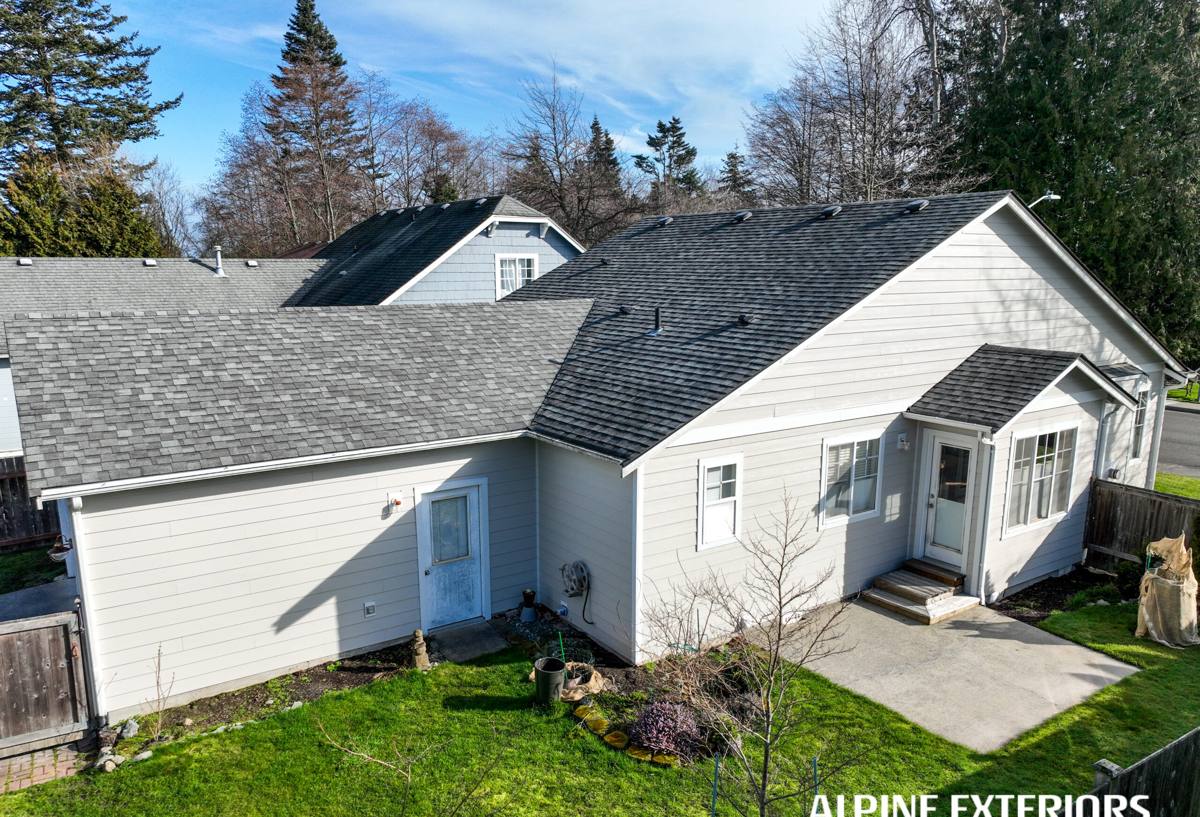
What Blaine Homes Tend to Face
Salt Air and Corrosion
Homes close to the water see faster breakdown of unprotected metal — nails, screws, drip edge, and older flashing that wasn't rated for a coastal environment. Once corrosion starts at a fastener head or a seam, water finds its way in even if the shingles above look fine.
Driving Rain and Wind
Storms coming off the water don't just fall straight down — they push rain sideways under shingle edges, around chimneys, and into any flashing that's slightly short or improperly lapped. A roof that would be fine in a calm rain can leak in a Blaine wind event if the details weren't built for it.
Moss, Shade, and a Long Wet Season
Whatcom County's wet season runs long, and shaded, tree-covered lots stay damp for extended stretches. That's ideal growing conditions for moss, which holds moisture against the roof surface and can work its way under shingle tabs over time, lifting them and creating entry points for water.
Gutters and Drainage
With the volume of rain this area gets, gutters that are undersized, clogged, or pulling away from the fascia stop doing their job fast. Water backs up under the roof edge instead of running off, which is a common source of fascia and soffit rot we see on older homes in this area.
Roofing Materials: What Actually Holds Up Here
There's no single "best" roofing material for every home — it depends on the roof's pitch, the budget, how much shade the lot gets, and how long the homeowner plans to stay in the house. Here's how the common options compare for a coastal Whatcom County property.
| Material | Typical Lifespan | Moss/Moisture Resistance | Maintenance |
|---|---|---|---|
| Asphalt composition shingle | 20-30 years | Moderate — needs periodic cleaning in shaded areas | Low to moderate |
| Architectural/laminate shingle | 25-35 years | Good — heavier profile sheds debris better | Low to moderate |
| Standing seam metal | 40-50+ years | Excellent — moss struggles to grip smooth metal | Low |
| Cedar shake | 20-30 years with upkeep | Poor without regular treatment in wet shade | High |
For heavily shaded, moisture-prone lots — which describes a fair number of properties around Blaine — we're often steering homeowners toward architectural shingles or metal specifically because they resist moss and hold up to salt air better with less upkeep. That's a judgment based on how these materials perform in wet, coastal conditions over decades, not a knock on any one product; it's simply which trade-offs make sense for this particular climate.
How We Approach a Roofing Job
- Inspection: We look at the whole system — decking condition, existing flashing, ventilation, and any signs of past leaks — not just the shingles on top.
- Honest scope: We tell you plainly whether you need a full replacement, a repair, or just better maintenance. Not every roof issue means a new roof.
- Tear-off and deck check: Old material comes off so we can actually see the decking underneath and replace any soft or water-damaged sections before anything new goes down.
- Underlayment and flashing first: This is where most long-term leaks are prevented or created. We use materials rated for coastal exposure and pay close attention to valleys, chimneys, skylights, and wall intersections.
- Ventilation check: Proper attic airflow keeps moisture from building up under the roof deck, which matters even more in a persistently damp climate.
- Cleanup: Nail sweep and full site cleanup before we consider the job finished.
Beyond the Roof: Siding, Windows, and Decks
A roof doesn't work in isolation — it's one part of the building envelope that keeps a Blaine home dry through a long wet season. We also handle siding, windows, and decks, and on coastal properties these systems interact more than people expect. Siding that's failing at a seam lets moisture behind the wall the same way a bad roof flashing does. Older windows without proper flashing let wind-driven rain track down into the wall cavity. Decks exposed to salt air and standing water need different fastener and coating choices than an inland deck would.
Because we handle all four trades, we can look at a home's exterior as one connected system rather than patching a roof today and discovering a related window or siding issue in six months. If you're already having roof work done, it's worth a quick look at flashing points where the roof meets siding or trim — those transitions are common trouble spots.
Why a Local Crew Matters Here
Whatcom County's permitting requirements, wind and snow load considerations, and coastal exposure standards aren't identical to what a crew based somewhere inland typically works with. A contractor who works this area regularly knows which details need extra attention on a Blaine roof versus a roof twenty miles inland in a drier microclimate, and knows how to sequence work around this region's weather windows so materials aren't installed in conditions that compromise them.
There's also a practical service side to this: a crew based in the area can respond faster if a storm causes damage or a tarp needs checking, rather than having to schedule around travel time from farther away.
Maintenance That Actually Extends Roof Life
Most roof failures we see in this climate are the slow kind — small issues left unaddressed for a few wet seasons. A little regular attention goes a long way:
- Clear moss and debris from the roof surface before it builds up, especially on shaded north- and west-facing slopes
- Keep gutters and downspouts clear so water actually drains instead of backing up under the roof edge
- Trim back overhanging branches to reduce shade, debris, and physical abrasion on the roof surface
- Check flashing around chimneys, vents, and skylights annually — these are the most common leak points
- Have the roof inspected after any major windstorm, even if nothing looks obviously wrong from the ground
- Address small leaks or missing shingles promptly rather than waiting for a full-blown interior water stain
Choosing a Roofing Contractor in Blaine
Given how much damage a poorly installed roof can cause in this climate, it's worth being selective. A few things worth checking before hiring anyone:
- Current Washington contractor license and active liability insurance — ask to see proof, not just a claim
- A written estimate that spells out materials, scope, and timeline, not a vague verbal number
- Manufacturer certification for the specific shingle or metal system being installed, if warranty coverage matters to you
- Willingness to explain why they recommend a given material for your specific roof, rather than pushing one product regardless of the situation
- Local references or a local physical presence, especially for warranty follow-up down the road
Cost matters too, but the lowest bid on a coastal roof is often the one that cut corners on flashing, underlayment, or fastener grade — the parts you can't see once the job is done but that determine whether the roof actually holds up to this area's weather.
Get an Estimate
If you're dealing with a roof that's showing its age, dealing with moss buildup, or you just want an honest read on how much life is left in it, we're happy to take a look. The estimate is free, there's no pressure, and you'll get a straight answer about whether you need a repair, a replacement, or just some maintenance — use the form below to get started.