 Bellingham Roofing
 South Hill: A Neighborhood With Its Own Exterior Challenges
South Hill sits above much of Bellingham, with older homes mixed among newer builds, mature tree cover, and enough elevation change that wind and rain hit different parts of the same roof at different rates. Homes here range from early-20th-century construction with additions bolted on over the decades to newer infill builds. That mix matters, because a roofing or siding crew that only knows how to install on a clean, modern deck can run into real trouble on a house where the framing, flashing details, and even roof pitch have changed over the years.
We've worked on enough South Hill homes to know that "one size fits all" doesn't apply here. A house tucked under a stand of mature conifers has a different maintenance schedule than one sitting more exposed toward the water. Our approach starts with actually looking at your specific roof, walls, and site conditions before we talk about materials or price.
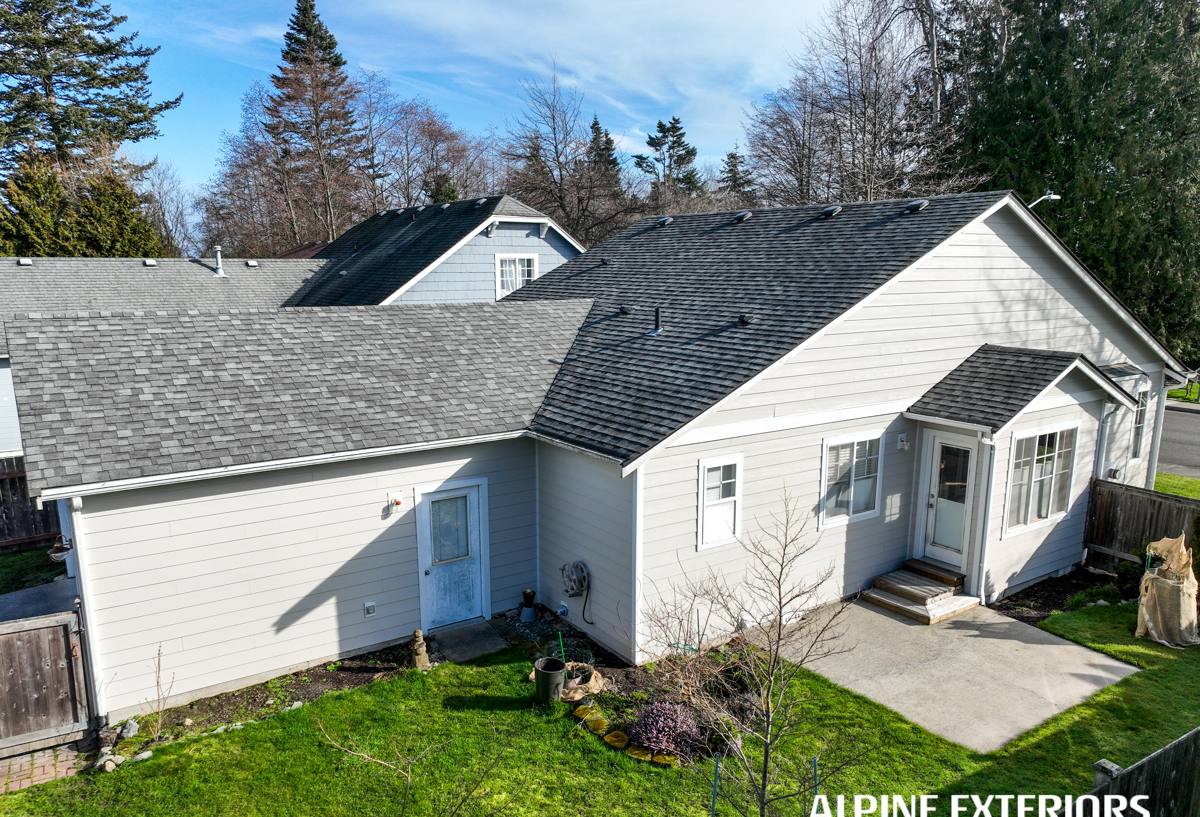
The Bellingham Bay Effect: Salt Air and Coastal Moisture
Bellingham sits directly on Bellingham Bay, and even a mile or two inland, homes on elevated ground like South Hill still catch salt-laden air carried in off the water. Salt air accelerates corrosion on exposed metal — nail heads, flashing, gutter hardware, and any unprotected fasteners are the first things to show it. Over years, this shows up as rust streaking on siding, pitted metal flashing, and fastener failure well before the rest of the material is worn out.
This is one of the main reasons we lean toward corrosion-resistant fastener and flashing specs on exterior work near the water, rather than whatever is cheapest at the local supply house. It costs a little more up front. It costs a lot less than redoing flashing work in twelve years instead of twenty-five.
What Salt Air Actually Damages First
- Exposed steel fasteners and staples — the earliest failure point on many roofs
- Galvanized flashing that wasn't rated for coastal exposure
- Painted or unfinished metal trim and gutter systems
- Caulking and sealant joints, which dry out and crack faster under salt exposure
Driving Rain and Wind-Driven Water Intrusion
Whatcom County doesn't just get rain — it gets wind-driven rain, where water is pushed sideways into wall assemblies and roof edges instead of simply falling straight down and running off. This is a different problem than volume of rainfall alone. A roof or wall system can shed a heavy vertical downpour just fine and still take on water when that same rain is being driven horizontally into a gap, a poorly lapped seam, or an under-flashed window.
That's why the details around penetrations — chimneys, vents, skylights, window and door openings — matter more here than in drier climates. We pay close attention to how water is meant to travel once it gets past the outer surface, because on a South Hill home surrounded by trees and hills, it eventually will find a weak point if one exists.
Moss, Shade, and Roof Longevity
South Hill's tree cover is part of what makes the neighborhood pleasant to live in, and it's also the reason moss and algae growth is a near-constant maintenance issue on shaded roof sections. Moss holds moisture against roofing material long after the rest of the roof has dried out, and on asphalt shingles in particular, that trapped moisture accelerates granule loss and shortens the life of the roof. On cedar or wood-based roofing, sustained moss growth is even more serious, since it can promote rot in the wood itself.
Moss season in this region runs long — realistically, much of the fall through spring — which means a roof under heavy shade needs a real maintenance plan, not a once-a-decade look from the ground. We talk to homeowners honestly about which parts of their roof are most exposed to moss risk based on tree cover and orientation, rather than treating the whole roof the same.
Signs Moss Has Moved Past "Cosmetic"
- Moss thick enough to lift shingle edges or tab corners
- Dark streaking or staining that persists even after moss removal
- Granule buildup in gutters, indicating accelerated shingle wear
- Soft or spongy decking felt underfoot during an inspection
Roofing Options for South Hill Homes
Most South Hill roofs we work on are asphalt composition shingle, with some cedar shake on older homes and a growing number of metal roofing installs, particularly on additions and full replacements where longevity and moss resistance are a priority. Each has real trade-offs worth understanding before you decide.
| Roofing Type | Typical Lifespan (this climate) | Moss Resistance | Maintenance Burden |
|---|---|---|---|
| Asphalt composition shingle | 18-25 years | Moderate — needs periodic cleaning under shade | Low to moderate |
| Cedar shake | 20-30 years with upkeep | Low — prone to moss and rot without maintenance | High |
| Standing seam metal | 40-50+ years | High — moss struggles to anchor on smooth metal | Low |
| Composite/synthetic shake | 30-40 years | Moderate to high | Low to moderate |
We don't push one material on every homeowner. A shaded, north-facing roof section is a strong argument for metal or a moss-resistant composite. A more exposed, sun-drenched roof plane on the same house might do perfectly well with a quality asphalt shingle. The right answer often varies by roof plane, not just by house.
Siding That Holds Up to Wind-Driven Rain
Siding on South Hill homes takes a beating from the same wind-driven rain that affects roofing, plus the added stress of temperature swings between damp mornings and drier afternoons. We install fiber cement, engineered wood, and vinyl siding depending on the home's age, budget, and how exposed the walls are.
Fiber cement has become our default recommendation for most South Hill exteriors because it handles moisture exposure without the swelling or rot risk of older wood products, holds paint well over the long term, and doesn't need the intensive maintenance schedule that real wood siding demands in a wet climate. That said, it's heavier and more labor-intensive to install correctly — proper fastening pattern and clearance from grade matter more with fiber cement than with lighter materials, and it's not the right call for every budget or every home.
Siding Maintenance Realities in This Climate
- Caulking and sealant joints should be checked annually, not just when a leak shows up
- Ground clearance and grading against the foundation affect how much moisture your siding sees at the bottom courses
- Paint and finish coatings degrade faster in constant damp-dry cycling than in drier climates
- Vegetation growing directly against siding traps moisture and should be kept clear
Windows: Comfort, Condensation, and Older Home Retrofits
A lot of South Hill's older housing stock still has original or early-replacement single-pane or early dual-pane windows. In a climate this damp, that shows up as condensation between panes, drafts, and higher heating costs through the wet months. Window replacement on an older home isn't just about swapping glass — it's about correcting flashing and sill details that may never have been built to modern water-management standards in the first place.
When we replace windows on an older South Hill home, we're as focused on how the new unit integrates with the existing wall assembly as we are on the window itself. A great window installed with poor flashing will leak. A modest window installed with correct flashing and proper sealant detailing will outperform it for years.
Decks and Outdoor Living in a Wet Climate
Deck framing and ledger board connections take on a disproportionate amount of water damage risk in this region, simply because horizontal or near-horizontal surfaces don't shed rain as efficiently as a pitched roof. Ledger flashing where a deck attaches to the house is one of the most common failure points we see on older decks — trapped moisture at that connection point can lead to structural rot that isn't visible until it's advanced.
For decking material, pressure-treated lumber remains a budget-friendly option but requires consistent sealing and staining to perform well long-term in this climate. Composite decking costs more upfront but largely eliminates the staining and sealing cycle, which matters if you'd rather spend weekends enjoying the deck than maintaining it.
Why a Local Crew Matters on South Hill
Whatcom County building requirements, typical framing practices from different building eras, and the specific way weather moves across South Hill's elevation are all things a crew learns by working here consistently — not from a general contracting playbook written for a different climate. A local crew also means someone who can respond quickly if a storm causes damage, rather than a company juggling job sites hours away.
We're not interested in overselling a full replacement when a targeted repair will genuinely hold up. Part of being a trustworthy local contractor is telling a homeowner when their roof has a few good years left instead of pushing an unnecessary project.
A Practical Exterior Maintenance Checklist for South Hill Homes
- Inspect shaded roof sections for moss buildup at least once before winter and once in spring
- Clear gutters and downspouts of debris and granules before the heavy rain season starts
- Check caulking around windows, doors, and siding joints annually
- Walk the perimeter and confirm grading still slopes water away from the foundation
- Look underneath deck ledger boards and framing connections for soft or discolored wood
- Trim back vegetation and tree limbs that overhang the roof or press against siding
Getting an Honest Assessment
If you're dealing with moss buildup, a siding section that's taking on water, drafty older windows, or a deck connection you're not sure about, the first step is simply having someone look at it who knows what South Hill's climate does to a house over time. We offer free, no-pressure estimates — you can use the form below to get a straightforward look at what's going on with your roof, siding, windows, or deck, and what your realistic options actually are.