 Bellingham Roofing
 Storm Damage Repair Built for South Hill's Roofs
South Hill sits up above the rest of Bellingham, which means it catches wind and driving rain a little differently than homes down closer to the water or tucked into the flatter neighborhoods. Higher elevation and more open exposure on parts of the hill translate into harder wind-driven rain hitting roof edges, ridges, and anything with a seam. When a windstorm rolls through Whatcom County off the Strait, South Hill roofs tend to show the damage first — lifted shingle tabs, torn ridge caps, and water finding its way in around flashing that held up fine the year before.
We work on South Hill regularly, which matters more than it sounds. A roof up here isn't just "a roof in Bellingham" — the pitch of a lot of the older homes, the mature tree cover on some streets, and the way storms track up the hill all shape what actually fails and where. Storm damage repair isn't a one-size job, and a crew that's already seen how South Hill roofs behave in a storm can find the real problem faster instead of guessing.
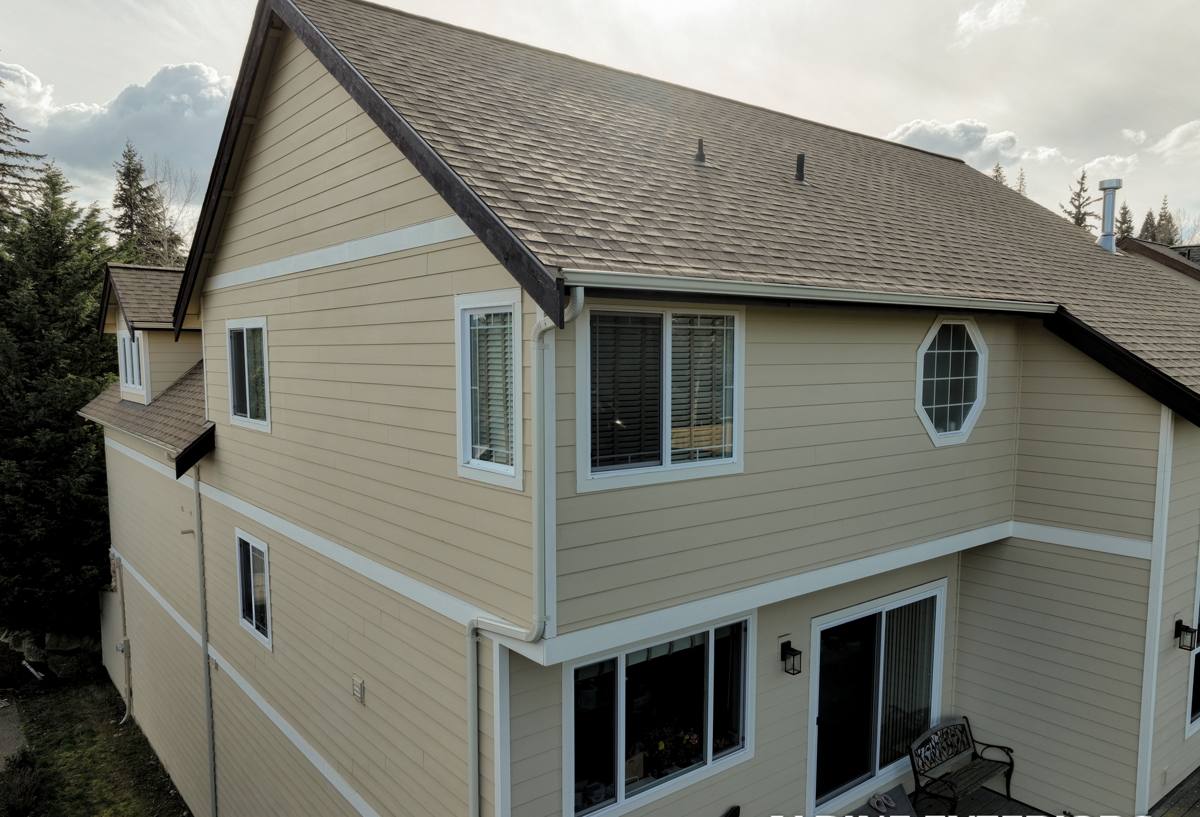
What Bellingham's Climate Does to a Storm-Damaged Roof
Whatcom County doesn't get the hail and tornado damage that dominates storm-repair advice written for other parts of the country. Our storm damage is quieter and more cumulative: salt-laden air off the Sound, long stretches of driving rain, and a moss season that runs most of the year. None of that shows up as one dramatic event — it shows up as a roof that was already weakened when the windstorm finally tears something loose.
- Salt air corrosion — metal flashing, fasteners, and gutter hardware corrode faster here than inland, and corroded metal is exactly what fails first when wind gets under a shingle edge.
- Driving rain — Pacific storms push rain sideways, not straight down, so damage often starts at vertical surfaces (walls, dormers, chimney flashing) rather than open field shingles.
- Moss and moisture retention — moss holds water against the roof deck long after a storm passes, softening wood and loosening the seal on shingles and fasteners over time.
- Wind funneling on the hill — elevation and exposure can concentrate gusts along certain rooflines, which is why damage patterns on South Hill don't always match what we see on a flatter lot a mile away.
Put together, storm damage here is rarely just "the storm's fault." It's usually a storm finding a weak point that moss, salt corrosion, or slow moisture intrusion had already started.
Signs of Storm Damage Worth Checking After Every Windstorm
Most storm damage isn't obvious from the ground. A missing shingle is easy to spot; a lifted seal or bent flashing is not, and those are the ones that cause the real water damage over the following weeks.
- Granules collecting in gutters or at downspout outlets after wind events
- Shingle tabs that look slightly raised or "fluttery" at the edges, especially on the windward side of the roof
- New or worsening ceiling stains inside, particularly near chimneys, skylights, or wall intersections
- Bent, lifted, or missing flashing around vents, chimneys, and roof-to-wall transitions
- Debris — branches, moss clumps, or torn shingle pieces — in the yard or on the roof itself
- Gutters pulled away from the fascia or sagging after heavy rain
If you see any of these after a storm, it's worth a look before the next round of rain arrives — Bellingham weather doesn't usually give a roof a long dry stretch to sort itself out.
How We Handle a South Hill Storm Damage Call
1. Inspection First, Not a Sales Pitch
We start by walking the roof and the attic, not just the ground-level view. Storm damage almost always has an entry point and a path — wind lifts an edge, water tracks under the underlayment, and it can show up on a ceiling several feet from where it actually got in. We trace that path before recommending anything.
2. Distinguish Storm Damage from Wear
Insurance adjusters and homeowners both need a clear answer: is this new storm damage, or a roof that was already near the end of its service life? We document both honestly. A roof with heavy moss buildup and brittle shingles that finally gave way in a windstorm is a different conversation than a healthy roof with a clean wind-torn section.
3. Repair Scope Matched to the Damage
Not every storm call needs a full section replaced. Sometimes it's a targeted flashing repair and a handful of shingles. Sometimes the wind exposed a larger area of failed underlayment that needs to come out. We scope to what's actually damaged, not to a standard package.
4. Tarp and Stabilize When Needed
If more rain is on the way before a full repair can happen, we'll get the area covered and stabilized first. In this climate, an open roof left exposed for even a day or two of driving rain can turn a minor repair into a much bigger interior problem.
Repair vs. Replacement: What Actually Drives That Decision
Homeowners often assume storm damage means either "a quick patch" or "a whole new roof," but the real decision depends on a few specific factors we walk through on-site.
| Factor | Favors Repair | Favors Replacement |
|---|---|---|
| Age of existing roof | Under roughly 10-12 years, still flexible | Nearing or past expected service life |
| Extent of moss/moisture damage found | Isolated to the storm-affected area | Widespread moss staining, soft decking in multiple spots |
| Flashing condition | Surrounding flashing still sound | Corroded flashing throughout, common in older salt-exposed roofs |
| Shingle match availability | Matching shingles still obtainable | Discontinued product, visible patch mismatch |
| Underlayment exposure | Underlayment intact beneath the damaged section | Underlayment torn or degraded across a wider area |
We'd rather tell a homeowner "this is a repair, not a replacement" and be right about it than upsell a job that isn't needed. If a repair is genuinely the honest answer, that's what we'll recommend.
Why Flashing and Fasteners Matter More Here Than the Shingles Themselves
A lot of storm damage conversations focus on shingles, but on the coast, metal is often the weaker link. Salt air accelerates corrosion on exposed nail heads, flashing seams, and gutter fasteners years before it affects the shingle material itself. Corroded fasteners lose their grip, and that's frequently the actual reason wind was able to lift a section in the first place — not that the shingles were bad, but that what was holding them down had quietly weakened.
Part of a correct storm repair is checking that flashing and fasteners in the repaired area — and the area immediately around it — are still doing their job, not just replacing what's visibly torn.
Moss: The Slow-Motion Storm Damage Nobody Notices
Whatcom County's long wet season keeps moss growing on roofs nearly year-round, and it does more damage than most homeowners realize. Moss holds moisture against the shingle surface and roof deck long after rain stops, which:
- Softens and weakens shingle granule adhesion over time
- Keeps wood decking damp, which can lead to soft spots that fail under wind load
- Works its way under shingle edges, physically lifting them and giving wind something to grab
When we repair storm damage on a mossy roof, we treat the moss issue in the repaired area too — otherwise the same weak point tends to reopen the next time a windstorm comes through.
A Practical Pre-Storm and Post-Storm Checklist
- Clean gutters and downspouts before the fall rain season starts, so water isn't backing up under roof edges during a storm
- Trim back tree limbs that overhang the roof, especially anything close enough to strike the surface in high wind
- Walk the attic after major storms and look for fresh water stains, damp insulation, or daylight where there shouldn't be any
- Check visible flashing around chimneys and vents for obvious gaps or lifted edges
- Have moss buildup addressed before it becomes a multi-year problem rather than a seasonal one
- Get any suspected storm damage looked at promptly — a small opening left through one more rain event gets expensive fast
Working With Insurance on a Storm Claim
Wind and storm damage is often covered, but the claim only goes smoothly with clear documentation. We provide straightforward photos and a written description of what we found and what caused it — not exaggerated to inflate a claim, and not downplayed to make a sale. Adjusters generally respond well to a factual, specific report, and that's what we give them.
Get a Free Estimate on South Hill
If a recent windstorm has you wondering about a lifted shingle, a stain on the ceiling, or just want a roof checked before the next round of Bellingham rain, we're glad to come take a look. The estimate is free, there's no pressure, and you'll get a straight answer about whether it's a repair or something more. Use the form below to get started.