 Bellingham Roofing
 Why Siding in the Lynden Area Has to Work Harder
Homes around Lynden sit in a stretch of Whatcom County that takes a specific kind of weather beating. You're close enough to the water to pick up salt-laden air, far enough inland to catch heavy winter rain systems coming off the Pacific, and shaded enough by tree cover and cloud that moss and mildew get a long growing season on anything that stays damp. Siding here isn't decorative — it's the single biggest factor in whether a home's sheathing, framing, and insulation stay dry for the next thirty years or start rotting quietly behind a wall nobody's looking at.
A siding product or installation that would hold up fine in a drier inland climate can fail here in ways that don't show up until the damage is already done. That's the lens we use on every Lynden-area project: not "does this look good going up," but "does this hold up to what this specific climate throws at it, year after year."
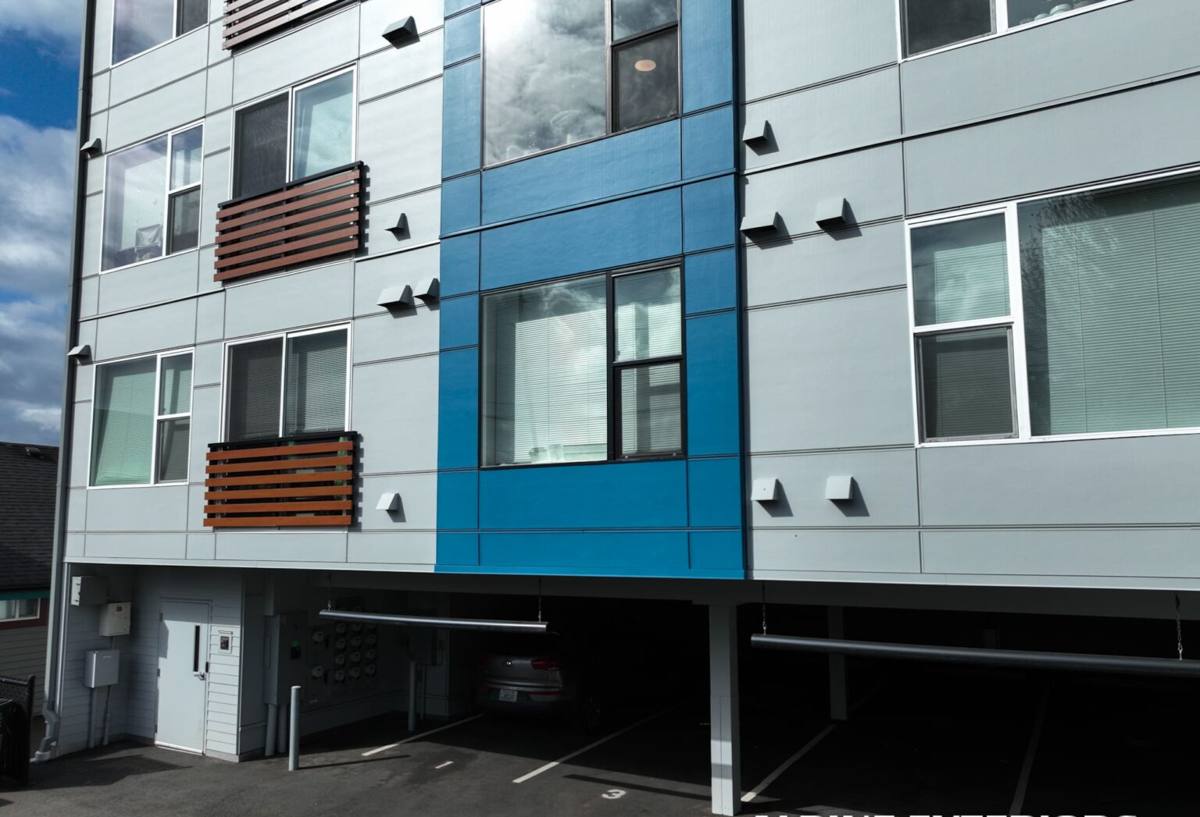
The Three Things This Climate Does to Siding
Salt Air and Marine Exposure
Even a few miles inland, homes in this part of Whatcom County get enough salt-laden moisture in the air to accelerate corrosion on fasteners, trim flashing, and any metal components in the wall assembly. Untreated or poorly coated fasteners rust and streak the siding face over time; corroded flashing loses its ability to shed water where it matters most, at seams and penetrations.
Driving Rain and Wind-Driven Moisture
Rain here doesn't just fall straight down — Pacific storm systems push it sideways, driving water into laps, seams, and any gap in the weather barrier that a fair-weather installation might get away with. Siding that relies on caulk and paint alone to stay sealed, rather than proper flashing and drainage behind the cladding, tends to let moisture in exactly where wind-driven rain concentrates: around windows, at corners, and along the bottom courses.
Moss, Mildew, and a Long Damp Season
Tree cover and extended cloudy, humid stretches give moss and mildew a long window to establish themselves on north-facing walls, shaded elevations, and anywhere air doesn't move well. Porous or wood-based siding gives that growth something to root into; the wrong finish traps moisture against the substrate instead of letting it dry.
What a Correct Siding Installation Actually Involves
The siding itself only does part of the job. Most of the failures we get called out to inspect trace back to the assembly behind the visible face, not the product on the wall. A correct installation includes:
A Continuous Weather-Resistive Barrier and Drainage Plane
Water that gets past the siding face — and some always does, even with a well-installed product — needs a clear path down and out. That means a properly lapped weather-resistive barrier and, ideally, a drainage gap behind the cladding so moisture doesn't sit trapped against the sheathing.
Flashing at Every Penetration
Windows, doors, hose bibs, vents, light fixtures — every penetration through the siding is a potential entry point for wind-driven rain. Each one needs proper flashing integrated with the weather barrier, not just a bead of caulk covering the gap.
Correct Fastening and Clearances
Fastener type, spacing, and depth matter — over-driven or under-driven nails compromise the siding's ability to move with temperature and moisture changes. Ground clearance and clearance from roof lines, decks, and hardscaping keep the bottom edge of the siding from sitting in standing water or splashback.
Caulking and Joint Treatment Done to Spec
Manufacturer-specified sealants at butt joints and trim intersections, not general-purpose caulk applied wherever it looks like a gap needs filling.
Why We Install Only James Hardie Fiber Cement
We don't install vinyl, LP SmartSide, Cemplank, Allura, primed spruce, or cedar. That's a deliberate standard, not a limitation in what we're capable of installing. Each of those products has legitimate strengths, but none of them holds up as consistently as James Hardie fiber cement does against the specific combination of salt air, driving rain, and prolonged dampness this area sees.
| Factor | James Hardie Fiber Cement | Vinyl / Engineered Wood |
|---|---|---|
| Moisture behavior | Non-combustible fiber cement resists water absorption and won't rot; engineered for wet climates | Wood-based products can swell or delaminate at exposed edges if moisture gets in; vinyl can warp under heat/cold cycling |
| Salt air resistance | ColorPlus factory finish holds up well to airborne salt without early fading or chalking | Painted or vinyl finishes often show salt-related wear and color loss sooner |
| Moss and mildew | Dense, non-porous material gives biological growth less to root into | Porous or textured surfaces can hold moisture and support growth longer |
| Fire resistance | Non-combustible material | Combustible in most engineered wood and vinyl products |
| Warranty structure | Strong transferable warranty backing both substrate and factory finish | Varies widely; often shorter or with more exclusions on finish performance |
James Hardie's HZ product lines are climate-engineered specifically for wetter regions like the Pacific Northwest, which is exactly the exposure profile a home near Lynden deals with. The ColorPlus factory finish is baked on under controlled conditions rather than field-painted, which means better adhesion and more consistent long-term color retention than a job-site paint job can reliably deliver. Combined with correct installation — the weather barrier, flashing, and fastening details above — it's the combination we're willing to stand behind on homes in this climate.
Our Process for Lynden-Area Projects
- On-site assessment. We look at the existing siding, sheathing condition where visible, drainage around the foundation, and any specific exposure issues — shaded north walls, low clearance areas, prevailing wind direction.
- Scope and product selection. We walk through the right James Hardie line and profile for the home, factoring in exposure and the homeowner's aesthetic goals.
- Tear-off and substrate check. Removing old siding is also when hidden moisture damage gets found — we address any compromised sheathing before anything new goes up.
- Weather barrier and flashing installation. This is the part that determines whether the siding performs for decades or fails early, and it's the part that's invisible once the job is done.
- Siding installation to manufacturer spec. Correct fastening, clearances, and joint treatment throughout.
- Final walkthrough. We go over the finished work and what maintenance, if any, to expect going forward.
Signs Your Current Siding Is Already Losing the Fight
- Soft or spongy spots when you press on the siding, especially near the bottom courses
- Persistent moss or dark streaking on north-facing or shaded walls that comes back quickly after cleaning
- Peeling, bubbling, or chalking paint on wood-based or engineered wood siding
- Visible gaps, warping, or buckling at seams and panel joints
- Rust streaks below fasteners or trim
- Musty smell or visible staining on interior walls that back up to exterior siding
- Caulk that's cracked, shrunk, or pulled away from joints
Any one of these is worth a look. Several at once usually means moisture has been getting behind the siding for a while, not just sitting on the surface.
Maintenance After Installation
James Hardie siding is low-maintenance compared to wood or engineered wood alternatives, but "low-maintenance" doesn't mean "no maintenance" in a climate like this. A periodic rinse to clear off airborne salt residue and moss spores, keeping gutters clear so water isn't overflowing onto wall sections, and trimming back vegetation that keeps a wall shaded and damp all go a long way toward getting the full lifespan out of the installation. None of this is labor-intensive — it's mostly about not letting moisture and organic growth get a foothold in the first place.
Why Hiring a Crew That Already Works This Area Matters
Siding installation isn't a one-size-fits-all trade. A crew that's worked mainly in drier climates may not default to the drainage and flashing details that matter most here, simply because they've never had to. Working regularly in Whatcom County means we're already factoring in the salt exposure, the wind-driven rain patterns, and the moss pressure into how we detail a job before the first piece of siding goes up — not treating it as an afterthought if a problem shows up later. That familiarity is also why we standardized on one product system instead of installing whatever's cheapest for a given job: it lets us install the same correct details, to the same spec, on every project.
If your Lynden-area home needs new siding or you're not sure whether what's on the walls now is holding up the way it should, we're happy to take a look. The estimate is free, there's no pressure, and you'll get a straight answer about what your home actually needs — just fill out the form below to get started.