 Bellingham Roofing
 Roofing in a Community Built Among the Trees
Sudden Valley sits in a part of Whatcom County where the tree canopy does as much to shape a roof's lifespan as the weather does. Homes here are often tucked under mature fir, hemlock, and cedar, close to Lake Whatcom, which means less direct sun and more standing shade than you'd get on a roof out in the open near Bellingham Bay. That shade keeps roofs damp for hours or days after a storm passes, and it's the single biggest reason we see moss, algae streaking, and slower-than-normal drying on Sudden Valley roofs compared to homes just a few miles away.
Add in the driving rain that rolls through Whatcom County off the Pacific most of the fall and winter, plus the salt-tinged marine air that reaches inland from Bellingham Bay and the Strait of Georgia, and you've got a climate that's genuinely harder on a roof system than it looks on a sunny July afternoon. We've worked on enough homes in this area to know the difference between a roof that's aging normally and one that's failing early because of moss root intrusion or trapped moisture under the wrong material.
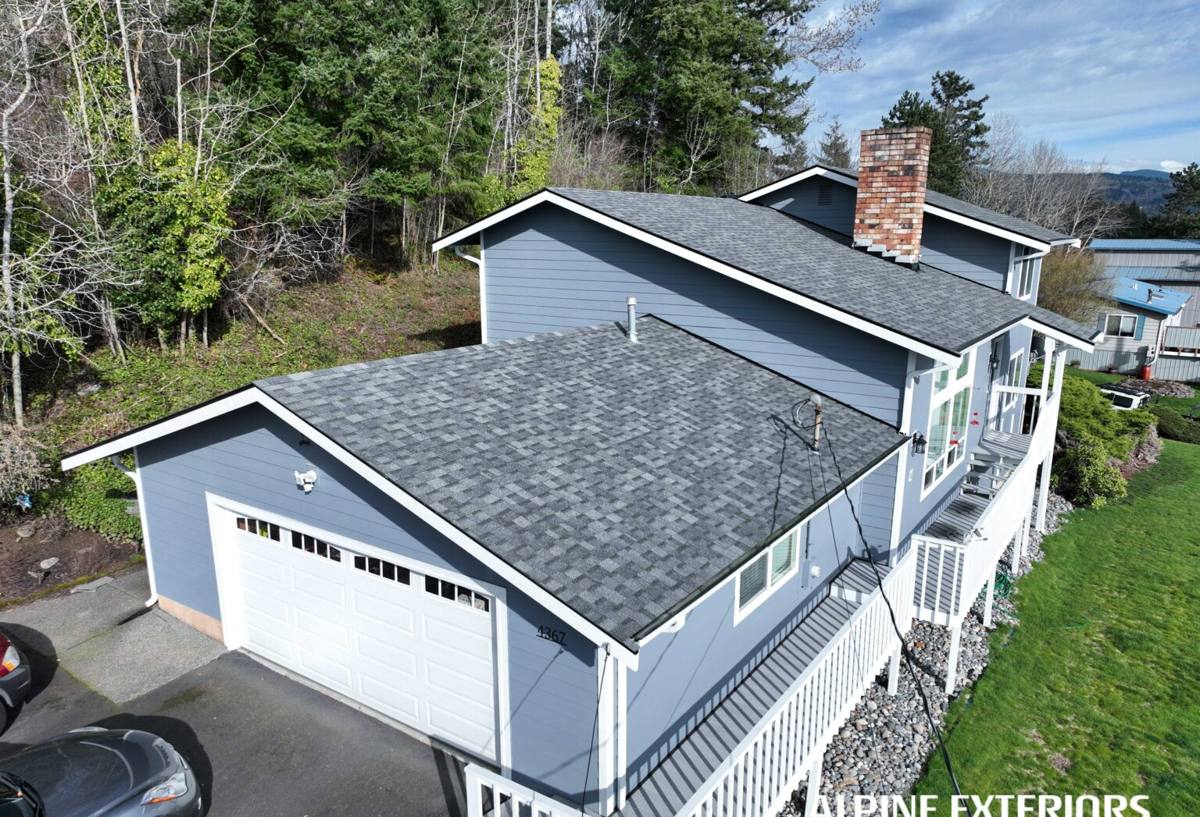
Moss, Shade, and Roof Life Expectancy
Why moss is the real enemy here
Moss doesn't just look bad. Its root structure works into shingle granules and seams, holding moisture against the roof deck long after the surface looks dry. On heavily shaded lots like many in Sudden Valley, moss can establish itself within a couple of years of a roof going in if it isn't managed. Left alone, it shortens the life of asphalt shingles significantly and can contribute to soft spots, granule loss, and eventually leaks at the seams.
What actually helps
- Zinc or copper strips installed near the ridge, which release trace metals that discourage moss growth every time it rains
- Keeping overhanging branches trimmed back to let more light and airflow reach the roof surface
- Scheduled soft-washing rather than pressure washing, which can strip granules and shorten shingle life
- Choosing roofing materials and underlayment rated for sustained moisture exposure, not just average regional rainfall
We install and treat roofs with this specific microclimate in mind, not a generic Pacific Northwest average. A roof spec that works fine on an open lot in Ferndale or Lynden isn't automatically the right call for a shaded, tree-lined property near Lake Whatcom.
Roofing Material Choices for Wooded, Wet Lots
| Material | How it handles shade & moisture | General lifespan | Maintenance |
|---|---|---|---|
| Architectural asphalt shingle | Good with proper ventilation and moss treatment; needs periodic cleaning in heavy shade | 25-30 years | Moderate |
| Metal (standing seam) | Sheds moss and debris well; less surface for growth to take hold | 40-50+ years | Low |
| Cedar shake | Attractive but holds moisture in shade; requires disciplined upkeep | 20-30 years with upkeep | High |
| Synthetic/composite shingle | Resists moisture absorption better than wood; good moss resistance | 30-40 years | Low-moderate |
None of these is universally "right" — it depends on how much sun your specific roof plane gets, your roofline complexity, and what you're trying to balance between upfront cost and long-term upkeep. We'll walk your roof with you and tell you honestly which option fits your lot, not just push whatever's easiest to install.
Siding That Holds Up Under Tree Cover
Siding in Sudden Valley faces a similar problem to roofing: shaded walls stay damp longer, and homes backed up to trees often get less wind-driven drying than an open exposure would provide. Fiber cement siding has become our default recommendation for these conditions. It doesn't absorb moisture the way wood does, holds paint and color far longer without cracking or cupping, and doesn't feed mold and mildew growth the way some wood products can in constant shade.
We're careful about installation details here specifically — proper flashing, ventilation gaps, and caulking at seams matter more on a shaded, damp wall than on a wall that gets full sun most of the day. A siding job that looks fine going in can fail early if those details are skipped, and in a wooded setting like Sudden Valley, the moisture is relentless enough to find any gap.
What we check before recommending a full re-side
- Whether existing sheathing has soft spots or rot from long-term moisture intrusion
- Current flashing condition around windows, doors, and roof-to-wall transitions
- Whether the home has adequate rainscreen or ventilation gap behind the siding
- Signs of moss or algae on north- and shade-facing walls specifically
Windows: Condensation and Older Frames
A lot of Sudden Valley homes were built decades ago, and older single- or early double-pane windows in a shaded, humid setting tend to show their age through condensation between panes, foggy glass, and drafty frames. That's not just a comfort issue — persistent condensation around a window opening can lead to sill rot and interior wall moisture over time, especially on walls that don't get much sun to dry them out.
When we replace windows in this area, we pay close attention to flashing and sealing around the new unit, since a leaky window installation in a shaded wall cavity can sit wet for a long time before anyone notices a problem. We'll also talk through glass and frame options that make sense for a home that doesn't get a lot of direct solar gain to help with drying and efficiency.
Decks in a Shaded, Damp Environment
Decks are often the most exposed structure on a Sudden Valley property in terms of moisture — flat or gently sloped surfaces, frequently shaded, collecting leaf litter and needles from the surrounding trees. Wood decking in this kind of setting needs real upkeep: regular cleaning of debris out of the gaps, periodic sealing or staining, and attention to ledger board flashing where the deck meets the house, which is one of the most common points of hidden rot we find on older decks here.
Composite decking has become a popular option for exactly this reason. It doesn't absorb water the way wood does, resists mold and mildew staining better in constant shade, and doesn't need refinishing every couple of years. It costs more upfront than wood, but for a shaded lot where wood decking is fighting moisture constantly, it's often the lower-maintenance choice over the life of the deck.
Why a Local Whatcom County Crew Matters Here
Sudden Valley isn't a generic subdivision — it's a specific kind of lot, with its own tree cover, terrain, and in many cases its own HOA guidelines that can affect exterior color, material, and roofing choices. A crew that works across Whatcom County regularly knows to check those requirements before ordering materials, not after. We also know how driveway access, steep lots, and tree-lined properties in this area affect scheduling and equipment staging, which matters for keeping a project on time and not tearing up your yard in the process.
Just as important: we're not guessing at how this climate treats a roof or a wall. We see the same moss patterns, the same shaded-wall siding failures, and the same deck ledger rot repeatedly across this part of the county, and that experience shapes the recommendations we make for your specific property.
A Practical Maintenance Checklist for Sudden Valley Homes
- Have your roof checked for moss growth at least once a year, more often on heavily shaded roof planes
- Keep gutters clear of needles and debris, which is a bigger issue here than on open lots
- Trim back branches that keep roof and siding sections in constant shade where practical
- Inspect deck ledger boards and flashing annually for signs of hidden moisture
- Check window seals and sills for condensation staining, especially on north-facing exposures
- Soft-wash siding and roofing rather than pressure washing to protect the material surface
Getting an Honest Look at Your Property
Every lot in Sudden Valley sits a little differently against the sun and tree line, so the right roofing, siding, window, or deck approach for your home depends on what your specific property is dealing with, not a one-size answer for the whole neighborhood. If you're noticing moss buildup, a roof that never seems to fully dry out, siding that's holding moisture, or a deck that's starting to show soft spots, we're glad to take a look and give you a straight assessment of what's going on and what your options actually are. Reach out for a free, no-pressure estimate using the form below.