 Bellingham Roofing
 Why New Roof Installation Works Differently in Sudden Valley
Sudden Valley sits back in the trees around Lake Whatcom, and that setting is a big part of what makes the neighborhood a nice place to live — it's also exactly what makes roofs there wear differently than roofs on an open lot closer to downtown Bellingham. Heavy tree cover holds shade and moisture on a roof deck long after a storm has passed. The lake and surrounding hills funnel wind and rain in ways that push water sideways into seams and flashing that a flatter, more open site would never see. And the marine air that moves in off Bellingham Bay and settles through Whatcom County carries salt that speeds up corrosion on fasteners, flashing, and any exposed metal.
Put those three things together — persistent shade and dampness, wind-driven rain, and salt-laden air — and you get a roof that's fighting moss, water intrusion, and corrosion at the same time, often in the same season. A new roof installation for a Sudden Valley home isn't just a matter of stripping old shingles and laying new ones. It has to be built, from the deck up, to handle all three of those stresses at once, or the homeowner ends up paying for the same problems again in half the time a well-built roof should last.
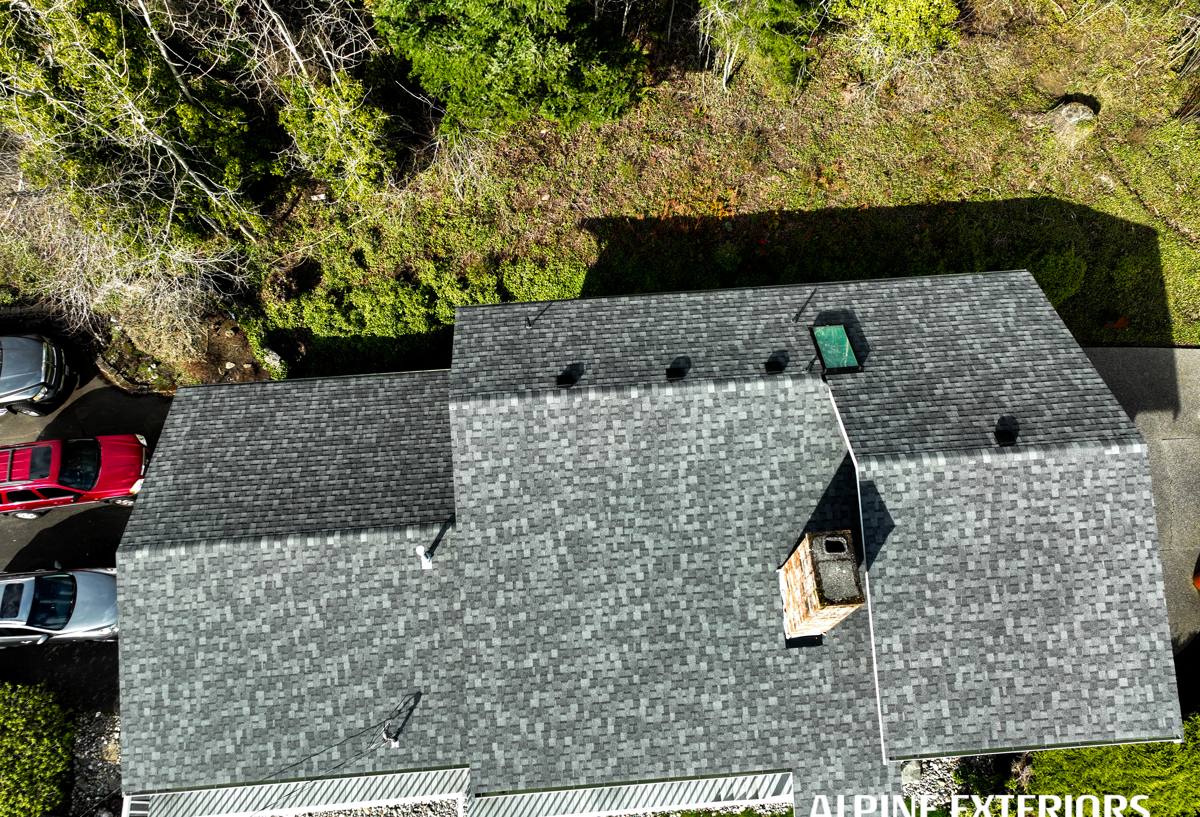
What a Correct New Roof Installation Actually Involves
Full Tear-Off and an Honest Deck Inspection
A real new roof installation starts with a full tear-off, not a layer laid over the old one. Overlaying hides problems instead of fixing them, and in a climate this wet, whatever moisture is already trapped under the old roofing stays trapped. Once the old material is off, the deck gets inspected board by board. Any wood that's gone soft, delaminated, or stained from long-term moisture gets replaced before anything new goes down — installing a roof over a compromised deck just guarantees an early failure, no matter how good the shingles are.
Underlayment Built for Driving Rain
Standard felt underlayment is fine in a dry climate. In a spot that takes driving rain off the lake, we treat underlayment as a second line of defense, not an afterthought — synthetic underlayment across the field of the roof, with self-adhered ice-and-water membrane at eaves, valleys, and around every penetration, since those are the spots where wind-driven water actually gets pushed backward under shingles.
Flashing at Every Transition
Chimneys, skylights, sidewalls, and roof-to-wall transitions are where the large majority of "new roof" leaks actually start, and it's almost never because the shingles failed — it's because flashing was reused, undersized, or installed without step flashing tied properly into the wall's water-resistive barrier. Correct installation means new flashing at every transition, sized and layered so water is always directed out and down, never sideways into a seam.
Attic and Roof Ventilation
A roof that can't breathe traps heat and moisture in the attic, which shortens shingle life and feeds the exact conditions moss and algae need on the exterior. Balanced intake at the eaves and exhaust at the ridge keeps air moving through the attic year-round, which matters as much in a shaded, damp neighborhood like Sudden Valley as good shingles do.
Choosing a Roofing System That Holds Up Here
There isn't one "right" roofing material for every Sudden Valley home — it depends on the roof's pitch, how much shade and moss pressure the specific lot has, and what the homeowner wants to maintain over time. What matters is picking a system with eyes open about how it behaves under shade, moisture, and salt air, rather than picking on looks or price alone.
| Roofing System | How It Handles Moss & Moisture | Maintenance Reality |
|---|---|---|
| Standard asphalt composition shingle | Adequate with algae-resistant granules; still needs airflow and periodic cleaning in heavy shade | Lowest upfront cost; moss removal every few years extends its life |
| Architectural / laminate shingle | Thicker profile sheds water better and resists wind uplift in driving rain | Slightly more maintenance-forgiving than 3-tab; still benefits from moss control |
| Standing seam metal | Sheds water and moss debris fastest of the common options; smooth surface gives moss little to hold onto | Higher upfront cost, but the lowest ongoing moss/algae maintenance |
| Cedar shake | Attractive, but wood in constant shade and damp air is the hardest material to keep moss-free | Requires the most consistent maintenance and inspection of any option in this climate |
We're honest with homeowners about that last row in particular: cedar can look great on the right roof, but on a heavily shaded Sudden Valley lot it's fighting the exact conditions that grow moss fastest, and that's a maintenance commitment worth going in with clear eyes about — not a knock on the material itself, just an honest read of what this specific climate does to it.
Moss, Algae, and the Long Wet Season
Moss doesn't just sit on a roof looking bad — it holds water against the shingle surface, works its way under tabs, and over time lifts the roofing enough to let water in underneath. In a neighborhood with as much tree canopy as Sudden Valley, moss pressure is higher than it is on more exposed rooflines closer to town, and a roof installed without that in mind will show moss again within a season or two.
A few things make a real difference in how long a new roof stays clean:
- Algae-resistant shingles with built-in copper or zinc granules, which slow regrowth on the shaded slopes
- Zinc or copper strips near the ridge on roofs with heavy moss history, letting rain carry trace metal down the slope
- Proper ridge and soffit ventilation, which keeps the deck and shingle underside drier so moss has less to grow on
- Keeping overhanging branches trimmed back where it's practical, so the roof gets more sun and airflow
- A yearly or every-other-year gentle moss removal and inspection, rather than waiting until growth is heavy enough to lift shingles
None of these replace a correctly installed roof, but built into the plan from the start, they add real years to how long a new roof looks and performs like new.
Our Process for a Sudden Valley Re-Roof
- On-site inspection: we walk the roof, the attic, and the property — noting moss history, shade patterns, tree cover, and any existing leak signs or soft decking.
- Written estimate: a clear breakdown of material options, scope of work, and price — no pressure, no same-day-only pricing tactics.
- Material selection: we walk through the tradeoffs in plain terms so the homeowner picks a system that fits their roof, their budget, and how much maintenance they want to do.
- Full tear-off: old roofing removed down to the deck, with debris contained and the property protected throughout.
- Deck repair: any compromised sheathing is replaced before new underlayment goes down — never covered over.
- Underlayment, flashing, and ventilation installed: built for driving rain and long-term moisture, not just code minimum.
- Roofing installed: to manufacturer specification, so warranty coverage is fully intact.
- Final walkthrough: we go over the finished roof with the homeowner, point out ventilation and moss-prevention features, and answer questions before we consider the job done.
What Affects the Cost of a New Roof
Every Sudden Valley roof is a little different, so we don't quote off a flat per-square rate without seeing the roof. That said, most of the price swing between two similarly sized homes comes down to a short list of factors.
| Cost Factor | Why It Matters |
|---|---|
| Roof size and pitch | Steeper roofs take longer to work safely and use more material per square foot of house below |
| Layers being removed | Roofs with more than one existing layer take longer to tear off and haul away |
| Deck condition | Rotted or delaminated sheathing found during tear-off has to be replaced before installation continues |
| Material choice | Standard shingle, architectural shingle, and standing seam metal carry different material and labor costs |
| Roof complexity | Valleys, dormers, skylights, and chimneys each need their own flashing detail and add labor time |
| Access and tree cover | Heavily wooded lots, common in Sudden Valley, can mean more careful material staging and debris handling |
We'd rather walk a homeowner through where their specific price comes from than hand over a number with no explanation behind it.
Timeline and Scheduling Around Bellingham Weather
A straightforward tear-off and re-roof on an average Sudden Valley home typically runs one to a few days of active work, weather permitting — steeper or more complex rooflines take longer. The bigger scheduling factor in this area isn't the labor itself, it's the weather window. Whatcom County's wet season stretches long, and driving rain isn't just uncomfortable to work in — an open roof deck during a heavy rain event is a real risk to the house underneath. We watch the forecast closely, stage materials so the roof isn't left exposed longer than necessary, and are upfront if a stretch of weather means pushing a start date rather than rushing a tear-off into a storm.
Why Hiring a Crew That Already Works in Sudden Valley Matters
Sudden Valley isn't downtown Bellingham — many roads in are private, some homes fall under HOA architectural guidelines, and permitting still runs through Whatcom County rather than the city. A crew that's already worked in the neighborhood knows how to get equipment and material in and out efficiently, understands what documentation an HOA or the county may want to see before work starts, and has a feel for how a specific street or slope tends to hold moisture and shade compared to a similar-looking lot a mile away. That local familiarity doesn't replace a solid installation, but it does mean fewer surprises, fewer delays, and a crew that isn't learning the neighborhood's quirks on the homeowner's dime.
Questions Worth Asking Before You Hire
A new roof is a significant investment, and it's reasonable to ask a contractor direct questions before signing anything. A few worth putting to any crew bidding a Sudden Valley re-roof:
- Are you licensed and insured to work in Washington State, and can you provide proof?
- Will this be a full tear-off, and how will you handle deck repair if you find soft or damaged sheathing?
- What underlayment and flashing details will you use at valleys, eaves, and chimneys specifically?
- How do you handle attic ventilation on this roof, and why?
- What's your plan for moss and algae resistance given this property's shade and tree cover?
- What does the manufacturer warranty actually require to stay valid, and will your installation meet that?
- Have you worked in Sudden Valley before, and do you understand any HOA or access requirements here?
A contractor who answers these clearly and specifically, rather than in vague generalities, is usually a good sign of how the actual work will go.
Ready to Talk About Your Roof?
If your Sudden Valley roof is aging, showing moss, or you're just planning ahead, we're happy to take a look and walk you through what a correctly built new roof would involve for your specific home. There's a form below — reach out for a free, no-pressure estimate and we'll go from there.