 Bellingham Roofing
 Exterior Work Built for Sunnyland's Weather, Not Just Its Homes
Sunnyland is one of Bellingham's older, established neighborhoods, with a mix of home ages, roof types, and siding materials that reflect decades of Pacific Northwest weather doing what it does. If you own a home here, you already know the drill: gray skies for months at a time, damp air rolling in off Bellingham Bay, and a roof that never really gets a chance to dry out between November and April. That's not a knock on the neighborhood — it's just what living in Whatcom County means for anyone who owns exterior surfaces. Our job is to build and maintain roofs, siding, windows, and decks that actually hold up to that pattern, not just look good the day they're installed.
This page focuses on what Sunnyland homeowners specifically deal with and how we approach the work. We're not going to invent statistics or pretend every house in the neighborhood has the same problem — older homes, newer infill, and everything in between all have different needs. What we can tell you is what we consistently see on roofs and siding in this part of Bellingham, and how we handle it.
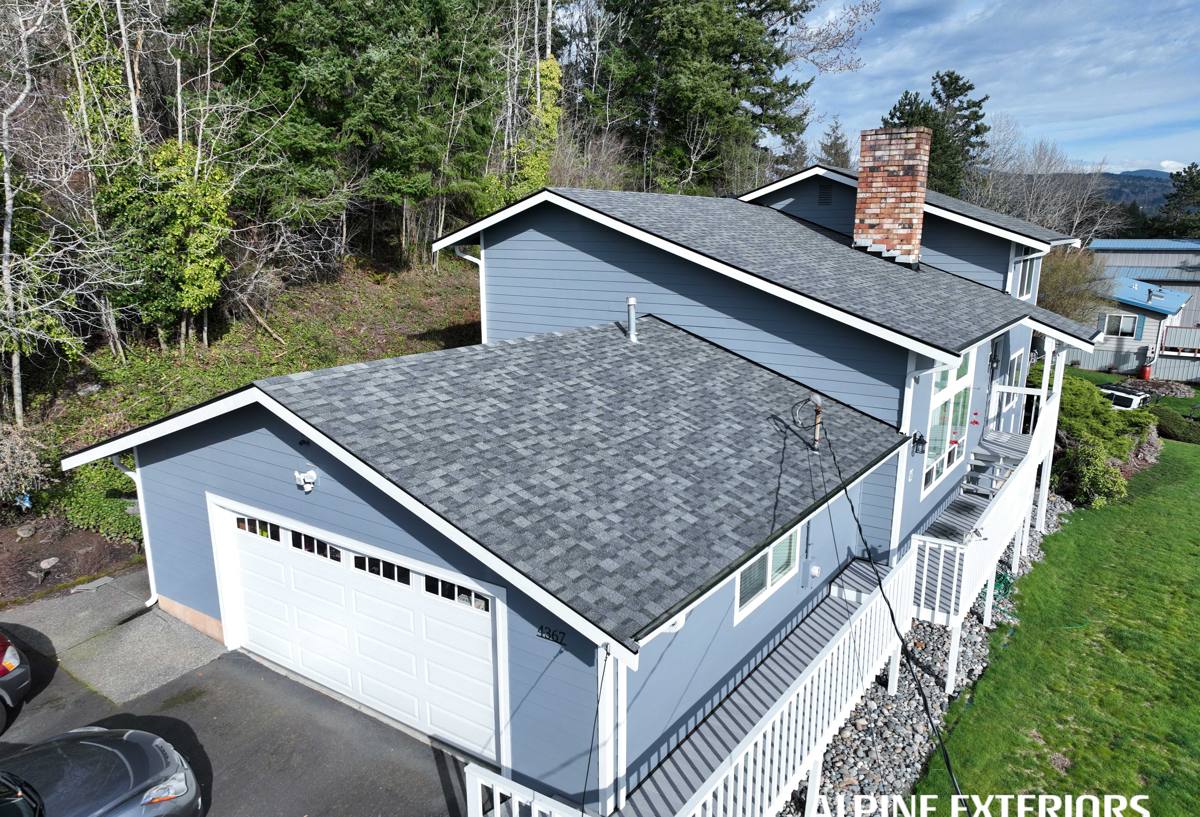
What Salt Air, Driving Rain, and Moss Season Actually Do to a Roof
Bellingham sits close enough to the water that salt-laden air is a real factor for exterior materials, even a few miles inland. Salt air accelerates corrosion on exposed metal — flashing, fasteners, gutter hardware — faster than it would in a dry inland climate. Combine that with wind-driven rain that doesn't fall straight down but gets pushed sideways into laps, seams, and transitions, and you get moisture finding its way into places a roof or siding system wasn't necessarily designed to shed water from.
Then there's moss. Whatcom County's moss season isn't really a season — for a lot of roofs, it's most of the year. Moss thrives in the shaded, damp, slow-to-dry conditions that are normal here, especially on north-facing roof slopes or sections shielded by trees. Moss itself doesn't just sit on top of shingles; its root structure works into the granule surface and, over time, lifts shingle edges and holds moisture against the roof deck longer than it should ever sit there.
None of this means Sunnyland homes are doomed to constant repairs. It means the materials, the installation details, and the maintenance schedule all need to account for these conditions from the start — which is exactly where a lot of exterior problems in this region actually begin: not with bad luck, but with work that wasn't detailed for the climate it's sitting in.
The Three Climate Factors We Design Around
- Salt air corrosion — we favor corrosion-resistant flashing, fasteners, and hardware, and pay attention to how coastal air affects metal roofing and gutter systems over time.
- Wind-driven rain — proper flashing at valleys, walls, and penetrations matters more here than in drier climates, since water is being pushed into gaps rather than just running off.
- Moss and shade — roof design, ventilation, and material choice all affect how quickly a roof dries out after rain, which directly affects how much moss takes hold.
Roofing Services for Sunnyland Homes
Whether you're dealing with an aging roof that's showing its age, storm damage, or you're just tired of scheduling moss removal every year, we handle the full range of roofing work: inspections, repairs, full replacements, and re-roofing when a repair no longer makes sense. For older homes in the neighborhood, we often find roofs that have had multiple small repairs layered on top of each other over the years — patch jobs that solved a symptom without addressing why moisture was getting in to begin with. Part of an honest roof evaluation is telling you when a repair will genuinely hold and when it's time to talk about replacement instead of adding another patch to the pile.
We work with asphalt composition shingles, metal roofing, and cedar where it's still in good condition and worth preserving, always with an eye toward how each material actually performs under sustained damp conditions rather than just how it looks new.
| Roofing Material | Typical Lifespan Here | Moss/Moisture Considerations |
|---|---|---|
| Asphalt composition shingle | 20–30 years | Widely used, reasonable cost; needs periodic moss treatment and gutter maintenance to hit full lifespan |
| Metal roofing | 40–60 years | Sheds water and dries fast, which limits moss growth; fasteners and flashing need corrosion-resistant hardware near the coast |
| Cedar shake/shingle | 20–30 years with upkeep | Attractive but higher maintenance in a wet climate; needs consistent treatment and ventilation to avoid moss and rot |
| TPO/flat roofing (additions, porches) | 15–25 years | Seam quality and drainage slope are critical in high-rainfall conditions |
How We Approach a Roof Inspection
A real inspection isn't a five-minute look from the ground. We check the roof surface for granule loss, cracked or curling shingles, and moss buildup; we look at flashing around chimneys, skylights, and wall intersections since that's where the majority of leaks in this climate actually originate; and we check attic ventilation, because poor airflow traps moisture underneath the roof deck and shortens the life of everything above it. We'll tell you plainly what's urgent, what can wait, and what's simply cosmetic.
Moss, Gutters, and the Maintenance Routine That Actually Matters
Moss removal by itself is a short-term fix if nothing else changes. Pressure washing moss off a roof without addressing why it grew there — shade, poor drying, clogged gutters holding water against the eaves — just means it comes back next season. We treat moss control as part of a broader maintenance routine rather than a one-time scrape-and-go service.
- Clear gutters and downspouts at least twice a year — more often if you're under mature trees, which is common in older Bellingham neighborhoods
- Treat moss-prone roof sections (typically north-facing or shaded slopes) before it establishes root structure into the shingle surface
- Check flashing and roof penetrations annually for lifted edges or gaps, especially after a hard windstorm
- Confirm attic ventilation is adequate — trapped moisture under the deck accelerates shingle failure from underneath
- Trim back tree limbs that keep sections of the roof shaded and slow to dry
- Address small leaks immediately rather than waiting — sustained rain means small problems compound quickly
We can set up a maintenance visit on a schedule that fits your roof's exposure and age, rather than a generic annual checkup that doesn't account for how shaded or exposed your particular roof actually is.
Siding That Holds Up to Salt Air and Sideways Rain
Siding takes a different kind of abuse than roofing — it's less about standing water and more about constant exposure to wind-driven rain and salt-laden air working at seams, corners, and fastener points. We install and repair fiber cement, engineered wood, and vinyl siding, and we pay particular attention to flashing details around windows, doors, and wall penetrations, since a well-chosen siding material installed with poor flashing will still let water in behind the surface.
We're generally cautious about siding choices that trap moisture behind the panel without a way to dry out, since that combination doesn't age well in a climate where the siding rarely gets a long dry stretch. That's a professional standard we hold ourselves to, not a claim that any one product is defective — it's about matching material and installation method to how wet this region actually stays for most of the year.
Signs Sunnyland Homeowners Should Watch For
- Soft spots or visible swelling at the bottom edge of siding panels, often near ground contact or downspouts
- Paint or caulking failing faster than expected around window and door trim
- Visible staining or streaking that suggests water is running behind rather than off the siding surface
- Persistent moss or algae growth on siding in shaded, north-facing walls
Windows: Sealing Out Rain and Keeping Heat In
A lot of homes in this neighborhood still have original or older-generation windows, which means single-pane or early double-pane units that were never built to modern energy standards. Beyond the comfort and heating-bill impact, aging window seals and flashing are a common point of water intrusion during wind-driven rain, since failed seals let moisture track down into the wall cavity rather than shedding off the exterior.
We handle both full window replacement and targeted repair or re-flashing where the window itself is fine but the surrounding seal has failed. Replacement decisions come down to the condition of the frame, the age of the glazing, and whether the flashing detail around the opening was done correctly in the first place — not just whether the glass looks foggy.
Decks: Built for Standing Water and Freeze-Thaw Cycles
Decks in this part of Whatcom County deal with a specific combination: near-constant dampness for months, occasional freezing temperatures, and UV exposure during the drier summer stretch. That mix is hard on fasteners, ledger board connections, and any decking material that doesn't drain and dry efficiently. We build and repair decks with attention to proper drainage slope, ledger flashing (a common failure point where decks pull away from the house), and fastener hardware rated for damp, and in some areas, salt-influenced conditions.
We work with both wood and composite decking, and we'll talk through the real maintenance difference between them honestly — composite generally demands less upkeep in this climate, while wood decking can look great but needs a consistent sealing schedule to hold up through repeated wet-dry cycles.
Why a Local Crew Matters in a Neighborhood Like Sunnyland
Roofing and siding advice that works in a dry climate often doesn't translate here. A crew that installs the same way regardless of region will miss the details that matter in Whatcom County — flashing overlap sized for driving rain, ventilation planned around a long moss season, fastener choices that account for salt air. Being local also means we're not disappearing after the invoice clears; if something needs a follow-up visit six months or six years later, we're still in Bellingham, not working out of a truck that showed up from three counties over.
We also think it matters that we can speak plainly about tradeoffs — what's worth repairing versus replacing, what maintenance actually prevents future cost versus what's just upsell, and which material choices make sense for your specific roof exposure and budget rather than a one-size-fits-all recommendation.
What to Expect When You Call Us
We start with a straightforward inspection or consultation, tell you honestly what we find, and give you options rather than a single hard sell. For roofing and siding work especially, we'll explain not just what's failing but why, so you understand whether it's an isolated issue or a sign of a broader moisture or ventilation problem. Estimates are written clearly, with the scope of work spelled out so there's no ambiguity about what's included.
If you're a homeowner in Sunnyland dealing with a roof that's showing its age, siding that's taking on water, windows that let in more draft than light, or a deck that's seen better days, we're happy to take a look. Reach out for a free, no-pressure estimate using the form below — we'll walk the property, answer your questions honestly, and give you a clear picture of what your home actually needs.