 Bellingham Roofing
 Why Sunnyland Homes Need Windows Built for This Climate
Sunnyland is one of Bellingham's older, established neighborhoods, which means a lot of its homes are still running on their original windows or a mismatched round of replacements from decades past. That's not a knock on the neighborhood — older windows were built for a different era of building science, and they were never designed to handle what a Whatcom County winter throws at them today. Salt-tinged air off Bellingham Bay works into aluminum frames and hardware over time. Driving rain off the water finds every gap in old glazing and worn weatherstripping. And the long stretch of gray, wet months each year gives moss and mildew months to take hold on sills, tracks, and exterior trim.
None of that is dramatic on its own, but it adds up. A window that's a little loose in its frame lets in more moisture than it should. That moisture sits in wood trim that doesn't get enough sun or dry wind to shed it. Add a few seasons of that cycle and you've got soft sills, fogged glass, or a window that won't latch tight anymore. Custom window work in this neighborhood isn't about chasing a trend — it's about correcting for a climate that's harder on windows than most of the country ever deals with.
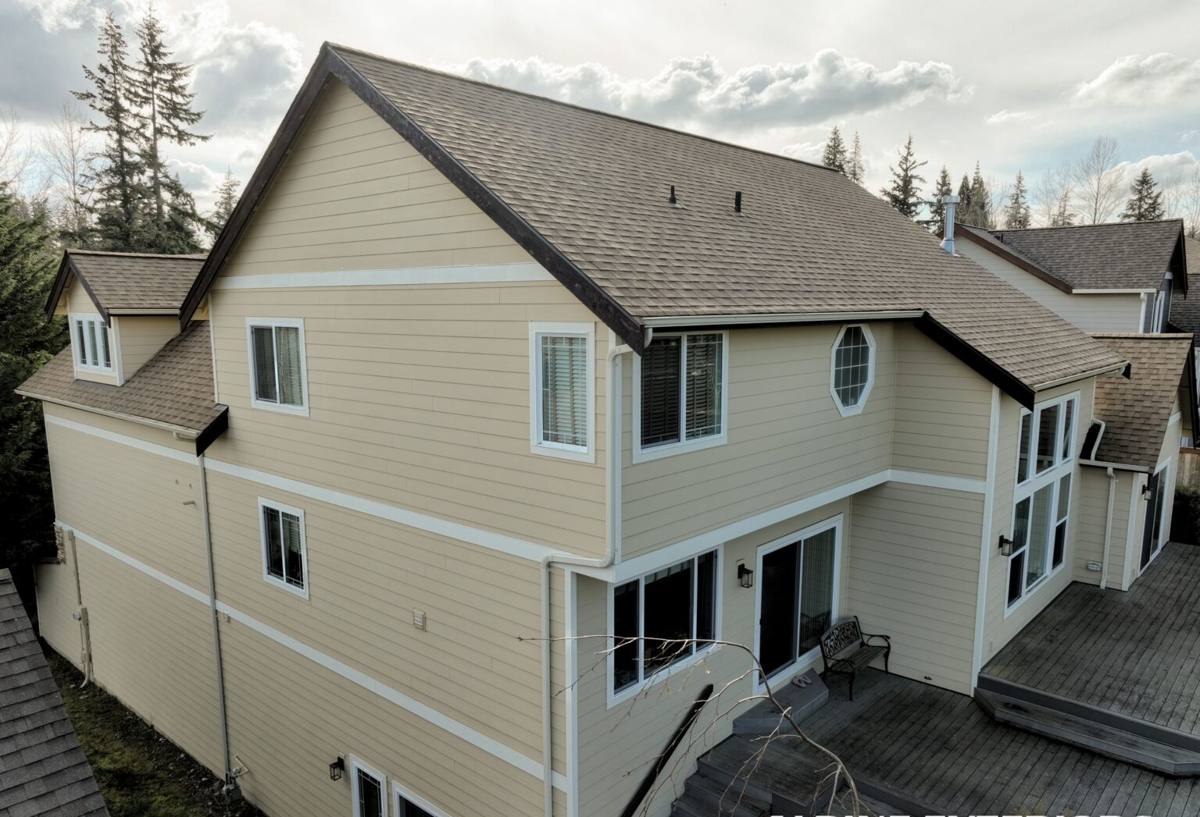
What "Custom" Actually Means for Window Replacement
"Custom" gets used loosely in this industry, so it's worth being specific. For us, a custom window job means every opening gets measured and treated on its own — not assumed to match a stock size, and not treated the same as the house next door. Sunnyland has a real mix of building eras and styles, from older bungalows to mid-century homes to newer infill construction, and each one has its own quirks: out-of-square openings from decades of settling, non-standard trim profiles, or additions where the wall assembly doesn't quite match the original structure.
Custom also means the window itself is specified for the opening and the exposure, not just ordered in a generic configuration. A window on a wall that takes direct wind-driven rain off the water needs different attention at the sill and flashing than one tucked under an eave on a sheltered side of the house. Getting that right is most of what separates a window that performs for twenty-plus years from one that starts failing in five.
Common Reasons Sunnyland Homeowners Replace Windows
- Fogged or cloudy glass — a sign the seal between panes has failed and the insulating gas has escaped
- Windows that are hard to open, close, or lock, often from swollen or warped frames
- Visible rot or soft wood at the sill, jamb, or exterior trim
- Persistent condensation on the inside of the glass during colder months
- Drafts or a noticeable temperature difference near the window
- Old aluminum frames that have pitted or corroded from years of salt-laden air
- Wanting to match window style and trim across a home after a remodel or addition
Choosing the Right Window Type for Your Home
There's no single "best" window — the right choice depends on the opening, how the room is used, and how much upkeep you want to take on. Here's how the common options stack up for a home in this part of Bellingham:
| Window Style | Best Suited For | Considerations Here |
|---|---|---|
| Double-hung | Bedrooms, bungalow-style homes, matching original character | More moving parts and weatherstripping to maintain against driving rain |
| Casement | Kitchens, walls needing tight seals | Crank seal compresses tight, which holds up well against wind-driven rain |
| Sliding | Wide openings, decks, sunrooms | Track can collect grit and moss spores if not cleaned seasonally |
| Fixed/picture | Views, light without ventilation needs | No moving parts to fail, simplest to seal and maintain |
| Awning | Basements, bathrooms, ventilation during light rain | Can stay cracked open in a drizzle without letting water in |
Materials: Vinyl, Fiberglass, and Wood-Clad
Material choice matters as much as style, especially with the amount of moisture this area sees. Vinyl is the most common replacement choice because it doesn't rot, doesn't need painting, and holds up well against salt air. Fiberglass costs more but resists expansion and contraction better across our temperature swings, which keeps seals tighter for longer. Wood-clad windows (wood interior, clad exterior) give you a traditional look inside, which suits a lot of Sunnyland's older housing stock, but the exterior cladding needs to be genuinely well-sealed at every joint — any gap becomes an entry point for moisture that the wood underneath won't tolerate for long.
We don't push any one material as universally "best." Instead we walk through the trade-offs for your specific home — sun exposure, wind exposure, budget, and how much maintenance you actually want to do — and let that decide it.
Cost Factors to Expect
| Factor | Why It Matters |
|---|---|
| Window count and size | Larger and more numerous openings raise material and labor cost directly |
| Frame material | Vinyl is typically the most budget-friendly; fiberglass and wood-clad cost more upfront |
| Glass package | Double-pane vs. triple-pane, and low-E coatings, change both cost and performance |
| Condition of existing framing | Rot or out-of-square openings can require extra carpentry before the new window goes in |
| Trim and exterior finish work | Matching existing trim profiles or repainting/staining adds labor |
| Access and site conditions | Upper-story windows or tight side yards can add time and equipment needs |
We don't quote a price without seeing the actual openings — anyone who does is guessing, and that guess tends to change once the work starts.
What a Correct Installation Actually Involves
The window unit itself is only part of the job. Most of the failures we get called out to fix in older neighborhoods trace back to installation shortcuts, not the window brand. A correct install includes:
- Removing the old window and fully inspecting the framing underneath for rot or damage before anything new goes in
- Repairing or replacing any compromised framing rather than installing over it
- Properly flashing the opening so water is directed out and away from the wall assembly, not just caulked over
- Installing sill pan flashing so any water that does get past the window drains outward instead of pooling
- Shimming the unit square and plumb, not just wedged into an out-of-square opening
- Sealing the interior and exterior with the right materials at the right points — over-sealing in the wrong spot can trap moisture just as badly as under-sealing
- Insulating the gap between the frame and the rough opening without overpacking it, which can bow the frame
Skipping any of these steps might not show up as a problem for a year or two. In a climate with this much sustained rain and humidity, it eventually does — usually as a soft spot in the trim, a musty smell, or water staining on interior drywall below the sill.
Our Process, Start to Finish
We keep the process straightforward because homeowners in this neighborhood have generally been through a few contractor experiences and know what a rushed one looks like.
- On-site assessment: We look at each window opening individually — framing condition, exposure to wind and rain, and how the current windows are failing.
- Honest recommendations: We walk through style and material options for your home specifically, including what we wouldn't recommend and why.
- Written estimate: Clear scope and pricing before any work is scheduled — no verbal-only numbers.
- Removal and framing repair: Old units come out, framing gets inspected and repaired as needed before the new window goes in.
- Installation: Proper flashing, sealing, and squaring for every unit, not a rushed drop-in.
- Final walkthrough: We check operation, seals, and finish work with you before calling the job done.
Why Local Experience in Sunnyland Matters
A window contractor who mostly works in drier parts of the state can still install a window competently — but they may not build in the extra flashing detail or sealing attention that this specific climate demands, because they haven't had to chase down the failures that show up here five winters later. Working regularly in Bellingham neighborhoods like Sunnyland means we've already seen how the older housing stock in this area was built, where the common weak points are, and what actually holds up against a full Whatcom County wet season.
It also means we're not guessing about permitting, typical framing quirks in older Bellingham homes, or how a given wall assembly handles moisture over time. That familiarity shows up less in the sales pitch and more in the parts of the job you don't see once the trim is back on — the flashing, the sealing, the framing repair done right the first time.
Get a Free Estimate for Your Sunnyland Home
If your windows are fogging, sticking, drafting, or just past their reasonable lifespan, it's worth having someone look at the actual openings before you decide on anything. We offer free, no-pressure estimates for Sunnyland homeowners — use the form below to get a time on the calendar.