 Bellingham Roofing
 Two Shingles, Two Very Different Roofs
When homeowners in Bellingham start pricing out a new roof, the first fork in the road is almost always the same question: architectural shingles or 3-tab shingles? Both are asphalt shingles, both come from the same major manufacturers, and both will keep water out of your attic if installed correctly. But they are not interchangeable products, and the differences matter more here than in a lot of the country because of what our climate does to a roof over time — driving rain off the Strait of Georgia, salt-laden air near the water, and a moss season that can run nine months out of the year in the shaded, damp corners of Whatcom County.
This page walks through how the two shingle types are actually built, how each one holds up locally, what they cost to install, and how to think about which one is the right call for your specific roof. Nothing here is a sales pitch for one product over the other — plenty of 3-tab roofs are still doing their job on Bellingham homes today. The goal is to give you enough real information to have an informed conversation with any contractor you're considering.
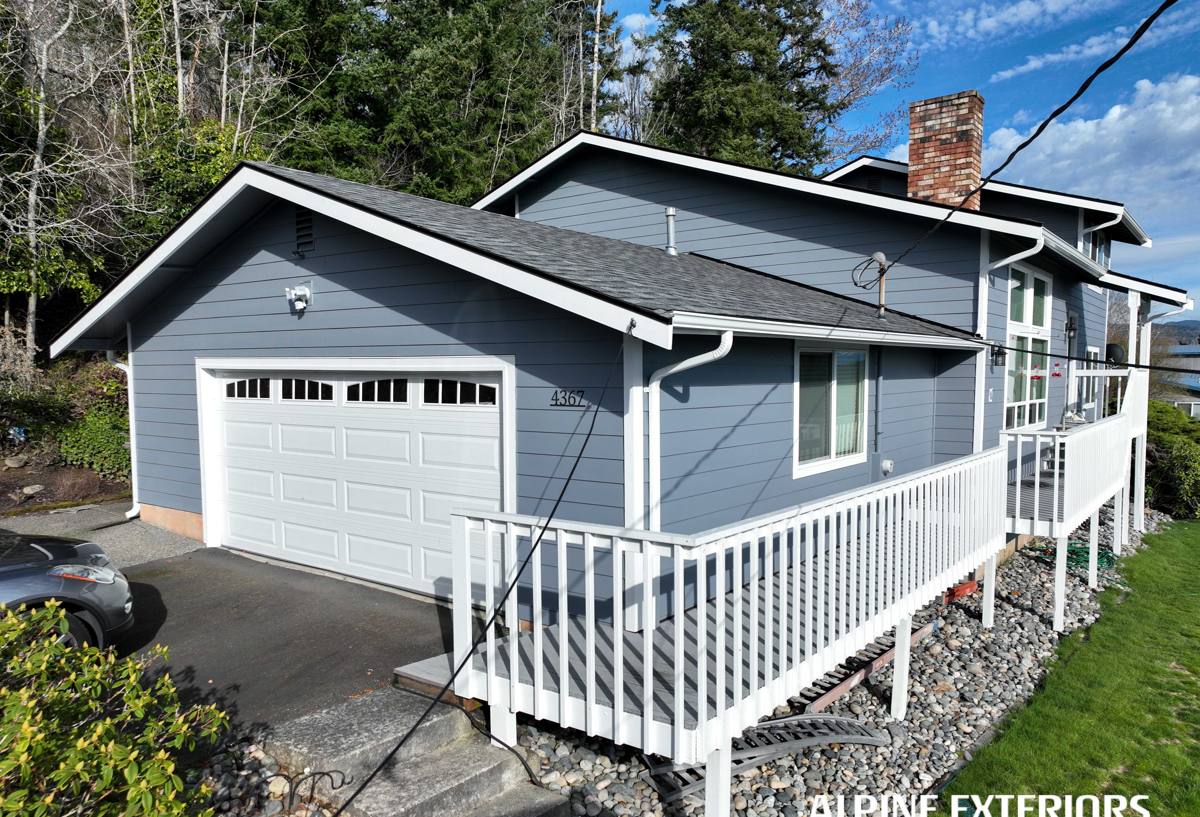
How Each Shingle Is Built
3-Tab Shingles
A 3-tab shingle is a single layer of asphalt-saturated fiberglass mat with a uniform thickness across the entire shingle. The name comes from the cutouts along the bottom edge that create the look of three separate tabs, giving the roof a flat, uniform pattern. They're lightweight, typically around 2.5 to 3 pounds per square foot, and every shingle in the bundle is identical.
Architectural Shingles
Architectural shingles — also called dimensional or laminate shingles — are built from two or more asphalt layers fused together, with the top layer cut and offset to create a staggered, dimensional look. They run heavier, usually 4 to 5 pounds per square foot or more, and that extra mass and lamination is where most of their performance advantage comes from. The added thickness isn't cosmetic; it changes how the shingle sheds water and resists wind uplift.
Wind, Rain, and Moss: Performance in a Whatcom County Climate
This is the section that actually matters most for people roofing a home in Bellingham rather than somewhere dry and inland. Our roofs deal with a specific combination of stresses: sustained wet weather for much of the year, wind events that come through with driving rain rather than dry gusts, proximity to salt air for homes closer to Bellingham Bay and the water, and heavy shade from mature evergreens that keeps north-facing slopes damp long after a storm clears.
Architectural shingles generally perform better under these conditions for a few concrete reasons. The laminated, multi-layer construction gives them a stronger wind rating in most manufacturer lines — commonly rated for higher sustained wind speeds than a standard 3-tab, which matters during the fall and winter windstorms that roll through the county. The thicker profile also sheds wind-driven rain more effectively at the shingle's butt edge, and the dimensional surface holds granules a bit longer under constant moisture exposure.
Moss is the other local reality worth being honest about. Neither shingle type is moss-proof — moss grows on any organic-surfaced roofing material when there's enough shade, moisture, and debris buildup, and Whatcom County's tree cover gives it plenty of opportunity. What differs is how forgiving each shingle is of the cleaning that moss removal requires. The thinner profile of a 3-tab shingle has less margin for error during a rough pressure-wash or aggressive scraping, while the extra thickness on an architectural shingle tolerates routine soft-washing and manual moss removal a little better over the years. Neither is a substitute for proper gutter maintenance, tree trimming for sun exposure, and scheduling moss treatment before it gets established.
Salt air is a slower, more subtle factor. It doesn't damage asphalt shingles the way it corrodes exposed metal, but homes closer to the water do see accelerated wear on exposed fasteners, flashing, and vents, which makes the quality of flashing and underlayment work at least as important as the shingle choice itself.
Lifespan and Warranty
Manufacturer warranties are a reasonable starting point for comparing expected service life, though actual lifespan depends heavily on installation quality, attic ventilation, and how exposed the roof is to sun, wind, and moisture — all things a warranty document can't account for.
| Factor | 3-Tab Shingles | Architectural Shingles |
|---|---|---|
| Typical manufacturer warranty | 20-25 years | 30 years to lifetime (limited) |
| Typical real-world lifespan locally | 15-20 years | 20-30 years |
| Wind rating (varies by product line) | Often 60-70 mph | Often 110-130 mph |
| Weight per square | ~230-250 lbs | ~350-450 lbs |
| Relative material cost | Lower | Moderate to higher |
Those local lifespan ranges run lower than the national averages you'll see quoted online — that's the honest impact of a wet, shaded, moss-prone climate rather than a knock on either product. A well-ventilated attic and a roof that gets sun exposure will outlast a shaded, poorly ventilated one regardless of which shingle is on it.
Appearance and Curb Appeal
The visual difference is immediate once you see the two side by side. A 3-tab roof has a flat, uniform, repeating pattern — clean and simple, but it reads as a budget-oriented look on most home styles. Architectural shingles have shadow lines and a randomized, dimensional pattern that mimics the look of wood shake or slate from the street. On the craftsman, farmhouse, and Pacific Northwest contemporary styles common in Bellingham neighborhoods, that dimensional look tends to complement the architecture more than a flat 3-tab does, which is part of why architectural shingles have become the more common choice on new installs even where 3-tab would technically hold up fine.
Cost Factors
Material cost is only part of the number that ends up on your estimate. A few things move the price regardless of which shingle you choose:
- Roof pitch and complexity — steep slopes, multiple valleys, and dormers add labor time on either shingle type
- Tear-off scope — one layer versus multiple layers of old roofing to remove and dispose of
- Decking condition — any plywood or plank sheathing that needs replacement once the old roof comes off
- Ventilation upgrades — ridge vents, soffit vents, or baffles added to improve attic airflow
- Flashing and underlayment quality — especially relevant for homes exposed to wind-driven rain or salt air
- Accessibility — trees, fencing, or tight lot lines that limit staging and material delivery
Architectural shingles typically run somewhat more per square than 3-tab in material cost alone, but the labor cost to install either is fairly similar since the install process is comparable. Given the smaller price gap and the performance advantages in our climate, most homeowners here find architectural shingles the more cost-effective choice over the life of the roof, even though the upfront number is a bit higher.
Installation Considerations
Both shingle types require correct nailing patterns, proper starter strip and ridge cap installation, and quality flashing at every penetration, valley, and wall intersection — the shingle itself is only as good as the details around it. Architectural shingles are somewhat less forgiving of nailing errors because of their weight and offset pattern, so installer experience with that specific product line matters. Any reputable install, regardless of shingle type, should include ice-and-water shield in valleys and eave areas, synthetic underlayment across the field of the roof, and attic ventilation sized correctly for the square footage — all of which do more to prevent moisture problems in our climate than the shingle brand does.
Which One Makes Sense for Your Roof
There's no universally correct answer — it depends on your budget, how long you plan to stay in the home, your roof's exposure to wind and shade, and what look you want. A few questions worth walking through before deciding:
- Is this a rental, flip, or budget-driven replacement where a solid 15-20 year roof is the priority? A 3-tab may be the practical choice.
- Is this your long-term home, and do you want to minimize how often you deal with roofing again? Architectural is usually the better value over time.
- Does your roof have significant shade from mature trees or north-facing slopes prone to moss? The extra thickness of architectural shingles tolerates cleaning better.
- Is your home closer to the water with more direct wind and salt exposure? A higher wind-rated architectural product is worth the difference.
- Does curb appeal and resale value matter for this property? Architectural shingles generally read as a higher-quality roof to buyers and appraisers.
- Are you matching an existing roof style on an addition or partial replacement? Sometimes the existing shingle type dictates the choice regardless of preference.
Maintenance Either Way
Whichever shingle ends up on your roof, the maintenance that actually extends its life in Whatcom County is the same: keep gutters and valleys clear of needle and leaf debris, address moss before it establishes rather than after, keep tree limbs trimmed back for sun exposure and airflow, and have flashing and vent boots inspected periodically rather than waiting for a leak to show up inside the house. A roof replacement is a good moment to correct any ventilation or flashing shortcuts from a previous install, regardless of which shingle you choose going forward.
If you're weighing architectural versus 3-tab for a home in Bellingham or elsewhere in Whatcom County, we're happy to take a look at your specific roof — pitch, shade exposure, current condition — and walk through what makes sense for your situation. Reach out for a free, no-pressure estimate using the form below.