 Bellingham Roofing
 The Shingles Are Just the Cover Page
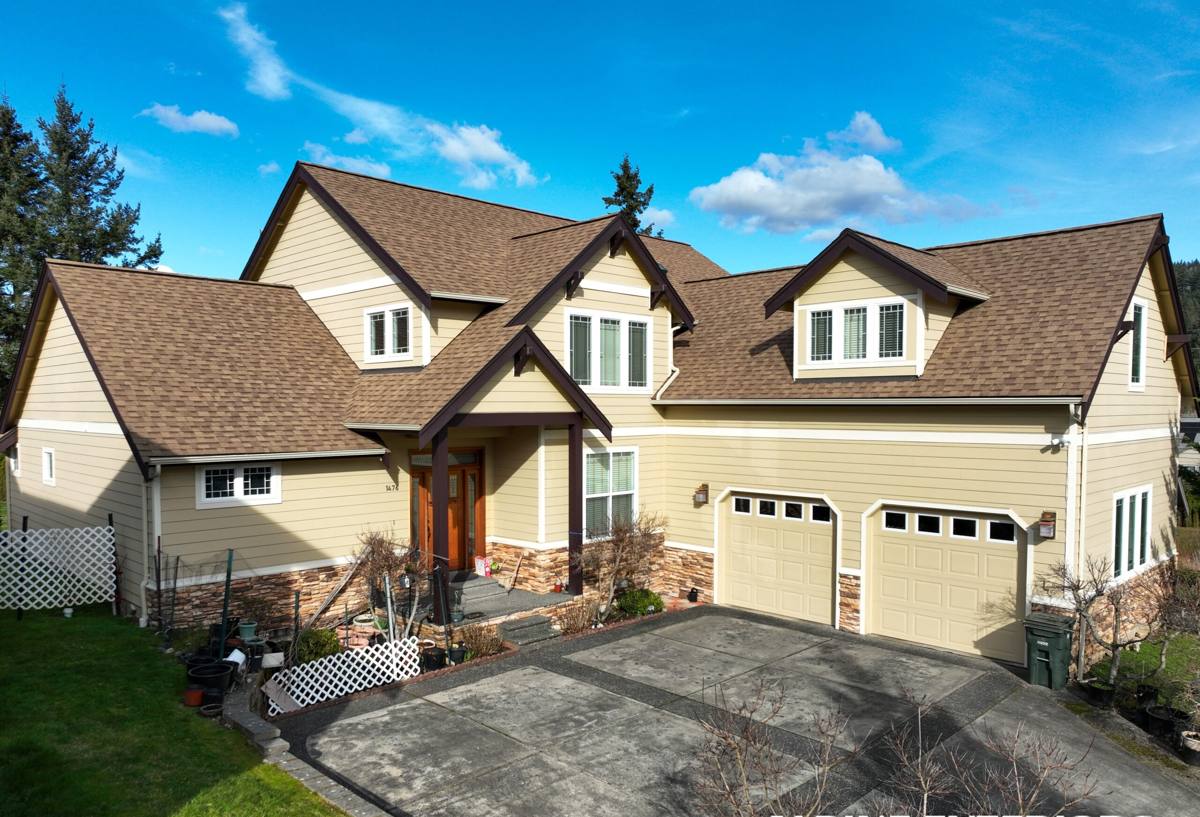
When most Whatcom County homeowners think about their roof, they picture the shingles — the color, the texture, the curb appeal. That's fair; it's the only part you can see from the driveway. But shingles are really just the weather-facing skin of a system with four or five layers working together underneath. If any one of those layers is missing, undersized, or installed wrong, the shingles on top can look brand new while the roof underneath is quietly failing. In a climate like Bellingham's — salt air off the Sound, driving rain for months at a stretch, and moss that never really takes the winter off — those hidden layers do more of the actual work than the shingles get credit for.
This page walks through what's actually under a typical asphalt shingle roof, why each layer exists, and which details matter most for houses in this part of Washington specifically.
The Roof Deck: Everything Else Depends On It
The deck is the plywood or OSB sheathing nailed to your rafters or trusses. It's the structural base every other layer attaches to, and it's also the first thing that tells us the real condition of a roof once we pull shingles off. In Whatcom County we regularly find deck damage that had nothing to do with the shingles' age — it came from a slow leak at a flashing detail, from ventilation that let condensation build up in the attic, or from moss holding moisture against the surface for years at a time.
A few deck issues we watch for on tear-offs:
- Soft or spongy spots, especially near valleys, chimneys, and eaves
- Delamination in OSB panels from long-term moisture exposure
- Nail pops or fastener patterns that suggest the deck was never properly re-nailed to code
- Gaps or improper spacing between sheathing panels that were never addressed before re-roofing
Replacing bad decking costs more than reusing what's there, which is exactly why some roofing jobs skip it. We don't. A new roof over a compromised deck is a roof that's failing again inside a few years, and by then the damage is hidden under new shingles where nobody can see it until water starts coming through the ceiling.
Underlayment: The Layer That Actually Keeps Water Out
Here's something a lot of homeowners find surprising: shingles alone aren't fully waterproof. Wind-driven rain, ice damming, and capillary action can push water underneath shingle tabs, especially at low slopes, valleys, and edges. The underlayment is the secondary barrier that catches what gets past the shingles and directs it back out before it reaches the deck.
Felt vs. Synthetic
Traditional asphalt-saturated felt has been used for decades and still works, but it absorbs water, can wrinkle under humidity, and tears more easily during installation. Synthetic underlayment is a woven or non-woven polymer sheet that's lighter, stronger, more tear-resistant, and doesn't absorb moisture the way felt does. Given how many wet days Bellingham roofs sit under before the shingles even go on, synthetic underlayment holds up better through a typical install window and performs better long-term in a marine climate.
Ice & Water Shield
This is a self-adhering, rubberized membrane used at the most vulnerable spots on a roof — eaves, valleys, around chimneys and skylights, and anywhere ice damming or standing water is likely. It's not optional armor for a handful of trouble spots; in this region, with our combination of moss buildup, freeze-thaw swings, and near-constant winter rain, we treat it as standard practice at every valley and eave, not just where code minimums require it.
Flashing: Small Metal Pieces, Big Consequences
Flashing is the metal (or sometimes rubber) detailing installed anywhere the roof plane is interrupted — chimneys, skylights, sidewalls, vent pipes, and roof-to-roof transitions like valleys. It's a small percentage of the material cost on a roofing job and a disproportionately large percentage of where leaks actually start.
Common flashing problems we find on older Bellingham roofs:
- Reused flashing from the previous roof, now rusted or bent out of shape
- Step flashing along sidewalls replaced with a bead of caulk instead of proper metal
- Chimney counter-flashing that was never cut into the mortar joint correctly
- Pipe boot collars with cracked rubber gaskets — a very common, very fixable leak source
Salt air off the water accelerates corrosion on lower-grade metal flashing faster than it would inland, which is one more reason material choice at these small details matters more here than in a drier, inland climate.
Ventilation: The Layer You Never See at All
Intake and exhaust ventilation don't stop water from the outside — they manage moisture and heat from the inside. Warm, moist air from the living space rises into the attic. Without a balanced path for that air to enter low (soffit vents) and exit high (ridge or box vents), it condenses on the underside of the deck. Over a wet Bellingham winter, that condensation can do as much damage to sheathing as an actual roof leak, and it's often mistaken for one.
Poor ventilation also shortens shingle life from underneath — trapped heat and moisture cause premature curling and granule loss, which is a strange thing for a homeowner to hear since the damage isn't coming from the weather side at all.
Why Moss Season Changes the Math Here
Moss isn't just cosmetic. It holds moisture against the shingle surface long after the rest of the roof has dried, works its way under tab edges, and gradually lifts granules and shingle edges as it grows. In Whatcom County's long, wet moss season, roofs with poor ventilation, north-facing slopes, or heavy tree cover deal with this every year. The right underlayment and flashing details buy you a real margin of safety while moss is doing its slow work on the surface layer above — but they don't replace regular moss treatment and gutter maintenance as ongoing upkeep.
Comparing Underlayment and Protection Options
| Layer / Material | What It Does | Best Used | Trade-Offs |
|---|---|---|---|
| Asphalt felt (15# or 30#) | Basic secondary water barrier | Budget re-roofs, lower-slope minimums | Absorbs moisture, tears more easily, shorter service life |
| Synthetic underlayment | Secondary water barrier, walkable, tear-resistant | Standard for most full roof systems | Higher material cost than felt |
| Ice & water shield | Fully adhered waterproof membrane | Eaves, valleys, penetrations, low-slope sections | More expensive per square foot; used selectively, not whole-roof |
| Metal step/counter flashing | Directs water around walls, chimneys, transitions | Every wall and chimney intersection | Requires correct install sequencing with siding or masonry |
| Balanced soffit/ridge ventilation | Manages attic moisture and heat | Every enclosed attic space | Needs adequate intake, not just exhaust, to function correctly |
What This Means When You're Comparing Roofing Quotes
Two roofing bids can list "new roof, 30-year shingles" and still describe very different roofs underneath. The difference usually isn't visible until something goes wrong. When you're comparing quotes, it's worth asking specifically what underlayment is spec'd, whether ice & water shield is included at valleys and eaves as standard or as an upsell, what flashing will be reused versus replaced, and whether the deck will be inspected — and repaired if needed — once the old shingles come off.
A Quick Checklist for Homeowners
- Ask whether deck inspection and repair (if needed) is included in the base price, not billed as a surprise change order
- Confirm synthetic underlayment vs. felt, and get it in writing
- Confirm ice & water shield coverage at eaves, valleys, and penetrations
- Ask whether flashing will be replaced with new metal or reused
- Ask how attic ventilation will be assessed and whether changes are recommended
- Get the manufacturer and warranty terms for both shingles and underlayment in writing
The Bottom Line
A roof is a system, not a single product. The shingles matter, but they're the last five percent of a job that starts with a sound deck, a properly chosen and installed underlayment, correctly detailed flashing, and balanced ventilation. In a Bellingham climate — with the moisture load off the Sound, the extended moss season, and the salt air working on exposed metal — those underlying layers are doing more of the long-term protection than most homeowners realize. Cutting corners there doesn't show up on day one. It shows up in year six or seven, as a ceiling stain that traces back to a detail nobody asked about at the time of the quote.
If you'd like a straightforward, no-pressure look at what's actually going on with your roof — deck condition, ventilation, flashing, all of it — we're happy to come take a look and give you a written estimate with no obligation. Use the form below to get started.