 Bellingham Roofing
 Roofing in Lynden: A Different Kind of Weather Test
Lynden sits in the Nooksack Valley in northern Whatcom County, close enough to the water and the Canadian border that the same marine weather pattern that soaks Bellingham reaches out here too. The difference is subtle but real: Lynden's roofs deal with more open exposure to wind coming off the valley, long stretches of overcast, damp days, and the kind of low, steady rainfall that never seems dramatic in the moment but adds up to some of the wettest annual totals in the state. A roof out here isn't fighting one big storm a year. It's fighting eight months of dampness, one shingle course at a time.
That slow, grinding moisture is what actually wears out roofs in this part of Washington. Not hail, not high heat, not sudden failure — just years of saturated air, shaded rooflines, and moss finding every low spot it can hold onto. We've built our roofing work around that reality rather than around generic national installation standards that assume a drier climate.
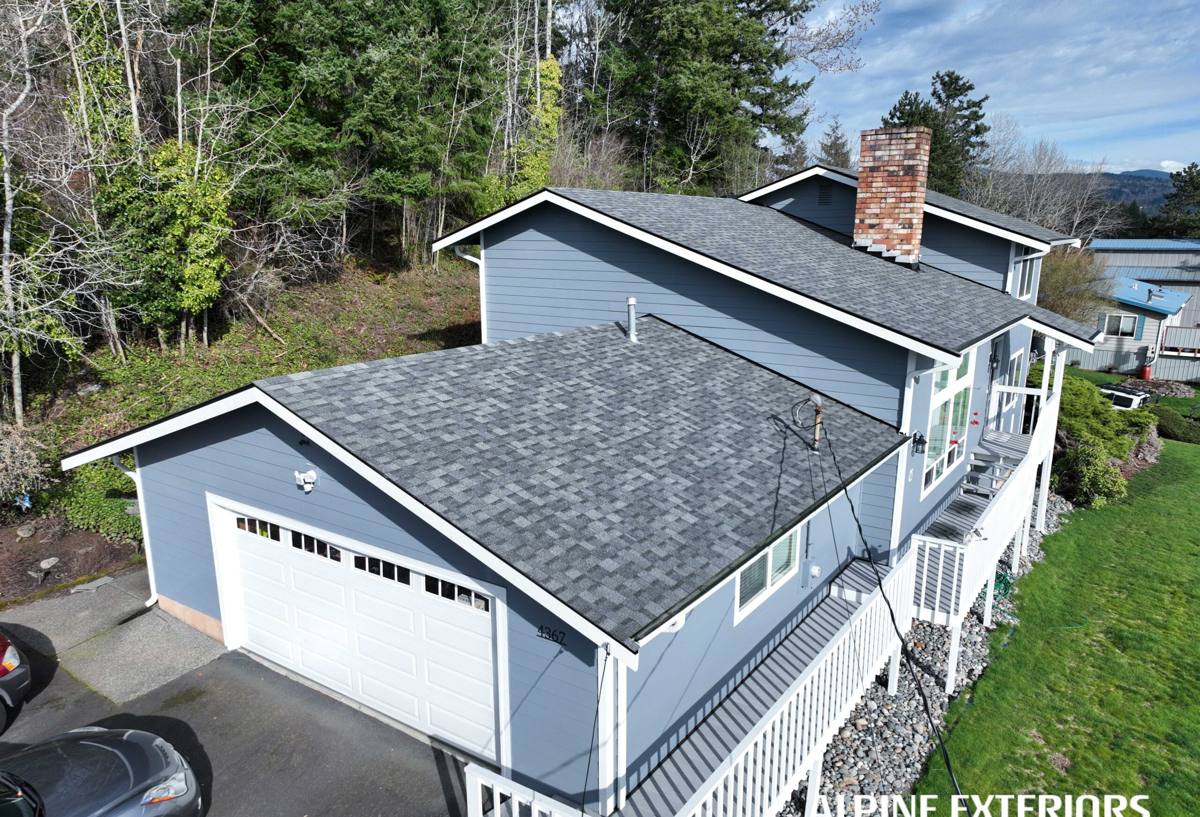
What Moss Season Really Does to a Roof
Ask any longtime Whatcom County homeowner and they'll tell you moss isn't an occasional nuisance — it's a season. It typically takes hold in the shaded, north-facing slopes and anywhere tree cover blocks the sun, starting in fall and building through winter and into spring before drying out enough in summer to slow down.
Why moss is more than a cosmetic problem
- Moss holds water against the shingle surface long after rain has stopped, keeping that layer of the roof perpetually damp
- Growing moss roots and rhizoids work into the granule surface of asphalt shingles, gradually loosening granules that protect against UV and wear
- Thick moss mats lift shingle edges, creating channels where wind-driven rain can get pushed backward under the shingle line
- Moss and the organic debris it traps clog valleys and gutters, which backs water up under roofing material instead of letting it run off
Pressure washing moss off is one of the fastest ways to shorten a roof's life — it strips granules and can force water under shingles. We treat moss removal as a maintenance task that calls for the right chemistry and a soft touch, not brute force, and we look at what's causing the moss (tree cover, shade, poor airflow) rather than just treating the symptom once and moving on.
Driving Rain and the Parts of a Roof That Actually Fail First
Most roof leaks in this region don't start in the open field of shingles. They start at the details: flashing around chimneys and skylights, valleys where two roof planes meet, transitions where a roof meets a wall, and any penetration for vents or plumbing stacks. Wind-driven rain in Whatcom County doesn't fall straight down — it comes in at an angle, which means water gets pushed sideways and upward into gaps that would stay dry in calmer weather.
When we inspect a roof in Lynden, we spend as much time on those transition points as we do on the field of the roof itself. A roof can have plenty of shingle life left and still leak because a piece of step flashing was never properly integrated, or because sealant was used to bridge a gap that should have been solved with metal.
Ventilation: the quiet factor that decides how long a roof actually lasts
A roof deck that can't breathe traps moisture from inside the house against the underside of the sheathing. Combined with the damp air outside for much of the year, that's a recipe for slow rot, sagging decking, and premature failure of the roofing material from underneath — the kind of damage a homeowner often doesn't see until it's advanced. Proper intake and exhaust ventilation matters as much here as the shingle brand on top.
How We Handle a Roofing Project in Lynden
| Stage | What We're Checking | Why It Matters Here |
|---|---|---|
| Initial inspection | Decking condition, flashing, ventilation, moss and moisture patterns | Identifies whether the issue is a repair or a sign of deeper deck damage before we quote anything |
| Tear-off (if replacing) | Full removal down to the deck, deck inspection | Soft, damp decking is common under older roofs here and needs to be caught before new material goes down |
| Underlayment | Synthetic or ice-and-water shield at eaves, valleys, and penetrations | Extra protection at the spots wind-driven rain actually gets into |
| Flashing detail work | Step flashing, valley metal, chimney and skylight flashing | Where the large majority of leaks in this climate originate |
| Ventilation check | Intake at eaves, exhaust at ridge, balanced airflow | Prevents trapped moisture and extends roof life from underneath |
| Final walk-through | Cleanup, gutter and downspout check, homeowner review | Confirms water has a clear path off the roof before the next rain |
Repair, Restore, or Replace? A Straight Answer
Not every roof problem needs a full replacement, and we won't tell you it does. Roofing decisions generally come down to three honest factors: how much usable life is left in the existing material, how localized the damage is, and whether the underlying deck is sound.
Signs a repair is likely still the right call
- Damage is isolated to one area — a single flashing detail, a small section of missing shingles, one valley
- The roof is less than roughly two-thirds through its expected lifespan
- The decking underneath tests solid, without soft spots or visible sagging
Signs it's time to talk replacement
- Multiple leak points across different parts of the roof, not just one spot
- Widespread granule loss, curling, or brittle shingles across large sections
- Soft or spongy decking found during inspection
- The roof is already near or past its expected service life for its material type
We'll give you the actual condition we find, not the answer that leads to the bigger invoice.
Beyond the Roof: Siding, Windows, and Decks in the Same Climate
A roof doesn't work in isolation. The same damp, mossy conditions that stress a roofline also affect siding (moisture behind panels, staining, rot at trim joints), window seals (fogging and drafts as gaskets age in constant humidity), and decking (slick surfaces, ground contact rot, fastener corrosion). When we're already on a property for roofing work, we'll flag anything we notice in those other areas — not to upsell, but because a homeowner should know if there's a related issue building before it becomes its own separate repair call.
Why a Local Crew Matters More Than It Sounds Like It Should
Roofing crews that don't work Whatcom County regularly tend to apply the same install methods they'd use in a drier region — lighter underlayment, less attention to flashing detail, standard ventilation specs that don't account for how much moisture this climate actually pushes at a house. That's not a knock on their skill; it's just a mismatch between the work and the weather it has to survive.
Working roofs across Bellingham and the surrounding communities, including Lynden, means seeing the same failure patterns repeat: the same shaded slopes growing moss first, the same valley designs backing up in heavy rain, the same ventilation shortcuts causing deck rot from the inside. That pattern recognition is what actually prevents callbacks, not a longer brochure of certifications.
Simple Maintenance Steps Homeowners Can Do Between Visits
- Keep gutters clear of debris going into fall, before the heavy rain months start
- Trim back tree branches that shade the roof and keep it from drying out between rains
- Have visible moss addressed early in the season rather than letting it establish over winter
- Watch for daylight or staining in the attic after storms — an early sign worth a call
- Schedule an inspection every couple of years, or after any major windstorm
What to Expect When You Call Us
We start with a straightforward inspection and a plain explanation of what we find — no pressure toward the most expensive option, no vague scope. If it's a repair, we'll tell you that. If the deck and flashing tell a different story, we'll show you why replacement makes more sense long-term. Either way, you'll get a written estimate you can actually understand before any work starts.
If you're a homeowner in Lynden dealing with a leak, visible moss buildup, or just want an honest read on how much life your roof has left, we're happy to take a look. Fill out the form below for a free, no-pressure estimate.