 Bellingham Roofing
 Lynden's Climate Is Harder on Siding Than It Looks
Lynden sits inland from Bellingham Bay, but it shares the same marine-influenced weather pattern that defines Whatcom County: long stretches of steady, driving rain, high ambient humidity, and short winter days that never quite dry a house out before the next system rolls through. Add in the salt-tinged air that moves inland off the Salish Sea on a west wind, and you have conditions that are quietly aggressive toward exterior building materials, even when nothing looks obviously wrong from the curb.
The clearest sign is moss. Whatcom County's moss season isn't a two-week nuisance — it's most of the year. Anything on a home's exterior that holds moisture even slightly longer than it should becomes a host surface: fascia boards, deck rails, roof valleys, and siding, especially on north-facing walls and anywhere tree cover blocks the sun and wind. Siding that's marginal on moisture resistance in a drier climate becomes a real maintenance headache here.
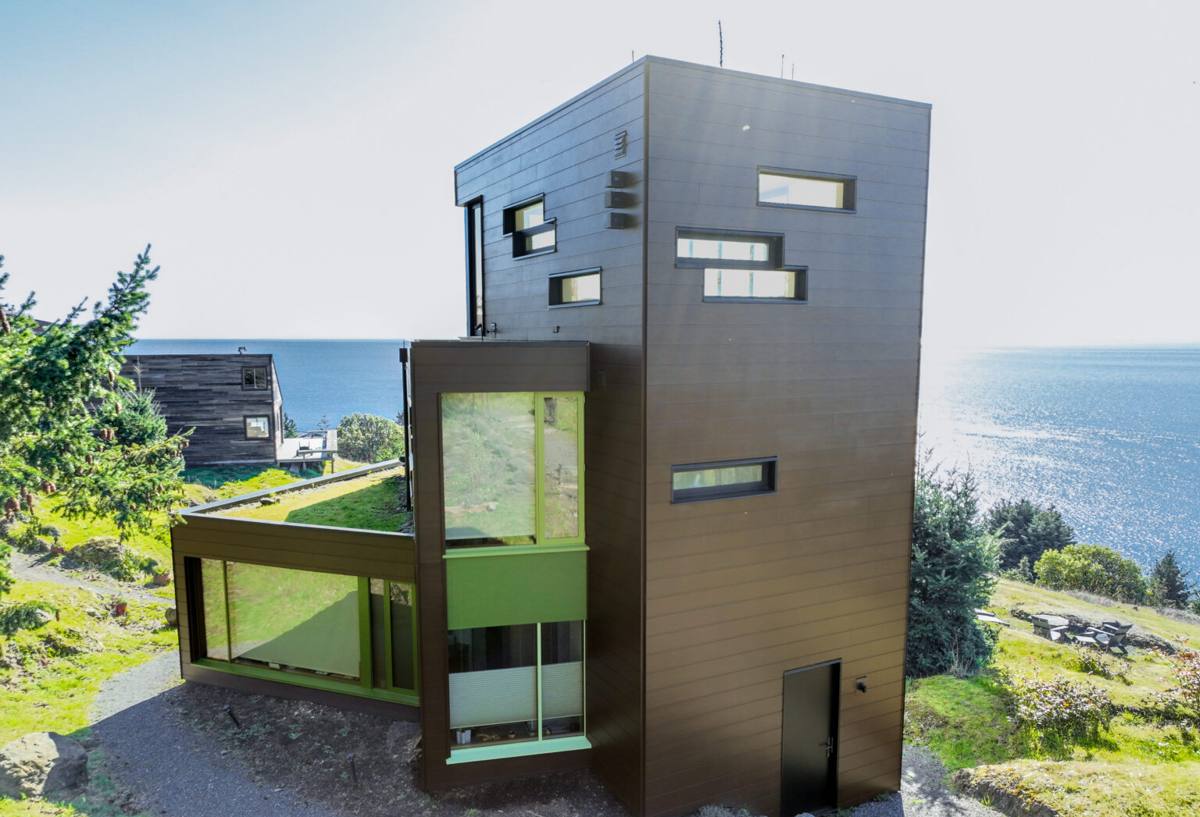
What the Wrong Siding Does Over Time in This Climate
Moisture Absorption and Moss Growth
Wood-based siding products — cedar, primed spruce, and engineered wood like LP SmartSide — rely on their finish and factory treatment to keep water out. In a climate where that finish is under near-constant load from rain and humidity, any gap in coverage (a cut edge, a nail hole, a hairline crack at a joint) becomes an entry point. Once moisture gets behind the surface, it doesn't evaporate quickly here. That's exactly the environment moss, algae, and eventually rot need.
Freeze-Thaw and Swelling
Whatcom County doesn't get brutal winters, but it does get repeated cycles of cold snaps followed by wet, mild stretches. Wood-based products that absorb even small amounts of moisture will swell, and repeated swelling and drying cycles work joints and fasteners loose over years. Vinyl siding handles moisture differently but has its own weakness here — it expands and contracts significantly with temperature swings, and in driving wind-driven rain it can allow water to track behind panels at loose seams.
UV and Color Fade
Lynden doesn't get the harsh, constant UV load of a southern climate, but factory finishes on lower-grade products still chalk and fade over a decade of exposure, especially on south and west elevations. Repainting a large home is a real, recurring cost that many homeowners don't budget for when they choose a cheaper siding product up front.
Why We Install Only James Hardie Fiber Cement
We made a standing decision as a company to install James Hardie fiber cement siding exclusively — not vinyl, not LP SmartSide, not Cemplank or Allura, not primed spruce or cedar. That's not a marketing position; it's a response to years of watching which products actually hold up in Pacific Northwest conditions and which ones create callbacks.
Non-Combustible Material
James Hardie siding is fiber cement — primarily sand, cement, and cellulose fibers — which means it does not burn, warp, or feed a fire the way wood-based or vinyl products can. That's a meaningful difference in wildfire-adjacent areas of Whatcom County, and it's reflected in how some insurers evaluate a home's exterior.
Engineered for Moisture, Not Just Coated Against It
Hardie's HZ5 product line is specifically engineered for climates like ours — cold, wet, and humid for most of the year. The material itself resists moisture absorption rather than depending entirely on a surface coating to keep water out, which matters when a home is going to see months of continuous damp weather every single year.
ColorPlus Factory Finish
Rather than field-painted siding that starts degrading in UV and moisture from day one, ColorPlus finish is baked on in a controlled factory process, resulting in more consistent color and a finish that resists fading, chipping, and cracking far longer than field-applied paint. It also comes backed by its own finish warranty, separate from the substrate warranty.
James Hardie Product Lines for a Lynden Home
Most Lynden homes end up using a combination of these Hardie products, chosen based on the home's architectural style and which elevations take the worst weather exposure.
| Product | Best Use | Why It Fits This Climate |
|---|---|---|
| HardiePlank Lap Siding | Primary wall coverage, most home styles | Most common choice; sheds driving rain well when installed with correct overlap and clearance |
| HardiePanel Vertical Siding | Modern/farmhouse accents, gable ends | Fewer horizontal joints for water to catch on, good for high-exposure gables |
| HardieShingle Siding | Accent gables, craftsman-style homes | Textured look without the moisture risk of real wood shingles |
| HardieTrim Boards | Corners, window and door casing, fascia | Same moisture resistance as the field siding, keeps trim from being the weak point |
What a Correct Installation Actually Involves
The siding product is only part of the equation. Most siding failures we're called to look at in this region trace back to installation shortcuts, not the material itself. A correct Hardie install in a climate like Lynden's means:
- A drainage plane and rain screen gap behind the siding, so any water that does get past the surface has somewhere to go instead of sitting against the sheathing
- Proper flashing at every window, door, and roof-to-wall intersection — the single most common failure point on homes we've re-sided
- Correct fastener type, spacing, and penetration depth per Hardie's published installation specs, not generic siding nail patterns
- Minimum clearance from grade, decks, and roof lines so the bottom edge of the siding never sits in standing water or snow
- Properly sized and caulked joints, using sealants rated for our climate rather than whatever's cheapest on the shelf
- Correct overlap on lap siding sized for our rainfall exposure, not the minimum allowed spec
Skip any one of these and the siding itself can be flawless while the wall behind it still takes on water. This is exactly why James Hardie certifies installers and why the manufacturer's own warranty can be affected by installation quality — the product and the installation are one system, not two separate things.
Our Process for a Lynden Siding Project
On-Site Assessment
We start by walking the home, looking at current siding condition, moisture staining, moss patterns, and the state of the sheathing and trim underneath wherever we can access it. This tells us if we're dealing with a straightforward re-side or if there's hidden water damage that needs addressing first.
Tear-Off and Sheathing Check
Once the old siding comes off, we inspect the sheathing and framing before anything new goes up. In a climate this wet, this step catches problems — soft sheathing, missing house wrap, prior water intrusion — that would otherwise get sealed behind new siding and resurface years later.
Installation to Hardie Spec
We install the rain screen system, flashing, and Hardie siding to manufacturer specification, using the product lines and fastening pattern appropriate to each elevation's exposure.
Final Walkthrough
We walk the finished job with the homeowner, checking joints, trim lines, and paint consistency before calling it complete.
Cost Factors for James Hardie Siding in Lynden
Every home is different, but the main variables that move the price of a Hardie siding project are consistent across the jobs we quote in this area:
| Factor | Why It Matters |
|---|---|
| Home size and wall complexity | More corners, gables, and dormers mean more cutting, trim, and flashing labor |
| Current siding removal | Tear-off of old wood, vinyl, or damaged siding adds labor and disposal cost |
| Sheathing or framing repair | Hidden water damage found at tear-off can add scope before new siding goes up |
| Product mix | Combining lap, panel, and shingle siding for architectural detail costs more than a single product across the whole home |
| Trim and detail work | Window casing, corner boards, and fascia replacement are often bundled into a full siding project |
We give every homeowner a written, itemized estimate rather than a single number, so it's clear what's driving the cost and where there's room to phase the project if needed.
Why It Matters That We Already Work in Lynden
A siding crew that only occasionally works this far into Whatcom County is guessing at local conditions. We already know which elevations in this area take the worst of the driving rain, how aggressively moss establishes itself on shaded walls here, and what permitting and inspection expectations look like locally. That experience shows up in small decisions — clearance heights, flashing details, product selection by elevation — that a generic install doesn't account for.
It also means we're not disappearing after the job is done. A local crew is the one you call in year three if a joint needs a look or a gutter downspout is dumping water somewhere it shouldn't. That accountability is worth as much as the product itself.
Maintenance and Longevity After Installation
Correctly installed James Hardie siding is low-maintenance, not no-maintenance. In this climate, we recommend an annual rinse to clear moss spores and debris before they establish, a periodic check of caulked joints and trim for any gaps, and keeping gutters clear so overflow doesn't run down the face of the siding. Beyond that, ColorPlus finish and the fiber cement substrate are built to go long stretches without repainting or repair — which is the whole point of choosing a product engineered for this climate instead of one that simply tolerates it.
If you're planning a siding project for a Lynden home, we're happy to walk the property, look at what you're currently dealing with, and put together a straightforward, no-pressure estimate using the form below.