 Bellingham Roofing
 Building a Deck That Actually Holds Up in Sudden Valley
Sudden Valley sits back from Bellingham's saltwater shoreline, but it doesn't escape the region's climate — it just gets its own version of it. Instead of salt spray, homes here deal with dense tree canopy, a lake nearby, and shade patterns that keep decking surfaces damp long after the rain stops. Combine that with the driving rain and long moss season that hit all of Whatcom County, and you get a set of conditions that will find every weak point in a deck within a few winters. A deck built for a sunny, open lot in another neighborhood is not automatically a good fit here. The framing, fasteners, decking material, and drainage details all need to account for a lot that may stay wet and shaded for weeks at a stretch.
We've worked on enough decks around Sudden Valley to know which details matter and which ones get skipped by crews unfamiliar with the area. This page walks through what a correctly built deck looks like for this specific setting.
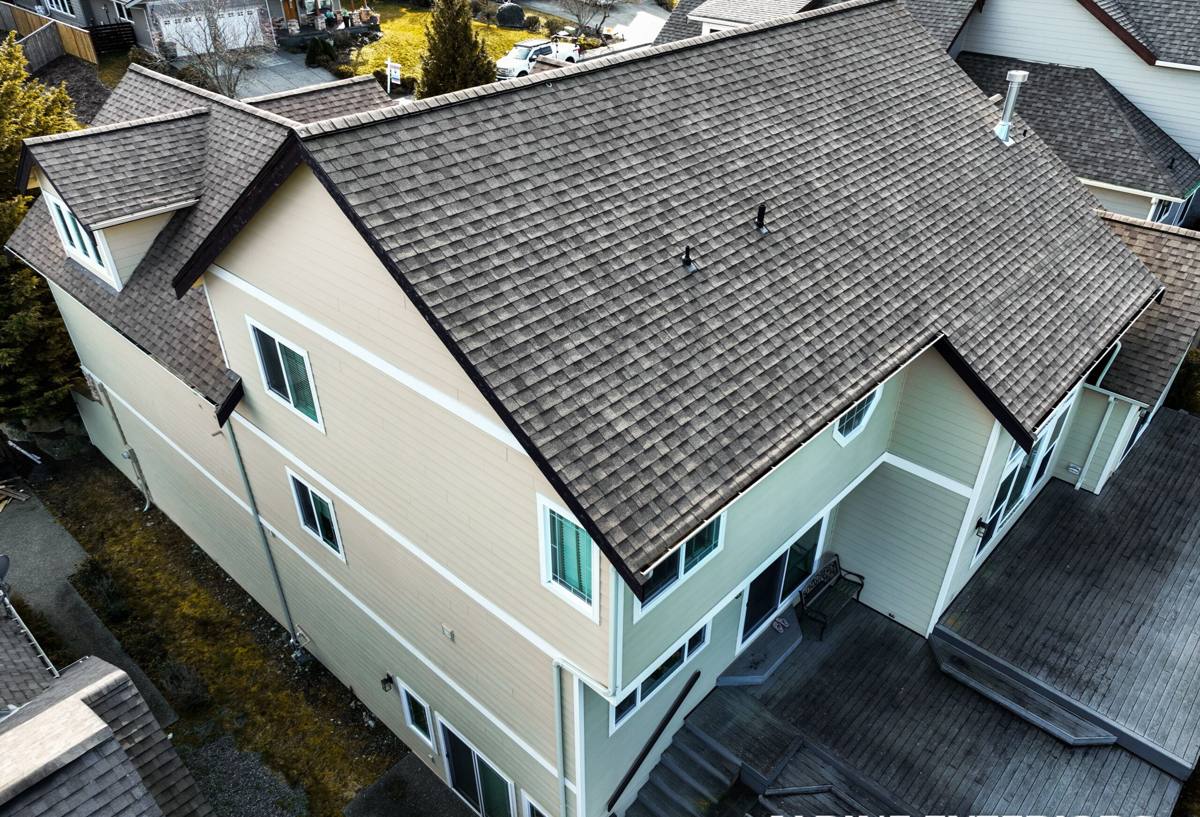
What Makes Sudden Valley's Lots Different
Three things come up again and again on decks in this community:
Heavy Tree Cover and Shade
Many lots back up to mature trees or wooded common areas. That's a big part of what makes the neighborhood attractive, but it also means less direct sun on the deck surface, slower drying after rain, and a steady supply of falling needles, leaves, and organic debris that feeds moss and algae growth between boards and in ledger areas.
Sloped and Uneven Terrain
A lot of Sudden Valley is built on hillside lots with a walkout basement or a deck that steps down from the main living level. That means more complex framing, taller support posts, and footings that have to be engineered for the actual slope rather than assumed flat ground.
Proximity to Lake Whatcom
Being close to the lake adds ambient humidity on top of the region's already wet fall and winter pattern. Wood surfaces near the water tend to stay damp longer than the same material would a few miles inland, which speeds up the timeline on rot, mildew staining, and fastener corrosion if the wrong materials are used.
Choosing Decking Material for a Shaded, Damp Lot
There's no single "best" decking material for every home, but on a shaded Sudden Valley lot, some options clearly hold up better than others. Here's how the common choices compare for this specific setting:
| Material | Moss & Moisture Behavior | Maintenance | Typical Lifespan Here |
|---|---|---|---|
| Cedar | Naturally rot-resistant but still needs sealing; moss will grow on shaded, unsealed boards | Annual cleaning and re-sealing recommended in shaded areas | 15-20 years with upkeep |
| Pressure-Treated Fir/Pine | Treated for rot but surface still absorbs moisture; prone to cupping and splintering in wet shade | Regular cleaning, periodic stain/sealant | 10-15 years in shaded conditions |
| Composite (capped) | Non-absorbent surface resists moss staining better, though algae can still form on the surface film | Occasional wash-down; no sealing or staining | 25-30+ years, manufacturer-backed |
For lots with heavy shade and slow drying, we lean toward capped composite or a well-ventilated wood system, because the maintenance burden of bare or lightly sealed wood in constant shade adds up fast. That said, plenty of homeowners want the look and feel of real wood, and that's a legitimate choice as long as everyone understands the sealing schedule it requires. Our job is to lay out the honest trade-offs — moisture behavior, upkeep, and cost — so the decision fits how you actually want to spend your weekends.
Framing and Structural Details That Matter Here
The decking surface gets the attention, but the framing underneath is what determines whether a deck lasts. On sloped, shaded Sudden Valley lots, a few details deserve extra care:
- Footings sized for the actual slope — not a flat-ground assumption, especially on walkout or hillside lots with taller support posts.
- Ledger board flashing that fully sheds water away from the house band joist, since this is the single most common failure point on older Pacific Northwest decks.
- Joist tape or flashing on top of every joist to keep fastener holes from becoming a slow leak point into the wood fibers.
- Proper board spacing to allow airflow and drainage between decking boards, which matters more in shade than in full sun.
- Elevated or ventilated framing under the deck where ground clearance is low, so moisture and moss don't build up unseen beneath the surface.
None of this is exotic work, but it's the kind of detail that gets rushed on a low-bid job. On a shaded lot, cutting corners here shows up as a soft spot or a moss-blackened joist within a few years instead of a couple of decades.
Moss, Mildew, and the Long Moss Season
Whatcom County's moss season can run from fall through spring, and a shaded Sudden Valley lot gets the full length of it. Moss and algae aren't just cosmetic — on wood decking they hold moisture against the board surface and accelerate rot, and on any material they make a deck genuinely slippery underfoot, which is a real safety issue on stairs and sloped walkways common in this neighborhood.
A well-built deck reduces this problem structurally: adequate board spacing, gaps that don't trap needles and leaf litter, and framing that allows airflow underneath. But no deck in this setting is entirely maintenance-free. We talk through a realistic seasonal care routine with every homeowner — when to sweep debris off the surface, how to safely clean moss without damaging the material's finish, and what warning signs (soft spots, dark staining, standing water) mean it's time for a look.
Our Process for a Sudden Valley Deck Project
1. Site Visit and Design
We walk the actual lot — slope, tree cover, drainage paths, and how the deck will tie into the house — before talking materials or layout. Shaded, sloped lots often need a different framing plan than a flat, open one, and we'd rather catch that at the design stage than mid-build.
2. Material and Layout Conversation
We go over decking options with the moss and moisture realities of your specific lot in mind, not a generic pitch. If your yard gets four hours of sun and the neighbor's gets ten, that difference should show up in the recommendation.
3. Permitting
Most new decks and significant rebuilds in Whatcom County require a building permit, and structural elements like footings and railings have to meet current code. We handle the permit process as part of the job so it isn't left for the homeowner to sort out.
4. Build
Framing first, with flashing and drainage details done before a single decking board goes down — those layers are invisible once the project is finished, which is exactly why they matter most.
5. Walkthrough and Care Guidance
Before we consider the job done, we walk the finished deck with you and go over what routine care looks like for your specific material and sun exposure.
Permits and Whatcom County Requirements
Decks above a certain height or attached to the home typically fall under Whatcom County's building code requirements, covering footing depth, guardrail height, stair geometry, and ledger attachment. Sudden Valley, as a private community, may also have its own architectural or design review process on top of county permitting. We factor both into the project timeline up front rather than discovering a review requirement partway through construction.
A Quick Checklist for a Properly Built Deck
- Footings sized for your lot's actual slope and soil, not a generic assumption
- Flashed ledger board where the deck attaches to the house
- Joist protection tape or flashing on every framing member
- Decking material matched honestly to your sun exposure, not just budget
- Board spacing that allows drainage and airflow in shaded conditions
- Code-compliant guardrails and stair geometry where required
- A clear seasonal maintenance plan handed to you at project completion
Why Local Experience on This Specific Neighborhood Matters
A deck built without accounting for Sudden Valley's tree cover, slope, and lake-driven humidity will show problems faster than the same design would somewhere else — even if the workmanship looks fine on the day it's finished. Crews who haven't worked this neighborhood before tend to treat every lot the same, and that's how moss, soft framing, and drainage problems show up years earlier than they should. We've built and repaired decks across Bellingham and Whatcom County long enough to know that the details that matter here aren't always the ones that matter everywhere else.
If you're planning a new deck or need an honest look at whether an existing one is holding up the way it should, we're happy to come take a look. There's a free, no-pressure estimate available through the form below — we'll walk your lot, talk through material options that fit your actual sun and shade conditions, and give you a straight answer on what the project involves.