 Bellingham Roofing
 Building New in Cordata? The Windows Are Not Where You Cut Corners
Cordata is one of the areas in north Bellingham where new construction and infill building have been steady — new homes going up alongside older ones, lots getting subdivided, builders working within tighter timelines than they'd like. When a house is framed and dried in, windows are one of the last big decisions before siding closes everything up. Get the install right at that stage and you won't touch it again for decades. Get it wrong, and the mistake gets buried behind trim and siding until it shows up as a stain on drywall or a soft spot under a sill, sometimes years later.
We install new-construction windows for homes going up in Cordata and the rest of Whatcom County. This page is about that specific job — not a general window pitch, but what actually matters when you're setting windows into new framing in this climate, in this neighborhood.
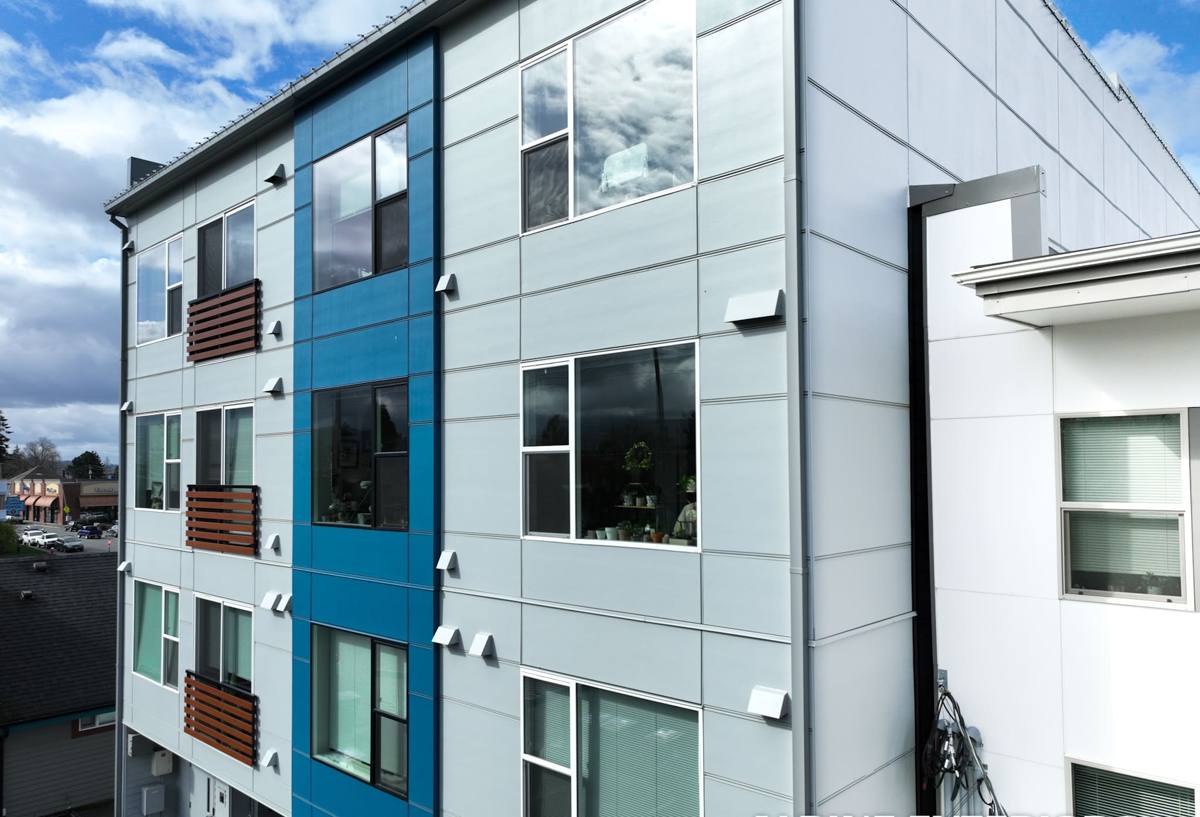
What Bellingham's Climate Actually Asks of a New Window
Whatcom County sits right where Puget Sound weather and marine air meet. That combination puts three specific demands on a new-construction window that a lot of generic install guides don't account for.
Salt Air and Coastal Moisture
Bellingham's proximity to salt water means metal components — hardware, fasteners, and cheaper cladding — see more corrosion pressure over time than the same products would inland. It's not dramatic, but it's constant. We pay attention to fastener material and hardware finish for that reason, not because a catalog says so, but because we've seen what a decade of marine air does to the wrong screw.
Driving Rain and Wind-Driven Water
This isn't a light-drizzle climate. Rain here regularly comes in sideways, driven by wind off the water, which means water gets pushed at a window opening from angles that a purely vertical rain never would. A new-construction install lives or dies on how well the flashing handles wind-driven water at the sill and the sides, not just at the top.
A Long Moss and Mildew Season
Cool, damp air for much of the year means anything that stays wet, stays wet a long time. Sills, jamb returns, and any exposed wood trim around a window opening are exposed to that dampness for months at a stretch. Detailing that sheds water quickly, rather than letting it sit, matters more here than it would in a drier climate.
New-Construction vs. Replacement Windows — Why the Install Method Matters
People sometimes use "new-construction window" loosely, but it specifically refers to a window with a nailing fin that gets installed into open, unfinished framing before siding goes on — as opposed to a replacement or pocket window, which gets fit into an existing frame after the fact. They're different products installed with different methods, and mixing them up on a new build creates problems.
| Factor | New-Construction (Nail Fin) | Replacement / Pocket |
|---|---|---|
| When it's used | Open framing, before siding and exterior finish | Existing window opening, finished walls intact |
| How it seals | Nailing fin integrates directly with the weather-resistive barrier and flashing tape | Fits inside old frame; relies on the old frame's condition and caulk/sealant |
| Long-term moisture control | Best possible, since flashing is built into the wall assembly from scratch | Only as good as the existing opening it's set into |
| Right fit for Cordata new builds | Yes — this is the correct product for framed, un-sided construction | Not applicable until the home is finished and eventually needs window replacement |
For a new build in Cordata, the nail-fin, new-construction window paired with correct flashing sequencing is simply the right tool for the job. The question isn't which type to use — it's whether the install crew treats the flashing sequence as seriously as it deserves.
What a Correct New-Construction Install Actually Involves
The window unit itself is only part of the job. The flashing and the way it integrates with the wall's weather-resistive barrier (WRB) is what actually keeps water out over the life of the house. A rushed or out-of-sequence install can look identical to a correct one from the outside — the difference only shows up years later.
- Sill pan flashing installed first, so any water that does get past the window has a sloped, sealed path back out rather than a place to pool.
- Back-dam or raised rear lip on the sill pan to stop water from running backward into the wall cavity.
- Correct shingle-lap sequencing — sill flashing first, then jamb flashing, then head flashing, each layer overlapping the one below it so water always sheds outward and downward, never up and in.
- Proper integration with the WRB (housewrap or equivalent), so the flashing ties into the rest of the wall's drainage plane instead of just sitting on top of it.
- Air-sealing and insulating the rough opening gap around the window frame, without over-compressing spray foam in a way that bows the frame.
- Level, plumb, and square setting of the unit itself, checked before fastening — a window that's slightly racked will bind, leak at the corners, or fail its own weatherstripping early.
None of this is unusual or exotic. It's standard trade practice. But it takes time and sequencing discipline, and on a job site under schedule pressure, it's exactly the kind of step that gets shortcut if the crew isn't deliberate about it.
Choosing Window Products for a Cordata Build
Product choice matters less than installation quality, but it's still worth getting right for this climate. Vinyl, fiberglass, and wood-clad units all show up in new Whatcom County construction, and each has real trade-offs rather than one obvious winner.
Vinyl is the most budget-friendly and performs well thermally, but quality varies a lot between manufacturers — cheaper vinyl can warp or discolor faster under UV and temperature swings. Fiberglass costs more but holds its shape and paint better over decades and handles our damp-to-dry seasonal swings with less movement. Wood-clad windows look great and perform well, but the exterior cladding still needs to be detailed correctly at the sill, since any gap in that cladding is a spot for moisture to find bare wood.
For energy performance, we look at U-factor and Solar Heat Gain Coefficient (SHGC) numbers rather than marketing terms. Bellingham's cooler, cloudier climate generally favors a lower U-factor for heat retention over aggressive solar heat gain control — we're not fighting intense summer sun the way a southern climate would be. We'll walk through the actual NFRC ratings on any unit we're quoting rather than just repeating a brand's talking points.
Cost Factors for New-Construction Windows in Cordata
Every new build is different, so we won't quote a number without seeing the plans, but these are the variables that actually move the price up or down.
| Factor | How It Affects Cost |
|---|---|
| Window count and size | Larger openings and more units are the biggest single driver of total cost |
| Frame material | Vinyl is generally most affordable; fiberglass and wood-clad cost more upfront |
| Glazing package | Double vs. triple pane, and low-E coatings, add cost but affect comfort and energy bills long-term |
| Opening complexity | Bay windows, odd angles, or large multi-slide doors take more labor and flashing detail than standard rectangular openings |
| Site access and timing | Coordinating install around a builder's framing and siding schedule can affect labor efficiency |
| Trim and finish scope | Whether we're also handling exterior trim work around the openings, or just the window unit itself |
Broadly, homeowners and builders should expect new-construction window packages to range from a modest per-opening cost for standard vinyl units up into a considerably higher range for larger fiberglass or wood-clad units with upgraded glazing. We'll give you a real, itemized number once we've seen the actual window schedule for your build.
How We Work With Builders and Homeowners on Cordata Builds
Most of our new-construction window work in this area comes in one of two ways: as a sub on a builder's schedule, or working directly with a homeowner who's managing their own build or acting as their own general contractor. Either way, the process looks similar.
We review the window schedule and rough openings against the actual units being ordered before anything shows up on site, so sizing problems get caught on paper instead of at install. We coordinate timing with the framing and WRB installation — windows need to go in after the wall is wrapped but before siding closes it up, and that window in the schedule can be tight. We install using the flashing sequence described above on every opening, not just the ones that are easy to reach. And we walk the finished install with whoever's managing the job before we move on, so any question about a specific opening gets answered while it's still open and visible.
Why a Crew That Already Works Cordata Matters
New-construction window flashing isn't unique to Cordata — the physics of water and wind don't change by neighborhood. But a crew that's already worked a number of jobs in this specific pocket of Bellingham knows the practical stuff: the kind of framing tolerances local builders tend to leave, how weather windows tend to break up a schedule here through the fall and winter, and what inspectors in this jurisdiction actually want to see at a rough-in check. That local familiarity doesn't replace good technique, but it does mean fewer surprises and fewer callbacks once the siding's closed up around the windows.
Pre-Install Checklist for a Cordata New Build
If you're a homeowner tracking your own build, or a builder bringing in an outside window crew, here's what should be true before window install day.
- Rough openings measured and confirmed against the actual ordered window sizes, not just the plan set
- Weather-resistive barrier (housewrap) installed and lapped correctly around each opening
- Sill pan flashing material on site and ready before the first window goes in
- A clear install sequence agreed on: sill, then jambs, then head, with proper overlap at each step
- Weather forecast checked — flashing tape and sealants need dry, moderate conditions to bond properly
- A walk-through plan for inspecting each opening before siding covers it up for good
If you're planning a new build or an addition in Cordata and want a straight answer on what your windows will actually cost and how the install will be sequenced, we're glad to walk the plans with you. Reach out for a free, no-pressure estimate using the form below.