 Bellingham Roofing
 Roofing in Ferndale: Built for the Weather That's Actually Here
Ferndale sits close enough to the water and open farmland north of Bellingham that its roofs take a different kind of beating than homes further inland. Salt-laden air moves in off the Strait and Bellingham Bay, long stretches of steady rain settle into every low-slope valley and gutter run, and shaded, moisture-heavy yards keep moss growing on shingles nearly year-round. None of that is unusual for Whatcom County, but it does mean a roof here ages differently than one in a drier climate, and it needs a contractor who treats that as normal, not as an afterthought.
We work on homes throughout Ferndale and the surrounding areas as part of our regular Bellingham-area service territory. That matters because roofing problems in this region tend to be climate-driven rather than random — moss intrusion, slow moisture infiltration, and corrosion on metal fasteners and flashing show up in predictable places if you know what to look for.
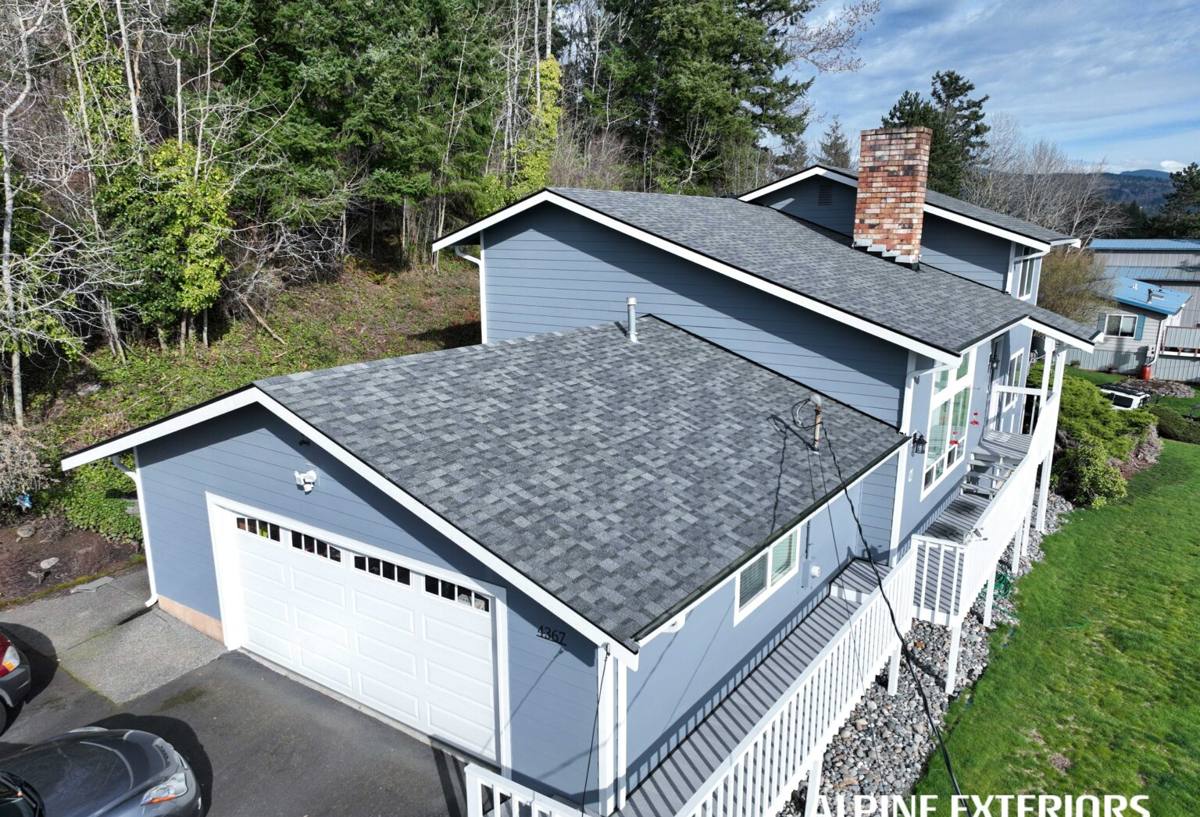
What Salt Air Does to a Roof
Homes closer to the water or open exposure get a steady, low-level dose of salt in the air. It's not dramatic on any single day, but over years it accelerates corrosion on anything metal — nails, flashing, gutter hangers, and exposed fasteners on metal roofing. Galvanized coatings wear down faster than they would inland, and once bare metal is exposed, rust follows.
Where We Check First
- Flashing around chimneys, skylights, and roof-to-wall transitions, where corrosion often starts before it's visible from the ground
- Exposed fastener heads on metal roofing panels
- Gutter hangers and end caps, especially on the windward side of the house
- Valley metal, which channels the most water and sees the most wear
When we replace or repair flashing and fasteners in salt-exposed areas, we favor corrosion-resistant materials and proper coatings as a matter of standard practice, not as an upsell. It's cheaper to spec it right the first time than to re-flash a chimney five years early.
Driving Rain and Roof Drainage
Whatcom County doesn't get the heaviest rainfall totals in the state, but it gets a lot of sustained, wind-driven rain — the kind that pushes water sideways under shingle edges and tests every seam in a roofing system rather than just sheeting straight down. A roof that would hold up fine in a light, vertical rain climate can still leak here if the underlayment, flashing laps, and shingle overlap aren't installed with that wind-driven pattern in mind.
Common Trouble Spots in Steady Rain
- Low-slope sections and dormers, where water has more time to find a way in
- Valleys with undersized or poorly lapped metal
- Roof penetrations — vent pipes, skylights, chimneys — where sealant and boot flashing degrade over time
- Gutters and downspouts that can't keep up with sustained volume, causing backup under the roof edge
We pay close attention to underlayment quality and flashing detail on every job here, because in this climate those details do more work than the shingle brand itself. A premium shingle installed with weak flashing will still leak; a modest shingle installed correctly, with attention to water path, generally won't.
Moss: The Slow, Steady Damage Nobody Notices Right Away
Moss season in this part of Washington isn't really a season — on shaded roofs it's closer to a permanent condition. Moss holds moisture against the roof surface long after the rain has stopped, which keeps shingles damp, degrades granule coating faster, and can work its way under shingle tabs and lift them over time. On cedar or wood-look products it's even more of a maintenance factor, since trapped moisture against wood accelerates rot.
Moss Management, Realistically
We don't treat moss removal as a one-time fix. It's an ongoing maintenance item for shaded roofs in this area, similar to cleaning gutters. Our approach:
- Gentle removal methods that don't strip granules or damage the shingle surface — no aggressive pressure washing on asphalt roofs
- Zinc or copper control strips near the ridge on roofs with recurring moss problems, which let rain carry trace metal down the roof surface and slow regrowth
- Trimming overhanging branches where practical, since shade and debris are the two biggest drivers of moss growth
- Regular inspection intervals for heavily shaded roofs, rather than waiting until moss is visibly thick
Left alone for years, moss-related moisture retention can shorten a roof's usable life meaningfully. Catching it early is far cheaper than dealing with the rot or leak that follows.
Roofing Materials: What Holds Up Here
There's no single "best" roofing material for every home — it depends on budget, roof pitch, sun/shade exposure, and how long the homeowner plans to stay in the house. What we can speak to honestly are the trade-offs, based on how each material behaves in a wet, moss-prone, salt-influenced climate.
| Material | Moisture & Moss Behavior | Salt Air Considerations | Typical Lifespan |
|---|---|---|---|
| Asphalt composition shingle | Good drainage when installed correctly; moss can lift tabs if untreated | Low risk — main exposure is at metal flashing and fasteners | 20–30 years, material dependent |
| Metal roofing (standing seam or panel) | Sheds water and moss well due to slick surface and steep effective pitch | Requires corrosion-resistant fasteners and coatings near the water | 40–50+ years with proper install |
| Cedar shake/shingle | Higher maintenance — retains moisture, more prone to moss and rot in shade | Not directly salt-sensitive, but moisture cycling is the bigger factor here | 20–30 years with regular maintenance |
| Synthetic/composite shingle | Resists moisture absorption well; low moss adhesion | Low risk — minimal exposed metal | 30–50 years depending on product |
For most Ferndale homes, we find asphalt and metal cover the majority of realistic budgets and performance needs. Cedar has real aesthetic appeal but comes with an honest maintenance commitment in a climate this wet — that's a trade-off we'll walk through directly rather than talk anyone out of a look they want without the full picture.
Repair vs. Replacement: How We Approach the Decision
Not every leak or moss patch means a new roof. Part of doing this job honestly is telling a homeowner when a targeted repair will hold for years versus when the roof has reached the point where repairs are just delaying an inevitable, more expensive replacement.
Signs a Repair Is Usually Enough
- Isolated flashing failure around one penetration or transition
- Localized moss damage caught before it's undermined multiple courses of shingles
- A gutter or drainage issue causing water intrusion, with the roofing material itself still sound
- Wind or storm damage limited to a small section
Signs Replacement Is the More Honest Answer
- Granule loss and shingle brittleness across most of the roof, not just one area
- Multiple past repairs in different locations, suggesting the underlayment itself is failing
- Visible sagging in the roof deck, which points to structural moisture damage
- A roof already past its expected service life for the material and local climate
We inspect before we quote either direction, and we'll say plainly when a repair is the right call, even if it's the smaller job.
Siding, Windows, and Decks: The Rest of the Exterior
Roofing problems in this climate rarely stay isolated to the roof. Water that gets past flashing at a roof-to-wall junction can travel down into siding and trim, and homes with moss or moisture issues on the roof often have related concerns at ground level — deck boards holding moisture, window flashing under stress from the same driving rain. Since we handle siding, windows, and decks in addition to roofing, we can look at an exterior as one connected system rather than treating each component in isolation. That's useful in a climate where water doesn't respect the boundary between "roofing scope" and "siding scope."
Why a Local Crew Matters for Ferndale Homes
A roofing contractor who works across Whatcom County regularly sees how Ferndale's mix of open exposure, coastal-influenced weather, and heavily treed residential lots plays out on real roofs — which flashing details fail first, which sides of a house take the worst of the wind-driven rain, which yards need moss control on a tighter interval than others. That kind of pattern recognition comes from being on local roofs consistently, not from a general knowledge of roofing systems.
It also means straightforward accountability — a crew based in the area, working under Washington contractor licensing, that's reachable if a question comes up after the job is done.
A Simple Maintenance Checklist for Ferndale Homeowners
- Have moss removed gently, not pressure-washed off, on any shaded roof section
- Check and clean gutters at least twice a year, more often under fir or cedar trees
- Have flashing around chimneys, skylights, and vents inspected every few years, especially on older roofs
- Watch for granule buildup in gutters — a sign of accelerating shingle wear
- Address small leaks quickly; sustained rain turns a small entry point into a bigger moisture problem fast
- Consider zinc or copper strips near the ridge if moss is a recurring, seasonal problem rather than a one-time issue
If your roof in Ferndale is showing moss, you've noticed a slow leak after a heavy rain, or it's just been a while since anyone's had a real look at it, we're happy to come out for a free, no-pressure estimate. The form below gets you started — we'll give you a straight assessment of what's actually going on and what your options are.