 Bellingham Roofing
 Building a Deck That Actually Holds Up in Ferndale
Ferndale sits close enough to the water and to Whatcom County's marine weather patterns that a deck built like it's going in a dry inland climate will disappoint you within a few years. Salt-tinged air off the Strait, driving rain that comes in sideways during fall and winter storms, and a moss season that can stretch from October through May all work against ordinary deck construction. A deck that looks right isn't the same as a deck that's built right for this specific place. The difference shows up in year three, not day one.
We build custom decks for homeowners throughout the Bellingham and Ferndale area, and the lessons that matter most here aren't generic decking advice you'd find in a big-box how-to guide. They're specific to what happens when untreated end grain sits wet for six months a year, or when a ledger board is flashed wrong and water gets behind the siding instead of off the deck.
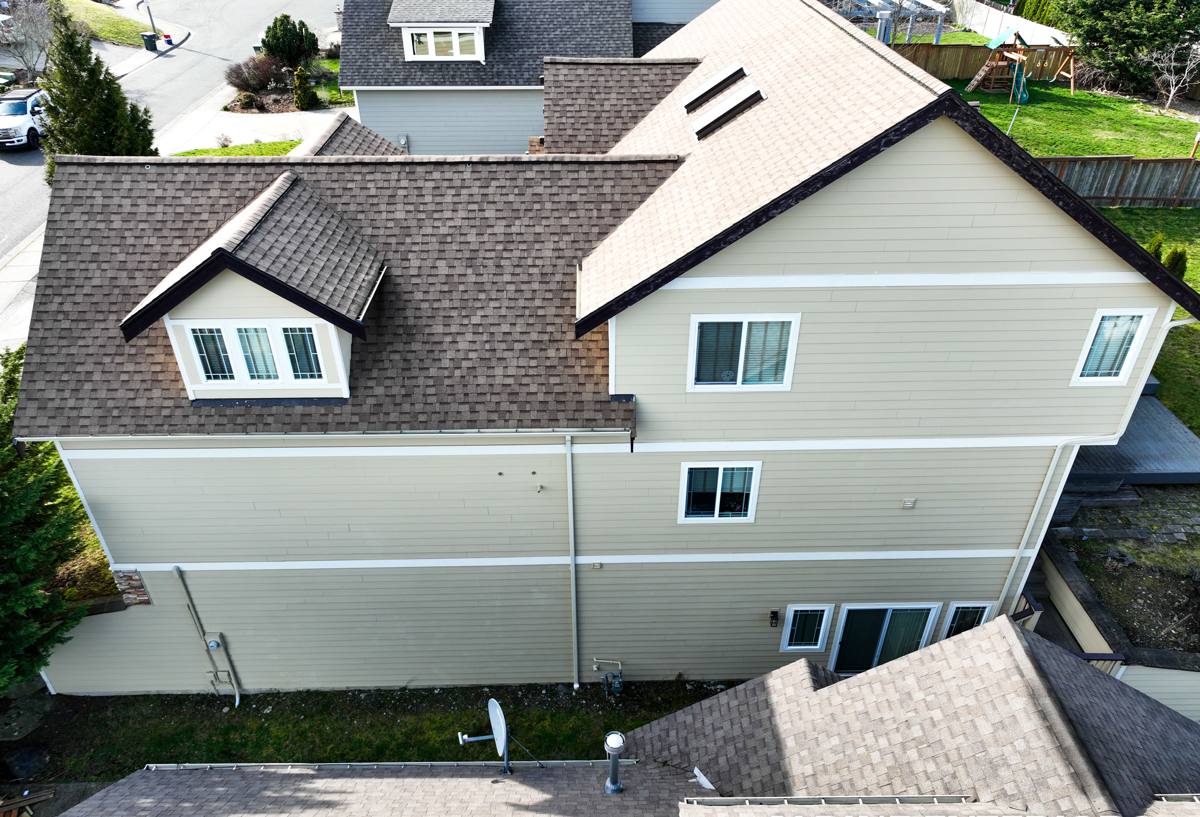
What Whatcom County Weather Does to an Ordinary Deck
Salt Air and Corrosion
Ferndale's proximity to Bellingham Bay and the Strait of Georgia means the air carries more salt than most inland Washington towns ever see. Salt accelerates corrosion in fasteners, hardware, and metal railing components. A deck built with standard electro-galvanized screws or basic zinc-coated joist hangers can start showing rust streaks and hardware failure well before the wood itself is due for replacement. Once a fastener corrodes, it loses holding strength quietly — you often don't see it until a board lifts or a railing post wobbles.
Driving Rain and Moisture Intrusion
Rain here doesn't just fall straight down. Wind-driven rain works its way into every gap, seam, and fastener hole that isn't properly sealed or flashed. On an attached deck, the ledger board connection to the house is the single most common source of hidden rot, because water gets trapped between the ledger and the band joist if flashing is missing or installed incorrectly. That damage happens inside the wall, out of sight, for years before anyone notices.
Moss and Algae Buildup
Long, wet, mild winters are ideal moss and algae conditions. On decking surfaces, moss holds moisture against the wood or composite cap, blocks proper drying between rain events, and creates a genuinely slick, dangerous walking surface — especially on stairs. Shaded areas under trees or on the north side of a house are the worst offenders, and they need to be planned for at the design stage, not treated after the fact with a pressure washer twice a year.
Choosing Decking Material for This Climate
There's no single "best" decking material — there's a best material for your budget, your maintenance appetite, and how much sun exposure the deck will get. Here's how the common choices actually perform in Ferndale's conditions:
| Material | Moisture Performance | Moss/Algae Resistance | Maintenance |
|---|---|---|---|
| Cedar | Naturally rot-resistant heartwood, but needs sealing to control checking and cupping | Moderate — needs regular cleaning in shaded spots | Annual cleaning, re-sealing every 2-3 years |
| Pressure-Treated Fir/Hem-Fir | Good with proper drying time before finishing; end cuts need field treatment | Moderate — same shaded-area risk as cedar | Annual cleaning, staining every 2-3 years |
| Composite (capped) | Excellent — non-porous cap resists water absorption | Better than wood, but still needs cleaning where moss spores collect | Occasional washing, no staining or sealing |
| PVC | Excellent — fully synthetic, no wood fiber to absorb moisture | Best of the group, still requires periodic washing | Lowest — washing only |
Composite and PVC decking cost more up front but eliminate the sealing and staining cycle that wood requires — which matters in a climate where moisture never fully lets up. Wood decking, done right, still has a place: it's less expensive initially and many homeowners prefer the look and feel, as long as they go in understanding the upkeep. We'll walk through the honest trade-offs for your specific project rather than pushing one product line.
The Structural Details That Actually Matter
Ledger Attachment and Flashing
For any deck attached to the house, the ledger board connection needs proper flashing — typically a metal flashing that directs water away from the ledger-to-house joint, combined with correct fastener spacing and, where called for, structural screws or through-bolts rated for the load. This is the detail most likely to be shortcut on a low-bid job, and it's the one that causes the most expensive hidden damage later.
Footings and Frost Depth
Footings need to be sized and set to the depth required for the soil and frost conditions in this part of Whatcom County, with proper drainage around the footing itself so water doesn't pool and heave the post over time. Undersized or shallow footings are a common source of a deck that develops a lean or bounce within a few years.
Fasteners and Hardware
Given the salt content in the air here, we spec stainless steel or heavy hot-dip galvanized fasteners and connectors rather than standard electro-galvanized hardware. It costs more per box, but it's the difference between hardware that lasts the life of the deck and hardware that starts corroding while the wood is still fine.
Joist Spacing and Board Direction
Joist spacing needs to match the decking material's span rating — composite and PVC products often require tighter joist spacing than solid wood to prevent flexing. Board direction and layout should also account for drainage, so water sheds off the surface instead of pooling in low spots.
Designing to Prevent the Moss Problem, Not Just Clean It Up
The best defense against moss is a deck designed for airflow and drainage from the start:
- Proper gapping between boards so water drains through instead of sitting on the surface
- Adequate ventilation underneath the deck so the framing and underside of decking can dry out between rain events
- Thoughtful placement relative to tree cover and shade, where possible, to reduce the damp, low-light conditions moss favors
- Drainage grading beneath the deck so water doesn't collect and stay wet against posts and footings
- Material choice that matches the site's sun exposure — a heavily shaded deck is a better candidate for composite or PVC than for wood
None of this eliminates the need for periodic cleaning, but it dramatically reduces how often and how aggressively you have to clean, and it protects the structural wood underneath from staying wet for months at a time.
Our Custom Deck Build Process
- On-site assessment — we look at sun exposure, drainage, existing structure (for attached decks), and how the space will actually be used before recommending anything.
- Design and material selection — we walk through material options, layout, railing style, and any built-in features (stairs, benches, privacy screening) with honest cost and maintenance trade-offs for each.
- Permitting — we handle the permit process with the appropriate local jurisdiction so the structure is inspected and code-compliant, which also matters for resale and insurance down the road.
- Demolition and site prep — removal of any existing deck and prep of footings and grading.
- Framing and structural work — footings, posts, beams, joists, and ledger flashing built to the standards this climate requires, not the minimum code allows.
- Decking, railing, and finish work — installation of the chosen decking material, railing system, stairs, and any trim or lighting.
- Final walkthrough — we review the finished deck with you, including care and maintenance guidance specific to the material you chose.
Permits and Local Code Considerations
Deck construction in and around Ferndale is subject to local building code review, and most decks above a certain height or size require a permit and inspection. Requirements can vary by jurisdiction within Whatcom County, so we confirm the specific requirements for your property's location before design work is finalized rather than assuming one set of rules applies everywhere. Skipping permitting on a deck that requires one can create real problems later — with insurance claims, with a future sale, or with an uninspected structure that wasn't actually built to code even if it looks fine.
What Affects Cost
| Factor | Why It Matters |
|---|---|
| Decking material | Wood costs less upfront; composite and PVC cost more but need far less long-term maintenance |
| Size and layout complexity | Multiple levels, angles, or built-in features add labor and material |
| Height off grade | Taller decks need larger footings, more substantial framing, and often stairs with landings |
| Railing style | Cable, glass, and composite railing systems cost more than standard wood or metal baluster railing |
| Site access and existing structure | Tear-off of an old deck, difficult site access, or tying into an existing structure affects labor time |
We give straightforward estimates based on your actual site and material choices, not a generic per-square-foot number that doesn't hold up once the real conditions are factored in.
Keeping Your Deck in Good Shape Long-Term
- Sweep debris off the deck regularly, especially fallen leaves and needles in shaded corners where moisture collects
- Clean moss and algae with an appropriate deck cleaner before it builds up into a slip hazard, particularly on stairs
- Check fastener and hardware condition annually, especially on railings and stair connections
- Re-seal or re-stain wood decking on the schedule appropriate to the product — waiting too long lets moisture back into the wood
- Keep gutters and downspouts near the deck clear so runoff isn't dumping extra water onto or under the structure
- Inspect the ledger flashing area periodically for any sign of staining or soft wood on the house side
Why Local Experience Matters for a Deck Build
A crew that already works in Ferndale and across Whatcom County knows which details are optional in a drier climate and which ones are not optional here — the ledger flashing, the fastener grade, the drainage and airflow underneath the structure. We've seen what happens when those details get skipped: hidden rot, corroding hardware, and moss-slick stairs within a few seasons. Building it right the first time, with materials and hardware suited to salt air and driving rain, costs less over the life of the deck than repairing shortcuts later.
If you're planning a new deck or replacing one that's showing its age, we're happy to walk your property, talk through material options honestly, and put together a free, no-pressure estimate using the form below.