 Bellingham Roofing
 Metal Roofing for Happy Valley Homes
Happy Valley sits close enough to Bellingham Bay and the surrounding greenbelt that its roofs deal with a specific combination of stresses: salt-tinged marine air, long stretches of steady rain, and shade from mature trees that keeps roof surfaces damp longer than homes further inland. A roof here isn't just shedding water — it's fighting moisture retention and organic growth for eight or nine months of the year. Metal roofing, installed correctly for this environment, handles all three of those problems better than most alternatives, but "installed correctly for this environment" is doing a lot of work in that sentence. Generic metal roofing know-how isn't enough. What matters is how the panels, fasteners, and underlayment are chosen and detailed for a neighborhood with Happy Valley's specific exposure.
This page covers what a metal roof needs to actually perform in this pocket of Whatcom County, what a correct installation looks like, and how we handle the job from first look to final walkthrough.
What Bellingham's Climate Does to a Roof in Happy Valley
Salt Air
Proximity to Bellingham Bay means airborne salt finds its way onto roof surfaces and fasteners, even a few miles inland. Salt accelerates corrosion on any exposed metal edge, screw head, or cut panel end that isn't properly finished or coated. Over years, an underspecified fastener or an untreated cut edge becomes the failure point — not the panel field itself.
Driving Rain
Western Washington rain doesn't fall straight down as often as people assume. Wind off the water pushes it sideways under eaves, into ridge caps, and up under poorly lapped panels. A roof that only handles vertical rain well will still leak here. Every lap, flashing, and penetration has to be detailed for wind-driven water, not just gravity drainage.
Moss and Organic Growth
Tree cover and consistent moisture make moss and lichen a near-guarantee on any roof surface that holds shade and damp for long periods. Moss isn't just cosmetic — it holds water against the roof surface, works into seams, and on some materials it can trap acidic organic debris that shortens the material's service life. Metal is naturally more resistant to sustained moss colonization than asphalt or wood, but it isn't immune, especially in valleys and shaded slopes where debris collects.
Why Metal Roofing Fits This Neighborhood
Metal roofing's core advantages line up well with what Happy Valley actually deals with:
- Smooth, hard surfaces give moss and moisture far less to grip onto compared to porous shingles.
- Proper steel or aluminum panels with a quality factory finish resist the coastal corrosion cycle better than raw or poorly coated metal.
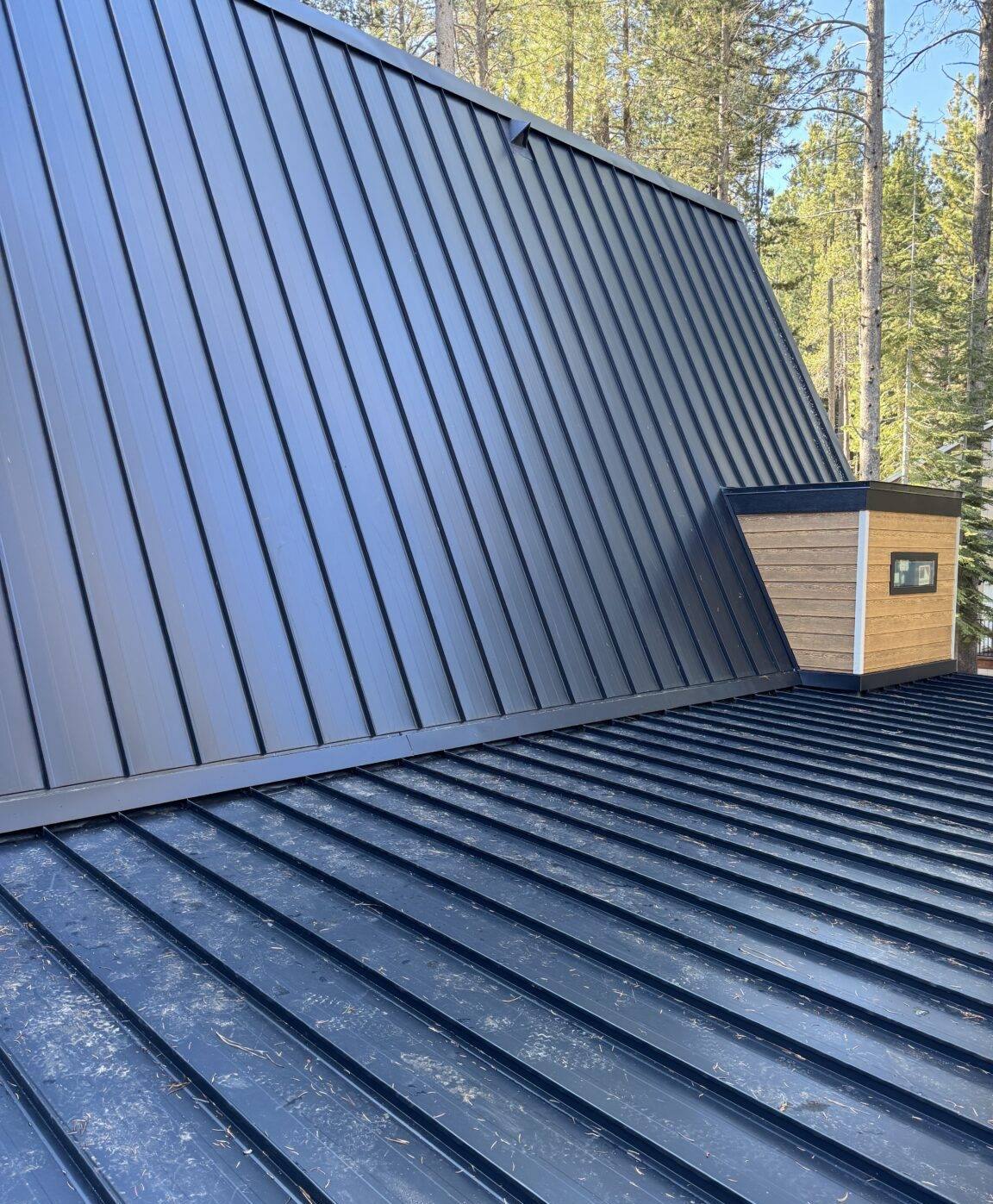
- Standing seam and concealed-fastener panel systems shed wind-driven rain more reliably because water never sits over an exposed fastener.
- A well-installed metal roof typically outlasts asphalt shingles by decades, which matters on a roof this hard to keep dry and clean.
None of that is automatic, though. The panel profile, fastener spec, and underlayment all need to be chosen with this specific climate in mind — a metal roof installed the same way you'd install one in a dry inland climate will underperform here.
What a Correct Metal Roof Installation Involves
Panel and Fastener Selection
For homes with real coastal exposure, we favor panel and fastener combinations with proven corrosion resistance in marine air — matched metals where possible, and quality factory finishes rather than bare or minimally coated material. Mixing incompatible metals (for example, certain fasteners against certain panel alloys) sets up galvanic corrosion that shows up years later as staining and pitting right at the fastener line.
Underlayment
Given how much rain this area sees, we don't treat underlayment as an afterthought. A synthetic, high-temp underlayment — with self-adhered membrane at eaves, valleys, and other water-concentration points — gives the roof a real second line of defense if wind ever drives water past a lap or a seam works loose over time.
Flashing and Penetration Details
Chimneys, vents, skylights, and wall-to-roof transitions are where most roof leaks actually start, metal or otherwise. Flashing has to be formed and lapped in the correct sequence with the panels — not caulked on after the fact — so water is always directed out and down, never trapped behind a joint.
Ventilation
Trapped moisture under a roof deck causes rot and mold regardless of what's on top of it. Proper intake and exhaust ventilation keeps the underside of the roof dry, which matters even more in a shaded, damp neighborhood like Happy Valley where the roof rarely gets a long dry stretch to fully air out.
Metal Roofing Options: A Practical Comparison
| Panel Type | Best For | Trade-offs |
|---|---|---|
| Standing seam (concealed fastener) | Long-term, low-maintenance performance in high-rain, salt-exposed settings | Higher upfront cost; requires an experienced install crew |
| Exposed-fastener panel | Budget-conscious projects, outbuildings, secondary structures | Fasteners need periodic inspection and eventual re-torque or replacement as gaskets age |
| Stone-coated steel | Homeowners wanting a traditional shingle or shake look with metal's durability | More installation steps; cost sits between exposed-fastener and premium standing seam |
We don't push one system on every home. The right choice depends on roof pitch, how much wind-driven rain a given elevation actually sees, tree cover, and budget. On homes with heavy tree canopy and valley-style water concentration, we lean toward standing seam because there are simply fewer joints for water and debris to work into over time.
Cost Factors Homeowners Should Understand
We won't quote a number without seeing the roof, but the honest range for metal roofing runs well above asphalt shingles — often 2 to 4 times the material and labor cost — with the payoff being a service life that can run several decades longer when installed correctly. What actually moves the price on a given Happy Valley home:
| Factor | Why It Matters |
|---|---|
| Panel system chosen | Standing seam costs more than exposed-fastener panel per square |
| Roof complexity | Valleys, dormers, and multiple penetrations add flashing labor |
| Tear-off vs. overlay | Removing an old roof to inspect the deck adds cost but avoids hiding rot |
| Access and pitch | Steep or tight-access roofs take longer and need more safety setup |
| Ventilation upgrades | Adding proper intake/exhaust venting during the reroof is cheaper than doing it later |
Our Process on Happy Valley Homes
1. On-Site Inspection
We look at the whole system, not just the roof surface — deck condition, existing ventilation, moss and moisture patterns, and how water currently moves off the roof during rain.
2. Straight Recommendation
We tell you what the roof actually needs, including if a full metal reroof isn't the most cost-effective answer for your situation. If repair or a different material makes more sense for your budget and timeline, we'll say so.
3. Written Estimate
You get a clear scope: panel type, underlayment, flashing approach, ventilation plan, and timeline — no vague line items.
4. Installation
Proper deck prep, correct underlayment and flashing sequencing, and panel installation matched to your roof's pitch and exposure.
5. Final Walkthrough
We walk the finished roof with you, cover basic maintenance expectations, and answer questions before we consider the job done.
Why a Crew That Already Works in Happy Valley Matters
Roofing crews without local experience often bring a generic install approach that doesn't account for this area's specific mix of salt exposure, sustained rain, and moss pressure. A crew that regularly works Bellingham and Whatcom County neighborhoods like this one already knows which details matter here — how far to carry ice-and-water protection at valleys given our rain patterns, which fastener and panel combinations hold up against coastal air, and how tree cover on a given lot changes the moss and debris plan. That local pattern recognition is the difference between a metal roof that looks right on day one and one that still performs correctly after fifteen wet Whatcom County winters.
Simple Maintenance Checklist for Metal Roofs in This Climate
- Clear debris and overhanging branches at least once or twice a year, especially before the fall rains start
- Check gutters and downspouts regularly — clogged gutters back water up under eave flashing
- Look for moss or algae staining in shaded valleys and north-facing slopes and address it before it spreads
- Have flashing around chimneys, vents, and skylights inspected periodically, since these are the most common leak points
- Watch for any fastener or seam that looks disturbed after major windstorms
If you're weighing a metal roof for a home in Happy Valley, we're glad to take a look and give you a straightforward assessment — no pressure, no obligation. Use the form below to request a free estimate and we'll get back to you to schedule a time to come take a look.