 Bellingham Roofing
 Composite Decking Built for Blaine's Coastal Conditions
Blaine sits right on the water at the northern edge of Whatcom County, and that location shapes everything about how an outdoor deck ages here. Salt-laden air off the Strait of Georgia and Boundary Bay settles on every exposed surface, driving rain comes in sideways for months at a time, and the shoulder seasons bring long stretches of damp, low-light weather that keeps surfaces wet longer than they'd stay wet almost anywhere else in the state. Wood decking in this environment needs constant upkeep to avoid rot, splintering, and mildew staining. Composite decking was built to handle exactly this kind of exposure, but only when it's specified and installed correctly for the site. We install composite decking for homeowners in Blaine who want a deck that looks good and stays structurally sound through another wet Pacific Northwest winter without the annual sanding, staining, and sealing routine that wood demands.
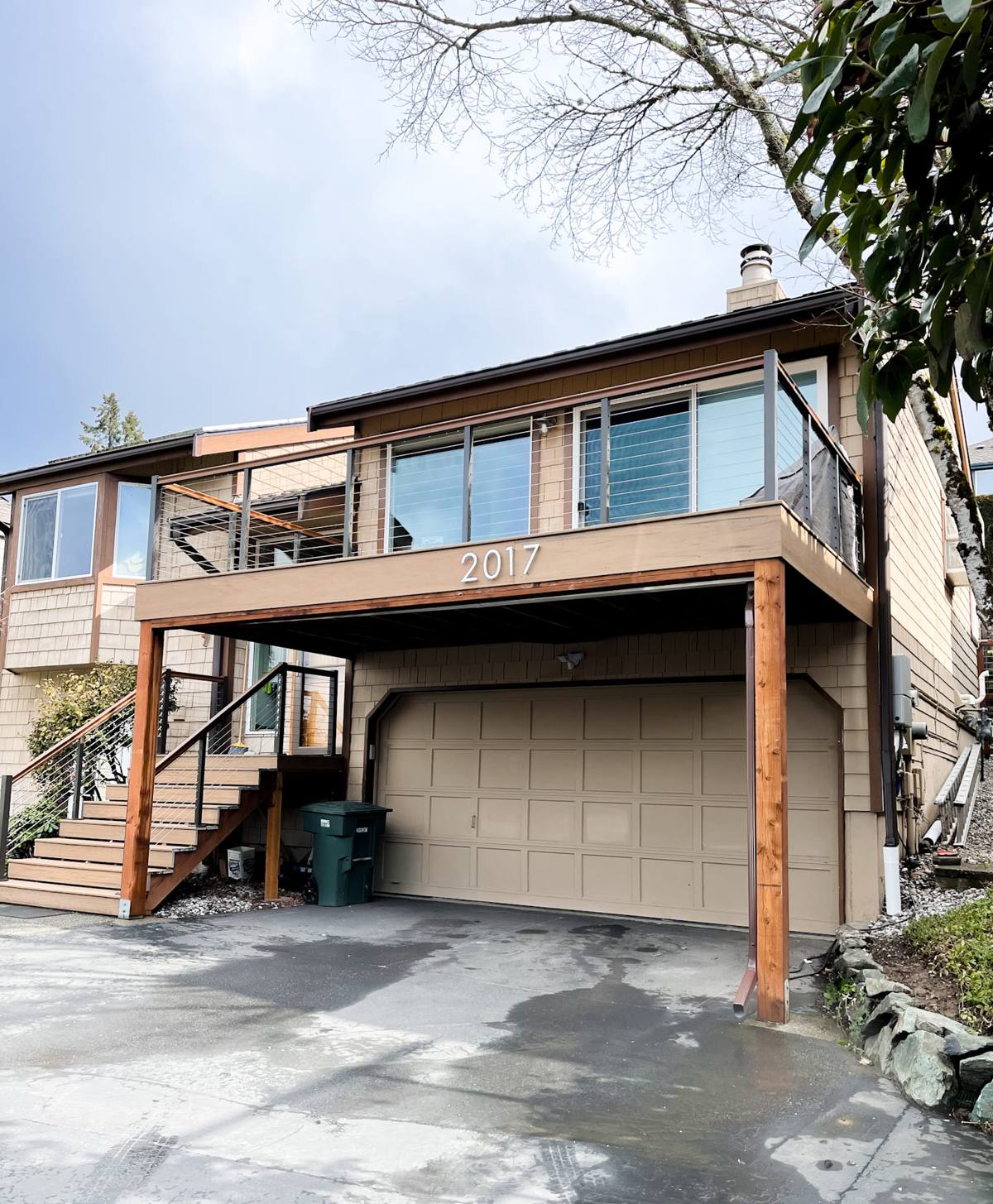
Why Composite Makes Sense in a Salt-Air Environment
Composite decking is made from a blend of wood fibers and recycled plastics, capped on most modern boards with a protective polymer shell. That shell is the part that matters most in Blaine. It doesn't absorb moisture the way raw wood does, it doesn't provide the organic material that moss and algae need to take hold, and it doesn't react with salt residue the way bare or painted wood can over time. That doesn't mean composite is maintenance-free — it still needs periodic washing to keep salt film and organic growth from building up on the surface — but it removes the rot risk entirely and cuts the maintenance burden down to occasional cleaning instead of yearly refinishing.
What Salt Air Actually Does to a Deck
Salt doesn't just sit on the surface. Airborne salt combines with the region's near-constant humidity to accelerate corrosion on any exposed metal fasteners, hinges, and railing hardware, and it can leave a fine white residue on dark-colored decking that some homeowners mistake for mold. On wood decks, salt exposure speeds up the breakdown of the wood's natural fibers and interferes with how well stains and sealants bond, which is part of why wood decks near the water in Blaine tend to need refinishing more often than the same deck would inland. Composite boards resist this because the moisture and salt can't penetrate past the cap, but the fasteners, brackets, and any exposed metal components still need to be marine-grade or stainless to hold up the same way.
What a Correct Composite Deck Build Involves in This Climate
A composite deck is only as good as the substructure underneath it, and in Blaine's wet climate that substructure does most of the work of keeping the whole system durable. We build the framing with attention to drainage first, because standing water under a deck is what eventually causes joist rot, hardware corrosion, and mold buildup — even when the visible decking on top is fully synthetic.
Framing and Substructure
- Pressure-treated or composite joists sized and spaced to the board manufacturer's specifications, not just local code minimums
- Joist tape or a moisture barrier on top of every joist to stop water from wicking into the wood framing
- Positive slope away from the house so water sheds instead of pooling under the deck surface
- Ledger board flashing detailed to keep wind-driven rain from working its way behind the house wall
- Stainless steel or coated fasteners rated for coastal exposure, including all brackets and hangers
- Adequate ventilation underneath low-clearance decks so trapped moisture has somewhere to go
Board Selection and Layout
Board spacing has to account for the region's humidity swings — composite expands and contracts with temperature and moisture more than most homeowners expect, and gaps that are too tight will buckle over a wet winter while gaps that are too wide invite debris and standing water between boards. We also pay attention to color choice on this coast: darker composite boards absorb more heat and can accelerate the drying-and-swelling cycle at butt joints, so we talk through color and finish options with an eye toward how the deck will actually perform here, not just how it looks in a showroom.
Our Process for a Blaine Composite Decking Project
- On-site assessment: We look at drainage around the foundation, sun and wind exposure, existing structure condition if it's a replacement, and how close the site sits to open water or exposed shoreline.
- Design and material selection: We walk through board brands, colors, and railing systems, and explain the real trade-offs of each option for this specific site rather than pushing one product line.
- Permitting: Deck projects in Blaine typically require a building permit depending on height and attachment to the house; we handle that paperwork as part of the job.
- Demolition (if replacing an existing deck): Old wood decking and any compromised framing are removed and hauled off, and we inspect the ledger and framing underneath before building back.
- Framing and moisture-proofing: This is where the long-term durability of the deck is actually decided, and we don't rush it.
- Composite board installation: Hidden fastener systems where possible for a clean surface with no exposed screw heads to trap moisture and grime.
- Railing, stairs, and trim: Matched to the decking system and detailed so water sheds off every horizontal surface.
- Final walkthrough: We go over care basics with the homeowner before we consider the job done.
Composite vs. Wood vs. PVC: A Straight Comparison for This Climate
| Factor | Wood | Composite | PVC |
|---|---|---|---|
| Moisture resistance in coastal air | Poor without ongoing sealing | Strong — capped boards resist water and salt | Very strong, fully synthetic |
| Maintenance in a wet climate | Annual cleaning, sanding, staining | Occasional washing | Minimal washing |
| Moss and algae resistance | Low — organic surface invites growth | Good on capped boards | Good |
| Upfront cost | Lowest | Mid-range | Highest |
| Long-term cost over 15-20 years | Highest, due to repeated refinishing and repair | Lower — infrequent upkeep | Lowest ongoing cost, higher entry price |
| Appearance options | Natural wood grain, fades over time | Wide range of wood-look colors, holds color well | Solid colors, consistent look |
Where Homeowners Run Into Trouble
Most composite decking problems we get called out to inspect in this area trace back to installation shortcuts rather than the product itself — a substructure that wasn't properly moisture-barriered, boards installed without the manufacturer-specified gap, or fasteners that weren't rated for salt exposure and started corroding within a few seasons. These issues don't show up right away, which is part of the problem; they surface two or three winters in, once moisture has had time to work its way into the framing. That's why we treat the parts of the deck nobody sees — the joists, the flashing, the fastener spec — as seriously as the visible decking surface.
Signs an Existing Deck Needs Attention
- Soft or spongy spots underfoot, which usually mean the framing underneath has taken on water
- Visible rust streaking near fastener heads or brackets
- Boards that have cupped, buckled, or separated at the seams
- Persistent moss or algae film that returns quickly after cleaning
- Railings that feel loose at the post connections
Cost Factors for a Blaine Composite Deck
Every project is different, but the main cost drivers we see on composite decking jobs in Blaine and the surrounding area are consistent: overall square footage, whether it's new construction or a tear-out and replace, the height and complexity of the substructure, board brand and tier selected, and how much railing and stair work is involved. A straightforward, low-clearance composite deck replacement generally lands in a lower cost range than a multi-level deck with custom railing, cable systems, or built-in features. We give homeowners a firm, itemized quote after the site visit rather than a rough number over the phone, because the framing condition and drainage work often change the scope once we're actually looking at the site.
Why Hire a Crew That Already Works This Area
A contractor who works Whatcom County's coastal communities regularly already knows how far the moss season runs, how aggressive the salt exposure is this close to the water, and which fastener and flashing details actually hold up here versus what looks fine on paper. That local knowledge shows up in decisions a homeowner never sees — the moisture barrier detail at the ledger, the fastener grade, the drainage slope — but it's exactly what determines whether a composite deck still looks and performs the way it should in ten years. We build decking for homes throughout Bellingham and Whatcom County, and Blaine's shoreline exposure is part of what we plan for from the first site visit, not an afterthought.
If you're weighing a new composite deck or need to replace one that's showing its age, we're happy to come take a look and walk the site with you. Reach out for a free, no-pressure estimate using the form below.