 Bellingham Roofing
 Siding Built for Puget's Weather, Not Just Its Curb Appeal
Puget homes sit close enough to Bellingham Bay and the Whatcom County shoreline that siding has to do more than look good. It has to shrug off salt-laden air, take a beating from sideways rain nine months out of the year, and resist the moss and algae that colonize anything that stays damp too long. A lot of siding products can handle one of those. Very few handle all three for decades without babysitting. That is the exact problem fiber cement siding was engineered to solve, and it is the only siding material we install on Puget homes.
We are not a general contractor who happens to do siding on the side. Siding installation, specifically James Hardie fiber cement, is what our crew does, and we have done it on enough homes in this corner of Whatcom County to know what the local weather does to a wall assembly over time. This page is about what that means for a Puget home specifically — not a generic rundown of what fiber cement siding is.
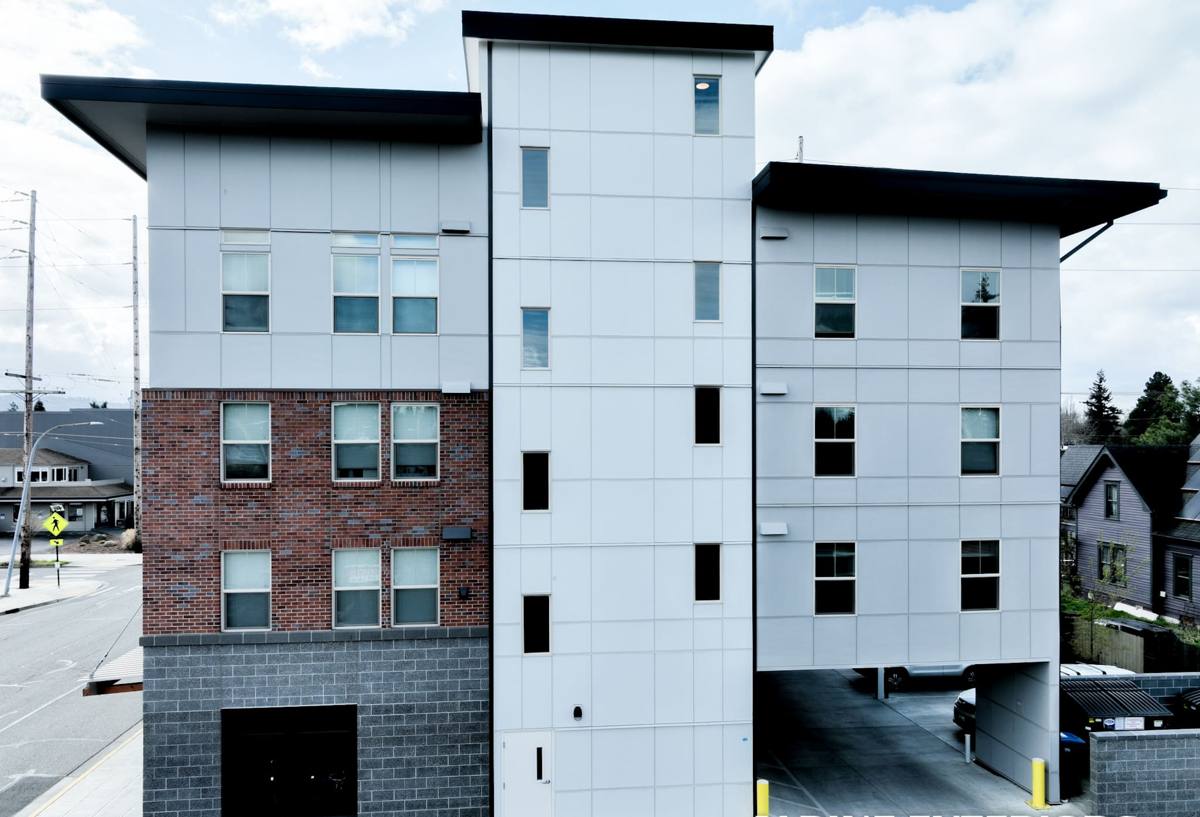
What Puget's Climate Actually Does to Siding
Salt Air and Metal Fasteners
Proximity to the bay means airborne salt settles on every exterior surface, including fasteners, flashing, and trim. Untreated or undersized fasteners corrode faster here than they would ten miles inland. This is a detail most homeowners never think about until a streak of rust starts bleeding through paint years later. It is also one of the first things we check when we look at an install — the fastener spec matters as much as the siding itself.
Driving Rain and Wind-Driven Moisture
Bellingham's rain rarely falls straight down. Wind off the water pushes it sideways into walls, which means water intrusion happens less through open surfaces and more through gaps — poorly lapped joints, unsealed penetrations, trim that was caulked instead of properly flashed. A siding material that swells, warps, or wicks moisture at the seams will fail here faster than it would in a drier, calmer climate.
Moss, Algae, and the Long Damp Season
Whatcom County's mild, wet stretch from fall through spring gives moss and algae a long runway to establish themselves on any surface that holds moisture. Wood-based sidings are especially vulnerable because organic growth feeds on the material itself, not just sits on top of it. Fiber cement doesn't give moss the same foothold, and a factory-applied finish resists the staining that makes older siding look tired and dirty even when it's structurally fine.
Why We Only Install James Hardie
Fiber cement is a category, but not all fiber cement is built the same. We standardized on James Hardie specifically because of how it performs in exactly the conditions Puget deals with:
- Non-combustible core — a real safety advantage over wood-based and some composite sidings.
- HZ5 engineered formulation — Hardie's climate-specific product lines are built to handle wet, humid regions like ours rather than a one-size-fits-all mix.
- ColorPlus factory finish — baked-on color that resists fading and chipping far better than field-applied paint, which matters when you're fighting salt air and constant moisture.
- Dimensional stability — it does not swell, cup, or rot the way wood and some engineered wood products can when they take on repeated moisture.
- Strong transferable warranty — backed by decades of real-world performance data, not a marketing promise.
We get asked fairly often why we don't offer LP SmartSide, vinyl, or cedar as cheaper alternatives. The honest answer is that we have looked closely at what each of those materials asks of a homeowner over a 20-30 year horizon in this climate — the maintenance, the moisture sensitivity, the repainting cycles — and we would rather stand behind one product we trust completely than offer options we'd have reservations about recommending to our own neighbors.
What a Correct Fiber Cement Install Involves
Fiber cement siding is only as good as its installation. A rushed or undertrained crew can take a great product and turn it into a callback-generating problem. On a Puget home, we pay particular attention to:
- Water-resistive barrier and flashing — the house wrap and flashing details behind the siding do the real waterproofing work; the siding is the second line of defense, not the only one.
- Proper clearances — Hardie specifies minimum gaps between siding and grade, roofing, decks, and other transitions. Skipping these is one of the most common causes of moisture damage we see on older installs.
- Correct fastener pattern and corrosion-resistant fasteners — especially important this close to the water.
- Proper joint treatment and caulking — lapped and sealed to shed wind-driven rain rather than trap it.
- Manufacturer-specified nailing and blind-nailing where called for — so panels stay tight and don't telegraph fastener heads over time.
Every one of these is a Hardie installation requirement, and every one of them is easy to shortcut if a crew is moving fast or isn't specifically trained on fiber cement. It's also why DIY and general handyman installs on this product tend to age poorly, even when the material itself is excellent.
Our Process on a Puget Home
1. On-Site Assessment
We walk the exterior, check the current siding and any moisture damage, and look at trim, flashing, and drainage details specific to your home's exposure to wind and rain direction.
2. Scope and Product Selection
We walk you through Hardie's plank, panel, and shingle options and help you pick a profile and ColorPlus finish that fits the home and the neighborhood, without overselling upgrades you don't need.
3. Tear-Off and Substrate Check
Old siding comes off, and we inspect the sheathing underneath for rot or moisture damage before anything new goes up. This step gets skipped by corner-cutting crews and it is the single most important part of the job.
4. Water-Resistive Barrier and Flashing
We install or verify the house wrap and flashing at every window, door, and penetration before the first plank goes on.
5. Installation to Manufacturer Spec
Fastener type, spacing, clearances, and joint treatment all follow James Hardie's published installation guidelines — not shortcuts.
6. Final Walkthrough
We review the finished work with you, check caulking and trim details, and make sure the job matches what was scoped.
Comparing the Real Options for a Puget Home
| Material | Salt Air / Moisture Resistance | Moss & Algae Resistance | Long-Term Maintenance |
|---|---|---|---|
| James Hardie Fiber Cement | Strong — non-combustible, engineered for wet climates | Strong — factory finish resists staining | Low — no repainting cycle with ColorPlus |
| Vinyl Siding | Moderate — can warp or crack in temperature swings | Moderate — surface growth still occurs | Low upfront, but limited lifespan and fading |
| Cedar / Primed Wood | Weak — absorbs moisture, prone to rot near the coast | Weak — organic material feeds growth | High — regular painting, sealing, and repair |
| LP SmartSide (engineered wood) | Moderate — better than raw wood, still moisture-sensitive at edges | Moderate — depends on finish maintenance | Moderate — edge sealing and repainting over time |
What Drives Cost on a Job Like This
Every Puget home is different, so we don't quote sight-unseen, but the main cost factors are consistent:
- Square footage and the complexity of the home's shape (corners, dormers, trim detail add labor)
- Condition of the existing sheathing once old siding comes off
- Whether tear-off and disposal of old siding is needed
- Plank profile, texture, and ColorPlus color selection
- Accessibility — height, landscaping, and site conditions that affect scaffolding or lift needs
We'll walk your home in person and give you a real number tied to your project, not a generic per-square-foot estimate that changes once we see the walls.
Why Hiring a Crew That Already Works Puget Matters
A crew that only occasionally works this close to the water can miss the details that matter here — fastener corrosion resistance, clearance from grade in a wetter microclimate, flashing details tuned for wind-driven rain rather than straight-down rainfall. We've installed and inspected enough siding around Bellingham and the surrounding Whatcom County shoreline to know which failure points show up first in this specific environment, and we build the install around avoiding them from day one rather than fixing them in five years.
If you're weighing a siding replacement or new construction siding in Puget, we're happy to take a look and give you a straightforward, no-pressure estimate — what we'd recommend, what it would involve, and a real number, no obligation to move forward.