 Bellingham Roofing
 Roofing in Columbia: Built for What Bellingham Weather Actually Does
Columbia is one of Bellingham's older, well-established neighborhoods, and that means a lot of its housing stock has been through decades of Pacific Northwest weather. If you own a home here, you already know the drill: gray drizzle for months at a stretch, occasional windstorms off Bellingham Bay, and that persistent green film that creeps across north-facing roof slopes no matter how careful you are. Roofing in this part of Whatcom County isn't about surviving one bad storm — it's about holding up to a slow, steady grind of moisture that never really stops.
We work on roofs throughout Columbia and the surrounding Bellingham area, and the patterns repeat house after house: moss buildup in shaded valleys, gutters that overflow during heavy rain events, and roof decking that's taken on hidden moisture damage long before anyone notices a leak inside. A roof here has to manage water, not just shed it once and call it done.
What Bellingham's Climate Does to a Roof
Salt Air and Metal Fatigue
Being close to the water means homes in and around Columbia deal with a low-grade dose of salt air carried in on marine winds. It's not the same intensity you'd see right on the waterfront, but it's enough over time to accelerate corrosion on exposed metal — flashing, fasteners, vents, and gutter hardware. Cheaper or improperly coated metal components tend to show rust and pitting years before they should. We pay attention to metal quality and fastener specification on every roof we touch here, because replacing a roof covering long before the metal underneath is a common and avoidable expense.
Driving Rain and Wind-Driven Water
Bellingham doesn't usually get the kind of violent downpours you'd see elsewhere, but it makes up for that with duration and wind direction. Rain here often comes in sideways during winter storms, which means water gets pushed up under shingle edges, around chimney flashing, and into any gap that a fair-weather roof detail might get away with elsewhere. Roof valleys, step flashing along walls, and any roof-to-wall transition are the spots that fail first when the underlying workmanship is thin.
Moss, Shade, and Slow Decay
Columbia has plenty of mature trees, which is part of the neighborhood's character — and part of what makes moss such a persistent issue. Shaded roof sections stay damp far longer after a rain than sun-exposed ones, and moss doesn't just look bad. It lifts shingle edges, holds moisture against the roofing material, and works its way into seams over a few seasons. Left unchecked, moss can shorten the useful life of an asphalt shingle roof by years.
Common Roofing Materials We Work With
| Material | Typical Lifespan Here | Moss/Moisture Notes |
|---|---|---|
| Asphalt composition shingle | 20–30 years | Most affordable; needs periodic moss treatment and gutter maintenance |
| Architectural/dimensional shingle | 25–35 years | Heavier profile sheds water better in wind-driven rain; still needs moss upkeep on shaded slopes |
| Standing seam metal | 40–50+ years | Sheds moss more easily due to smooth surface; fastener and coating quality matter near the water |
| Cedar shake | 20–30 years with upkeep | Attractive but higher maintenance in a wet climate; needs consistent ventilation and treatment |
None of these materials is automatically the "right" choice — it depends on your roof's exposure, your budget, how long you plan to stay in the home, and how much upkeep you want to take on. We'll walk through the honest trade-offs for your specific roof rather than push whatever's easiest to sell.
Roof Replacement vs. Repair: How We Help You Decide
Not every roofing problem in Columbia needs a full tear-off. A lot of what we see is isolated: a section of flashing that's failed, a few damaged shingles from wind, or a moss-related soft spot that's still contained. We inspect the whole roof before recommending anything, because a leak in one spot is sometimes a symptom of a bigger issue elsewhere — deteriorated underlayment, inadequate attic ventilation, or age-related granule loss across the whole field.
Signs a Repair Is Usually Enough
- Isolated leak tied to a specific flashing point, vent boot, or damaged shingle section
- Roof is under 15 years old with no widespread granule loss
- Moss is present but hasn't lifted shingles or caused visible sagging
- No signs of soft decking or interior water staining beyond one localized area
Signs Full Replacement Makes More Sense
- Roof is at or near the end of its expected material lifespan
- Multiple leaks or water stains across different rooms
- Widespread granule loss, curling, or brittle shingles
- Soft or spongy decking found during inspection
- Previous repairs have been patchwork and are starting to compound
Ventilation and Moisture Control Matter as Much as the Roof Covering
A roof surface is only part of the system. In a climate as consistently damp as Bellingham's, attic ventilation and moisture management underneath the roofing material often determine how long that roof actually lasts. Poor ventilation traps warm, moist air against the underside of the decking, which can lead to rot, mold, and premature failure of the roofing material from below — problems that aren't visible from the ground and don't show up until they're serious. When we're on a roof for an inspection or a replacement, we look at soffit and ridge ventilation, not just the shingles themselves.
How We Approach a Roofing Project
Every project starts with an honest, no-pressure walk-through. We look at the roof itself, the attic space where accessible, gutters and drainage, and any trouble spots you've already noticed. From there we give you a straightforward assessment — what's actually wrong, what your realistic options are, and roughly what each path costs, without pushing you toward the most expensive answer.
During a re-roof, we pay close attention to the details that matter most in this climate: proper underlayment for wind-driven rain, correctly lapped and sealed flashing at every wall and chimney transition, and fastener patterns that hold up under coastal wind exposure. These aren't upgrades — they're the baseline of doing the job right in Whatcom County.
Cost Factors for a Columbia Roof Project
| Factor | Why It Matters Here |
|---|---|
| Roof pitch and access | Steeper or hard-to-access roofs take longer and require more safety setup |
| Number of layers to remove | Older homes sometimes have multiple roofing layers that need full tear-off |
| Flashing complexity | Homes with multiple roof planes, dormers, or chimneys need more detail work |
| Decking condition | Moisture damage found during tear-off may require decking replacement |
| Material choice | Asphalt, metal, and cedar carry different material and labor costs |
Siding, Windows, and Decks: The Rest of the Exterior Picture
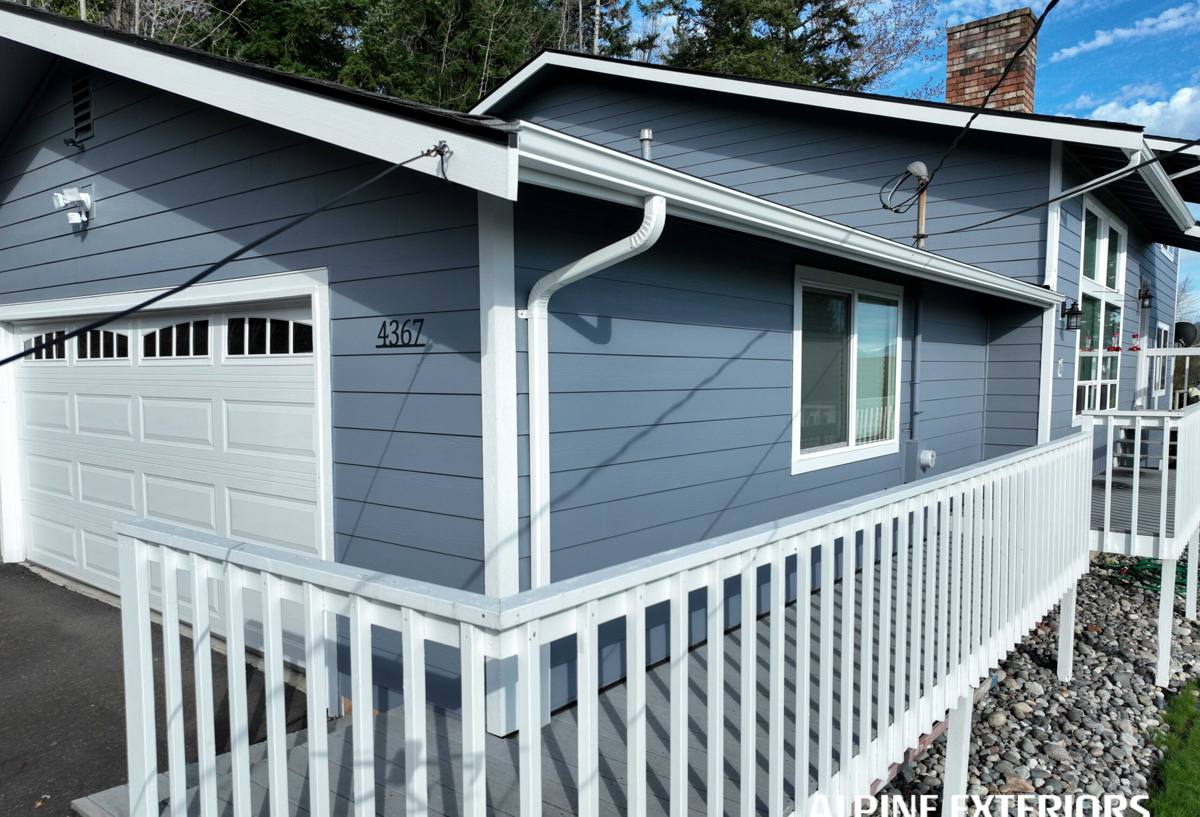
Roofing rarely exists in isolation. Homes in Columbia that have moss and moisture issues on the roof often show related wear on siding and trim, especially on north- and west-facing walls that stay shaded and damp longer. We also handle siding, window replacement, and deck work, which means if a roof inspection turns up a related issue — deteriorated fascia, water staining on siding below a bad gutter run, or a deck that's showing rot from the same moisture exposure — we can address it as part of the same conversation instead of sending you to track down a separate contractor.
Why a Local Crew Matters in Columbia
Roofing advice that works in a dry climate doesn't automatically work here. Underlayment specs, flashing details, and ventilation requirements that are "optional" in low-rainfall regions are basic necessities in Whatcom County. A crew that works this area regularly knows which roof details fail first under sustained Pacific Northwest rain, how much moss pressure a shaded roof in a neighborhood like Columbia actually sees over a season, and how coastal air affects metal components over the life of the roof. That local knowledge shows up in the small decisions — flashing choices, fastener grade, ventilation layout — that determine whether a roof holds up for its full expected lifespan or starts causing problems a decade early.
Maintenance Checklist for Columbia Homeowners
- Inspect and clear gutters at least twice a year, more often under heavy tree cover
- Check shaded roof sections annually for moss growth and treat before it spreads
- Look for granule buildup in gutters and downspouts, a sign of shingle wear
- Check attic insulation and ventilation for signs of trapped moisture or musty odor
- Have flashing around chimneys, vents, and roof-to-wall transitions inspected every few years
- Address small leaks promptly — in this climate, delayed repairs compound quickly
If you're noticing moss buildup, a slow leak, or you're just due for an honest assessment of where your roof stands, we're glad to come take a look. Estimates are free, there's no pressure, and you'll get a straight answer about what your roof actually needs — not an upsell.