 Bellingham Roofing
 Window Replacement Built for Columbia's Weather, Not Just Its Homes
Columbia sits close enough to the water and the weather patterns that move through Bellingham and Whatcom County that its windows take a different kind of beating than windows fifty miles inland. Salt-laden air works on hardware and finishes year-round. Driving rain off Bellingham Bay finds every gap in flashing and sealant during fall and winter storms. And the long, damp moss season here keeps humidity high against exterior walls for months at a stretch, which is exactly the condition that turns a small window leak into rot behind the trim. Replacing windows in this neighborhood isn't the same job as replacing windows in a dry climate, and it shouldn't be treated that way.
This page covers what Columbia homeowners actually need to know before replacing windows: what the climate does to window systems over time, what a correctly installed replacement looks like, how our process works from first look to final walkthrough, and why local experience matters more here than a lot of homeowners realize.
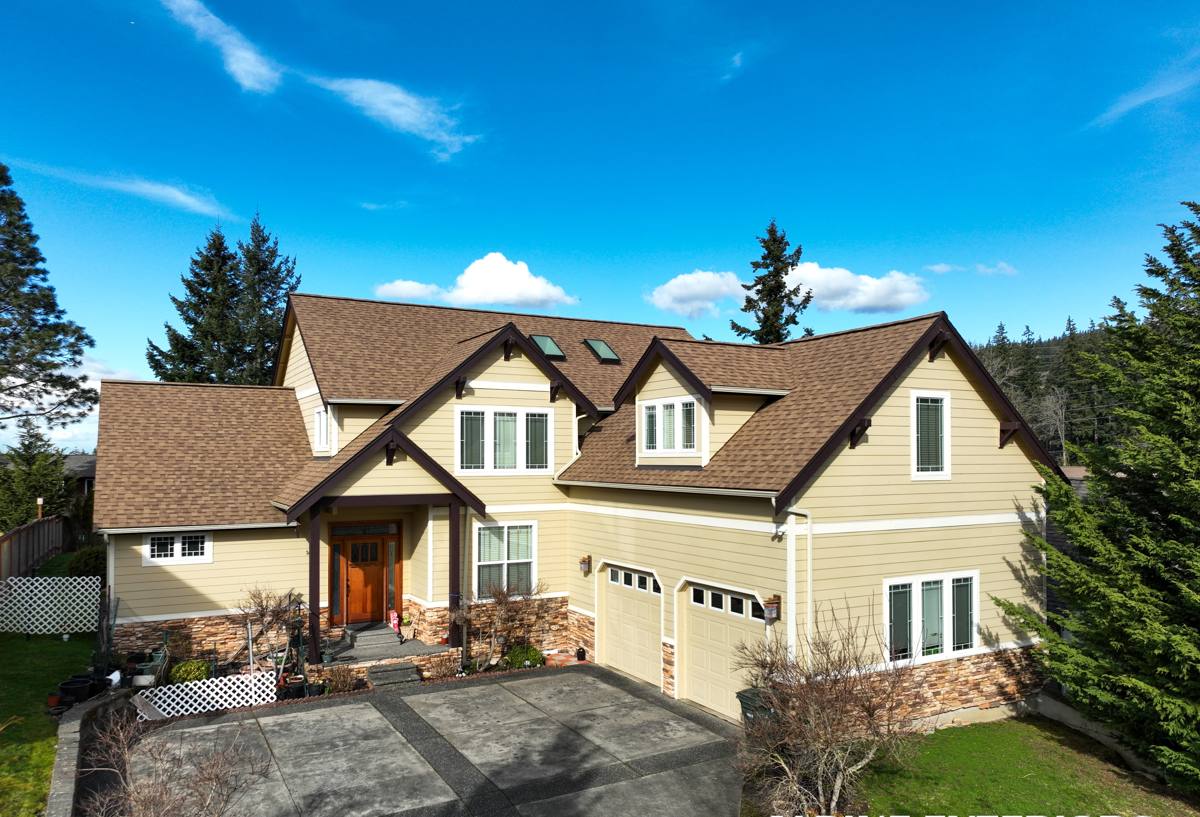
What Salt Air, Driving Rain, and Moss Season Actually Do to Windows
Each of these conditions attacks a different part of a window system, and understanding that helps explain why some replacement jobs hold up for decades and others fail early.
Salt Air
Airborne salt is corrosive to exposed metal hardware — hinges, locks, balance systems, and screen frames. On older aluminum windows it also accelerates pitting and oxidation of the frame itself. Modern vinyl and fiberglass frames sidestep most of this, but hardware quality still matters, which is why we don't cut corners on the mechanical components even when they're the least visible part of the window.
Driving Rain
Wind-driven rain doesn't just hit a window head-on — it gets pushed sideways and upward into any gap around the frame. A window that would stay dry in a calm rain can leak in a Bellingham storm if the flashing and sealant details aren't done correctly. This is almost always where poorly installed replacement windows fail first, and it's rarely the window unit itself that's at fault.
Moss Season
Whatcom County's long stretch of cool, wet months keeps exterior wood siding and trim damp for extended periods. Around window openings, that sustained moisture is what turns a minor caulk failure into hidden sheathing or framing rot. Moss and algae growth on nearby siding and trim is also a sign that an area stays wet longer than it should, and it's a clue we look for when assessing a window opening for hidden damage.
Signs Your Columbia Home's Windows Are Ready for Replacement
Windows rarely fail all at once. Watch for these signs, especially on walls that face prevailing weather:
- Fogging or a permanent haze between panes of double-pane glass — the seal has failed and the insulating gas has escaped
- Soft or discolored wood on the interior sill or exterior trim around the frame
- Visible daylight or a noticeable draft around the sash when the window is closed
- Windows that are difficult to open, close, or lock — often a sign the frame has shifted or swollen
- Paint that bubbles or peels repeatedly around the window opening despite fresh coats
- A musty smell near the window that doesn't go away with cleaning
- Noticeably higher heating bills without another clear explanation
- Visible corrosion or stiffness in the locking hardware
Any one of these is worth a look. Several together usually mean the window opening has been letting in moisture for a while, and it's worth checking the framing underneath before deciding on a replacement plan.
What a Correct Window Replacement Job Actually Involves
"Replacing a window" sounds simple, but the parts that determine whether it lasts fifteen years or fifty happen out of sight, before the new window ever goes in the opening.
Inspecting and Repairing the Opening
Every old window comes out with the opening exposed, and that's the moment to find out what's actually going on. Soft sheathing, rotted framing members, or old, brittle flashing all need to be addressed before a new window goes in — installing a new window into a compromised opening just hides the problem for a few more years.
Flashing and Water Management
This is the single most important part of the job for a climate like ours. Proper flashing directs any water that gets past the window's own seals back out and away from the wall assembly, using a layered approach — sill pan flashing at the bottom, side flashing that laps over it, and head flashing or a drip cap at the top that sheds water outward. Done in the right order with the right materials, this is what keeps driving rain from ever reaching the framing, even in a bad storm.
Air Sealing and Insulation
The gap between the new window frame and the rough opening needs to be filled with an appropriate low-expansion foam or backer rod and sealant — not stuffed with fiberglass insulation alone, which does little to stop air movement. Air leaks here are a common source of both drafts and condensation problems on interior trim during cold snaps.
Interior and Exterior Finish Work
Trim, casing, and sill work should be sealed and finished in a way that sheds water on the exterior and looks clean on the interior. On the exterior especially, caulk joints need to be done correctly the first time — recaulking a window every year or two is a sign something underneath wasn't done right.
Choosing a Frame Material for This Climate
There's no single "best" window material for every home — it depends on your home's age, style, budget, and how much maintenance you want to take on. Here's how the common options compare for a coastal, high-moisture climate like Bellingham's.
| Frame Material | Moisture & Salt Air Performance | Maintenance | Typical Cost Position |
|---|---|---|---|
| Vinyl | Does not rot or corrode; performs well in salt air and damp conditions | Low — occasional cleaning, no painting | Lower to mid-range |
| Fiberglass | Excellent — dimensionally stable, resists moisture and temperature swings well | Low | Mid to upper range |
| Wood-Clad | Good if the exterior cladding is intact; the wood interior still needs protection from moisture intrusion | Moderate — exterior clad is low-maintenance, but any breach in the cladding needs prompt attention | Upper range |
| Aluminum | Prone to corrosion and pitting in salt air over time unless well-finished; conducts cold, which can cause interior condensation | Moderate to high | Varies widely |
Our default recommendation for most Columbia homes is vinyl or fiberglass, simply because they hold up to salt air and sustained moisture with the least ongoing maintenance. That said, we'll talk through what fits your home's look and budget rather than push one material across the board — a wood-clad window can be the right call on some homes, as long as you understand the maintenance commitment.
Our Window Replacement Process, Start to Finish
1. On-Site Assessment
We look at each window opening individually, not just the glass — checking for existing water damage, how the opening is currently flashed, and what the wall assembly looks like behind the trim. This is also when we measure and talk through material, glass, and style options.
2. Removal and Opening Prep
Old windows come out carefully to avoid unnecessary damage to surrounding siding and trim. Any rot, soft framing, or failed old flashing found at this stage gets repaired before anything new goes in.
3. Flashing and Installation
New windows go in plumb, level, and square, with sill pan flashing, properly lapped side and head flashing, and correct fastening per the window manufacturer's installation instructions — this is what preserves the manufacturer's warranty and keeps water out.
4. Air Sealing and Insulation
The gap around the frame is sealed with appropriate low-expansion foam and backer rod, addressing both drafts and the risk of interior condensation.
5. Interior and Exterior Finish
Trim and casing go back on clean, caulk joints are sealed properly, and the exterior finish is matched to the surrounding siding as closely as possible.
6. Final Walkthrough
Every window gets opened, closed, and locked to confirm smooth operation, and we walk the job with you before calling it finished.
Cost Factors for Window Replacement in Columbia
Window replacement costs vary by home, and we're not going to quote numbers that don't reflect your specific project. What we can tell you is what actually drives the cost up or down, so an estimate makes sense when you get one.
| Factor | Why It Matters |
|---|---|
| Number and size of windows | More openings and larger units mean more material and labor |
| Frame material | Vinyl is typically the most budget-friendly; fiberglass and wood-clad cost more upfront |
| Condition of the existing opening | Hidden rot or damaged framing found during removal adds repair work before installation can proceed |
| Glass package | Upgraded Low-E coatings, gas fills, or added panes improve efficiency and comfort at added cost |
| Installation type | Full-frame replacement (down to the studs) costs more than insert replacement but corrects underlying flashing or rot issues that inserts can't fix |
| Access and site conditions | Upper-story windows or tight access can add labor time |
A full-frame replacement usually costs more than a pocket or insert replacement, but it's the right call whenever there's evidence of moisture damage in the opening — inserting a new window into a wall assembly that's already compromised just delays the real repair.
Why It Matters That We Already Work in Columbia
A lot of window replacement work here isn't about the window itself — it's about correctly reading what the local climate has already done to a home before we touch anything. A crew that regularly works Columbia and the surrounding Bellingham area has seen how salt air ages hardware and finishes, knows what driving-rain damage typically looks like when it's been building for years behind trim, and recognizes the early signs of moss-season moisture problems before they turn into structural repairs. That local pattern recognition is the difference between a replacement that solves the actual problem and one that just puts new glass over an old issue.
We're also familiar with the permitting and inspection expectations that apply to exterior work in this area, so there aren't surprises partway through a project.
Protecting Your New Windows Through Whatcom County Weather
New windows are only as good as the maintenance behind them, and in this climate that maintenance is light but shouldn't be skipped:
- Rinse salt residue off frames and hardware a couple of times a year, especially on wind-exposed elevations
- Check exterior caulk joints annually, particularly after the first winter, and touch up any cracking before it lets water in
- Keep gutters and downspouts clear so water isn't pooling or sheeting near window openings
- Clear moss or debris buildup on nearby siding and trim promptly rather than letting it sit against the wall
- Operate locks and hardware periodically through the winter so moving parts don't seize up from disuse
None of this is complicated, but staying on top of it is what lets a correctly installed window actually reach its expected lifespan in a coastal, high-moisture climate like ours.
Ready to Talk About Your Windows?
If your Columbia home has windows showing any of the signs above, or you're just weighing options for an upcoming project, we're happy to take a look and walk you through what we find — no pressure, no obligation. Use the form below to request a free estimate.