 Bellingham Roofing
 Siding Repair in York: Built for What Bellingham Weather Actually Does
Homes in York deal with a specific combination of punishment that a lot of siding simply wasn't built to handle long-term: salt-laden air drifting in off the water, driving wind-blown rain that hits siding sideways instead of straight down, and a moss and algae season that can run most of the year in the Pacific Northwest's damp, shaded conditions. None of that is exotic or rare here — it's just normal Whatcom County weather. But it adds up differently on siding than it does on a roof, because siding is a vertical, joint-heavy system that has to shed water at seams, corners, and penetrations instead of just sloping it off.
When we get called out for siding repair in York, the damage almost always traces back to one of those three forces: salt air accelerating corrosion on fasteners and trim, wind-driven rain finding its way behind panels through failed caulking or gapped laps, or moisture trapped under moss and algae growth that never fully dries between rain events. Understanding which of these is actually happening on your house is the difference between a repair that lasts and one you're paying for again in two years.
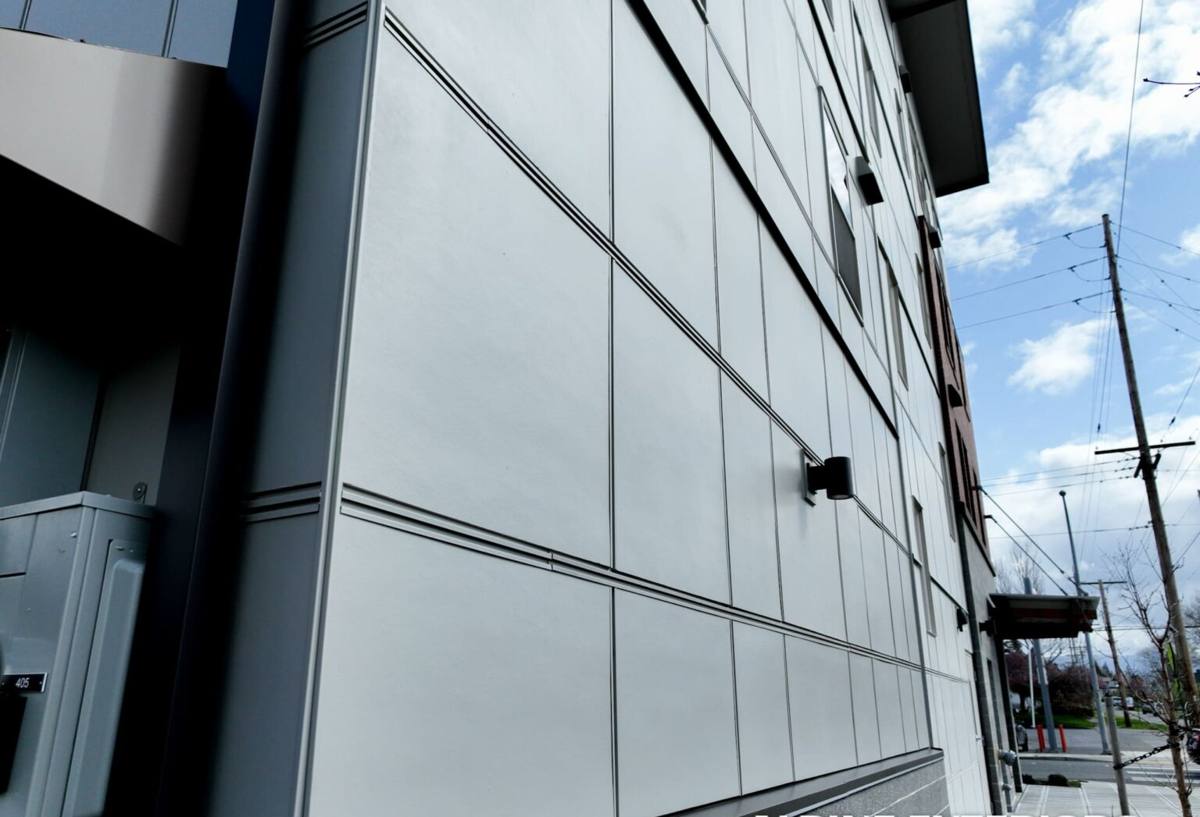
Signs Your York Home Needs Siding Repair
Some siding problems are obvious. Others hide behind trim, under eaves, or in shaded corners where nobody looks until there's a bigger problem. Here's what we watch for on repair calls in this area:
- Soft, spongy, or crumbling spots when you press on the siding, especially near the bottom courses and around window and door trim
- Visible cracking, splitting, or buckling panels, particularly on the sides of the house that face prevailing wind and rain
- Persistent green or black staining that keeps coming back within weeks of cleaning, which usually means moisture is being held against the material rather than just sitting on the surface
- Gaps or separation at seams, corner boards, and butt joints where caulking has shrunk, cracked, or pulled away
- Rust streaking below nail heads or fasteners, a common sign of salt-air corrosion working on the metal before it works on anything else
- Paint that's peeling, bubbling, or failing faster than it should, which often points to moisture moving through the siding from behind
- Warping or wavy panel lines, especially on wood-based products that have absorbed and released moisture repeatedly over multiple wet seasons
Why Small Problems Don't Stay Small Here
In a drier climate, a small gap or crack in siding might sit for years without causing real damage. In Bellingham, with rain arriving from multiple directions and humidity staying elevated for long stretches, an opening in the siding envelope gets tested constantly. Water finds it, wicks into the substrate, and the moss and algae that thrive in our shaded, damp conditions colonize any surface that stays wet long enough. That's why what looks like a cosmetic issue in July can be a structural one by the following spring if it's left alone.
What a Correct Siding Repair Actually Involves
A proper repair isn't just replacing the damaged board and moving on. We treat every repair call as a small diagnostic project, because the visible damage is usually a symptom, not the root cause.
Diagnosis Before Demolition
Before we pull a single panel, we check what's happening behind it: is the house wrap or building paper intact, is there evidence of long-term moisture staining on the sheathing, are the flashing details at windows and penetrations doing their job. Replacing siding over a moisture problem that's still active just buys you a few more years before the same repair call happens again.
Matching the Repair to the Material
Different siding materials fail differently and need to be repaired differently. Wood and engineered wood products that have absorbed water often need to come out entirely in the affected section, because trapped moisture inside the material doesn't go away once it's covered back up. Fiber cement typically isolates damage more locally, which is one of several reasons it holds up better over a full repair-and-maintain lifecycle in this climate.
Getting the Details Right
Most siding failures we see in York didn't start with the siding — they started with a flashing detail, a caulk joint, or a fastener that wasn't right for a salt-air environment. A repair that just swaps the panel and skips those details is a repair that fails again on the same schedule.
Common Siding Materials We Find on York Homes
Repair approach and long-term outlook depend heavily on what's already on the house. Here's how the materials we commonly encounter behave under Bellingham's specific mix of salt air, wind-driven rain, and moss pressure:
| Material | Typical Failure Pattern Here | Repairability |
|---|---|---|
| Cedar / primed wood | Absorbs moisture, warps, and rots at butt joints and lower courses; repeated wet-dry cycles accelerate failure | Damaged sections often need full removal; moisture can spread under intact-looking boards |
| Vinyl | Cracks in cold snaps, warps near heat sources, and doesn't stop water intrusion behind panels — it just hides it longer | Panels are easy to swap, but hidden water damage underneath is often found only after removal |
| LP SmartSide / engineered wood | Edge and joint swelling where factory sealant wears through, especially in constant damp conditions | Repairs are workable if caught early; delayed repairs often mean replacing whole sections |
| James Hardie fiber cement | Far more resistant to moisture-driven swelling and rot; failures, when they happen, are usually installation-related (caulking, fastening, flashing) rather than material breakdown | Generally the most straightforward and durable to repair or patch correctly |
We install exclusively James Hardie fiber cement siding on this company's replacement projects, and part of the reason is exactly this pattern: it's simply less prone to the moisture-driven failures that generate repeat repair calls in a climate like ours. That said, most of our repair work happens on whatever material is already on the house, and we'll give you a straight answer about whether that material is worth continuing to repair or whether you're better off planning for replacement.
Our Repair Process
- On-site inspection: We walk the exterior, check problem areas you've flagged, and look at the parts of the house most exposed to wind and rain that homeowners rarely inspect themselves.
- Moisture and substrate check: Where damage is present, we check what's happening behind the siding before quoting a fix.
- Written scope and estimate: You get a clear explanation of what's being repaired, why, and what it costs — no vague line items.
- Repair work: Matching materials and colors where possible, correcting flashing and sealant details as part of the repair, not as an afterthought.
- Final check: We confirm the repaired area sheds water correctly and matches the surrounding siding as closely as the existing material allows.
Repair vs. Replacement: Making the Right Call
Not every repair call ends in a repair. Sometimes the honest answer is that a section of siding — or the whole house — has enough underlying moisture damage or material fatigue that patching it is a short-term fix for a long-term problem. We'll tell you plainly which situation you're in.
| Factor | Favors Repair | Favors Replacement |
|---|---|---|
| Extent of damage | Isolated to one or two areas | Spread across multiple elevations |
| Material condition | Surrounding siding is still sound | Surrounding siding shows the same early signs of failure |
| Moisture history | No evidence of long-term trapped moisture | Staining or soft sheathing found behind panels |
| Material type | Fiber cement or well-maintained material | Older wood or engineered wood past its practical service life |
When a York homeowner is looking at a full re-side rather than a repair, our recommendation is James Hardie fiber cement — for the reasons in the table above and because it's engineered for climates like ours, with product lines built around moisture and climate performance, a factory-applied ColorPlus finish that holds up to UV and salt air better than field-applied paint, and a strong transferable warranty backing it up. We don't install vinyl, LP SmartSide, or unprimed/primed wood siding on new installations, and we're upfront with clients about why: in a market with this much rain and humidity, we'd rather stand behind one product system we trust completely than offer several we have real reservations about.
Why a Crew That Already Works in York Matters
Siding repair done right depends on understanding how a specific house sits relative to weather — which elevation takes the worst of the wind-driven rain, how much shade keeps moss and algae active longer, how close the property is to salt air exposure. A crew that regularly works in and around Bellingham and Whatcom County has already seen these patterns play out on dozens of similar homes. That's the difference between a repair that addresses what's actually happening to your siding and one that just replaces what's visibly broken and hopes for the best.
It also matters for material matching and scheduling. Local crews know which siding profiles and colors are common in the area, keep relationships with suppliers who can get matching material quickly, and understand how to plan repair work around the wetter months so you're not stuck mid-repair when a storm rolls through.
What to Expect: Timeline and Cost Factors
Every repair is different, but the same factors drive most of the variation in scope and cost:
| Factor | Why It Matters |
|---|---|
| Extent of moisture damage behind the siding | Hidden rot or sheathing damage adds scope beyond the visible panel |
| Material availability and matching | Discontinued colors or profiles may require broader replacement to keep a consistent look |
| Access and height | Second-story and steep-terrain sections take longer and require more equipment |
| Flashing and trim condition | Correcting underlying flashing issues adds labor but prevents repeat failures |
| Weather window | Repairs scheduled around drier stretches move faster and cure better |
Most straightforward, isolated repairs can be completed in a day or two once material is on hand. Repairs that uncover hidden moisture damage take longer, since the priority is fixing the actual problem, not just covering it back up.
If you're seeing any of the warning signs above on a York-area home, we're glad to take a look. We offer free, no-pressure estimates — we'll tell you honestly whether you're looking at a straightforward repair, a more involved fix, or a conversation about replacement, and why.