 Bellingham Roofing
 Roofing and Exteriors Built for Birch Bay's Waterfront Conditions
Birch Bay sits right on the water in northwest Whatcom County, and that location shapes everything about how a home ages there. Homes closer to the shoreline take on salt-laden air and wind straight off the bay, while properties set back under tree cover deal with shade, needles, and moisture that never quite dries out between fall and spring. Add in the long stretch of gray, wet months typical of this part of Washington, and you've got a climate that's genuinely tougher on roofs, siding, windows, and decks than most homeowners realize until something starts failing.
We work throughout Bellingham and greater Whatcom County, and Birch Bay is one of the areas where we see the clearest pattern: it's rarely one dramatic storm that causes damage. It's slow, steady exposure — salt air on fasteners and metal, moss quietly working into shaded roof sections, and driving rain finding the one seam or flashing detail that wasn't sealed quite right. Good exterior work out here means planning for that pattern, not just patching what's visible.
What Salt Air Actually Does to a Home
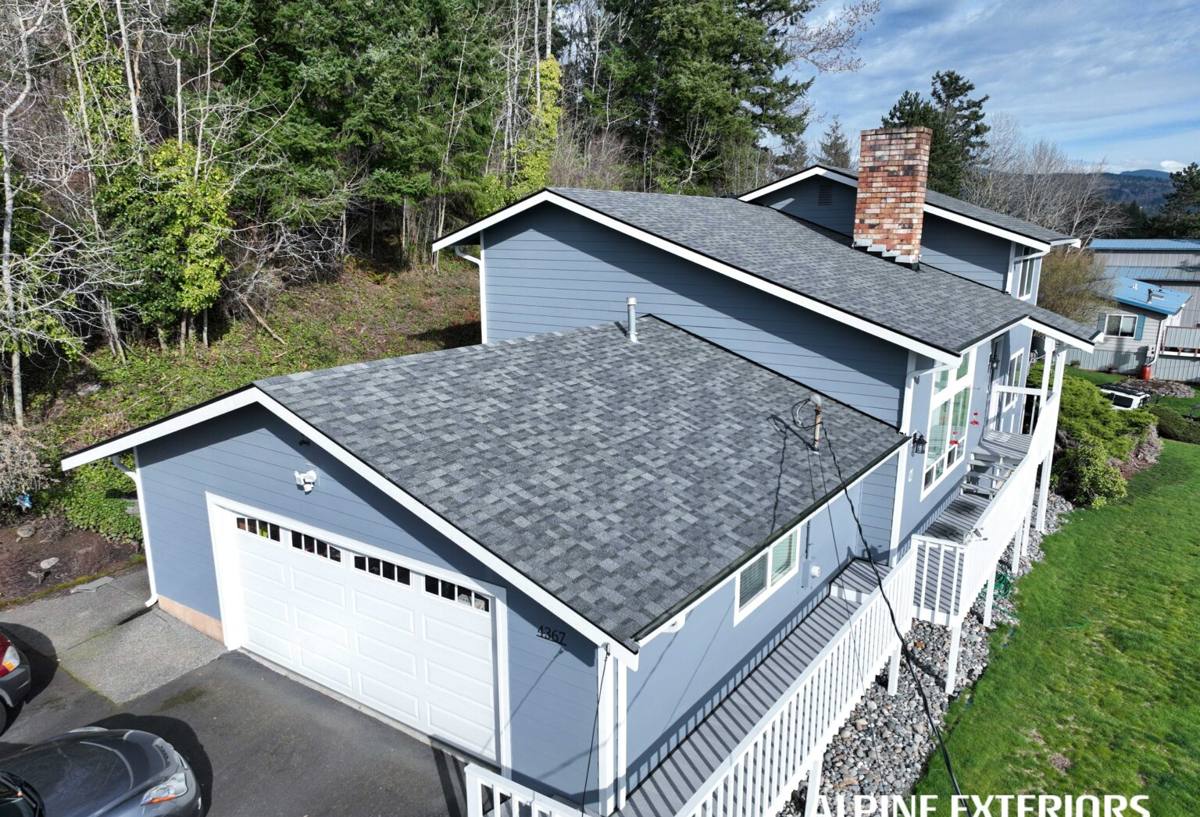
Salt air doesn't need direct ocean waves to cause problems — a shoreline community like Birch Bay gets enough airborne salt that it accelerates corrosion on anything metal, especially fasteners, flashing, gutters, and hardware that isn't rated for coastal exposure. This is one of the most common issues we find on older Birch Bay homes: standard-grade nails or screws that have started rusting and staining the siding or roofing around them, sometimes years before the actual roofing or siding material is due for replacement.
Where salt exposure shows up first
- Rust streaking below exposed fasteners on siding and trim
- Corroded gutter hangers, screws, and seams
- Pitting or discoloration on lower-grade metal flashing
- Faster fading and chalking on south- and west-facing siding that takes direct sun and salt wind together
The fix isn't complicated, but it does matter: on homes within closer range of the water, we favor stainless steel or hot-dip galvanized fasteners and coastal-rated flashing over standard builder-grade hardware. It costs a bit more up front and saves a lot of grief later.
Moss, Shade, and Whatcom County's Long Wet Season
Whatcom County's roofs deal with moss for a good chunk of the year, and Birch Bay's mix of mature evergreens and damp, shaded lots makes it worse in spots. Moss holds moisture against roofing material long after the surrounding area has dried out, and over time that trapped moisture works under shingle edges, lifts tabs, and accelerates granule loss on asphalt roofing. On cedar or wood-based products, sustained moss and moisture contact is even more of a concern.
North-facing roof planes and sections shaded by trees are almost always the first place moss takes hold, while sun-exposed south slopes on the same roof can look completely clean. That uneven wear is normal here — it's not a sign the whole roof is failing, but it is a sign that spot maintenance matters more in this climate than in drier parts of the state.
Realistic moss management
We don't recommend aggressive pressure washing as a first response — it can strip protective granules and shorten the life of asphalt shingles. Zinc or copper control strips, careful hand or low-pressure cleaning, and keeping gutters and valleys clear of needle debris do more good over the long run than an occasional deep clean.
Roofing Options for Birch Bay Properties
Most homes we work on in this area are asphalt composition shingle, with a smaller number of cedar shake, metal, and flat or low-slope roofs on additions and outbuildings. Each has different trade-offs once you factor in coastal wind, salt air, and moss exposure.
| Roofing Type | How It Handles This Climate | Maintenance Consideration |
|---|---|---|
| Asphalt Composition | Good overall value; performs well with proper ventilation and moss control | Needs periodic debris/moss clearing on shaded slopes |
| Metal | Sheds moisture and moss well; strong wind performance | Fasteners and flashing should be coastal-rated to avoid corrosion |
| Cedar Shake | Traditional look, but holds moisture longer in shaded, damp conditions | Requires more diligent moss and moisture management near the water |
| Low-Slope/Flat (membrane) | Common on additions; drainage detailing is critical near the coast | Ponding and seam integrity need regular inspection |
We'll walk through what's actually on your roof now, how it's aging, and whether it makes sense to repair, re-roof a section, or plan a full replacement — based on what we see, not a sales script.
Siding That Holds Up to Wind and Salt
Siding on Birch Bay homes takes a combination of stresses: direct wind off the bay, salt air, and — for tree-shaded lots — persistent moisture and shade. We install and repair fiber cement, engineered wood, and vinyl siding, and the right choice usually comes down to a property's specific exposure rather than a one-size-fits-all recommendation.
Fiber cement handles the coastal combination of moisture and wind-driven rain well and holds paint longer than many wood-based alternatives, which is a real advantage on a home that gets direct salt exposure. It's also heavier and requires correct fastening and flashing detail to perform as intended — cutting corners on installation shows up faster here than it would inland. We don't push products we don't think hold up in this environment; if a lower-maintenance option is a better fit for your home's exposure and budget, we'll say so.
Common siding issues we see near the water
- Caulk and sealant failure at trim and window edges from repeated wet-dry cycling
- Paint failure or chalking on the wind- and salt-exposed side of the house
- Moisture staining where gutters overflow onto siding during heavy rain
- Warping or delamination on older or improperly installed wood-based products
Windows: Sealing Out Wind-Driven Rain
Window performance in Birch Bay is less about the glass itself and more about the seal around it. Driving rain off the bay, pushed by wind, finds gaps in flashing and caulking that would never leak in calmer conditions. Older single-pane or poorly flashed windows are where we most often trace water intrusion back to — not a roof leak, but a window that was never properly integrated with the surrounding wall assembly.
When we replace windows, proper flashing and integration with the siding or house wrap matters as much as the window unit itself. A quality window installed without correct flashing will eventually leak in this climate; a modest window installed correctly often outperforms it.
Decks Facing the Bay
Decks in Birch Bay deal with sun, salt air, and rain in roughly equal measure, which is a hard combination on fasteners, ledger connections, and framing. We see the most wear at the ledger board connection to the house, at stair stringers exposed to standing water, and on any composite or wood decking installed without adequate airflow underneath.
For coastal decks, stainless steel fasteners and hardware are worth the upgrade over standard galvanized in most cases, and proper flashing at the ledger connection is one of the most important — and most commonly overlooked — details in deck construction near the water.
A Practical Seasonal Checklist for Birch Bay Homes
- Clear moss and debris from shaded roof slopes and valleys before the wet season builds
- Check gutters and downspouts for salt corrosion and debris blockage each fall
- Inspect exposed fasteners and flashing for early rust staining
- Look at caulking around windows and trim for cracking or gaps after summer sun exposure
- Check deck ledger connections and any low-lying framing for moisture damage
- Have roofing inspected after any significant wind event off the bay
Why a Local Crew Matters Here
Birch Bay isn't Bellingham proper, and it isn't inland Whatcom County either — it has its own microclimate shaped by direct exposure to the water. A crew that mostly works inland jobs may not think twice about standard fasteners or skip the extra flashing detail that coastal homes need. We work across this region regularly enough to know which homes need the coastal-grade approach and which don't, and we'll tell you plainly which category yours falls into rather than upselling every job to the same premium spec.
Being local also means we're not far away if something needs a follow-up look after a storm, and we're familiar with the kind of homes common in this area — from older cottage-style properties to newer builds along the waterfront.
Getting an Honest Assessment
If you're noticing rust streaks, mossy patches, a window that weeps during hard rain, or a deck that feels a little soft near the house, it's worth having someone take a direct look before it becomes a bigger repair. We're happy to walk your property, explain what we're seeing in plain terms, and give you a free, no-pressure estimate on roofing, siding, windows, or deck work — use the form below to get started.