 Bellingham Roofing
 Building a Deck That Actually Holds Up in Birch Bay
Birch Bay sits right on the water in Whatcom County, and that location cuts both ways. It's part of why people want a deck out here in the first place — but it's also why so many decks in this community fail early. Salt-laden air, wind-driven rain coming straight off the water, and a moss season that can stretch from fall through spring all put more stress on a deck here than the same structure would see a few miles inland. A deck built to a generic spec, with generic hardware, will show it within a few years: rust streaks bleeding out of fastener heads, soft spots where water sat too long, boards that stay slick with algae well into summer.
None of that is inevitable. It's a matter of choosing the right materials, detailing the structure correctly for a coastal environment, and building in drainage and airflow from the start instead of trying to fix it later. That's the approach we take on every deck we build in Birch Bay.
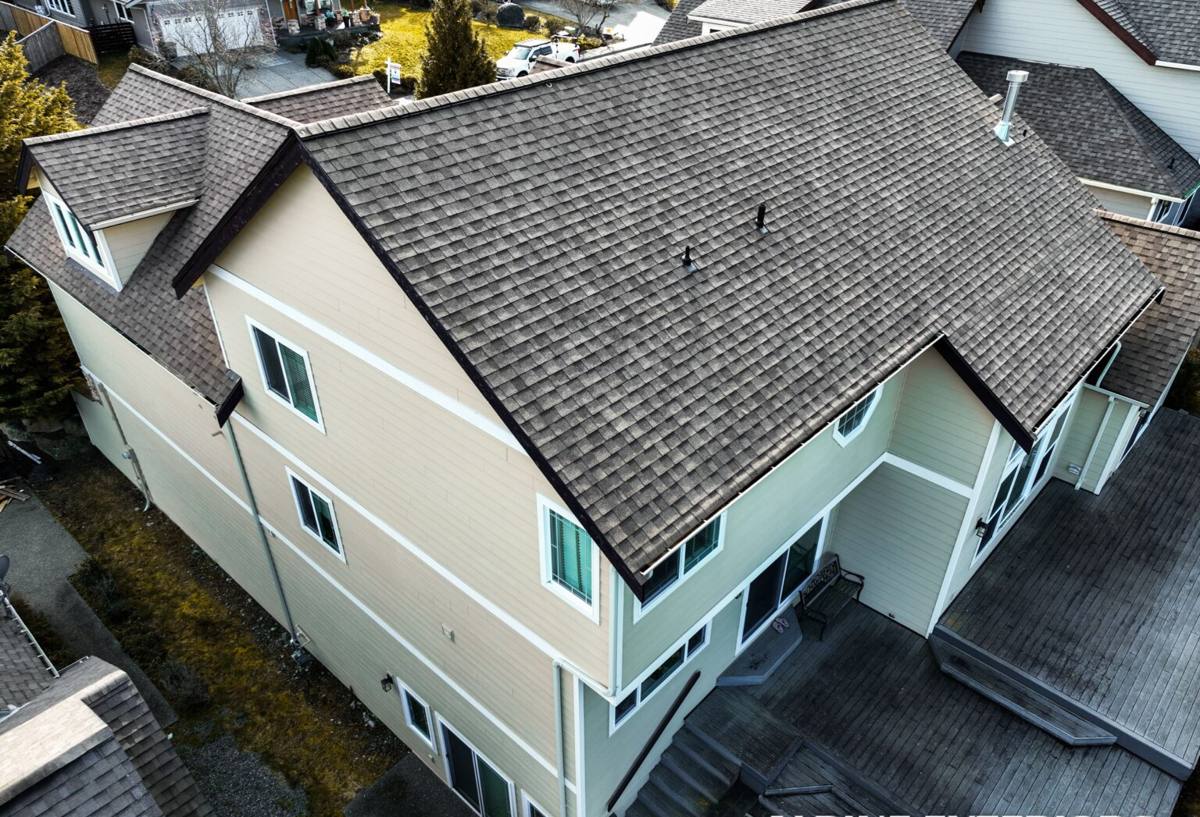
What the Coastal Climate Does to an Ordinary Deck
Salt Air and Corrosion
Airborne salt from Birch Bay accelerates corrosion on anything metal — fasteners, joist hangers, post bases, railing hardware. Standard galvanized coatings that hold up fine inland can start breaking down faster in a salt-air environment, especially where two dissimilar metals touch or where a coating gets scratched during installation. Once corrosion starts at a fastener, it doesn't stay contained; it weakens the connection and stains the wood or composite around it.
Driving Rain
Open water means wind-driven rain, which behaves differently than a straight-down shower. It gets pushed sideways into ledger connections, under poorly flashed rim joists, and into any gap that a calmer climate could get away with leaving loose. On a deck attached to the house, that ledger-to-house connection is the single most common source of hidden rot if it isn't flashed correctly.
Moss and Algae
The same damp, mild conditions that make this a good place to live also make it an excellent place for moss and algae to establish on horizontal wood surfaces. A deck with poor drainage, tight board spacing, or shaded, low-airflow areas underneath will grow a moss carpet faster than most homeowners expect — and moss holds moisture against the decking surface, which shortens its life regardless of material.
What a Correctly Built Deck Involves Here
A deck that's going to last on the Birch Bay coastline isn't built differently in a dramatic way — it's built more carefully in a handful of specific places:
- Stainless steel or high-grade coated fasteners and connectors at every structural point, not just the visible ones
- Proper ledger flashing where the deck attaches to the house, with flashing that sheds water away from the wall assembly, not into it
- Footings sized and set to local frost and soil conditions, inspected before backfill
- Board spacing and joist layout that allow water to drain through and air to move underneath
- Post bases and hardware rated for exterior, coastal exposure — not interior-grade substitutes
- Railing systems attached with hardware that won't streak or seize over time
Skipping any one of these doesn't usually show up right away. It shows up in year three or four, as rust stains, a spongy board, or a railing post that's gone loose because the fastener corroded inside the wood.
Choosing the Right Decking Material
There's no single "best" decking material for Birch Bay — there's a best material for your budget, your maintenance appetite, and how close your lot is to the water. Here's how the common options compare in this environment:
| Material | How It Handles Salt Air & Moisture | Maintenance | General Cost Range |
|---|---|---|---|
| Pressure-treated wood | Good if properly sealed and re-sealed; end grain is the weak point | Annual cleaning and periodic sealing | Lowest upfront |
| Cedar | Naturally rot- and insect-resistant, but surface still needs protection near salt spray | Regular cleaning and sealing to keep color and resist moss | Mid-range |
| Composite decking | Doesn't rot or absorb moisture into the board itself; still needs correct fastening and airflow underneath | Periodic washing to keep algae and pollen from building up | Higher upfront, lower long-term upkeep |
| Tropical hardwoods | Very dense and naturally durable, but hardware and fastening require extra care | Occasional oiling to maintain appearance | Highest |
We'll walk through these trade-offs with you honestly rather than steering you toward whatever's easiest to install. A wood deck done right, with correct fastening and sealing, can perform very well here — it just asks more of the homeowner over time than composite does.
Why We're Careful About Hardware Regardless of Decking Choice
Whatever surface material you choose, the hardware underneath it does the real work of holding the deck together, and it's the piece most exposed to salt-air corrosion because it's often hidden and easy to overlook during a lower-cost build. We treat fastener and connector selection as a fixed standard on every Birch Bay deck, not an upgrade option — it's cheaper to spec it right the first time than to reopen a deck surface to replace failed hardware later.
Drainage, Airflow, and Keeping Moss From Taking Over
A deck built tight to the ground, with no airflow underneath and boards packed close together, is a moss farm waiting to happen. We build in consistent board spacing for drainage, keep the structure high enough off grade where the design allows for airflow, and grade the ground beneath the deck so water doesn't pool and sit. None of this eliminates moss entirely — nothing in this climate does — but it slows it down significantly and keeps the deck surface drying out between rains instead of staying damp for days.
Our Process for a Birch Bay Deck Build
- On-site assessment — we look at sun exposure, wind exposure toward the water, existing drainage, and how the deck will tie into your home
- Design and material discussion — honest trade-offs on decking material, railing style, and layout based on your budget and how you'll use the space
- Permitting — deck projects in Whatcom County typically require a permit depending on size and height; we handle that process rather than leaving it to you
- Framing and structural work — footings, ledger flashing, joists, and hardware built to coastal-grade standards
- Decking, railing, and finish work — installed with attention to fastening, spacing, and drainage
- Final walkthrough — we go over care and maintenance specific to the material you chose
Permits and Local Requirements
Most new decks and many significant deck rebuilds in Whatcom County require a building permit, and setback rules can apply depending on your lot's proximity to the water or property lines. Requirements vary by project, so we don't guess — we confirm what applies to your specific site and handle the permitting process as part of the build, so you're not left navigating that on your own.
Keeping a Birch Bay Deck Healthy Long-Term
A well-built deck still needs some ongoing attention in this climate. A short seasonal routine goes a long way:
- Sweep debris off the deck regularly — trapped leaves and needles hold moisture against the surface
- Rinse off salt spray and pollen buildup a few times a year, more often if you're close to the water
- Check railing posts and stair connections annually for any looseness, which can signal hardware corrosion starting
- Re-seal wood decking on the schedule recommended for your specific product — don't wait until it looks obviously weathered
- Keep an eye on shaded, low-airflow corners where moss tends to establish first
- Clear gutters and downspouts near the deck so roof runoff isn't dumping extra water onto the structure
Why Hiring a Crew That Already Works Birch Bay Matters
A deck built by a crew unfamiliar with coastal exposure will often look fine on the day it's finished — the differences show up over the following few years, as the fasteners a crew chose, the flashing details they used, and the drainage they built in either hold up or don't. We build decks throughout Bellingham and Whatcom County, and the material and hardware choices we make in Birch Bay specifically reflect what this coastline actually does to a structure, not a generic regional average. That's the difference between a deck that needs real repair work in five years and one that's still solid in twenty.
If you're planning a new deck or need to replace one that's showing its age, we're happy to take a look and talk through what makes sense for your property. Reach out for a free, no-pressure estimate using the form below.