 Bellingham Roofing
 South Hill sits up on the hillside above downtown Bellingham, close enough to the water to catch the salt air off Bellingham Bay and exposed enough to take the full brunt of whatever comes off the Sound. Older homes on the hill often have roofs that have quietly outlasted their real service life — patched over, moss-scrubbed, and due for a straight answer about whether it's time to replace rather than repair again. This page covers what a new roof installation actually looks like for a South Hill home, and why the details matter more here than they do a few miles inland.
Why South Hill Roofs Wear Differently
Elevation and exposure change how a roof ages. South Hill's mix of hillside lots, mature tree cover, and open views means most roofs deal with a combination of factors that don't all hit the same house at once anywhere else in Whatcom County:
- Salt-laden air off the bay accelerates corrosion on exposed fasteners, flashing, and any metal roofing components that aren't rated for coastal exposure.
- Driving rain off Pacific storm systems pushes water sideways under poorly lapped shingles and around flashing that was installed for calmer weather.
- A long moss season — Bellingham's damp, mild winters and shaded lots on the hill give moss and moisture months to work into shingle mat and roof deck.
- Tree cover common in the older, established parts of South Hill means constant needle and leaf debris collecting in valleys and gutters, holding moisture against the roof surface.
None of that is unique to any one house. It's the cumulative effect that matters — a roof built without those conditions in mind ages faster here than the same product would in a drier, more sheltered part of Washington.
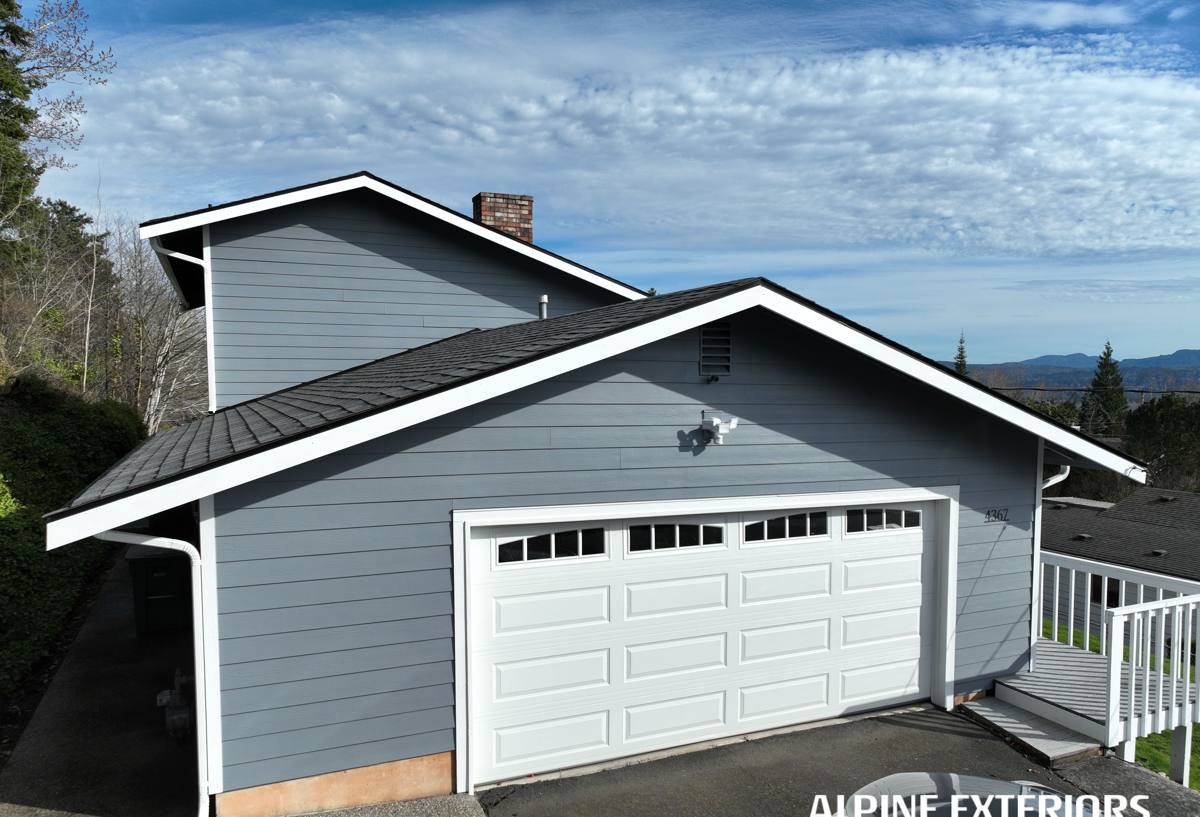
Signs a South Hill Roof Needs Replacing, Not Repairing
Repair makes sense when the damage is isolated. Replacement is the honest call once the roof's underlying systems — deck, underlayment, flashing — are failing broadly rather than in one spot. Common signs we look for on South Hill homes:
- Granule loss heavy enough that you can see it collecting in gutters or at downspout outlets
- Moss growth that's returned within a year or two of cleaning, especially on north-facing or shaded slopes
- Soft spots or sag in the roof deck when walked, usually a sign moisture has reached the sheathing
- Daylight or water staining visible in the attic, particularly around chimneys, vents, or valleys
- Shingles curling, cracking, or missing tabs across multiple sections rather than one storm-damaged area
- A roof already past 20-25 years old, regardless of how it looks from the ground
If a roof is showing two or more of these, repair is usually a short-term patch on a longer-term problem. We'll always tell you honestly which situation you're in — there's no benefit to either of us in replacing a roof that just needs a good repair.
What a Correct Installation Involves
A new roof is only as good as what's underneath the shingles. On South Hill, we pay particular attention to the layers most homeowners never see:
Tear-Off and Deck Inspection
Full tear-off to the deck lets us actually see the plywood or plank sheathing underneath — something no re-roof-over-existing job allows. Any deck sections softened by long-term moisture intrusion (common where moss has held water against the roof for years) get replaced before anything new goes down.
Underlayment Built for Driving Rain
Given how often wind-driven rain hits this hillside, we use synthetic underlayment across the field and self-adhering ice-and-water membrane at the vulnerable points — eaves, valleys, and around penetrations — rather than treating those as optional upgrades. This is the layer that protects the deck if wind ever forces water past the shingles themselves.
Flashing and Fastener Selection
Because of the salt air this close to the bay, we favor corrosion-resistant flashing and fastener materials over standard-grade options, particularly on chimneys, skylights, and any roof-wall intersections. Cheaper fasteners can start showing rust streaks within a few years in this environment — a maintenance headache we'd rather you never have.
Ventilation
Proper intake and exhaust ventilation keeps moisture from condensing in the attic, which matters as much as keeping rain out from above. Under-ventilated attics on shaded, moisture-prone lots are a common contributor to premature deck rot we see when we tear off older roofs on the hill.
Valleys and Debris Points
Given the tree cover common on South Hill, valleys get extra attention during installation — proper metal or woven valley work that sheds debris and water rather than trapping it, since this is where moss and organic buildup start first.
Material Choices for This Climate
There's no single "best" roofing material — the right choice depends on budget, roof pitch, and how much upkeep you want to take on. Here's how the common options stack up for a South Hill home specifically:
| Material | Moss & Moisture Resistance | Salt Air Durability | Typical Lifespan |
|---|---|---|---|
| Architectural asphalt shingle | Good with proper ventilation and algae-resistant granules | Good — minimal exposed metal | 25-30 years |
| Standing seam metal | Excellent — sheds moisture fast, little surface for moss to grip | Requires coastal-rated coatings and fasteners | 40-50+ years |
| Synthetic/composite shake | Good, resists moisture absorption better than wood shake | Good | 30-40 years |
| Cedar shake | Requires regular treatment to resist moss and rot | Fair — higher maintenance near salt air | 20-30 years with upkeep |
For most South Hill homes, a quality architectural shingle with algae-resistant granules and correct ventilation offers the best balance of cost and durability. Metal is worth considering on steeper pitches or for homeowners planning to stay long-term and wanting to minimize moss maintenance altogether.
Our Installation Process
We keep the process straightforward and communicate at each stage rather than disappearing until the job's done:
- On-site inspection and estimate — we walk the roof, check the attic where accessible, and give you an honest assessment of condition and options.
- Material selection — we walk through the trade-offs above in plain terms so you're choosing based on your budget and priorities, not a sales pitch.
- Scheduling around weather — given how much rain this region gets, we plan tear-off days around forecasts and keep the deck protected if conditions shift mid-job.
- Tear-off and deck repair — full removal of old roofing, deck inspection, and replacement of any compromised sheathing.
- Underlayment, flashing, and ventilation installation — the protective layers described above, done to spec rather than skipped to save time.
- Final installation and cleanup — shingles or panels installed, site cleaned of debris and nails, and a final walkthrough with you.
What to Expect Cost-Wise
Pricing depends on roof size, pitch, material, and how much deck repair is needed once tear-off exposes the sheathing — we won't quote a number sight unseen. In general terms, a straightforward asphalt shingle replacement on a typical South Hill home runs toward the middle of the market range for the region, with metal roofing and extensive deck repair pushing costs higher. We'll give you a clear, itemized estimate after inspection, not a vague ballpark.
Why Hire a Crew That Already Works This Neighborhood
A roofing crew that regularly works South Hill already understands the practical realities of the job before they show up: how the hillside lots affect staging and access, which details tend to fail first on homes exposed to the bay, and how the local moss and moisture cycle actually behaves across seasons rather than in theory. That's the difference between a generic installation and one built for the specific place it's going on. It also means faster response if something needs attention after the job is done — we're not driving in from out of the area to handle a warranty callback.
Maintenance After Installation
A correctly installed roof still benefits from basic upkeep, especially in this climate:
- Clear gutters and valleys of leaves and needles at least twice a year, more often under heavy tree cover
- Have moss growth addressed early rather than letting it establish — soft-washing rather than pressure-washing protects granule surfaces
- Check attic ventilation isn't blocked by insulation or storage
- Schedule a roof inspection after any major windstorm to catch lifted flashing or shingles before they lead to leaks
If you're weighing whether your South Hill roof needs replacing or just some honest attention, we're happy to take a look and give you a straight answer either way. Reach out for a free, no-pressure estimate — the form below gets you started.