 Bellingham Roofing
 Asphalt Shingle Roofing in Happy Valley, Bellingham
Happy Valley sits close enough to Bellingham Bay that homes here feel the marine layer almost every day of the year. That proximity is part of what makes the neighborhood pleasant to live in, and it's also exactly why roofs age differently here than they do a few miles inland. Salt-laden air, wind-driven rain off the water, and a moss season that can run from late fall clear into spring all put steady, low-grade stress on a shingle roof. None of it is dramatic on its own. It's the accumulation that gets homeowners — a roof that looked fine at year twelve and suddenly needs real work at year sixteen because the small stuff never got addressed.
We install and repair asphalt shingle roofing throughout Happy Valley and the surrounding Bellingham streets, and we've built our process around what actually wears out roofs in this specific microclimate, not a generic checklist written for a drier part of the country.
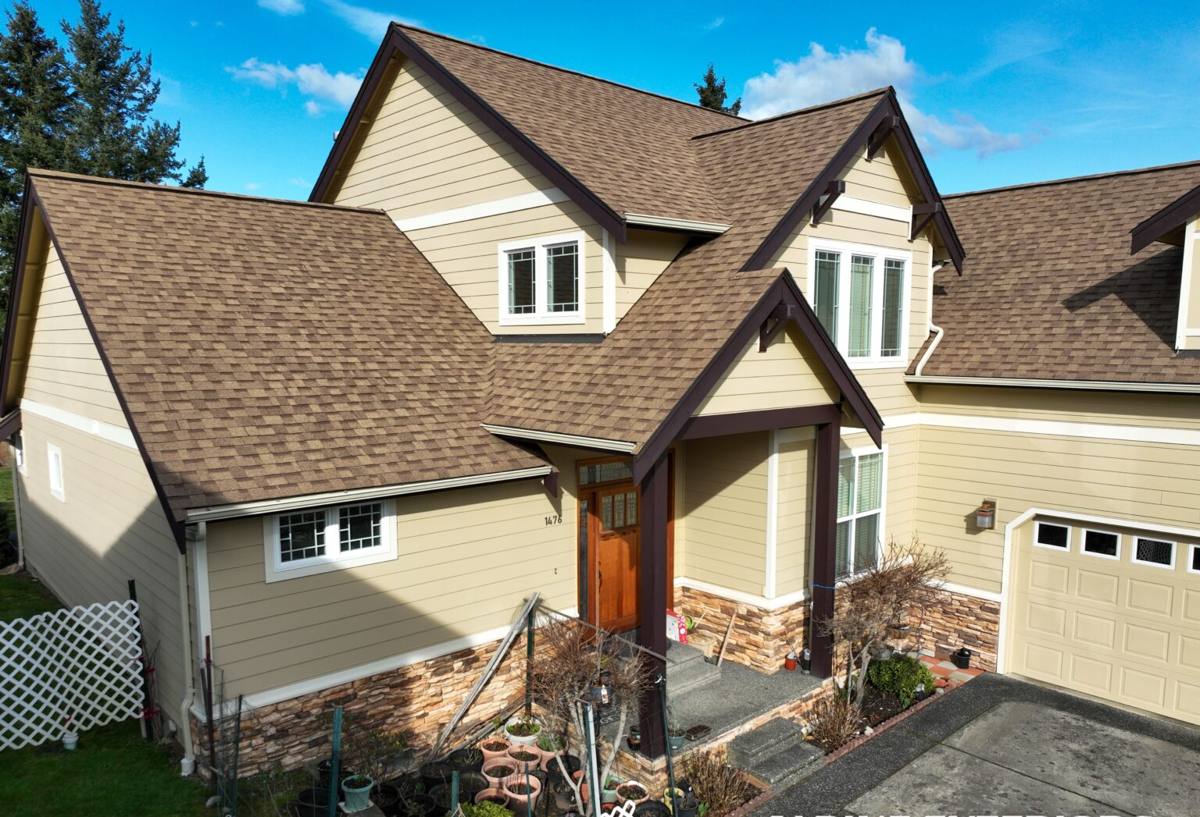
Why Happy Valley's Climate Is Harder on Shingles Than It Looks
Whatcom County doesn't get the violent weather some regions do, but it makes up for that with persistence. A shingle roof in Happy Valley deals with three compounding factors most of the year:
- Salt air corrosion: The neighborhood's closeness to the bay means fasteners, flashing, and exposed metal components are exposed to airborne salt more than roofs further inland. Lower-grade galvanized nails and flashing corrode faster here, which is a big reason we don't cut corners on fastener quality.
- Driving rain: Wind off the water doesn't just fall on a roof, it pushes rain sideways and up under shingle tabs, valleys, and roof-to-wall transitions. A roof that would shed water fine in a calm downpour can leak in Happy Valley if the underlayment, valleys, and step flashing weren't detailed for wind-driven moisture.
- Extended moss season: Shade, moisture, and mild temperatures are a moss-friendly combination, and a lot of Happy Valley's tree canopy gives moss plenty of shaded, damp real estate to take hold. Moss isn't just cosmetic — it holds moisture against the shingle surface and works its way under tab edges, which accelerates granule loss and can lift shingles enough for water to get underneath.
Individually, none of these would ruin a roof fast. Together, over a Bellingham winter after Bellingham winter, they're the reason we see premature wear on roofs that were installed without local conditions in mind.
What This Means for Material Choices
Not every asphalt shingle product handles this environment equally well. Algae-resistant shingles (rated with copper or zinc granules) genuinely earn their keep in a moss-and-moisture climate like this one — it's one of the few upgrades we'll actively recommend rather than just offer. Standard three-tab shingles, by contrast, tend to show moss and streaking faster and have a thinner profile that's less forgiving of wind-driven rain at the tab edges. We'll walk you through the trade-offs honestly rather than upselling the most expensive option by default.
What a Correctly Installed Shingle Roof Needs Here
A shingle roof built for Happy Valley isn't fundamentally different in its components from any other asphalt roof — it's different in how much attention goes into the details that matter for this climate.
Underlayment and Ice/Water Protection
Synthetic underlayment with a full self-adhered ice-and-water membrane at eaves, valleys, and around every penetration gives the roof a second line of defense when wind pushes rain under the shingle surface. In a driving-rain environment, this layer does more real work than homeowners typically realize — it's the backup that keeps a wind event from becoming an interior leak.
Flashing and Fasteners
Given the salt-air factor, we favor corrosion-resistant flashing and fastener materials over the cheapest galvanized options, particularly at chimneys, skylights, and wall transitions where flashing failure is the single most common source of "mystery" roof leaks. This is a small cost difference upfront and a meaningful difference in how the roof holds up over fifteen or twenty years.
Ventilation
Proper intake and exhaust ventilation keeps the attic dry and temperature-balanced, which matters for shingle lifespan and for controlling condensation — a real issue in a humid, marine climate where moisture can build up in an attic space even without a roof leak. Poor ventilation shortens shingle life from underneath, which is easy to miss until granule loss and curling show up years earlier than they should.
Valleys and Roof-to-Wall Details
Valleys concentrate water flow, and roof-to-wall transitions are where wind-driven rain finds gaps if step flashing and counter-flashing weren't installed correctly. These are the details that separate a roof that performs well in a Bellingham winter from one that doesn't, and they're also the details that are hardest to fix after the fact without pulling shingles back up.
Our Process for Happy Valley Roofing Projects
We keep the process straightforward because roofing shouldn't feel mysterious to the homeowner paying for it.
- On-site inspection: We look at the existing roof's condition, note moss coverage, flashing condition, ventilation, and any soft or spongy decking, and take measurements.
- Honest assessment: We tell you whether you're looking at a repair, a partial re-roof, or a full replacement — and why. If a repair will genuinely hold, we'll say so rather than pushing a full replacement.
- Written estimate: Materials, scope, and timeline laid out clearly, with algae-resistant shingle options priced alongside standard options so you can compare.
- Tear-off and deck inspection: Old roofing comes off down to the deck, and we check for water damage or rot before anything new goes down — this is where hidden problems from wind-driven rain or old flashing failures usually surface.
- Underlayment, flashing, and shingle installation: Built in the order and to the spec described above, with attention to valleys, penetrations, and wall transitions.
- Final walkthrough and cleanup: We review the completed work with you and clear the site of debris and fasteners.
Repair, Partial Re-Roof, or Full Replacement?
Not every roof problem in Happy Valley needs a full tear-off. The table below covers the general signs that point toward each option — actual scope always depends on what we find during inspection.
| Situation | Typical Fix | Why |
|---|---|---|
| Isolated moss buildup, few damaged shingles, roof under 12-15 years old | Targeted repair + moss treatment | Underlying materials are usually still sound; localized damage doesn't justify full replacement |
| Flashing leak at chimney or wall, rest of roof in good shape | Flashing repair/replacement | Flashing fails independently of shingle age and is a common isolated leak source |
| One roof slope with storm or tree damage, other slopes intact | Partial re-roof of affected slope | Matches new material to the damaged section without full-roof cost |
| Widespread granule loss, curling shingles, roof near or past 20-25 years | Full replacement | Material is past its service life across the whole roof; repairs won't hold long-term |
| Soft decking, visible interior water staining in multiple rooms | Full replacement with deck repair | Water has compromised the structure beneath the shingles, not just the surface layer |
Maintenance That Actually Matters in This Climate
A shingle roof in Happy Valley benefits from a bit more upkeep attention than the same roof would need in a drier climate. This isn't about babying it — it's about catching the small, cheap fixes before they become expensive ones.
- Schedule a moss inspection and treatment in early fall, before the wet season sets in, rather than after moss has already spread.
- Keep gutters clear so water isn't backing up under the eave edge during heavy rain events.
- Trim back overhanging branches where practical — less shade means less moss-friendly moisture retention on the roof surface.
- After any significant windstorm, a quick visual check (or a call to us) for lifted or missing shingles can prevent a small wind event from turning into a winter-long leak.
- Have flashing checked every few years, especially around chimneys and skylights, since flashing failure is often silent until it isn't.
A Practical Pre-Winter Checklist for Happy Valley Homeowners
- Gutters and downspouts cleared and flowing freely
- Visible moss growth treated or scheduled for treatment
- No visibly lifted, cracked, or missing shingles
- Flashing at chimneys, skylights, and wall transitions intact and sealed
- Attic checked for daylight, staining, or musty odor indicating moisture intrusion
Why Hiring a Crew That Already Works Happy Valley Matters
Roofing crews that mostly work drier, more inland parts of Washington sometimes install roofs that meet code and look fine on day one, but weren't detailed for wind-driven rain or salt-air corrosion. Those shortcuts don't show up as problems immediately — they show up as leaks and premature moss growth three, five, or eight years later.
We work Bellingham and the surrounding Whatcom County neighborhoods regularly, which means we're not guessing at how a roof will hold up here — we're building to what we've seen actually work and actually fail on roofs like the ones already standing in Happy Valley. That local pattern recognition is worth more than it sounds like on paper; it's the difference between a roof that needs attention every year and one that quietly does its job for two decades.
We also stand behind our workmanship and back it with manufacturer warranty coverage on materials, so you're not left guessing what's covered if something does come up down the road.
Get a Free, No-Pressure Estimate
If your Happy Valley roof is showing moss, aging shingles, or you just want an honest read on how much life it has left, we're happy to take a look. The estimate is free, there's no pressure to move forward, and you'll get a straight answer about what your roof actually needs — use the form below to get started.