 Bellingham Roofing
 Why Birch Bay Windows Wear Out Faster Than Windows Inland
Birch Bay sits right on the water, and that changes what a window has to survive day to day. Homes a few miles inland in Bellingham deal with a lot of rain, but they don't get the salt-laden air coming off the bay, and they usually get more of a wind break from trees, hills, or neighboring structures. Birch Bay homes, especially anywhere close to the waterfront, take wind-driven rain almost head-on, and that rain carries salt that settles into hardware, sills, and any gap in the seal.
Over time that combination — salt air, sustained moisture, and wind pressure pushing water where it normally wouldn't go — is hard on window frames, weatherstripping, and especially the metal components: hinges, cranks, locks, and screws. It also means the window's job isn't just to look good and keep heat in. It has to shed water actively, resist corrosion, and keep doing both for 20-plus years without babysitting.
Then there's the moss and mildew side of things. Whatcom County's wet season runs long, and anything that stays damp — a windowsill with poor drainage, a corner where caulking has failed, a shaded north-facing wall — becomes a spot where moss, algae, and mildew take hold. On windows specifically, that usually shows up as black staining on the sill, a spongy feel to painted wood trim, or a musty smell near the frame inside. None of that is cosmetic once it's been sitting for a season or two; it's usually a sign moisture is getting past the exterior seal.
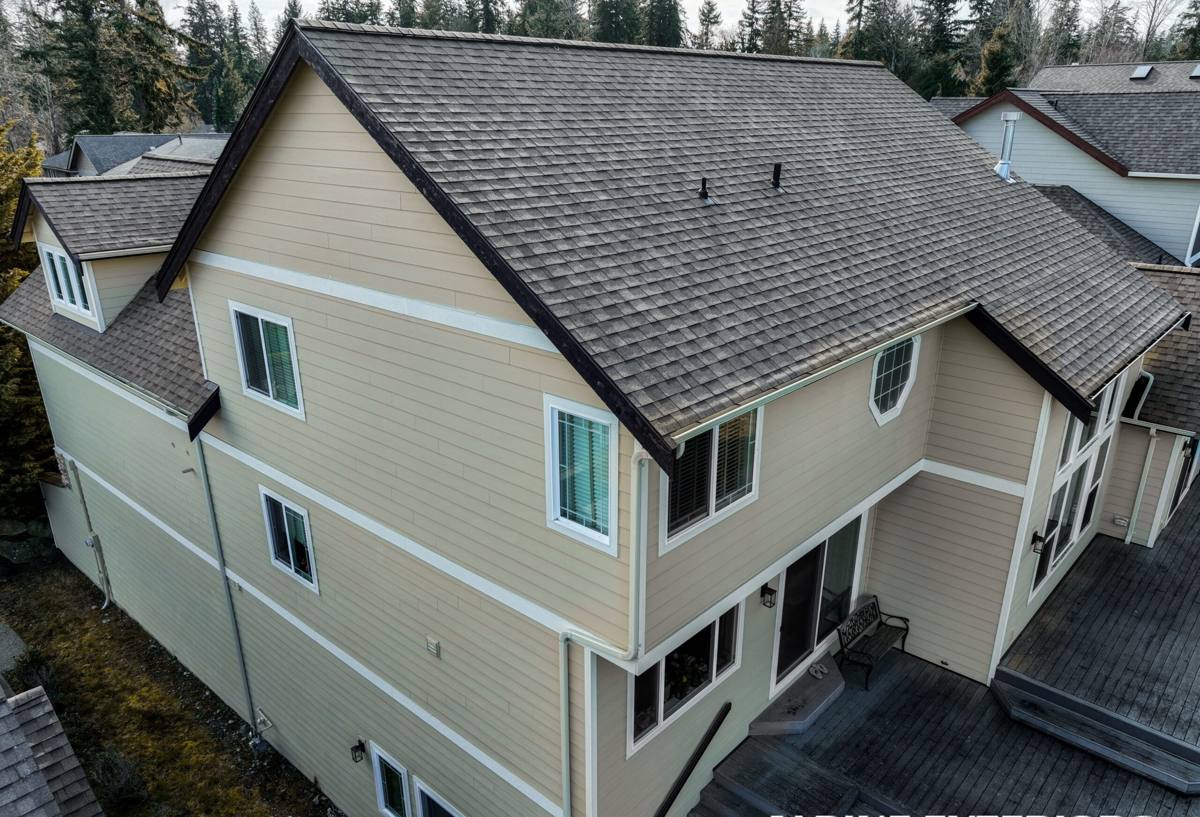
Signs a Birch Bay Home Actually Needs New Windows
Not every drafty or foggy window needs full replacement, and we'll tell you honestly when a repair, re-caulk, or hardware fix will do the job. But there are a handful of signs that point to replacement being the right call, especially in a coastal setting like Birch Bay:
- Fogging or a visible haze between panes of a double-pane window — the seal has failed and the gas fill is gone, so the insulating value is too
- Wood frames that are soft, discolored, or crumbling at the corners, especially at the bottom where water sits longest
- Windows that won't stay open, won't latch tightly, or have visibly corroded cranks and locks
- Noticeable drafts or a cold wall near the window even with it fully closed and locked
- Paint or finish that's failed on the exterior frame while the rest of the siding is fine — often a sign water is getting behind the trim
- Persistent condensation on the inside of the glass in cooler months, which points to poor insulating performance, not just humidity
If you're seeing two or more of these on the same window, replacement is almost always more cost-effective long-term than repeated repair, because the underlying seal and frame integrity are already compromised.
What a Correct Window Installation Actually Involves
The window unit itself matters, but in a wind-driven-rain environment like Birch Bay, the installation detailing matters more. A high-end window installed with shortcuts will leak before a mid-grade window installed correctly. Here's what we consider non-negotiable on every job:
Flashing and Water Management
Every opening gets flashed so that water is directed out and down, never trapped behind the siding or sill. That means proper sill pan flashing at the bottom of the opening (so any water that does get past the window has somewhere to drain), and head flashing or a drip cap above the window that sheds water away from the top seam. This is the single biggest factor in whether a window stays dry for 20 years or starts leaking in year three.
Weather-Resistive Barrier Integration
The window has to be integrated into the wall's weather-resistive barrier (the house wrap or building paper) using the correct shingle-lap order — top flap over the barrier, side flaps overlapping the sill flashing, and so on — so water always moves downward and outward, never behind a seam.
Sealing That's Built to Move
We use sealants and backer rod rated for exterior exposure and temperature swings, not just standard caulk that will crack and shrink within a couple of seasons. Coastal air ages sealant faster than inland air, so joint quality here isn't optional.
Fastening and Shimming
The window has to be plumb, level, and square, shimmed at the manufacturer's specified points so the frame doesn't rack out of shape and compromise the seal around the sash. A window that's slightly out of square will never seal correctly, no matter how good the caulking is.
Window Materials That Hold Up Near the Water
Material choice matters more in Birch Bay than in a sheltered inland lot, mainly because of hardware corrosion and moisture cycling. Here's how the common options compare for this specific setting:
| Material | Coastal/Salt-Air Performance | Maintenance | Typical Fit |
|---|---|---|---|
| Vinyl | Good — won't rot or corrode; hardware quality varies by manufacturer | Low — occasional cleaning, no painting | Most Birch Bay homes; strong value |
| Fiberglass | Excellent — very stable in temperature swings and humidity, resists warping | Low | Homes wanting long service life and minimal upkeep |
| Wood (unclad) | Poor without diligent upkeep — most exposed to moisture damage of any option | High — regular painting/sealing required | Only where exterior is well-protected from weather |
| Wood, aluminum or fiberglass-clad | Good exterior protection with wood's interior look; cladding seams need good detailing | Moderate — interior wood still needs occasional attention | Homes wanting a traditional interior look with better exterior durability |
| Aluminum | Fair — prone to corrosion near salt air unless properly coated; also conducts cold | Moderate | Less common choice for this exposure; we typically steer clients elsewhere |
We don't push one brand or material on every job. What we do insist on is corrosion-resistant hardware (stainless or coated components, not bare steel) and glass packages rated for the wind exposure of your specific lot, whether you're a block off the water or set back with more of a windbreak.
Choosing the Right Glass Package
Standard double-pane glass is fine for a lot of homes, but in Birch Bay we usually talk through a few upgrades that pay off:
Low-E Coatings
Low-emissivity glass coatings help control heat loss in our cool, wet winters and reduce solar heat gain in summer. For a coastal exposure they also help cut down on the temperature swing that drives condensation on the interior pane.
Argon or Krypton Fill
Gas-filled insulated glass units improve the R-value of the window without adding bulk. This matters more here than in a mild inland spot because of the steady wind exposure pulling heat through the glass.
Impact and Wind-Rated Glazing
Homes on more exposed lots — closer to the water, less windbreak, more direct fetch across the bay — benefit from a higher wind-load rating on the glass and frame assembly. This isn't necessary for every home, but it's worth discussing if you've had storm damage before or your lot catches wind straight off the water.
Our Installation Process, Start to Finish
- On-site assessment: we look at each opening, check for existing water damage or rot behind the trim, and measure for exact fit
- Material and glass selection: we walk through the material and glass options that make sense for your exposure and budget — no upsell for its own sake
- Removal: old windows come out carefully, and we inspect the framing underneath before anything new goes in — this is where hidden rot or moisture damage gets caught
- Framing repair if needed: any soft or damaged framing gets addressed before the new window goes in; installing a new window over a compromised opening just hides the problem
- Flashing and barrier integration: sill pan, side flashing, and head flashing installed in the correct shingle-lap order, tied into the existing weather-resistive barrier
- Setting the window: shimmed plumb, level, and square, fastened per manufacturer spec
- Sealing and trim: exterior sealant, interior trim, and insulation around the frame to eliminate air gaps
- Final check: operation, locking, and a visual water-management check before we consider the job done
Common Shortcuts We See — and Why They Fail Here
A lot of window problems we get called out to fix in Birch Bay aren't the window's fault — they're installation shortcuts that don't show up until a season or two of driving rain finds the gap. Use this checklist if you're evaluating a past installation or comparing quotes:
- Caulk used in place of proper flashing — caulk is a backup seal, not a substitute for sill pan and head flashing
- No sill pan flashing, meaning any water that gets past the window has nowhere to drain but into the wall framing
- Window not shimmed square, causing uneven pressure on the sash and premature seal failure
- Weather-resistive barrier flaps taped or stapled in the wrong order, letting water run behind the seam instead of over it
- Standard steel fasteners or hardware used on a coastal-exposure home, leading to early corrosion and staining
- Gaps around the frame left uninsulated, creating both a draft and a condensation point
Any one of these can look fine on install day and cause a real problem two or three winters later — which is exactly the kind of issue that's expensive to trace once siding and trim are back in place.
Living With Windows in a Salt-Air, Moss-Prone Climate
Even a correctly installed window needs a little seasonal attention here. A few habits go a long way in Whatcom County's coastal conditions:
Rinse salt residue off exterior frames and hardware a couple times a year, especially after storms — salt buildup accelerates corrosion on hinges, cranks, and locks. Keep weep holes (the small drainage openings at the base of the frame) clear of debris and moss so water has somewhere to go. Check exterior caulk lines once a year for cracking or gaps, particularly on south- and west-facing walls that take the brunt of wind-driven rain. And if you notice moss or algae building up on a sill or lower frame, treat it early — left alone through a wet Whatcom County winter, it holds moisture against the frame and speeds up whatever damage is already starting underneath.
Why Hire a Crew That Already Works Birch Bay
Window installation done wrong doesn't usually announce itself right away — it shows up as a leak, a soft spot in the wall, or a musty smell a year or two down the road, after the crew that did the work is long gone. A contractor who works Birch Bay regularly already knows which exposures need extra wind-load consideration, which older homes in the area tend to have hidden framing issues behind the trim, and how to detail flashing so it actually holds up to a full wet season of driving rain off the water. That local knowledge is the difference between a window that just looks new and one that's actually built to handle this specific coastline for the next couple of decades.
If you're weighing a repair versus replacement, or just want a straight answer on what your windows need, we're happy to take a look. Reach out for a free, no-pressure estimate using the form below — we'll walk the property, tell you honestly what we find, and lay out your options without any pressure to decide on the spot.