 Bellingham Roofing
 Birch Bay Sits Right at the Edge of the Weather
Birch Bay homes take a different kind of beating than a house set back in the trees a few miles inland. Being this close to the water means near-constant exposure to salt-laden air, wind that drives rain sideways instead of straight down, and a moss season that stretches longer than almost anywhere else in Whatcom County. Siding here isn't just a cosmetic layer — it's the first and most-tested line of defense on the house.
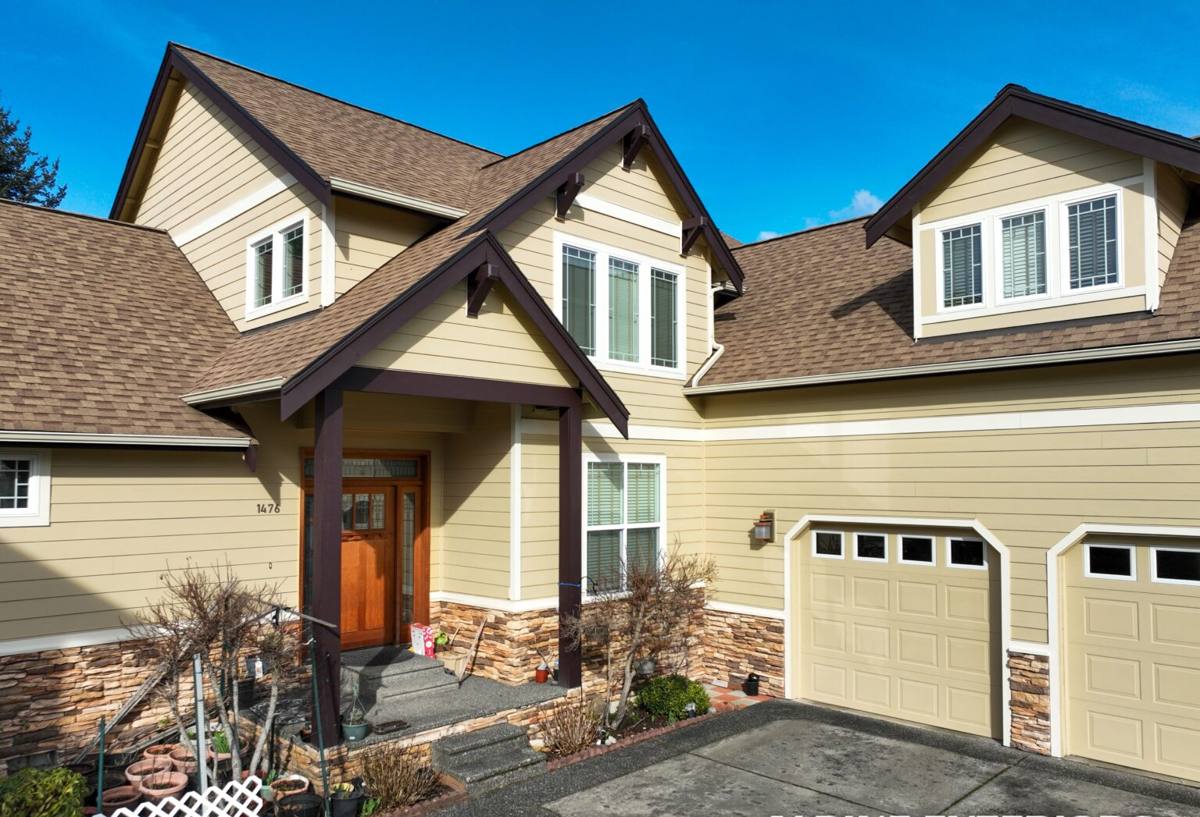
We install James Hardie fiber cement siding exclusively, and Birch Bay is one of the clearest examples of why. This is a page about one job, done right, in one place: replacing or installing James Hardie siding on a Birch Bay home built for exactly the conditions it faces.
What Salt Air, Driving Rain, and Moss Actually Do to a Wall
Salt Air
Airborne salt is corrosive to metal fasteners, flashing, and trim, and it accelerates the breakdown of paint films on wood and engineered wood products. Over years, salt exposure can leave chalky residue, dull finishes, and speed up fastener corrosion in ways that inland Bellingham homes simply don't experience at the same rate.
Wind-Driven Rain
Birch Bay's open exposure to Georgia Strait means rain doesn't just fall — it gets pushed horizontally into wall assemblies, seams, and butt joints. Any siding product that isn't rated for direct wetting, or any installation that skips proper flashing and gapping, gives that wind-driven water a path to get behind the cladding.
Moss and Sustained Moisture
Marine air keeps humidity elevated for more of the year here than in drier parts of the county. That extended dampness is exactly what moss, algae, and mildew need to take hold on north-facing walls and anywhere sun exposure is limited. Left unchecked, organic growth holds moisture against the siding surface far longer than a simple rain event would.
Why We Standardized on James Hardie for Homes Like This
We made a deliberate decision years ago to install only James Hardie fiber cement siding — not vinyl, not LP SmartSide, not Cemplank or Allura, not primed spruce or cedar. Every one of those products has legitimate uses and loyal customers. Our reasoning is specific to what we've seen happen to siding on exposed, marine-influenced homes over time:
- Fiber cement doesn't feed organic growth the way wood-based products can when moisture gets trapped against a wall.
- James Hardie's ColorPlus finish is baked on at the factory under controlled conditions, which holds up more consistently than field-applied paint exposed to salt air during cure.
- Hardie engineers specific product lines for different climate zones, including formulations built around moisture and temperature swings — relevant on a coastline where conditions change fast.
- It's non-combustible, which matters everywhere but adds peace of mind on properties where wildfire smoke and ember exposure have become a real seasonal concern across the Pacific Northwest.
- The warranty is transferable and backed by a large, established manufacturer, not something we have to explain away years later.
None of the alternatives are bad products in the abstract. We simply won't put our name on an installation where we know the material is working against the house instead of with it — and on a lot in Birch Bay, that distinction shows up faster than almost anywhere else we work.
Picking the Right Hardie System for a Birch Bay Lot
James Hardie makes several product profiles, and the right choice depends on the home's style, sun exposure, and how directly it faces the water.
| Product | Best Use | Why It Fits This Climate |
|---|---|---|
| HardiePlank lap siding | Most single-family homes, classic and modern styles | Widely proven profile with strong water-shedding lap geometry when installed with correct overlap and gapping |
| HardieShingle | Craftsman and cottage-style homes, accent gables | Gives a traditional shingle look without the moisture absorption of real wood shingles |
| HardiePanel with battens | Modern builds, garages, accent walls | Clean vertical lines; performs well when paired with a proper rainscreen gap on exposed elevations |
| ColorPlus prefinished options | Any of the above | Factory-cured finish resists fading and chalking better than field-painted siding in salt air |
For homes with a direct water-facing elevation, we often recommend the more weather-exposed side receive extra attention on flashing detail and rainscreen venting, even when the rest of the home is more sheltered by trees or terrain.
What a Correct Installation Actually Involves
James Hardie siding performs the way it's rated to perform only when it's installed to spec. Most of the problems we get called out to fix on other contractors' work trace back to shortcuts taken during installation, not a flaw in the material itself. On an exposure-heavy site like Birch Bay, these details matter more than usual:
Water Management Behind the Siding
A weather-resistive barrier and, on more exposed walls, a rainscreen gap that lets any moisture that does get past the cladding drain and dry out rather than sitting against the sheathing.
Flashing at Every Penetration
Windows, doors, hose bibs, light fixtures, and deck ledgers all need proper head flashing and kick-out flashing where rooflines meet walls — the exact places wind-driven rain finds a way in.
Fastening Pattern and Fastener Material
Corrosion-resistant fasteners, placed and spaced according to Hardie's published instructions, not "close enough." In a salt-air environment, the wrong fastener metal is a slow-motion failure waiting to happen.
Joint Treatment and Caulking
Butt joints either flashed or properly caulked with a product rated for the movement and exposure involved — this is one of the most common places we find moisture intrusion on older installs.
Clearances
Proper gap between the siding's bottom edge and grade, decks, roofs, or hardscaping so splashback and standing water don't sit against the material.
Our Process on a Birch Bay Job
- On-site assessment — we look at sun exposure, wind direction relative to the home, current siding condition, and any existing moisture or moss issues before recommending a scope of work.
- Tear-off and sheathing check — once old siding is off, we inspect sheathing for hidden rot or moisture damage, which is common on homes that have had wind-driven rain intrusion for years without visible symptoms.
- Water management install — house wrap, flashing, and rainscreen furring where appropriate for the wall's exposure level.
- Hardie installation to manufacturer spec — correct fasteners, gapping, and joint treatment throughout.
- Final inspection and walkthrough — we go over the finished work with the homeowner before calling the job done.
What Affects the Cost of a Birch Bay Siding Job
Every home is different, but a few factors consistently move the estimate up or down more than homeowners expect:
| Factor | Why It Matters |
|---|---|
| Condition of existing sheathing | Hidden rot from years of wind-driven rain intrusion adds repair scope that isn't visible until tear-off |
| Home size and number of stories | More wall area and taller elevations mean more material, labor, and staging/access equipment |
| Product line and finish | ColorPlus prefinished panels cost more upfront than field-painted but reduce repainting cycles over time |
| Trim and architectural detail | Gables, dormers, and multiple roof-wall intersections add flashing and cutting time |
| Site access | Waterfront lots, tight setbacks, or limited driveway access can affect staging and material handling |
Why It Matters That We Already Work Birch Bay
A crew that's installed siding across Whatcom County but hasn't spent real time on Birch Bay's shoreline can still do competent generic work — but they're guessing at the details that are specific to this exposure. Knowing which elevations of a typical Birch Bay lot take the worst of the wind, how much moss pressure to expect on shaded north walls, and how aggressively salt air attacks unprotected fasteners isn't something you learn from a manufacturer's install manual alone. It's something you learn by doing this work, on this coastline, repeatedly.
That local pattern recognition shows up in small decisions — where we add extra flashing that isn't strictly required by code, which joints get extra attention, how we sequence a job around this area's weather windows — that add up to a siding system that actually holds up to Birch Bay conditions rather than just meeting a minimum spec.
Signs Your Current Siding Is Already Losing the Fight
- Persistent moss or black streaking on north- or shade-facing walls that returns shortly after cleaning
- Soft or spongy spots when you press on siding near the bottom edge or around windows
- Visible fastener corrosion, rust streaking, or popped nail heads
- Paint that's chalking, peeling, or fading unevenly, especially on the side facing the water
- Gaps opening up at butt joints or corners where caulking has failed
- Interior signs like musty smells, peeling interior paint, or drywall staining near exterior walls
Any one of these on its own isn't necessarily an emergency, but a home showing several of them at once is usually telling you the current siding system has stopped doing its job.
Get a Straight Answer About Your Home
If you're weighing a siding replacement in Birch Bay, we're glad to walk your property, look at how your home's exposure lines up against wind and water, and give you an honest read on what it needs — no pressure, no inflated scope. Fill out the form below for a free estimate.