 Bellingham Roofing
 Fairhaven's Marine Climate Is Tough on Exterior Siding
Fairhaven sits close to the water, and that proximity shapes everything about how siding ages here. Salt-laden air moves off Bellingham Bay and settles on exterior surfaces year-round, accelerating corrosion on fasteners and trim and breaking down paint films faster than it would a few miles inland. Add Whatcom County's long wet season — months of driving rain pushed sideways by wind off the water — and you have a climate that tests every seam, joint, and coating on a house.
Then there's moss. The combination of shade from mature trees, persistent moisture, and mild temperatures gives moss and algae a long growing season on north- and west-facing walls. On the wrong siding material, that moss holds moisture against the surface for weeks at a time, which is exactly the condition that leads to rot, delamination, or paint failure. Siding in Fairhaven doesn't just need to look good — it needs to shed water fast, resist organic growth, and hold its finish without constant upkeep.
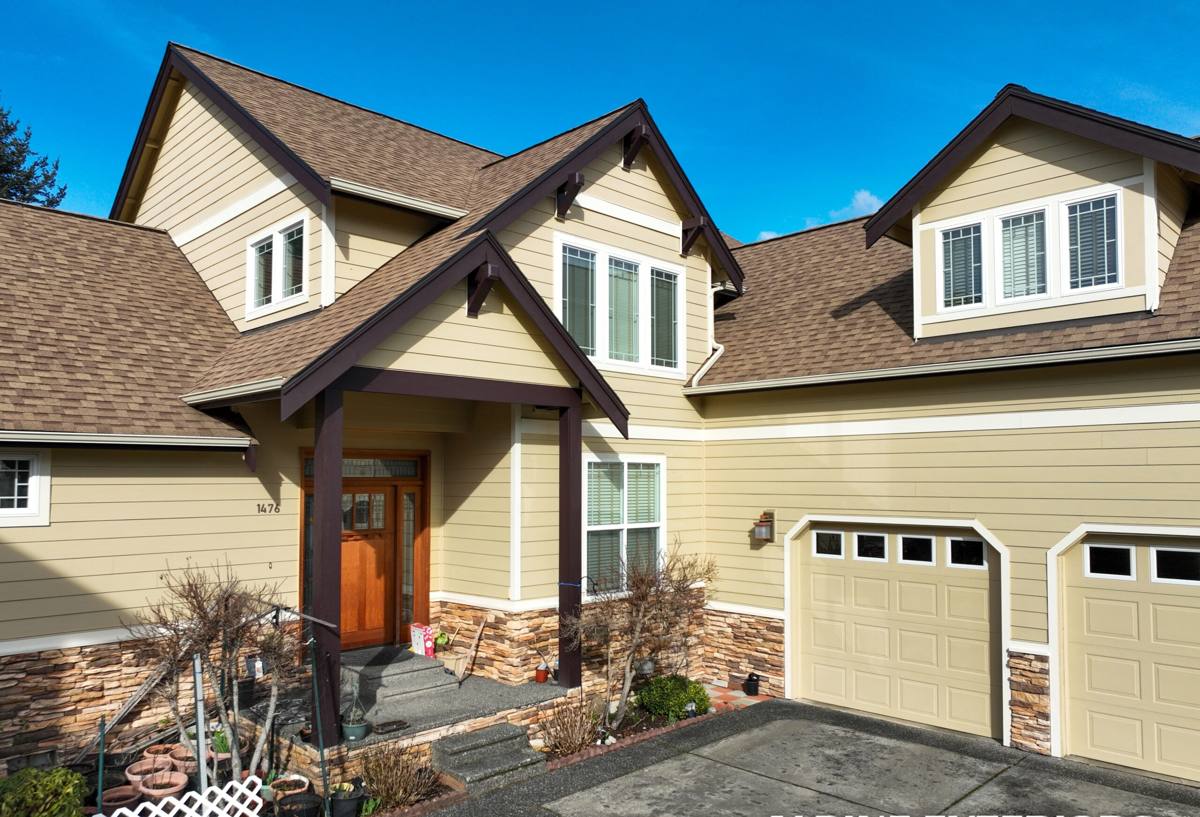
Why James Hardie Fits Fairhaven Homes
James Hardie fiber cement is engineered specifically for climate zones like ours, and that engineering matters more here than in drier parts of the country. It's a cement, sand, and cellulose fiber composite — it doesn't absorb and swell with water the way wood-based products can, and it's non-combustible, which matters given the wildfire smoke and dry-season risk the Pacific Northwest has seen more of in recent years.
HZ5 Engineered for the Pacific Northwest
James Hardie makes region-specific product lines called HardieZone, and homes in our climate zone qualify for the HZ5 line, engineered for areas with significant moisture exposure and freeze-thaw cycling. HZ5 panels are formulated to resist moisture-related damage better than a generic, one-size-fits-all siding product, which is a meaningful difference when a home sits this close to the bay.
ColorPlus Factory Finish vs. Field-Painted Siding
Most James Hardie siding we install uses the ColorPlus finish — a multi-coat, baked-on finish applied in a controlled factory environment rather than sprayed or brushed on site. That matters in a marine climate because factory-cured finishes bond more evenly and resist fading, chipping, and moss staining longer than field-applied paint, which can go on unevenly in damp Northwest job-site conditions. ColorPlus finishes also carry their own dedicated warranty coverage separate from the substrate warranty.
Signs Your Fairhaven Home's Siding Needs Attention
Because Fairhaven's climate accelerates wear, it's worth knowing what to look for before small problems become structural ones. Walk your exterior a couple of times a year, especially after the wet season, and check for:
- Soft or spongy spots when you press on siding, especially near the bottom courses and around windows
- Persistent moss or algae staining that returns within weeks of cleaning
- Paint that's peeling, bubbling, or chalking rather than just fading evenly
- Visible gaps, warping, or boards that have pulled away from the wall plane
- Dark streaking or staining below seams, which usually means water is getting behind the siding, not just running down the face
- Corroded or rust-streaked fasteners, particularly on the sides of the house that face prevailing wind and rain
Any one of these is worth a professional look. Several at once usually means the siding system as a whole — not just the visible surface — is past the point where patching makes sense.
What a Correct James Hardie Installation Involves
James Hardie siding performs the way it's rated to perform only when it's installed to the manufacturer's specifications. This is a product that's sensitive to installation quality — the same panel installed correctly versus installed with shortcuts can have very different outcomes after a few wet Northwest winters.
Flashing and Water Management
Every window, door, and penetration needs proper flashing integrated with a weather-resistant barrier behind the siding. In a climate with as much wind-driven rain as ours, the water management system behind the siding matters as much as the siding itself. Skipping or shortcutting flashing details is one of the most common causes of hidden rot behind otherwise good-looking siding.
Fastening, Gapping, and Clearances
Fiber cement needs to be fastened with the correct nail type, spacing, and depth — overdriven or underdriven fasteners both cause problems over time. Panels need proper gaps at butt joints and control joints to allow for expansion, and siding needs to maintain clearance from grade, roofing, and decking so it isn't sitting in standing water or trapped moisture.
| Installation Detail | Done to Spec | Common Shortcut We See |
|---|---|---|
| Weather barrier and flashing | Fully integrated, lapped correctly, sealed at penetrations | Barrier stapled up quickly, flashing skipped around windows |
| Fastener placement | Correct nail type, set flush, spaced per manufacturer specs | Overdriven nails, inconsistent spacing, wrong fastener type |
| Clearance from grade/decking | Minimum clearance maintained per manufacturer requirements | Bottom edge buried against soil, mulch, or deck surfaces |
| Joint gapping | Manufacturer-specified gaps, caulked or covered correctly | Panels butted tight with no room to expand |
What Drives the Cost of a Siding Project
Every home is different, so we won't quote a number without seeing the house, but a few factors consistently move the price on Fairhaven siding projects:
| Factor | Why It Matters |
|---|---|
| Condition of existing sheathing | Rot or water damage found once old siding comes off often needs repair before new siding goes on |
| Home size and wall complexity | More corners, dormers, and trim details mean more cutting, fitting, and labor |
| Siding profile and finish selection | Lap width, shingle-style panels, and trim packages vary in material and install time |
| Access and site conditions | Steep lots, tight setbacks, or limited staging area near the water can add labor time |
| Window and trim scope | Replacing or re-flashing trim and openings alongside siding adds cost but avoids redoing work later |
Our Process, Start to Finish
We start with an on-site walkthrough of the home, looking at existing siding condition, trim, flashing, and any problem areas before we ever talk product. Once we know what's underneath, we put together a written scope covering panel profile, color, trim details, and what happens with the sheathing and weather barrier — no surprises once demolition starts.
During installation, we remove old siding in sections rather than stripping the whole house at once, which limits how much of the home is exposed to Fairhaven's weather at any given time. We inspect and repair sheathing as we go, install and lap the weather-resistant barrier correctly, flash every opening, and fasten each panel to James Hardie's specifications — not just what's fast. We walk the finished job with the homeowner before calling it done.
Why We Install Only James Hardie
We made a decision as a company to install James Hardie fiber cement exclusively, and we don't install vinyl, LP SmartSide, or other fiber cement brands. That's not a marketing position — it's because we've seen what holds up in this climate and what doesn't, and we'd rather stand behind one product system we trust completely than offer a menu of options with different trade-offs. James Hardie's HZ5 formulation, factory-applied ColorPlus finish, non-combustible composition, and transferable warranty add up to the best match we've found for Whatcom County's marine climate.
Why Hiring a Crew That Knows Fairhaven Matters
A crew that regularly works this neighborhood already understands the practical realities of the job — tight or sloped lots near the water, older homes with sheathing that needs a closer look before new siding goes on, and the wind and moisture patterns that make flashing and gapping non-negotiable rather than optional. That familiarity shows up in fewer surprises mid-project and a finished install that's built for the conditions the house will actually face, not generic conditions from a manufacturer's install manual written for a drier region.
Caring for Your Hardie Siding After Installation
James Hardie siding is low-maintenance, not no-maintenance. A yearly rinse to clear moss spores and debris, especially on shaded or north-facing walls, keeps organic growth from getting a foothold. Keep gutters clear so overflow isn't running down the face of the siding, and keep an eye on caulking at trim joints and penetrations over time, since caulking is a maintenance item even on a well-installed system. Beyond that, correctly installed James Hardie siding is built to go a long time between anything more than routine cleaning.
If you're weighing a siding replacement on a Fairhaven home, we're happy to take a look and walk you through what we'd recommend — no pressure, no obligation. Use the form below to request a free estimate.