 Bellingham Roofing
 Roof Repair in Birch Bay: A Waterfront Climate Needs a Different Standard
Birch Bay sits right on the water in northern Whatcom County, and that location changes what a roof repair actually needs to accomplish. A patch that would hold for years on a sheltered, inland roof can fail within a season out here, because the problem isn't just the original damage — it's the salt air, wind-driven rain, and long moss season working on that repair from the day it's finished. A roof repair done for Birch Bay has to account for all three, not just fix the visible symptom.
This page covers roof repair specifically — not full replacement, which is its own decision with its own set of trade-offs. If your roof is showing isolated damage rather than widespread failure, repair is very often the right call, and doing it correctly the first time is what keeps it from turning into three repairs over three years.
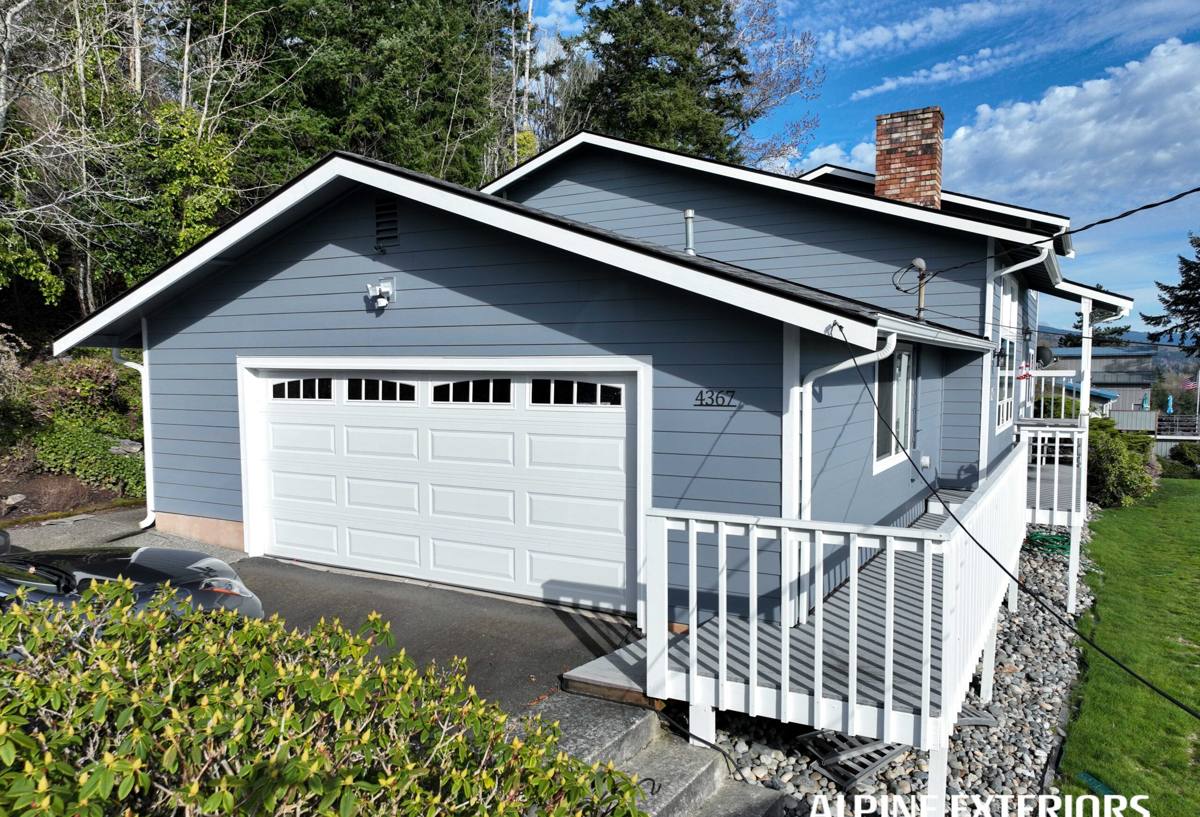
What Birch Bay's Climate Does to a Repaired Roof
Salt Air and Fastener Corrosion
Being this close to the water means more direct salt exposure than roofs see even a few miles inland. Salt accelerates corrosion on exposed metal — nail heads, flashing, vent caps, gutter hangers — and a repair that uses standard-grade fasteners or flashing can start failing at exactly the point it was fixed, sometimes faster than the original damage took to develop. Corrosion-resistant materials aren't an upgrade here; they're the baseline for a repair that's actually going to last.
Wind-Driven Rain
Waterfront exposure means more sustained wind, and wind-driven rain doesn't fall straight down onto a roof — it gets pushed sideways and upward under shingle tabs, along flashing edges, and into any gap a straight-down rain would never reach. A repair that looks watertight on a calm, dry day can still leak during the next windstorm if it wasn't detailed for rain moving sideways.
A Long Moss Season
Mild temperatures and near-constant moisture add up to a moss and mildew season that runs long on shaded and north-facing roof slopes around Birch Bay. Moss doesn't just sit on top of shingles — its rhizoids work down into the granule layer and lift shingle edges, which is one of the more common causes of a leak that seems to appear out of nowhere. A repair on a moss-affected roof has to address the moss itself, not just patch the leak it eventually caused.
Signs a Birch Bay Roof Needs Repair
Most roof problems give some warning before they become an active leak inside the house. Catching them early is usually the difference between a modest repair and a much bigger job.
- A stain on an interior ceiling or wall, especially one that shows up or spreads after a windy storm
- Missing, cracked, or curling shingles in one section rather than across the whole roof
- Flashing around a chimney, skylight, or vent that looks lifted, rusted, or patched over with caulk
- Moss buildup concentrated in a valley or on one slope that keeps coming back after cleaning
- Granules collecting in gutters or at the base of downspouts from one area of the roof
- Daylight visible through the roof deck when you look up from inside the attic
- A soft or spongy feel underfoot near a specific spot, which usually means the decking underneath has taken on moisture
Any one of these, caught early and isolated to one part of the roof, is usually a repair — not a reason to start pricing a full replacement.
What a Correct Repair Actually Involves
Finding the Real Source, Not Just the Symptom
Water on a ceiling rarely shows up directly below where it entered the roof. It can travel along rafters or decking before dripping somewhere lower and more visible. A repair that just patches the spot above the stain, without tracing the actual entry point, often leaves the real problem in place — which is why a proper repair starts with tracing the leak back to its source, usually at a flashing detail, a valley, or a section of damaged or lifted shingles.
Flashing Repair Done Right
Flashing failures are one of the most common sources of roof leaks in this climate, and one of the most commonly done wrong. A quick fix is smearing new caulk or roofing cement over old, corroded flashing — it looks solved for a season or two, then fails again, often worse. A correct repair replaces the compromised flashing section itself, integrated properly with the surrounding shingles and underlayment, so the fix actually addresses the corrosion and gap that caused the leak rather than covering it up.
Matching Materials on a Partial Repair
A repair usually means tying new shingles or flashing into existing material, and doing that cleanly matters both for how the roof looks and how well it sheds water. Shingle profiles and colors can be discontinued a few years after installation, so an honest repair estimate includes a straight answer about how close a color or profile match is achievable, rather than surprising you with a visibly mismatched patch after the work is done.
Addressing Moss as Part of the Repair
If moss contributed to the damage, removing it and treating the affected area is part of doing the repair correctly — not an upsell tacked onto the invoice. Moss that's left in place around a fresh repair will keep working at the same joints and edges that just got fixed, undoing the work within a season or two.
Checking Ventilation While the Roof Is Open
Whenever a repair opens up a section of roof, it's worth a quick check of attic ventilation in that area. Poor ventilation traps moisture against the underside of the deck, which contributes to rot and shortens the life of both the existing roof and the new repair.
Repair vs. Replace: Making the Call Honestly
Not every roof problem points toward repair, and not every homeowner needs to hear a replacement pitch for a fixable issue. The honest answer depends on a few concrete factors.
| Factor | Leans Toward Repair | Leans Toward Replacement |
|---|---|---|
| Extent of damage | Isolated to one section, valley, or penetration | Spread across multiple slopes of the roof |
| Roof age | Well under the material's expected lifespan | At or past expected lifespan for the roofing material |
| Deck condition underneath | Sheathing is solid, dry, and intact | Sheathing is soft, delaminated, or rotted |
| Repair history | First or second repair on this roof | Recurring leaks or repeated repairs in the same area |
| Material availability | Existing shingle or profile is still available to match | Product is discontinued and a match isn't realistic |
A five-year-old roof with one damaged valley from wind or debris is almost always a repair. A twenty-year-old roof with moss embedded across several slopes and a third leak in a different spot each time is telling you it's closer to the end of its service life — a repair there might buy a season, but it's not solving the underlying problem.
Common Repairs We See on Birch Bay Roofs
The specific repairs a roof needs here tend to follow the same climate-driven patterns, over and over, across different homes.
- Wind-lifted or missing shingles after a storm, usually along ridge lines or roof edges where wind uplift is strongest
- Flashing repair or replacement at chimneys, skylights, and sidewall transitions, where corrosion and lifted metal are common near the water
- Valley leaks where two roof planes meet and water volume concentrates, especially if the valley flashing has corroded or shingles have degraded
- Moss-related shingle damage on shaded or north-facing slopes, where lifted shingle edges need to be replaced along with moss removal
- Vent boot and pipe penetration repairs, where rubber gaskets crack and dry out over time and let water track down the pipe into the attic
Our Repair Process
We start with an in-person inspection of the roof and, where a leak is involved, the attic beneath it, so we can trace the actual source rather than guessing from the ground. From there we give a clear, written scope of what the repair involves and what it costs before any work starts — no vague verbal estimate you're expected to take on faith. Where the damage turns out to be more extensive once we're actually working on the roof, we explain that before doing the additional work, not after it shows up on the final bill. We stand behind the repair once it's done, and we're straightforward if what you're describing sounds more like a replacement conversation than a repair — we'd rather tell you that upfront than sell a patch we don't think will hold.
Why a Crew That Already Works Birch Bay Matters
A roofer who works this stretch of Whatcom County regularly already knows how salt air corrodes standard fasteners faster than it would inland, how wind-driven rain finds its way into flashing details that would stay dry in a calmer location, and which roof slopes around Birch Bay hold moss longest through the wet season. That's the kind of knowledge that shows up in the small decisions on a repair — which fastener grade to use, how far to extend a flashing repair beyond the visible damage, whether a valley needs more than a spot fix — and those small decisions are usually what determines whether a repair holds for years or needs revisiting by next winter.
If you're dealing with a leak, storm damage, or a roof issue you're not sure how to categorize, we're happy to take a look and give you a straight, no-pressure read on what it actually needs. Use the form below to request a free estimate for your Birch Bay property.