 Bellingham Roofing
 New-Construction Windows in Birch Bay: Getting It Right the First Time
Birch Bay sits right on the water, which means every new-construction window install here has to answer to conditions that inland Whatcom County homes simply don't face. Salt-laden air, wind-driven rain coming straight off the Strait of Georgia, and a long, damp moss season put real stress on window assemblies from day one. When we install new-construction windows in Birch Bay, we're not just setting glass in a rough opening — we're building a water management system into the wall before siding ever goes on. Get that part wrong and the homeowner won't see a problem for a year or two, but it will show up eventually as staining, soft framing, or a window that won't seal anymore.
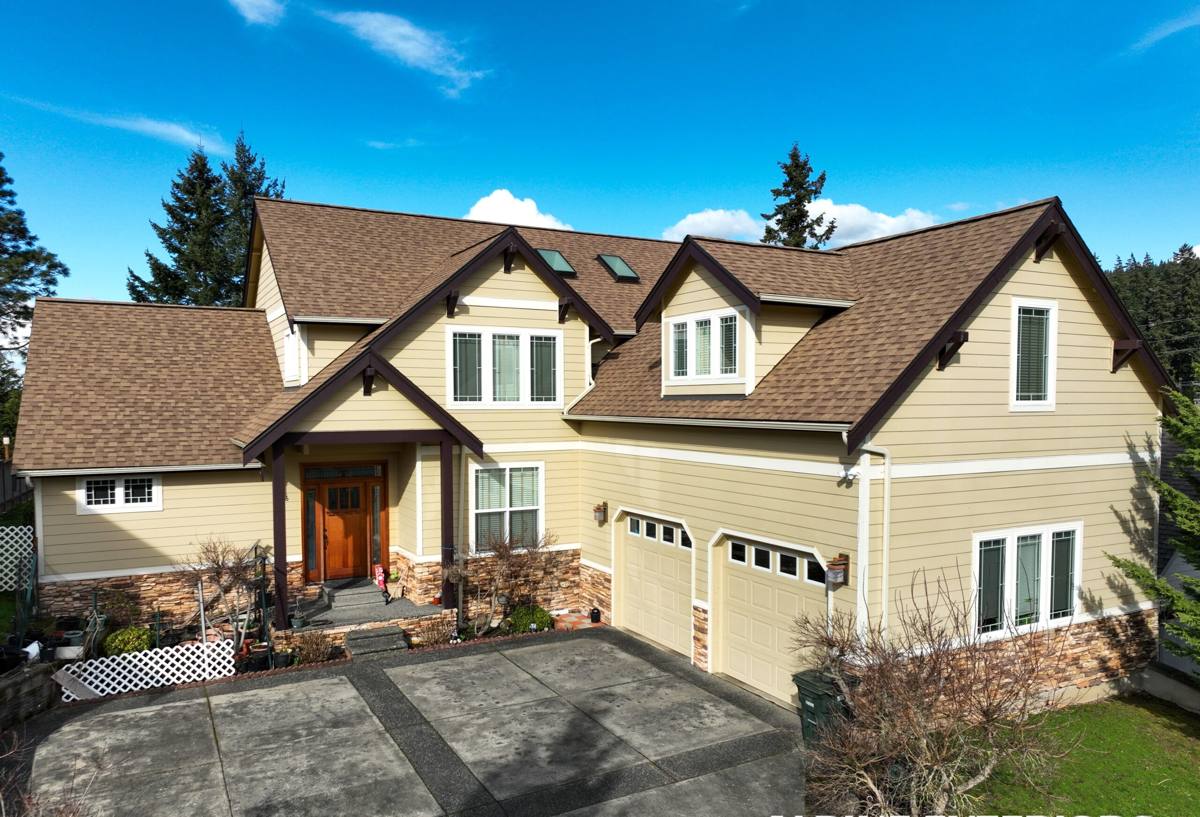
New-Construction vs. Replacement: Why the Distinction Matters
New-construction windows have a nail fin (also called a nailing flange) built around the frame, meant to be installed before the wall is finished — while the sheathing, weather-resistive barrier (WRB), and flashing are all still accessible. That's different from a retrofit or "pocket" replacement window, which is designed to slide into an existing frame with the exterior trim left in place.
On a true new build, or when we're re-siding a Birch Bay home down to the sheathing, new-construction windows are almost always the better call. They let us integrate flashing directly with the WRB and create a continuous drainage plane, rather than relying on sealant alone to keep water out. Given how much wind-driven rain this stretch of coastline sees, that difference is not cosmetic — it's the whole reason the assembly holds up.
What Birch Bay's Climate Actually Demands
Salt Air and Corrosion
Homes close to the water deal with airborne salt that accelerates corrosion on fasteners, hinges, and unprotected metal flashing. We spec corrosion-resistant fasteners and flashing materials for waterfront and near-waterfront Birch Bay properties as a matter of course, not as an upsell.
Driving Rain
Rain in Birch Bay doesn't just fall — wind off the water pushes it sideways into wall assemblies, especially on west- and southwest-facing elevations. A window that would be fine in a sheltered inland yard can leak here if the flashing details, sill pan, and head flashing aren't sequenced correctly.
Moss and Prolonged Dampness
Whatcom County's long wet season keeps north-facing and shaded wall sections damp for extended stretches. That moisture doesn't just grow moss on roofs — it slows drying time around window openings too, which is why correct flashing and drainage matter more here than in drier climates. A wall assembly that can shed water quickly and dry out between storms is what keeps framing sound for decades.
What a Correct Installation Actually Involves
A new-construction window install is a sequence, and every step depends on the one before it being done correctly. Skipping or rushing any layer is how leaks start.
- Rough opening prep — confirming the opening is square, level, and properly sized, with sheathing sound and dry.
- Sill pan flashing — a sloped, sealed pan at the base of the opening that directs any water that gets past the window back outside, rather than into the wall cavity.
- WRB integration — the weather-resistive barrier is cut and lapped so water always flows over the top of each layer, shingle-style, down and out.
- Window installation — set plumb, level, and square, with the nail fin fastened per the manufacturer's schedule.
- Head flashing — installed last, over the top of the WRB and window fin, so it sheds water down and over everything beneath it.
- Interior air sealing and insulation — closing the gap between frame and rough opening without over-compressing the insulation, which can distort the frame.
- Exterior trim and siding tie-in — trim and siding installed so they don't trap water against the window frame.
Every one of those steps is hidden once the siding goes on. That's exactly why the sequencing has to be right the first time — there's no easy way to inspect it later without opening the wall back up.
Window Materials and Types That Hold Up Near the Water
Material choice matters more in a coastal climate than it does further inland. We'll walk through the honest trade-offs for a Birch Bay property rather than push one product line.
| Frame Material | How It Performs in Birch Bay's Climate | Maintenance |
|---|---|---|
| Vinyl | Good moisture and salt resistance, no corrosion risk; budget-friendly for larger new-construction jobs | Low — occasional cleaning |
| Fiberglass | Excellent dimensional stability in temperature and moisture swings; holds up well to coastal exposure | Low |
| Aluminum | Strong and slim-profile, but prone to condensation and corrosion near salt air unless thermally broken and properly coated | Moderate — watch for corrosion at fasteners |
| Wood / wood-clad | Attractive but the most vulnerable to Whatcom County's damp season without diligent upkeep and quality cladding | High — regular inspection and finish maintenance |
For most new-construction projects in Birch Bay, we steer homeowners toward vinyl or fiberglass unless there's a specific architectural reason to consider wood-clad. That's not a knock on wood windows — it's an honest read on what a salt-air, high-moisture environment does to upkeep requirements over time. Glass package matters too: a good low-E, dual-pane unit is standard practice here, and homes with more direct water exposure or wind loading may benefit from upgraded impact-resistant or higher-performance glazing.
Our Process for a Birch Bay New-Construction Window Job
We walk every project through the same steps, whether it's a full new build or a re-side down to the studs:
- On-site assessment of the framing, exposure, and elevation-specific wind/rain exposure
- Window and material recommendation based on that specific home's exposure — not a one-size-fits-all spec
- Detailed, written estimate with no vague allowances
- Correct flashing and WRB integration sequence, documented as we go
- Final walkthrough with the homeowner or builder before siding closes the wall up
We treat the flashing and sequencing step as the part of the job that actually determines whether the window performs for the next 20-plus years. It's the least visible part of the work and the part we're least willing to rush.
Mistakes We See — and How We Avoid Them
Most window failures we're called out to inspect in coastal Whatcom County properties trace back to a handful of avoidable errors:
- Head flashing installed before the WRB is lapped over it, which sends water behind the barrier instead of over it
- No sill pan, relying on sealant alone at the base of the opening — sealant fails; a sloped pan doesn't rely on adhesion to work
- Over-fastening the nail fin, which can bow the frame and compromise the seal
- Skipping fastener corrosion resistance on projects close to the water, leading to rust staining and loosened fasteners over time
- Rushed sequencing to keep a build schedule moving, leaving gaps in the drainage plane that won't show up until the first real storm season
What Drives Cost on a New-Construction Window Project
| Factor | Why It Matters |
|---|---|
| Window count and size | More and larger openings mean more flashing detail work, not just more units |
| Frame material | Vinyl is typically the most economical; fiberglass and wood-clad cost more upfront |
| Glazing package | Standard low-E dual-pane vs. upgraded impact or acoustic glass changes unit price |
| Exposure and elevation | West- and water-facing walls may need extra flashing detail or upgraded materials |
| Coordination with siding trade | Tighter scheduling between window and siding crews reduces exposed-opening risk and can affect labor costs |
We don't publish blanket pricing because window count, sizing, and exposure vary so much house to house — but we'll always give a clear, itemized estimate before any work starts, and we'll explain the reasoning behind every line.
Why Hiring a Crew That Already Works Birch Bay Matters
Birch Bay isn't a generic Whatcom County neighborhood — it's a specific coastal microclimate, and the details that keep a window assembly watertight here aren't identical to what works in Bellingham proper or further inland. A crew that regularly works this stretch of coastline already knows which elevations take the worst of the wind-driven rain, which fastener and flashing choices hold up against salt air over years rather than months, and how the long moss season affects drying time around new openings. That local pattern recognition is the difference between an install that's technically code-compliant and one that's actually built for where it sits.
If you're planning a new build, an addition, or a full re-side in Birch Bay and want new-construction windows installed correctly the first time, we're happy to walk the site with you and put together a free, no-pressure estimate — just fill out the form below.