 Bellingham Roofing
 Windows Built for Birch Bay's Coastline, Not Just Any House
Birch Bay sits right on the water, and that changes what a window has to survive. A window that performs fine a few miles inland in Bellingham can start showing problems within a few years out here — hazy glass, pitted hardware, soft spots in the frame — because the air itself is working against it every single day. Salt-laden wind off the bay, wind-driven rain that hits windows sideways instead of straight down, and a long gray moss season that keeps everything damp for months at a time all add up to conditions that punish weak materials and sloppy installation.
We're not saying every window on the market fails out here. We're saying that if you're replacing windows in Birch Bay, the material, the hardware finish, and — just as important — how the window gets installed all need to account for that coastal exposure. This page covers what that actually looks like.
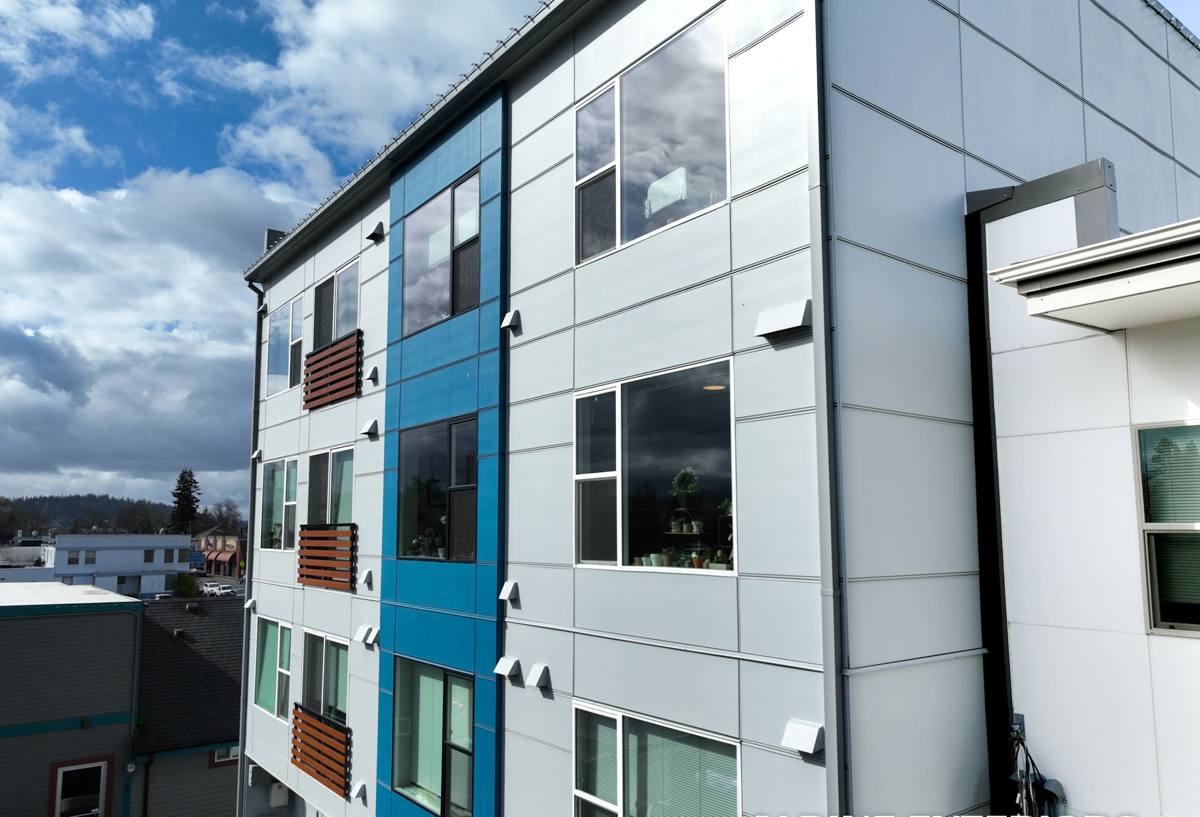
What Salt Air, Rain, and Moss Season Actually Do to Windows
Salt Air and Hardware Corrosion
Airborne salt is corrosive to untreated or lower-grade metal hardware — hinges, locks, cranks, and screws. Once corrosion starts, it doesn't stay cosmetic for long. A crank mechanism that seizes up or a lock that won't fully engage isn't just annoying, it's a window that no longer seals or locks the way it should.
Wind-Driven Rain and Water Intrusion
Storms coming off the water don't just wet the glass — they push rain sideways into any gap in the flashing, sealant, or frame joinery. A window that would stay dry in a calm rain a mile inland can leak in Birch Bay if the installation details around it aren't done right. This is less about the window itself and more about how it's flashed and sealed into the wall.
Moss Season and Persistent Moisture
Whatcom County's long wet season means wood trim, sills, and surrounding siding stay damp for extended stretches. Moss and algae thrive in that dampness, and if water is finding its way behind trim or pooling on a sill because of poor drainage detailing, you get slow rot that's often invisible until the frame is already compromised.
What "Correct" Actually Means for a Coastal Window Job
A lot of what separates a window installation that lasts from one that causes problems in three to five years isn't visible once the job is done. Here's what we hold every Birch Bay job to:
| Component | What We Do | Why It Matters Here |
|---|---|---|
| Frame material | Vinyl or fiberglass with UV- and salt-stable formulations; no bare or under-clad wood exposed to weather | Resists pitting and won't absorb moisture the way untreated wood does |
| Hardware | Corrosion-resistant finishes rated for coastal or marine-adjacent exposure | Cranks, locks, and hinges keep working instead of seizing from salt exposure |
| Flashing and sealant | Proper flashing tape and sill pans integrated with the house wrap, not just caulk around the edge | Caulk alone fails against sustained wind-driven rain; flashing handles the water that gets past it |
| Glass package | Dual- or triple-pane with warm-edge spacers and appropriate Low-E coating | Cuts down condensation and heat loss during our long, wet, low-sun winters |
| Trim and drainage | Sloped sills and back-dammed details so water sheds away from the frame | Prevents standing water that feeds rot and moss growth around the opening |
Choosing the Right Window for a Birch Bay Home
Frame Material
Vinyl windows with a quality coastal-rated formulation are a solid, cost-effective choice for most Birch Bay homes — they don't rust, don't need repainting, and hold up well to salt exposure. Fiberglass frames cost more but offer better dimensional stability and a longer service life, which can be worth it on homes with more direct water exposure or larger window openings where the frame has to resist warping.
We're generally cautious about wood-clad windows directly on the water side of a home. Wood can be a great look and performs fine when it's well-protected and maintained, but in a salt-air, high-moisture environment it demands more upkeep than most homeowners want to sign up for — the cladding has to be inspected and the finish maintained, or moisture finds its way in at the joints. That's a maintenance trade-off, not a defect in the product; we just want clients going in with eyes open.
Glass and Energy Performance
For our climate, a Low-E dual-pane or triple-pane unit with a warm-edge spacer system does the real work. Triple-pane adds a meaningful upgrade in sound dampening and thermal performance, which matters if a home takes wind noise off the bay or if you're trying to cut heating costs through a long wet winter. It costs more upfront, and for most homes dual-pane with a good Low-E coating is enough — we'll walk through the trade-off honestly rather than upsell you.
Hardware and Finish
Ask specifically about the corrosion rating on hardware finishes. This is the detail that gets skipped most often because it's not visible in a showroom, and it's exactly the detail that determines whether your locks and cranks are still smooth in five years or seized up and sticky.
Our Installation Process
- On-site assessment. We look at existing frame condition, sill and sheathing moisture, current flashing, and how exposed the opening is to prevailing wind and rain direction.
- Product selection. Based on that assessment, we recommend frame material, glass package, and hardware finish suited to the specific exposure of that wall — a window on the water-facing side often gets a different spec than one on a sheltered side of the same house.
- Removal and opening prep. Old windows come out carefully so we can inspect the rough opening for hidden rot or moisture damage before anything new goes in. If we find compromised framing, we address it before installing — sealing a new window into a wet or rotten opening just hides the problem.
- Flashing and weatherproofing. Sill pans, flashing tape, and integration with the existing house wrap or building paper come before the window itself goes in. This is the step that actually keeps wind-driven rain out.
- Setting and shimming. The window is set level, plumb, and square, then shimmed correctly so it operates smoothly and doesn't stress the frame over time.
- Insulation and sealing. Gaps get filled with appropriate low-expansion foam or backer rod and sealant — not overfilled, which can bow the frame, and not underfilled, which leaves a thermal and air gap.
- Interior and exterior trim. Trim goes back on with attention to drainage — sills sloped to shed water, no flat surfaces where moisture can sit and feed moss growth.
- Final check. We test operation, locks, and seals before we call the job done.
What to Check Before, During, and After Your Install
- Ask what flashing and sill pan method will be used — not just what caulk brand
- Confirm the hardware finish is rated for coastal/salt exposure, not a standard interior-grade finish
- Check that old openings are inspected for hidden moisture damage before new windows go in
- Make sure sills are sloped outward, not flat
- Get the warranty terms in writing — both the manufacturer's product warranty and our labor warranty
- Ask how window placement will be adjusted, if at all, for wind- and water-exposed walls versus sheltered ones
Signs Your Current Windows Are Losing the Fight
Homeowners in Birch Bay often notice a few consistent warning signs before a window fully fails:
- Cranks, locks, or hinges that feel stiff, gritty, or don't fully engage anymore
- Condensation building up between panes, which means the seal has failed
- Visible pitting, chalking, or discoloration on frames and hardware
- Soft or spongy wood trim around the window, or moss growing directly on the sill
- A noticeable draft or cold spot near the window on a windy day
- Difficulty opening or closing that wasn't there a year or two ago
Any one of these on its own isn't necessarily an emergency, but a couple of them together usually means the seal or frame is compromised and water is finding a way in.
Cost Factors for Birch Bay Window Projects
We won't quote a number without seeing the home, but here's what actually moves the price up or down on a coastal window job:
| Factor | How It Affects Cost |
|---|---|
| Frame material | Vinyl is typically the most cost-effective; fiberglass costs more but lasts longer under coastal exposure |
| Glass package | Dual-pane Low-E is standard; triple-pane adds cost for better thermal and sound performance |
| Extent of hidden damage | Rotted sheathing or framing found during removal adds repair time and materials before the new window goes in |
| Wall exposure | Water-facing walls may need more extensive flashing detail than sheltered walls on the same house |
| Number and size of openings | Larger or custom-sized windows cost more than standard sizes; whole-house projects typically bring a better per-unit price than single replacements |
| Trim and interior finish work | Matching existing trim profiles or doing full interior finish work adds labor beyond the window swap itself |
Why a Crew That Already Works Birch Bay Matters
Whatcom County covers a lot of different microclimates — a job in downtown Bellingham and a job on the water in Birch Bay aren't the same install, even if the window model is identical. A crew that regularly works this specific stretch of coastline already knows which walls tend to take the worst of the wind-driven rain, how bad the moss and moisture buildup typically gets by late winter, and which hardware finishes actually hold up rather than just what a spec sheet claims. That local pattern recognition is what keeps you from finding out the hard way, three winters from now, that a detail got missed.
It also matters for warranty follow-through. If an issue does come up — a seal that's underperforming, a spot where water is finding its way in — you want a contractor who's a short drive away and stands behind the work, not a crew that installed once and moved on.
Get a Straight Answer for Your Home
Every Birch Bay home faces the coast a little differently, and the right window spec for one wall isn't always right for another on the same house. If you're dealing with drafts, sticking hardware, foggy glass, or you're just planning ahead for a home in a tough coastal spot, we're glad to come take a look. Reach out for a free, no-pressure estimate — we'll walk the exterior with you, tell you honestly what we see, and lay out real options and pricing before anything gets decided.