 Bellingham Roofing
 Roofing Built for a Shoreline Community
Birch Bay sits right on the water, and that changes what's asked of a roof compared to a home a few miles inland toward Bellingham or elsewhere in Whatcom County. Salt-laden air, near-constant wind off the water, rain that comes in sideways instead of straight down, and a moss season that can run most of the year all put extra demands on an asphalt shingle roof. A shingle system that's correctly specified and installed for this environment can hold up for decades. One that's installed the same way you'd install it in a dry inland climate tends to show problems early — granule loss, curling edges, moss colonies, and leaks at the flashing.
This page covers asphalt shingle roofing specifically for Birch Bay homes: what the local climate demands, what a correct installation actually involves, how our process works from estimate to cleanup, and why it matters that the crew on your roof already knows this stretch of coastline.
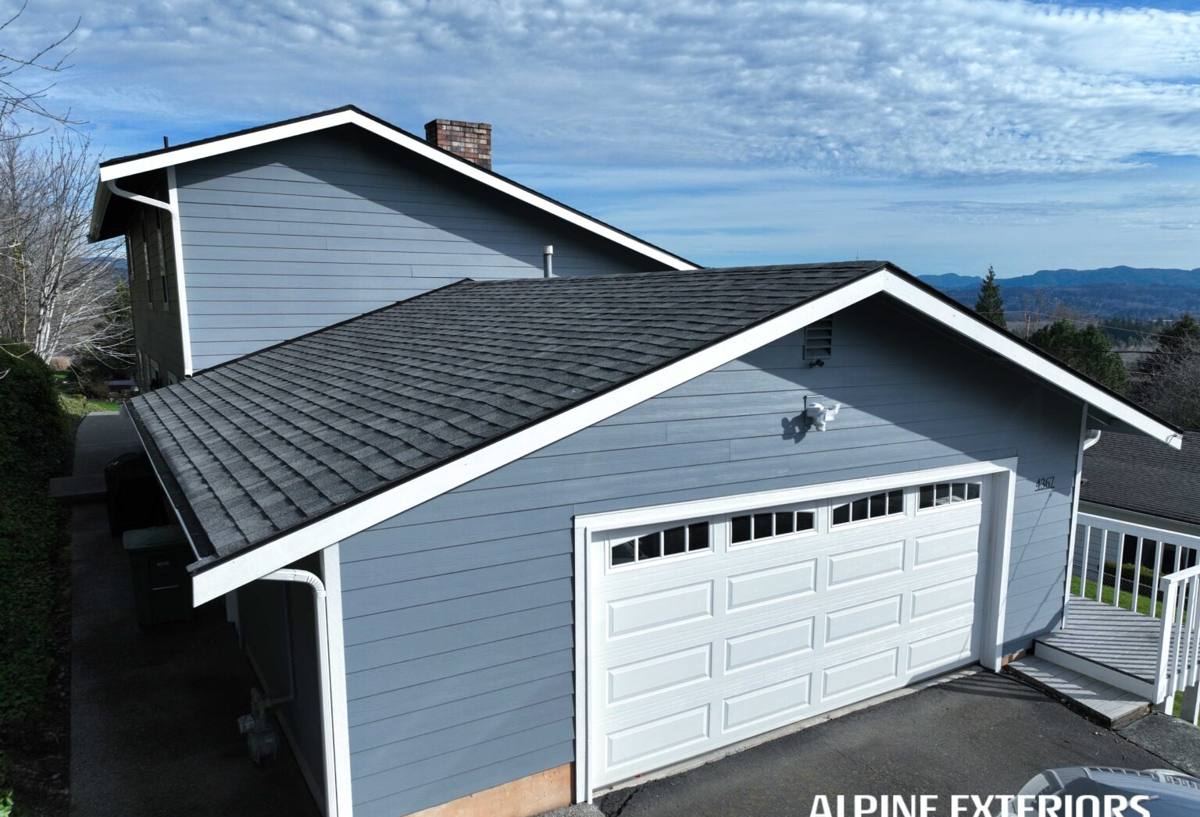
What This Climate Does to a Roof Over Time
Salt Air and Metal Components
Airborne salt doesn't just affect boats and railings. It accelerates corrosion on the metal parts of a roofing system — flashing, drip edge, nail heads, and vent stacks. When those components corrode faster than the shingles wear out, you can end up with leaks around chimneys, skylights, and wall intersections years before the shingles themselves are due for replacement. The fix isn't complicated, but it does mean choosing corrosion-resistant metal and fasteners up front rather than whatever's cheapest.
Wind-Driven Rain
Open water means open wind. Rain here doesn't just fall on a roof, it gets pushed up under shingle edges, into valleys, and around anything that penetrates the roof deck. A roof detailed for a calmer inland site — lighter sealing at laps, minimal underlayment overlap, standard nailing patterns — can pass a dry-weather inspection and still leak the first time a real storm rolls through off the bay.
Moss and Algae
Cool, damp, shaded conditions for much of the year are exactly what moss and algae need to establish themselves on a roof. Once moss gets a foothold in the shingle mat, it holds moisture against the roofing material and can lift shingle edges, which is where a lot of slow, hard-to-diagnose leaks start. Dark streaking from algae is mostly cosmetic, but heavy moss growth is a maintenance issue that needs to be managed, not ignored.
What a Correctly Installed Roof Needs in Birch Bay
A shingle roof is a system, not just a layer of shingles nailed to a deck. In a coastal, high-moisture environment, every layer below the shingles matters more than it would somewhere drier.
- Ice and water shield at eaves, valleys, and penetrations — a self-adhering membrane that seals around fasteners and resists wind-driven rain in the spots most likely to leak.
- Synthetic underlayment across the full deck — more tear-resistant and more water-resistant than old felt paper, and it holds up better if the roof sits exposed during a stretch of wet weather mid-project.
- Corrosion-resistant flashing and fasteners — around chimneys, skylights, dormers, and wherever the roof meets a wall, using metal and nails rated for salt-air exposure rather than standard-grade hardware.
- Balanced ventilation — enough intake at the eaves and exhaust at the ridge to keep moist attic air moving out, which reduces condensation on the underside of the deck and helps the shingles themselves last longer.
- Correct nailing pattern and fastener count — more fasteners per shingle than the manufacturer's bare minimum, placed exactly where the shingle is designed to be nailed, which is what actually determines a shingle's real-world wind resistance.
- Starter strip and drip edge at every edge — not just at the eaves. This is a common corner-cutting spot, and it's exactly where wind gets under a roof first.
Choosing the Right Shingle for This Environment
Not every asphalt shingle is worth putting on a home exposed to this kind of weather. The table below compares the main categories homeowners in Birch Bay usually choose between.
| Shingle Type | Wind Performance | Algae/Moss Resistance | Typical Lifespan | Relative Cost |
|---|---|---|---|---|
| Standard 3-tab | Adequate in sheltered spots, weaker on exposed or waterfront lots | None unless treated | Shorter end of the range | Lowest |
| Architectural (laminated) | Stronger — heavier, multi-layer construction resists uplift better | Better with algae-resistant granules | Mid-to-long range | Moderate |
| Impact-resistant (Class 4) | Strong, plus better resistance to debris impact in wind events | Available with algae-resistant granules | Long range | Higher |
| Algae-resistant (copper/ceramic granules) | Depends on base shingle chosen | Best — built specifically to slow algae growth | Depends on base shingle chosen | Moderate to Higher |
For most Birch Bay homes, especially anything with direct exposure to open water and wind, we lean toward a laminated architectural shingle with algae-resistant granules as the baseline, and discuss impact-resistant options when the site or the homeowner's priorities call for it. There's no single right answer for every roof — it depends on exposure, roof pitch, budget, and how long you plan to be in the home.
Moss and Algae: What Actually Works
Moss control on a coastal, shaded roof is an ongoing job, not a one-time fix. A few things make a real difference:
- Zinc or copper strips installed near the ridge let trace metal wash down the roof with rain and slow future moss growth across the whole field of shingles.
- Keeping overhanging branches trimmed back reduces shade and organic debris buildup, both of which feed moss.
- Clearing debris from valleys and gutters regularly prevents standing moisture, which is what lets moss get started in the first place.
- Gentle, low-pressure cleaning removes existing moss without damaging the granule surface that protects the shingle underneath.
A Note on Pressure Washing
High-pressure washing is one of the fastest ways to shorten the life of an otherwise healthy shingle roof. It strips protective granules, which accelerates UV damage and aging. If moss needs to come off, it should be done with low pressure and the right technique — not treated the same as cleaning a driveway.
Repair, or Full Replacement?
Not every roof problem in Birch Bay means a full tear-off. We look at a few things before recommending either path:
- Age of the roof relative to the shingle's expected service life in this climate.
- How widespread the damage is — a few damaged shingles near one flashing detail is a repair; granule loss and curling across large sections of the roof usually isn't.
- Condition of the roof deck underneath — soft or water-stained decking found during a repair often changes the scope of the job.
- Number and pattern of leaks — one isolated leak is often fixable; multiple unrelated leak points across the roof usually point to the underlayment and flashing system failing broadly, not just the shingles.
We'll always tell you honestly which category your roof falls into, including when a repair is the right call even though a full replacement would be a bigger job for us.
Our Process, Start to Finish
- On-site inspection. We look at the shingles, flashing, decking (where visible), attic ventilation, and any specific trouble spots you've noticed.
- Written estimate. You get a clear scope of work and material selection before anything is scheduled — no verbal-only quotes.
- Material selection. We walk through shingle options suited to your home's exposure, roof pitch, and budget, using the factors above rather than a one-size-fits-all default.
- Tear-off and deck inspection. Old roofing comes off down to the deck, which is checked for soft spots or water damage before anything new goes down.
- System installation. Ice and water shield, underlayment, flashing, ventilation components, and shingles are installed in that order, to spec, with attention to every edge, valley, and penetration.
- Cleanup and magnetic sweep. The property is cleared of debris and swept for stray nails before we consider the job finished.
- Final walkthrough. We go over the completed roof with you and cover warranty documentation before we leave.
Maintenance Checklist for Birch Bay Homeowners
Between installations, a little regular attention keeps a shingle roof performing the way it's supposed to in this climate:
- Check for moss or dark algae streaking at least twice a year, especially on north-facing or heavily shaded slopes.
- Clear gutters and valleys of leaves and debris before the wet season sets in.
- Trim back branches that shade the roof or drop debris onto it.
- Have flashing around chimneys, skylights, and vent stacks checked periodically for corrosion or lifted seals, given the effect of salt air on metal.
- After any major windstorm, do a visual check for lifted, cracked, or missing shingles rather than waiting for a leak to show up inside.
- Schedule a professional inspection every few years, even without an obvious problem — small issues in flashing or ventilation are far cheaper to fix early than after they've caused deck damage.
Why Local Experience Matters for This Job
A shingle roof installed by a crew that's never worked a waterfront property in Whatcom County can look correct and still be under-built for what Birch Bay actually throws at it. The details that matter here — flashing metal choice, fastener count, underlayment overlap at valleys, ventilation balance, and shingle selection for wind and algae exposure — come from having done this work on homes with the same salt air, wind, and moss pressure yours deals with. That's the difference between a roof that looks fine at handoff and one that's still performing correctly ten and twenty years later.
If you're dealing with an aging shingle roof, ongoing moss problems, or you just want an honest read on where your roof stands, we're happy to take a look. Reach out for a free, no-pressure estimate using the form below.