 Bellingham Roofing
 Birch Bay's Climate Is Hard on Siding
Birch Bay sits right on the water along the Strait of Georgia, and that location comes with a specific set of problems for exterior siding that homes a few miles inland in Bellingham don't deal with in the same way. Salt air corrodes metal fasteners and trim faster. Wind off the open water drives rain sideways into wall assemblies that were only designed to handle rain falling straight down. And the long gray stretch of fall and winter here in Whatcom County keeps north- and shade-side walls damp for weeks at a time, which is exactly what moss and algae need to take hold. None of this is unique to any one house in Birch Bay — it's a function of geography, and it means siding installed here has to be chosen and installed with that exposure in mind from the start.
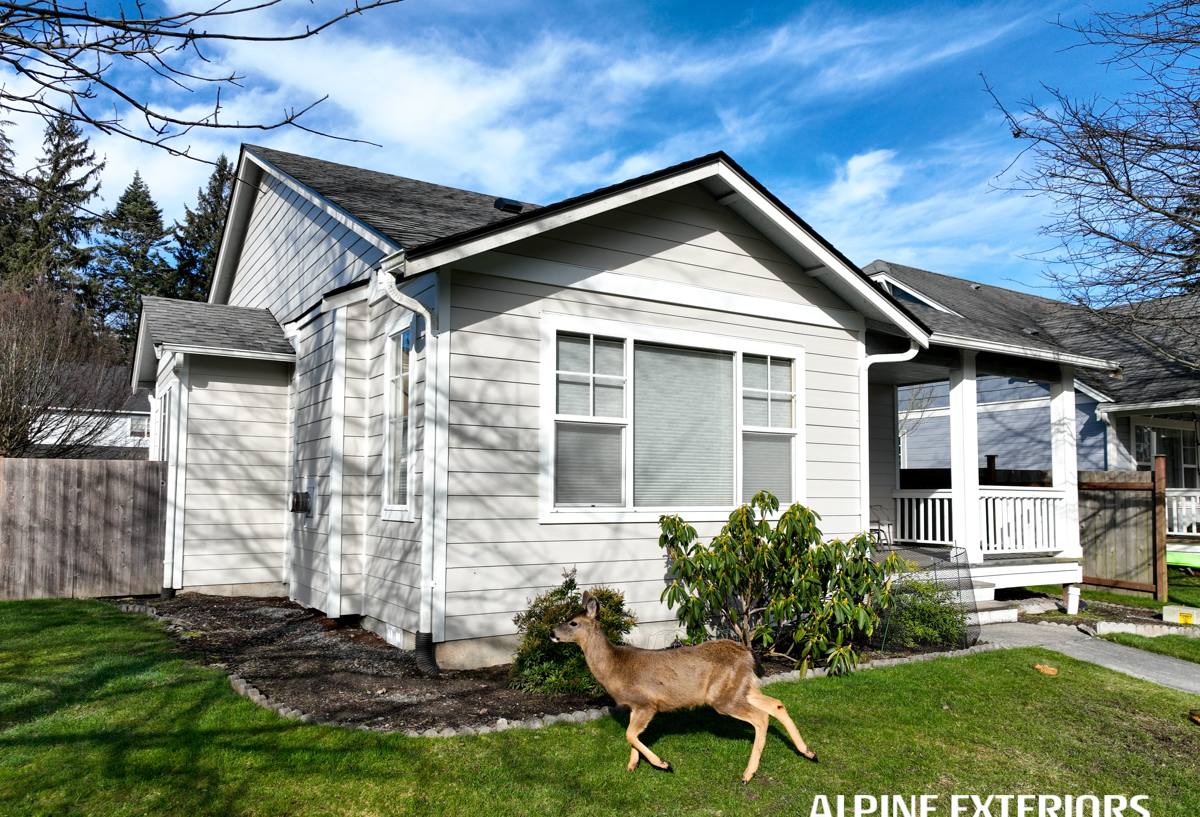
What Birch Bay Homes Actually Need From Their Siding
Salt Air and Corrosion
Airborne salt doesn't just affect homes right on the beach — it travels on wind and settles on siding, trim, and fasteners well back from the water. Over years, that salt exposure accelerates corrosion on anything metal that isn't rated for it, and it can degrade the surface of materials that weren't engineered to handle a marine environment. Siding material and hardware both matter here, not just the finish coat.
Wind-Driven Rain and Water Intrusion
Because Birch Bay is so open to the water, homes here take wind-driven rain from angles that inland siding jobs rarely have to account for. Rain doesn't just run down the face of the wall — it gets pushed up under laps, into gaps around trim, and into any seam that wasn't sealed or flashed correctly. A siding system that's merely "watertight on a calm day" isn't enough for this location.
Shade, Moisture, and Moss
Combine our regional rainfall with the tree cover and shaded north walls common on Birch Bay lots, and you get long stretches where siding simply doesn't dry out. That's the environment moss, algae, and mildew thrive in. Siding that resists moisture absorption and holds a factory finish well is a real advantage here — siding that soaks up water or needs frequent repainting will show green and black staining faster than almost anywhere else in the county.
Why We Only Install James Hardie Fiber Cement Here
We install James Hardie fiber cement siding exclusively — we don't install vinyl, LP SmartSide, Cemplank, Allura, primed spruce, or cedar. That's a deliberate standard, not a sales pitch, and it matters even more in a place like Birch Bay. Hardie's fiber cement doesn't rot, doesn't feed moss the way wood-based products can, and is non-combustible, which is a genuine advantage during our regional wildfire season. Hardie also builds specific product lines engineered for different climate zones, and the HZ5 line used in our region is formulated for the moisture and temperature swings of the Pacific Northwest specifically. The ColorPlus factory finish is baked on under controlled conditions rather than brushed on in the field, which gives it far better resistance to fading, chipping, and the kind of moisture cycling that Birch Bay's climate puts siding through. Paired with Hardie's transferable warranty, it's the product we're comfortable standing behind on a waterfront-adjacent job — which is why it's the only one we put on homes.
What a Correct Installation Involves
The siding panel itself is only part of the system. In an exposure like Birch Bay's, the installation details underneath and around the panels do as much work as the material.
Water-Resistive Barrier and Flashing
Every correct installation starts with a continuous water-resistive barrier behind the siding, lapped correctly from the bottom up so water always sheds outward. Flashing at windows, doors, and any horizontal trim has to be installed so water is directed out and away from the wall assembly, not trapped behind it. In a wind-driven rain environment, sloppy flashing is where leaks start — often years later, hidden behind the siding.
Fastening, Clearances, and Gaps
Hardie siding has specific fastening patterns, nail placement, and minimum clearances from grade, roofing, and other transitions — these aren't optional details, they're what the manufacturer's warranty is actually built on. Panels also need proper gaps at butt joints and terminations to allow for expansion and to keep water from wicking in and sitting against raw material.
Finish: Factory ColorPlus vs. Field-Painted
When ColorPlus prefinished panels are cut, the cut edges need to be sealed with the correct touch-up product so raw fiber cement isn't left exposed to moisture. Skipping this step is a common shortcut that shows up later as staining or finish failure right at the seams — exactly the spots already under the most stress from wind-driven rain.
Our Process for a Birch Bay Siding Installation
On-Site Assessment
We start by walking the property and looking at exposure — which walls face the water and prevailing wind, where shade and moisture linger, and what condition the existing siding, trim, and sheathing are in. This tells us where extra attention to flashing and drainage will matter most.
Tear-Off and Sheathing Check
Once old siding comes off, we check the sheathing and framing underneath for any hidden moisture damage before anything new goes up. Covering a wet or damaged wall with new siding just hides the problem — we address it first.
Installation to Manufacturer Spec
We install the water-resistive barrier, flashing, and Hardie panels according to manufacturer specifications for our climate zone, with fastening, clearances, and sealed cut edges done correctly the first time.
Final Walkthrough and Documentation
We walk the finished job with the homeowner, and make sure warranty documentation is in order. A correctly installed Hardie system is meant to be a long-term answer for a home in this environment, not a job that needs revisiting in a few years.
Comparing Siding Options for a Coastal Whatcom County Home
Homeowners in Birch Bay often ask how the material options actually compare once you factor in the local climate. Here's an honest breakdown of the trade-offs.
| Material | Coastal/Salt Air Performance | Moisture & Moss Resistance | Typical Installed Cost Range |
|---|---|---|---|
| James Hardie fiber cement (HZ5) | Engineered for regional climate; non-combustible | Strong — doesn't rot, holds factory finish well | Mid-to-upper range per square foot |
| Vinyl siding | Can become brittle and fade faster under salt/UV exposure | Moderate; seams can allow moisture behind panels | Lower range per square foot |
| Wood or primed spruce/cedar | Vulnerable to salt-accelerated weathering | Weaker — prone to rot and moss without frequent upkeep | Mid-to-upper range per square foot, plus ongoing maintenance |
Vinyl and wood-based products aren't without their advantages elsewhere, and we're not here to disparage them — but for the specific combination of salt air, driving rain, and moss pressure that Birch Bay sees, we've made fiber cement our standard because it holds up to that combination with the least long-term maintenance burden.
Why a Crew That Already Works Birch Bay Matters
Siding installation isn't identical from one part of Whatcom County to another. A crew that regularly works Birch Bay already understands how far salt exposure reaches inland from the water, which walls on a typical lot take the worst of the wind-driven rain, and how much shade and moisture a north-facing wall near tree cover is likely to hold onto through the winter. That familiarity shows up in small decisions — where extra flashing attention goes, how conservative to be with clearances, which details are worth the extra care — that a crew unfamiliar with this specific stretch of coastline might treat as optional.
Living With Fiber Cement Siding in a Salt-Air Environment
Correctly installed Hardie siding is genuinely low-maintenance, but "low-maintenance" isn't "no-maintenance" in a coastal setting like Birch Bay. A little seasonal attention goes a long way:
- Rinse salt residue and grime off the siding periodically with a garden hose, especially on wind-exposed walls
- Check caulking at trim, windows, and joints yearly, and touch up if it's cracked or pulling away
- Trim back vegetation and tree cover that keeps shaded walls from drying out
- Watch shaded and north-facing walls for early moss or algae growth and clean it before it spreads
- Inspect flashing and areas near grade after major storms for any signs of water intrusion
- Touch up any exposed cut edges or minor finish damage promptly rather than letting moisture sit against raw material
If you're weighing a siding replacement on a Birch Bay home, we're happy to take a look and talk through what your walls actually need given their exposure. Reach out for a free, no-pressure estimate — there's a form right below to get started.