 Bellingham Roofing
 Building a Deck That Actually Holds Up in Birch Bay
Birch Bay sits right on the water, and that changes what a deck has to survive. A design that works fine a few miles inland in Bellingham can struggle here within a few years if it wasn't built with the coastal exposure in mind. Salt-laden air corrodes the wrong fasteners and hardware faster than most homeowners expect, driving rain off the Strait finds every gap in flashing and framing, and the long gray moss season keeps every horizontal surface damp for months at a stretch. A custom deck in Birch Bay isn't just about layout and looks — it's about choosing materials and details that hold up to that specific combination.
This page is about custom deck building specifically for Birch Bay properties: what the climate demands, what a correctly built deck involves from the ground up, how we approach the work, and why local experience with this stretch of Whatcom County coastline matters more than it might seem.
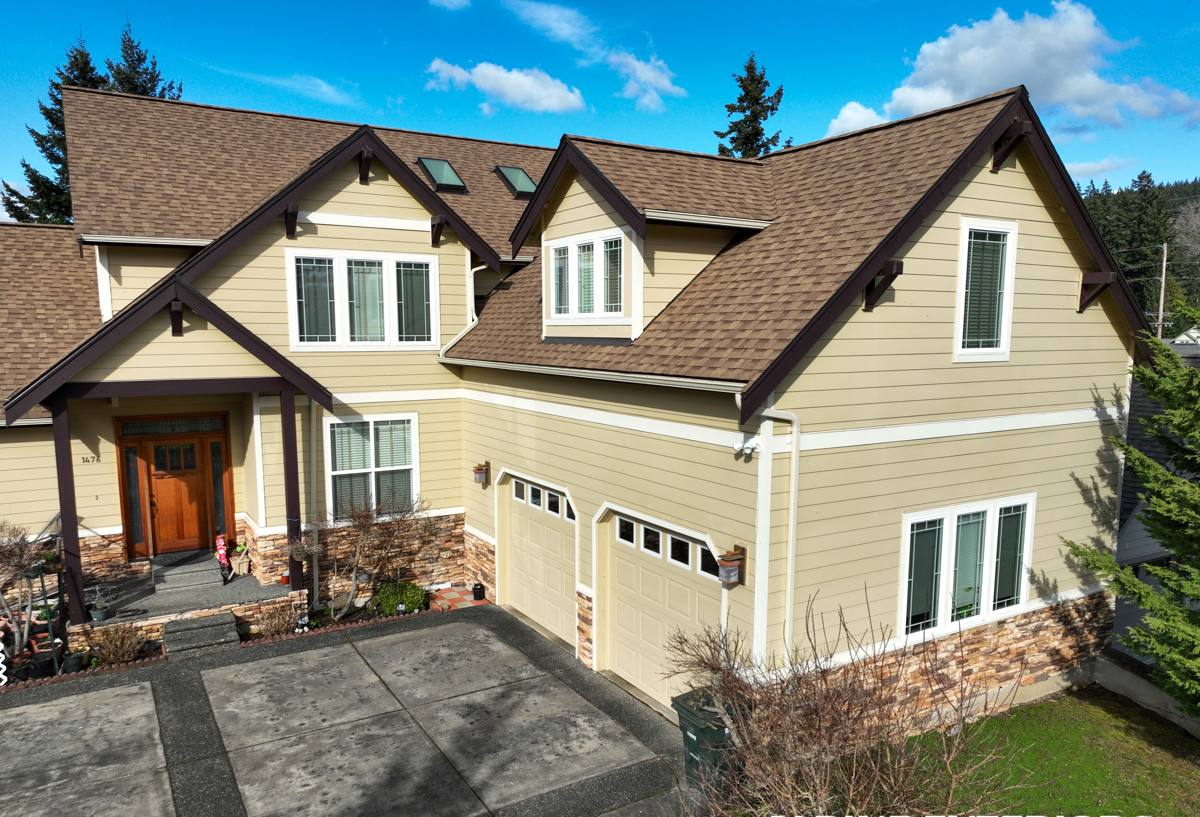
What Makes Birch Bay's Climate Hard on Decks
Salt Air and Metal Fatigue
Waterfront and near-waterfront homes in Birch Bay get more airborne salt than inland Bellingham properties. Salt accelerates corrosion in fasteners, joist hangers, post bases, and railing hardware. Standard electro-galvanized screws and connectors that are fine in a drier, inland yard can start rusting and staining decking within a season or two out here. That corrosion isn't just cosmetic — a corroded joist hanger or fastener is a structural weak point.
Driving Rain and Wind-Driven Moisture
Wind off the bay pushes rain sideways and up under overhangs and railings, not just straight down. That means flashing details at the ledger board, stair stringers, and any point where the deck meets the house have to be more forgiving than a textbook inland install. Water finds its way in through the smallest gap, and once it's behind siding or trapped against a ledger, rot starts from the inside where you can't see it.
Moss, Algae, and a Long Damp Season
Western Whatcom County's moss season runs long — shaded and low-airflow areas of a deck can stay damp for weeks at a time in fall, winter, and spring. Moss and algae hold moisture against decking boards, and on wood decking that means faster rot and a slicker, more slippery surface underfoot. Deck orientation, gaps between boards, and airflow underneath all affect how much of a moss problem a given deck will have.
Choosing Decking Material for a Salt-Air, High-Moisture Site
There's no single "best" decking material for every Birch Bay property — it depends on your budget, how much maintenance you're willing to do, and how exposed the site is. Here's how the common options actually compare for this kind of climate.
| Material | Moisture & Salt Air Behavior | Maintenance | Typical Lifespan |
|---|---|---|---|
| Pressure-treated lumber | Handles moisture reasonably well if fasteners and hardware are corrosion-rated; needs sealing to resist staining and moss growth | Annual cleaning, periodic sealing/staining | 15-20 years with upkeep |
| Cedar | Naturally moisture- and insect-resistant, but softer surface can trap moss in shaded, low-airflow spots | Regular cleaning and refinishing to hold color and resist graying | 15-25 years with consistent care |
| Composite decking | Doesn't absorb moisture or rot; resists salt-air corrosion issues in the board itself, though surface can still grow moss/algae if never cleaned | Occasional washing; no sealing or staining | 25-30+ years, manufacturer-dependent |
| PVC decking | Fully moisture-resistant, handles salt air and damp shade well | Lowest maintenance of the group | 25-30+ years, manufacturer-dependent |
Composite and PVC decking cost more up front than wood but tend to make sense for exposed, shaded, or hard-to-maintain sections of a Birch Bay property. Cedar and pressure-treated wood are still solid, honest choices for homeowners who don't mind the upkeep and want a natural look — the framing and fastener details matter more than the decking choice for long-term durability either way.
Framing and Fasteners: Where Coastal Decks Actually Fail
Most deck failures we see aren't from the decking boards themselves — they're from what's underneath: framing, connectors, and fasteners that weren't rated for a salt-air, wet-climate environment. This is the part of the job that doesn't show up in photos but determines whether a deck lasts fifteen years or forty.
- Stainless steel or heavy hot-dip galvanized fasteners and hardware, not standard electro-galvanized, for anything near the water
- Joist hangers and structural connectors rated for the same exposure class as the fasteners holding them
- Proper flashing at the ledger board where the deck attaches to the house, including a water-resistant barrier behind it
- Joist tape or flashing on top of framing members to keep moisture from wicking into the wood through screw holes
- Adequate gapping between decking boards for drainage and airflow, sized correctly for the material
- Post bases that keep wood posts elevated off concrete rather than embedded in it, to avoid trapped moisture at the base
Skipping any one of these to save money up front tends to show up as hidden rot or hardware failure years down the line — often right around the time a standard warranty would have run out.
Footings, Ledger Attachment, and Permitting
A custom deck is only as good as what's holding it up. In Birch Bay's mix of soil conditions and moisture exposure, footings need to be sized and set to local frost depth and bearing requirements, not just poured to a generic standard. Ledger board attachment — the connection between the deck and the house — is one of the most common failure points on older decks we're asked to evaluate, and it's also one of the most heavily scrutinized items in any inspection.
Whatcom County and the local building department typically require a permit for attached decks and for any deck above a certain height or size, with inspections at the footing and framing stages. Requirements can shift, and every lot is a little different, so we handle the permit process as part of the job rather than leaving homeowners to sort it out. Building to code isn't a formality here — it's what keeps a deck safe to stand on for decades, especially with the added stress that wind and moisture put on the structure.
Our Process for a Birch Bay Deck Build
1. Site Visit and Honest Assessment
We walk the site, look at sun and wind exposure, drainage, and how the deck will tie into the house, and talk through what materials make sense for your budget and how much maintenance you want to take on.
2. Design and Layout
We design the deck to fit how you'll actually use the space, accounting for prevailing wind and rain direction where it affects railing placement, overhangs, or covered sections.
3. Permitting
We prepare and submit the paperwork Whatcom County requires and schedule the necessary inspections so the job stays on track.
4. Footings and Framing
Footings are set to proper depth and bearing, and framing goes in with corrosion-rated hardware and fasteners suited to the site's salt-air exposure.
5. Decking, Railing, and Finish Work
Decking is installed with correct spacing and fastening for the material you've chosen, followed by railings, stairs, and any finish details.
6. Final Walkthrough
We walk the finished deck with you, cover basic care for the material you chose, and make sure everything's been inspected and signed off.
Keeping a Birch Bay Deck in Good Shape Year to Year
However well a deck is built, the local climate means it still needs some seasonal attention. A little upkeep goes a long way toward avoiding early repairs.
- Sweep debris and standing moisture off the deck surface regularly during fall and winter
- Treat moss and algae growth early rather than letting it build up on wood decking
- Check railings, stair connections, and any visible hardware for rust or looseness once a year
- Reseal or restain wood decking on the schedule the product calls for, don't stretch it out
- Keep gutters and downspouts near the deck clear so runoff isn't draining onto or under it
- Watch for gaps or cracking where the deck meets the house, and have them looked at before water gets behind the siding
Why Local Experience in Birch Bay Matters
A contractor who's built decks up and down this stretch of coastline knows which fastener grade actually holds up here, how far wind-driven rain travels under a given overhang, and which shaded corners of a lot turn into moss traps by December. That's the kind of knowledge that doesn't come from a manufacturer's spec sheet — it comes from seeing how decks in this specific area actually age. Hiring a crew that already works Birch Bay means fewer surprises, a design built around the real conditions on your lot, and a deck that's set up to handle this climate rather than one that was designed for a drier part of the state and happens to be sitting on the water.
If you're thinking about a new deck or replacing one that's showing its age, we're happy to take a look and give you a straightforward, no-pressure estimate. Use the form below to get started.