 Bellingham Roofing
 Why Columbia Homes Take a Beating From Bellingham's Coastal Climate
Columbia sits close enough to Bellingham Bay that homes here deal with a combination most inland neighborhoods don't: salt-laden air, driving rain off the water, and a moss season that can stretch for the better part of the year. Individually, none of these is unusual for Whatcom County. Together, they create conditions that wear down siding faster than homeowners expect, especially on north- and west-facing walls that stay shaded and damp for weeks at a time.
Salt air accelerates corrosion on fasteners, flashing, and any exposed metal trim. Driving rain finds every gap in caulking or flashing and pushes water sideways into places it was never meant to go. And moss doesn't just sit on the surface — its root structure holds moisture against the siding material, which is exactly the wrong thing to happen if the siding underneath isn't built to handle sustained dampness. On a lot of Columbia homes, siding damage isn't the result of one big storm. It's the slow accumulation of all three factors working on the same wall for years.
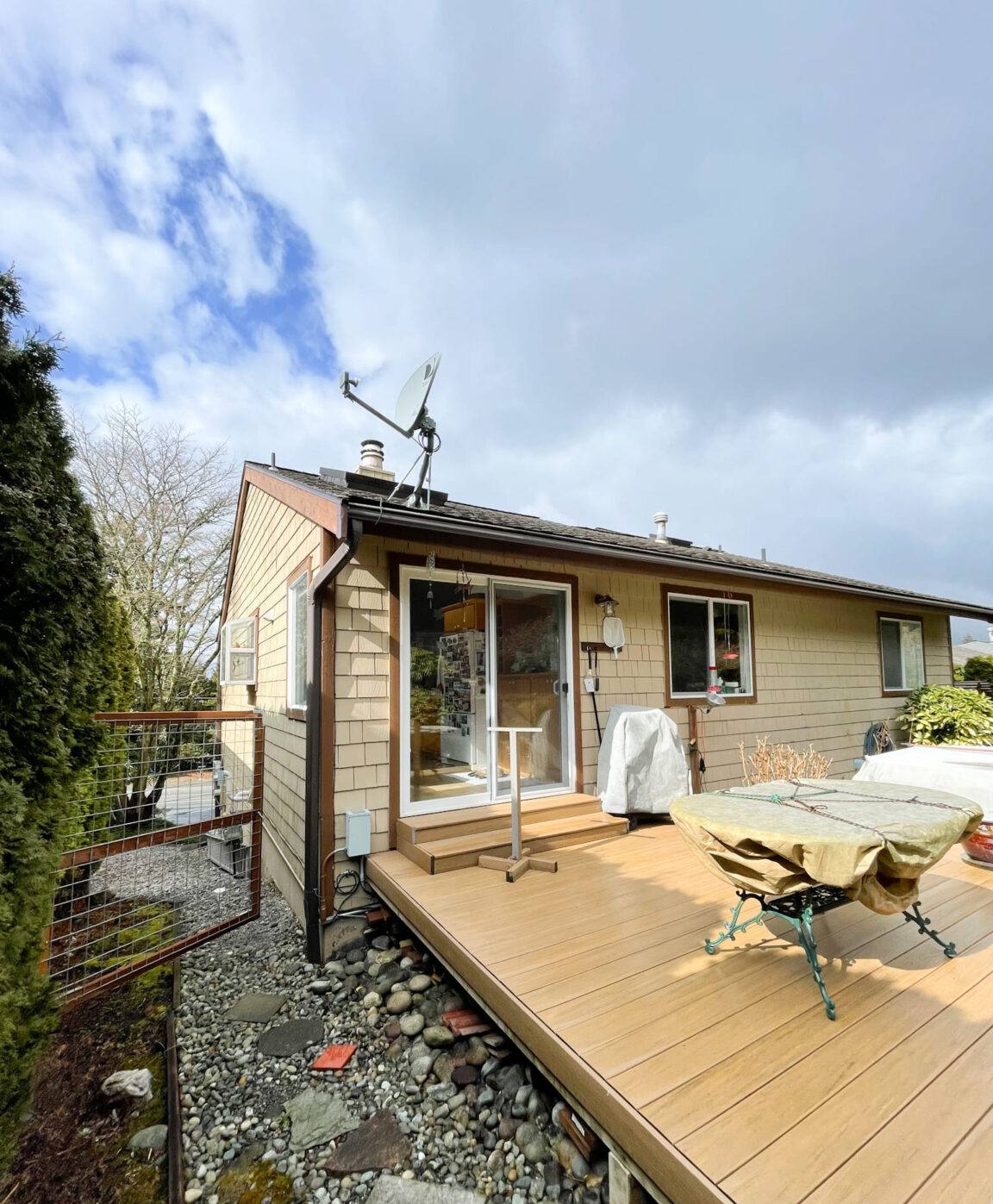
Signs Your Siding Needs Repair (Not Replacement)
Most siding problems we see in Columbia don't require tearing off the whole exterior. They require an honest diagnosis of what's actually failing and a repair that addresses the cause, not just the symptom. Common signs worth a professional look include:
- Soft or spongy spots when you press on the siding, especially near the bottom courses or around windows
- Visible moss or algae growth that keeps coming back even after cleaning
- Bubbling, peeling, or discolored paint in isolated areas rather than across the whole wall
- Gaps or separation at seams, corners, or trim boards
- Staining or streaking below joints, which usually points to water tracking behind the siding rather than on top of it
- Warped or buckled panels, particularly on walls that face prevailing weather
The key distinction is whether the damage is localized or systemic. A handful of soft boards around a single window is a repair. Widespread rot, siding that's failing at multiple unrelated points, or a house where the underlying water barrier has clearly been compromised for years is a different conversation — and a good contractor should tell you which situation you're actually in before recommending a scope of work.
What Correct Siding Repair Actually Involves
Diagnosing the Root Cause
Cutting out a damaged section and nailing up a new piece is not a repair — it's a patch, and patches fail again, usually within a couple of seasons. A proper repair starts by figuring out why that section failed in the first place. Was flashing installed incorrectly above a window? Is a gutter overflowing onto the wall below it? Is there a gap in the house wrap that's been letting moisture in behind the siding for years? If you don't answer that question first, you're just setting up the same failure to happen again a few feet away.
This is especially true in Columbia, where the combination of rain exposure and moss means water-management details — flashing, kick-out diverters, proper caulking at penetrations — matter more than they would in a drier climate. Skipping that diagnostic step is the single most common reason siding repairs don't hold up.
Matching Materials and Finish
Once the cause is addressed, the repair itself needs to match the existing siding in profile, exposure, and finish as closely as possible. Mismatched replacement boards are one of the most obvious signs of a rushed repair job, and they also create new weak points if the materials don't perform the same way over time. On homes with factory-finished siding, matching the existing color and sheen takes more care than it does with field-painted material, since a slightly off color is very visible in direct sunlight.
Repair vs. Replacement: How We Decide
| Factor | Points Toward Repair | Points Toward Replacement |
|---|---|---|
| Extent of damage | Isolated to one or two areas | Present on multiple walls or throughout |
| Underlying water barrier | Intact, tested and confirmed | Compromised across large sections |
| Age of existing siding | Well within expected service life | Already near or past its expected lifespan |
| Material condition | Surrounding boards are sound | Adjacent boards show early signs of the same failure |
| Root cause | Identifiable and fixable (flashing, gutter, sealant) | Systemic, tied to original installation quality |
Every one of these factors gets weighed together, not in isolation. A home with one soft section but a sound water barrier everywhere else is usually a straightforward repair. A home where every corner shows the same moss-driven staining pattern is telling you something about how the whole exterior was built, and a repair there is often just delaying an inevitable, larger project.
Our Siding Repair Process in Columbia
- On-site inspection. We look at the damaged area and the surrounding siding, check flashing and trim details, and identify the actual cause of failure — not just where it shows.
- Moisture check. Where rot is suspected, we probe and, when needed, open up a small section to see what's happening behind the siding before recommending a scope of work.
- Honest scope and options. We tell you plainly whether you're looking at a targeted repair, a larger repair, or a conversation about replacement — and why.
- Correct the cause, then the cosmetic damage. Flashing, sealant, or drainage issues get fixed first. Damaged siding gets removed and replaced to match.
- Finish and cleanup. Repaired sections are finished to blend with the surrounding siding as closely as the material allows, and the site is left clean.
Why We Repair With James Hardie Fiber Cement
When a repair calls for new siding material — whether it's a few boards or a full elevation — we install James Hardie fiber cement, and that's the only siding product our crews put on a house. We don't install vinyl, LP SmartSide, Cemplank, Allura, or primed wood siding, and in a climate like Bellingham's, that decision comes directly from what we've seen those materials do over time in coastal, moss-prone conditions.
Vinyl can warp and doesn't hold up structurally the way fiber cement does when moisture gets behind it. Engineered wood products like LP SmartSide are treated to resist moisture, but they're still wood-based, and wood-based siding is inherently more vulnerable to the kind of sustained dampness that moss and driving rain create along Bellingham Bay. Other fiber cement brands compete on price but don't carry Hardie's factory-applied ColorPlus finish or its HZ5 formulation, which is engineered specifically for wet, moderate climates like ours. James Hardie's fiber cement is non-combustible, doesn't feed moss growth the way wood-based products can, and its factory finish holds color and resists the freeze-thaw and moisture cycling that Whatcom County winters bring. That's why it's what we use both for full siding installs and for repair sections that need to perform for decades, not just look right on the day we leave.
What Homeowners Should Ask Before Hiring a Siding Repair Crew
Siding repair is easy to do badly and hard to verify from the ground once it's painted and closed up. A few questions before you hire can save you from paying for a patch that fails again in two years:
- Will you explain what actually caused the damage, not just replace the visible boards?
- Do you check flashing, house wrap, and drainage details as part of the repair, or only the siding itself?
- What material are you using for the replacement sections, and how will it be matched to the existing siding?
- Are you licensed and insured to do exterior work in Washington?
- Can you walk me through why you're recommending repair instead of a larger scope, or vice versa?
- What does your workmanship warranty actually cover, and for how long?
A contractor who can answer these clearly, without hedging, is usually one who does this work carefully and often — not one who's guessing at what will hold up.
Why Local Experience in Columbia Matters
Siding repair isn't one-size-fits-all, even within Bellingham. A crew that regularly works in Columbia has already seen how homes here are affected by proximity to the bay — which elevations take the worst of the driving rain, how quickly moss returns without proper drainage and shade management, and where builders in this area have historically cut corners on flashing details that show up as problems ten or fifteen years later. That familiarity means less guesswork and a faster, more accurate diagnosis when something's gone wrong on your walls.
It also means a repair that's built for the conditions this neighborhood actually experiences, not a generic fix pulled from a climate that doesn't see the same salt exposure or rainfall pattern. Whatcom County's coastal weather is specific, and a repair that doesn't account for it is a repair you'll likely be paying for again.
If you're seeing soft spots, recurring moss, or staining on your Columbia home's siding, we're glad to take a look and give you a straightforward, no-pressure assessment of what's going on and what it would take to fix it right. Use the form below to request a free estimate.