 Bellingham Roofing
 Fiber Cement Siding Built for Sehome's Specific Wear
Sehome's housing stock is a mix of older homes, mid-century builds, and newer infill packed into one of Bellingham's more established central neighborhoods, and a lot of that housing stock is carrying siding that's due for replacement or already showing it. Whatcom County's marine climate doesn't do any siding material any favors: salt-tinged air off the Salish Sea, rain that comes in sideways more often than it falls straight down, and a moss season that can run most of the year on shaded walls all add up to steady, cumulative wear. Fiber cement is the material we recommend for Sehome homes specifically because it resists all three of those pressures better than the alternatives, but only when the installation itself accounts for them.
This page is about that installation — what a correct fiber cement siding job for a Sehome home actually requires, not just what the material is. We install James Hardie fiber cement exclusively, and everything below reflects how we detail, fasten, and finish it for this specific climate and this specific neighborhood's mix of older and newer construction.
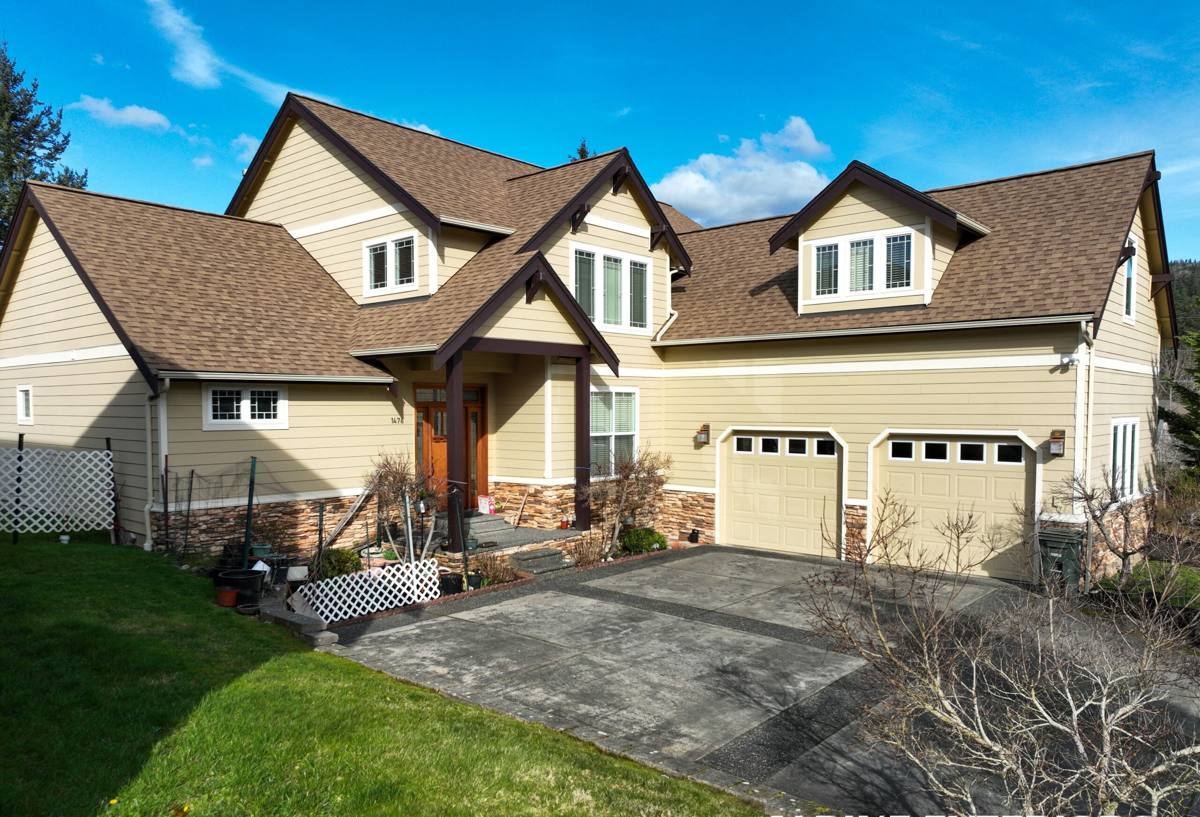
What Sehome Homes Need From Their Siding
Salt Air and Fastener Life
Sehome sits back from the immediate waterfront but is still well within reach of the salt-laden air that moves through Bellingham off the water. Salt accelerates corrosion on fasteners, flashing, and any exposed metal trim, and it wears down lower-grade finishes noticeably faster than they'd wear in a drier inland climate. On a fiber cement job, that means the fastener spec matters as much as the siding brand — corrosion-resistant nails or screws, correctly sized and spaced, aren't an upsell, they're the difference between a wall that holds its finish for decades and one that shows rust streaks at every nail head within a few years.
Wind-Driven Rain at Seams and Transitions
Rain in this part of Whatcom County usually arrives on a wind rather than falling straight down, which pushes moisture sideways into lap joints, window and door flashing, and roof-to-wall transitions instead of just running off a surface. A siding job that looks fine on a calm, dry install day can still fail here if the flashing details and lap spacing weren't built for wind-driven rain specifically. This is less about the siding material and more about how it's installed, but it's a bigger factor in Sehome than it would be somewhere with calmer weather.
Moss and Shaded Wall Exposure
Sehome's older tree canopy and the rise of land toward Sehome Hill mean plenty of homes here have walls that stay shaded and damp for long stretches, especially north- and east-facing sides. Moss and mildew take hold fastest on surfaces that hold moisture, and once established, they hold even more moisture against whatever is underneath them. Fiber cement's factory finish resists this better than field-painted materials, but proper clearance from grade, plantings, and roof runoff still matters for keeping a wall dry enough that moss doesn't get a foothold in the first place.
Why Fiber Cement Over the Alternatives
Homeowners in Sehome comparing siding options usually land on some combination of vinyl, engineered wood (like LP SmartSide), fiber cement, or in some of the neighborhood's older homes, cedar. We install James Hardie fiber cement exclusively and don't offer LP SmartSide, vinyl, Cemplank, Allura, primed spruce, or cedar. Those are legitimate products, and other contractors install them competently, but here's the honest comparison for a climate like this one.
| Material | Moisture Behavior | Maintenance in Sehome's Climate | Realistic Lifespan |
|---|---|---|---|
| James Hardie fiber cement | Dimensionally stable; doesn't swell, cup, or rot from moisture exposure | Low; factory finish resists moss and fading | 30+ years with proper installation |
| LP SmartSide (engineered wood) | Wood-based core is more sensitive to moisture at cut edges and fastener holes | Moderate; edge sealing needs periodic upkeep | 15-25 years, climate-dependent |
| Vinyl | Doesn't rot, but can warp, gap, or crack in temperature swings and wind | Low visible upkeep, but hidden moisture behind panels is hard to catch | 20-30 years, variable |
| Cedar | Absorbs moisture readily without consistent sealing and refinishing | High; recurring painting or staining cycle needed | 15-25 years with consistent upkeep |
The property that matters most in Sehome's climate is dimensional stability. Fiber cement doesn't expand, contract, or absorb water the way wood-based products do, so it holds its shape and its finish through repeated wet-dry cycles instead of slowly working itself loose at the seams. James Hardie's ColorPlus factory finish adds to that by putting the durable, weather-resistant coating on in a controlled factory process rather than relying on field painting to hold up outdoors year after year.
What a Correct Installation Involves
The material is only part of the equation. A Hardie siding job installed to spec, and one installed to just "get it up on the wall," can look identical the day the crew leaves and behave very differently five wet seasons later. For a Sehome home, a correct install includes:
- House wrap or weather-resistive barrier installed and properly lapped before any siding goes up, so water is directed out and down, not trapped behind the wall
- A drainage gap or rainscreen behind the siding so any moisture that gets past the surface can dry out instead of sitting against the sheathing
- Corrosion-resistant fasteners at Hardie's specified spacing and depth, not just "enough to hold the boards up"
- Correct lap spacing and clearance at every course, so wind-driven rain sheds rather than wicking upward into the joint
- Properly flashed and lapped transitions at windows, doors, corners, and the base of the wall, where most real-world leaks actually start
- Field-cut edges primed and sealed before installation, since the factory ColorPlus finish only protects the surfaces it was applied to
- Correct clearance from grade, decks, and roof lines, so runoff and splash-back don't sit against the bottom courses
Skip any one of these steps and the wall can still look correct for a year or two. The consequences, moss taking hold at a shaded seam, soft spots developing at the base, paint failure around a poorly flashed window, take a few wet seasons to show up. That's exactly why they're easy for a rushed or corner-cutting install to get away with until the homeowner is the one dealing with the repair bill.
Our Process for Sehome Projects
Assessment and Tear-Off
We start by walking the home and assessing the existing siding and the wall assembly underneath it, not just the surface. On Sehome's older housing stock in particular, this step often turns up sheathing or framing that needs attention before new siding goes up; catching that now is a lot cheaper than discovering it after the wall is closed back up. Tear-off removes the old material down to the sheathing so we can address anything hidden underneath.
Weather Barrier and Drainage Plane
Before a single piece of Hardie board goes up, we install and correctly lap the weather-resistive barrier and set up the drainage gap that lets the wall breathe and dry. This step is invisible once the siding is on, which is exactly why it's worth asking any contractor how they handle it, because it's the layer doing the real work when wind-driven rain gets past the surface.
Installation to Manufacturer Spec
We install every board, fastener, and flashing detail to James Hardie's published specifications for this climate zone, including fastener type and spacing, lap and clearance dimensions, and edge treatment. This is also where we handle trim, corners, and the transitions around windows and doors that see the most water exposure over time.
Finish and Walkthrough
Once the siding is up, we prime any field-cut edges, confirm caulking and sealant only where Hardie's spec calls for it (not as a substitute for proper flashing), and walk the finished job with the homeowner so you know exactly what was done and why.
What Affects Cost on a Sehome Siding Job
| Factor | Why It Matters |
|---|---|
| Home age and wall condition | Older Sehome homes more often need sheathing or framing repair discovered during tear-off |
| Wall height and complexity | More stories, dormers, and corners mean more cuts, flashing, and labor time |
| Existing siding material | Removing multiple layers or a difficult-to-strip material adds tear-off time |
| Trim and window count | Every opening needs its own flashing and finish detail |
| Site access and slope | Sloped lots near Sehome Hill can add staging and labor time |
| Color and finish choice | Factory ColorPlus finishes vary slightly by product line and color |
We won't quote a Sehome project off square footage alone. Two homes of similar size can have very different real costs depending on how many of these factors are actually in play, which is why we walk the property before giving you a number.
Questions Worth Asking Any Siding Contractor
Before hiring anyone for a fiber cement siding project in Sehome, it's worth asking a few direct questions:
- How do you handle the drainage gap and weather barrier behind the siding, not just the visible finish?
- What fastener type and spacing do you use, and is it to the manufacturer's published spec for this product line?
- How do you flash and detail transitions at windows, doors, and the base of the wall?
- Have you worked on homes in this specific neighborhood, and do you understand the site conditions common here?
- What does your warranty actually cover, workmanship, material, or both, and for how long?
A contractor who's done real fiber cement work in this area, through real wet seasons, should be able to answer all five without hesitation. Vague or evasive answers on any of them are worth taking seriously before signing anything.
Why a Crew That Already Works Sehome Matters
Sehome's mix of older construction, sloped lots near Sehome Hill, and consistent shade on certain walls isn't unique to this one neighborhood, but it is a specific combination worth having local experience with. A crew that's already worked homes in this part of Bellingham has seen how the terrain affects drainage, which wall orientations hold moss longest, and what's commonly hiding under older siding here before tear-off even starts. That familiarity shows up in fewer surprises mid-project and a job that's planned around this specific home's exposure rather than a generic install checklist.
If you're weighing fiber cement siding for a home in Sehome, we're happy to walk the property, look at your specific walls and their exposure, and give you a straightforward, no-pressure estimate. There's a form below, reach out and we'll set up a time to take a look.