 Bellingham Roofing
 Fairhaven's Climate Is Harder on Siding Than Most Homeowners Realize
Fairhaven sits close enough to Bellingham Bay that salt-laden air is a daily fact of life, not an occasional nuisance. Add Whatcom County's long, wet winters, wind-driven rain off the water, and a moss and algae season that can stretch eight months or more in shaded, north-facing spots, and you have a combination that wears out the wrong siding material faster than most manufacturers' brochures admit. This page is about one job, done right, in one neighborhood: fiber cement siding installation and replacement for homes in and around Fairhaven.
We're not going to give you a generic rundown of siding options. We install James Hardie fiber cement exclusively, on every job, in every neighborhood we serve — and Fairhaven's specific mix of coastal exposure and marine moisture is exactly the kind of environment that makes material choice and installation quality matter most.
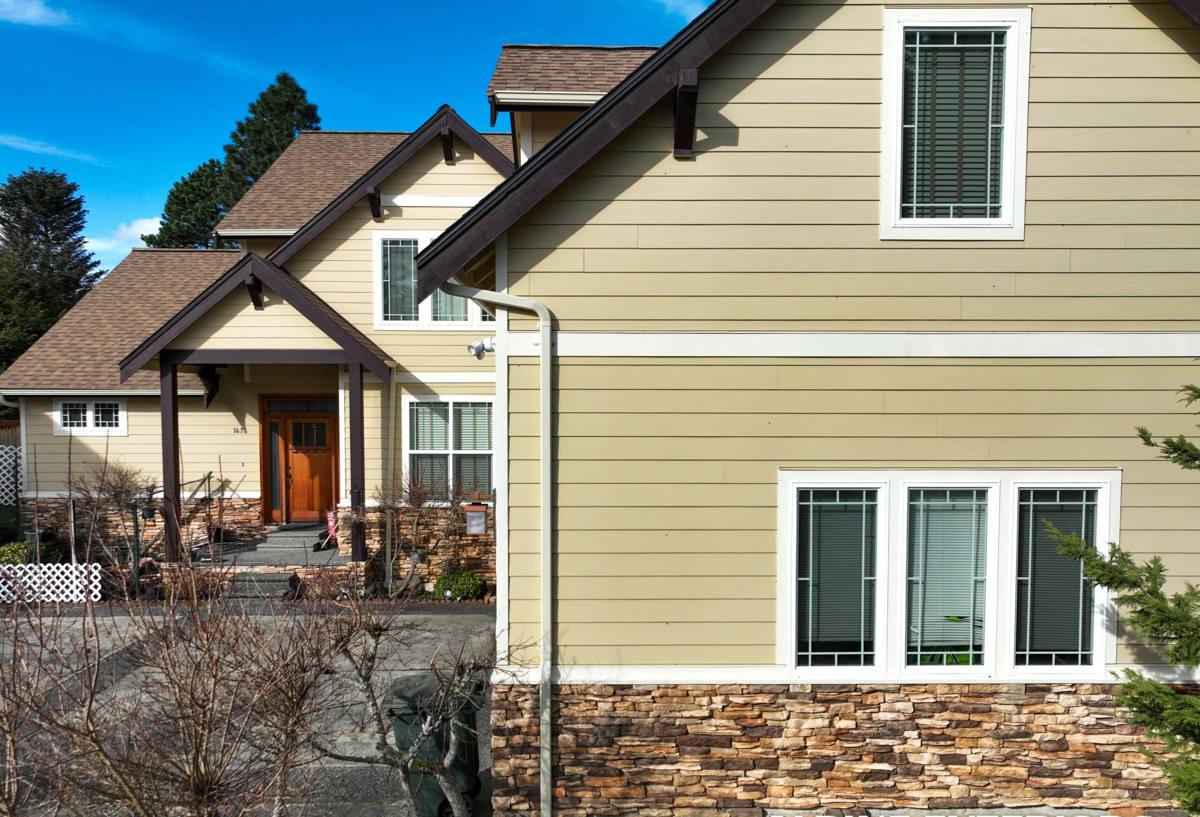
What Fairhaven Homes Actually Need From Their Siding
Salt Air and Metal Fasteners
Airborne salt accelerates corrosion on exposed metal — fasteners, flashing, trim edges — faster than it does even a few miles inland. Siding systems that rely on lightweight aluminum trim or exposed steel fasteners show pitting and staining sooner near the water. Correct fastener selection and flashing detail work matters more here than it does on a home in, say, Bellingham's Sunnyland or Barkley neighborhoods.
Driving Rain and Wind Exposure
Fairhaven's proximity to the bay means rain doesn't always fall straight down — wind pushes it sideways into wall assemblies, testing every seam, joint, and piece of flashing on a home's exterior. Siding that isn't installed with a proper drainage plane and correctly lapped flashing will eventually let water find its way behind the cladding, where it does the real damage: rot in sheathing, framing, and trim that you don't see until it's expensive.
Moss, Algae, and Shade
Bellingham's tree cover and marine humidity create long stretches where north- and west-facing walls stay damp. Wood-based and wood-composite sidings absorb that moisture and feed moss and algae growth; painted surfaces on those products break down faster under constant damp-dry cycling. A siding material that doesn't absorb water the way wood does is a genuinely different long-term maintenance conversation for homeowners here.
Why We Only Install James Hardie Fiber Cement in Fairhaven
We don't install vinyl, LP SmartSide, Cemplank, Allura, primed spruce, or cedar. That's a deliberate standard, not a limitation of what we're capable of installing. Here's the honest reasoning, specific to a climate like Fairhaven's:
- Vinyl expands and contracts with temperature swings and can warp or crack in high wind exposure; it also isn't a great match for the cooler, more traditional architectural character of many Fairhaven homes.
- LP SmartSide and other wood-strand products are engineered wood — they perform reasonably well when maintained perfectly, but any breach in the factory coating (a nail pop, a scuff, a poorly caulked joint) lets moisture into the wood fiber core, and marine humidity like Fairhaven's doesn't forgive that the way a drier climate might.
- Primed spruce and cedar are real wood — beautiful, but they need repainting and recaulking on a maintenance schedule most homeowners don't actually keep up with, and they're the most vulnerable of all these options to the rot and moss issues described above.
- Other fiber cement brands (Cemplank, Allura) are legitimate products, but we've standardized on one manufacturer so our crews, our install details, and our warranty conversations stay consistent — and James Hardie's factory-cured ColorPlus finish and climate-engineered product lines are the strongest match we've found for Pacific Northwest coastal exposure.
James Hardie fiber cement is non-combustible, doesn't absorb water the way wood-based products do, and holds paint and factory finish far longer under the freeze-thaw and damp-dry cycling that defines a Whatcom County winter. Hardie also engineers separate product lines for different climate zones — homes in our region generally call for the HZ5 line, built for areas with real seasonal temperature swings and sustained moisture, rather than the warm-humid HZ10 line built for the Gulf Coast and similar climates. That distinction isn't marketing — it affects how the board is manufactured and how it performs over decades.
What a Correct Fiber Cement Installation Actually Involves
Fiber cement siding is only as good as its installation. A rushed or generic install on a Fairhaven home — where wind-driven rain and salt air are working against the assembly every day — will show problems years before it should. The details that matter most here:
Drainage and Moisture Management
A weather-resistant barrier goes on the sheathing first, lapped correctly, before any siding touches the wall. Behind the siding itself, a proper rain screen or drainage gap lets any moisture that does get behind the boards drain and dry out instead of sitting against the wall assembly — this one detail matters more on a coastal-exposed home than almost anything else in the job.
Flashing at Every Penetration
Windows, doors, hose bibs, light fixtures, deck ledgers — every penetration through the siding plane needs correctly lapped, corrosion-resistant flashing. Kick-out flashing where a roofline meets a wall is one of the most commonly skipped details on lower-budget siding jobs, and it's one of the most common sources of hidden rot on homes near the water.
Fastening and Gaps
Hardie specifies exact fastener types, spacing, and penetration depth — and in a salt-air environment, using corrosion-resistant fasteners isn't optional. Boards also need correct gapping at butt joints and trim to allow for seasonal movement, caulked with a high-quality, paintable sealant rated for exterior exposure — not construction adhesive as a shortcut.
Finish and Touch-Up
ColorPlus factory-finished boards need field touch-up paint matched to the specific color line at cut edges and any job-site scuffs, using Hardie's own touch-up products to preserve the finish warranty. Field-painted (primed) boards need a correctly timed, correctly applied paint job — not a rushed coat before the crew moves to the next job.
Our Process for a Fairhaven Siding Project
- On-site assessment — we walk the exterior, check for existing rot, moisture damage, and problem areas (especially north-facing and water-facing walls), and talk through what your home's exposure actually needs.
- Tear-off and inspection — old siding comes off in sections so we can inspect sheathing and framing underneath before anything new goes up. Any rot or damage gets addressed before we close the wall back up, not covered over.
- Weather barrier and drainage plane — a new, correctly lapped weather-resistant barrier and drainage gap go in before siding installation starts.
- Hardie installation to manufacturer spec — fastening, gapping, and flashing done to James Hardie's published installation requirements, which is also what keeps the product warranty valid.
- Trim, caulking, and finish work — corner boards, window and door trim, and touch-up painting completed to match the ColorPlus finish or field-paint system.
- Final walkthrough — we go over the finished exterior with you before calling the job done.
Cost Factors on Fairhaven Fiber Cement Projects
Every home is different, and we don't quote a job without seeing it, but these are the factors that most often move a Fairhaven siding project's scope and price:
| Factor | Why It Matters in Fairhaven | Effect on the Job |
|---|---|---|
| Existing wall condition | Older homes near the water more often have hidden moisture damage behind existing siding | May add sheathing repair or replacement |
| Home exposure (waterfront vs. inland) | Wind and salt exposure varies block to block near the bay | Can affect fastener and flashing specification |
| Board profile and trim complexity | Multi-story homes and detailed trim take more labor and material | Affects install time and cost per square foot |
| Factory-finished vs. field-painted boards | ColorPlus finish reduces future maintenance but has different upfront cost | Shifts cost between install and long-term upkeep |
| Access and site conditions | Tight lots, mature landscaping, and hillside lots are common in this area | Can add setup time and equipment needs |
Why Hiring a Crew That Already Works Fairhaven Matters
Siding crews that don't work coastal neighborhoods regularly tend to install the same way everywhere — same fastener spec, same flashing details, same assumptions about moisture exposure — whether the home is three blocks from the bay or twenty miles inland. That's how avoidable problems show up five or ten years later on homes that needed a slightly different approach from day one.
A crew that's worked Fairhaven and similar Bellingham neighborhoods knows which walls take the worst of the wind-driven rain, understands the permitting expectations for this part of Whatcom County, and has already made the adjustments that a marine climate demands — before your project starts, not after something fails.
Maintaining Fiber Cement Siding in a Marine Climate
One of the real advantages of fiber cement over wood-based alternatives is how little ongoing maintenance it needs — but "little" isn't "none," especially this close to the water. A simple annual routine keeps a correctly installed system performing for decades:
- Rinse siding down once or twice a year to clear salt residue and organic buildup, especially on shaded or water-facing walls
- Check caulked joints around windows, doors, and trim annually for cracking or separation
- Look for moss or algae starting on north-facing walls and address it early with a gentle wash rather than pressure-washing, which can damage the finish
- Watch for any staining around fasteners or flashing, which can signal a developing moisture issue
- Touch up any scuffs or cut-edge exposure with matched paint before bare board is exposed to weather for extended periods
Let's Take a Look at Your Home
If you're weighing a siding replacement in Fairhaven, or you've noticed early signs of moisture or wear on your current siding, we're happy to come take a look. There's no pressure and no cost to get our honest read on what your home's exposure actually calls for — just fill out the form below to get started.