 Bellingham Roofing
 Why Siding Fails Faster in Columbia Than Homeowners Expect
Columbia sits close enough to Bellingham Bay that homes here deal with a combination most inland Whatcom County neighborhoods don't: salt-laden air off the water, wind-driven rain that hits walls at an angle instead of falling straight down, and a moss season that can stretch from October well into May. None of those things are dramatic on their own. Together, over years, they're exactly what breaks down siding that wasn't built or installed for this kind of exposure.
Salt air accelerates corrosion on fasteners, flashing, and any metal trim tied into the siding system. Driving rain pushes moisture into seams, laps, and butt joints that would stay dry in a calmer climate. And moss doesn't just sit on roofs — it colonizes shaded siding, gutters, and trim, holding moisture against the wall assembly long after a storm has passed. A siding system that can shrug off one of these stresses often can't hold up against all three at once, which is why we see premature failure in Columbia on materials that perform fine elsewhere in the county.
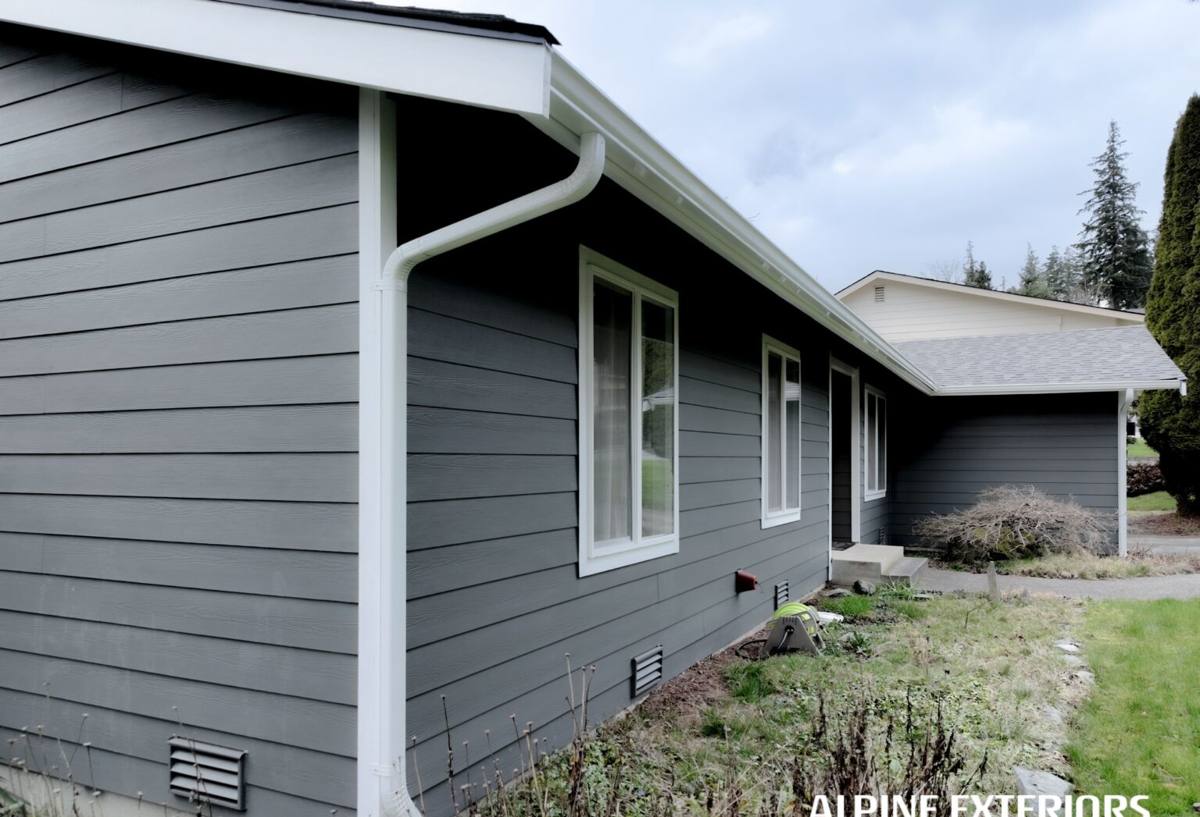
What Columbia's Housing Stock Means for a Siding Job
Columbia is one of Bellingham's older, close-in neighborhoods, with a mix of early-1900s homes and newer infill construction sitting close together on modest lots. That mix matters for siding work in a few practical ways:
Older Homes
Many of the older houses in this neighborhood have been re-sided at least once already, sometimes over the original wood siding, sometimes with a layer of foam or rigid insulation added along the way. Before any new siding goes on, we need to know what's actually on the wall — original sheathing, old asbestos-cement shingles, or a prior siding layer — because that determines whether a full tear-off is required and what the wall assembly needs for proper drainage and ventilation behind the new material.
Newer Infill Homes
Newer builds in Columbia are more likely to have house wrap and modern flashing details already in place, but "newer" doesn't always mean "installed correctly." We still check window and door flashing, kick-out flashing at roof-to-wall intersections, and weep paths before we button up any new siding, because a good siding product installed over a bad water-management detail will still leak.
Signs a Columbia Home Needs Siding Replacement, Not Just Repair
Not every siding problem calls for a full replacement. But in a marine, moss-heavy climate like this one, certain signs mean patching is just delaying a bigger repair bill:
- Soft or spongy spots when you press on the siding, especially near the bottom courses and around window sills
- Persistent moss or algae growth that comes back within weeks of cleaning, particularly on north- and west-facing walls
- Paint that's bubbling, peeling, or failing faster than the rest of the house, which often points to moisture trapped behind the surface
- Visible gaps, warping, or buckling at panel seams and corner boards
- Rot or discoloration at the base of the wall, around hose bibs, or below deck ledgers
- Rising heating bills with no other explanation, which can mean the wall assembly behind the siding is wet and losing its insulating value
- Siding that's original to a home built before the 1990s, since most materials from that era have already exceeded their realistic service life on the coast
Why We Only Install James Hardie Fiber Cement
We get asked why we don't offer vinyl, LP SmartSide, or cedar as options. It comes down to what we've watched hold up in this exact climate versus what struggles.
Vinyl siding is affordable and low-maintenance in mild weather, but it's a petroleum-based product that expands, contracts, and can become brittle over time — and wind-driven rain off the bay finds its way behind loose or warped panels more easily than homeowners expect. Wood-based products like LP SmartSide, primed spruce, and cedar look good on day one, but they're organic materials, and organic materials plus prolonged moisture plus a long moss season is a maintenance commitment few homeowners actually keep up with over 20-plus years. We're not saying these products are junk — they're reasonable choices in the right setting. We're saying we've made a professional call to stand behind one system for Columbia's conditions instead of offering products we know will need closer babysitting here than they would somewhere drier.
James Hardie fiber cement is non-combustible, dimensionally stable, and doesn't feed moss or rot the way wood-based sidings can. It's factory-finished with ColorPlus technology, so the color coat is baked on under controlled conditions rather than field-painted, which matters in a climate where a fresh paint job doesn't always get the dry cure time it needs.
Hardie Product Lines Built for Marine Exposure
James Hardie engineers its siding lines for different climate zones, and Bellingham falls into the HZ5 zone — the company's designation for regions with real moisture exposure and freeze-thaw cycling. That's the version of Hardie board we install here, not a generic national product.
| Product | Best Use on a Columbia Home | What It Offers |
|---|---|---|
| HardiePlank Lap Siding | Primary wall cladding, most common choice | Traditional lap look, engineered for HZ5 moisture and wind-driven rain exposure |
| HardiePanel Vertical Siding | Accent walls, gables, modern-style updates | Clean vertical lines, often paired with lap siding for visual contrast |
| HardieShingle | Craftsman and bungalow-style homes common in Columbia | Shingle-style profile without the maintenance burden of real wood shingles |
| HardieTrim | Corner boards, window and door trim, fascia | Matches fiber cement durability so trim doesn't fail before the field siding does |
ColorPlus Finish
Because the color coat is applied and cured at the factory rather than on-site, ColorPlus finishes hold up better against the UV exposure and salt air near the water, and they come with their own finish warranty separate from the substrate warranty on the board itself.
What a Correct Installation Actually Involves
The siding product is only half the equation. A Hardie install done wrong will still let water in behind it. Here's what we do on every Columbia project:
- Full assessment of existing siding and wall assembly to determine whether a tear-off to sheathing is needed
- Repair or replacement of any rotted sheathing or framing found once old siding comes off
- Installation of a code-compliant weather-resistive barrier with proper lapping for drainage
- Correct flashing at every window, door, roof-to-wall intersection, and penetration — this is where most leaks actually originate, not in the field of the siding
- Fiber cement installed to James Hardie's published fastening, clearance, and gapping specifications, including ground clearance and proper gaps at butt joints for expansion
- Caulking and sealant only where Hardie's specifications call for it, not as a substitute for correct flashing
- Final inspection of trim, corners, and paint touch-up at cut edges
Skipping steps in that sequence is how a siding job looks fine for a year or two and then starts showing moisture problems — often after the crew that installed it is long gone.
Cost Factors for Siding Replacement in Columbia
Every home is different, but a few factors consistently move the price on Columbia projects:
| Factor | Why It Matters Here |
|---|---|
| Tear-off scope | Older homes with multiple prior siding layers take longer to strip and may reveal sheathing damage |
| Sheathing and framing repair | Moisture intrusion from salt air and driving rain is more likely to have caused hidden rot on homes near the bay |
| House shape and trim detail | Craftsman-style homes with more corners, trim, and roof-to-wall intersections take more labor to flash correctly |
| Product selection | Lap, panel, and shingle profiles have different material and labor costs |
| Access and lot size | Narrow, close-set lots common in Columbia can slow material staging and equipment access |
We give a firm, itemized estimate after an on-site walkthrough rather than a rough number over the phone, because the tear-off and repair scope is the variable that swings a budget the most.
Why Hiring a Crew That Already Works in Columbia Matters
Siding work in a marine, moss-prone neighborhood isn't the same job as siding work twenty miles inland. A crew that already works Columbia regularly knows to expect hidden moisture damage under old siding layers near the water, knows which wall orientations need extra attention to moss and algae growth, and knows how James Hardie's HZ5 specifications apply in this specific climate. That familiarity shows up in fewer surprises during tear-off, fewer callbacks, and a finished product that's actually built for the weather it has to survive — not just the weather on the install day.
It also means we're not learning Whatcom County's permitting and inspection expectations on your project. We already know what local inspectors look for on flashing and clearance details, which keeps the job moving instead of stalling on avoidable corrections.
Ready to Talk About Your Siding?
If your Columbia home is showing signs of moss buildup, soft spots, or aging siding that's due for replacement, we're happy to take a look and walk you through what a correct James Hardie installation would involve for your specific house. Request a free, no-pressure estimate using the form below and we'll schedule a time to assess your home in person.