 Bellingham Roofing
 Why Metal Roofing Makes Sense in the Columbia Neighborhood
Homes in Columbia sit close enough to Bellingham Bay that salt-laden air is a real factor in how any roofing material ages, and far enough into a wet Pacific Northwest weather pattern that the roof spends a good chunk of the year damp, shaded, or both. That combination is hard on asphalt shingles, which lose granules and soften under constant moisture cycling, and it's exactly the environment where a properly installed metal roof earns its keep. Metal doesn't absorb water, it sheds moss more easily than a rough shingle surface, and a good coating system holds up to salt air far longer than the mineral surface on a typical shingle.
That said, "metal roof" covers a wide range of products and installation quality, and not every metal roof performs the same in this climate. This page walks through what a metal roof actually needs to do on a Columbia home, what separates a roof that lasts decades from one that causes problems in five years, and how we approach the job from first inspection to final walkthrough.
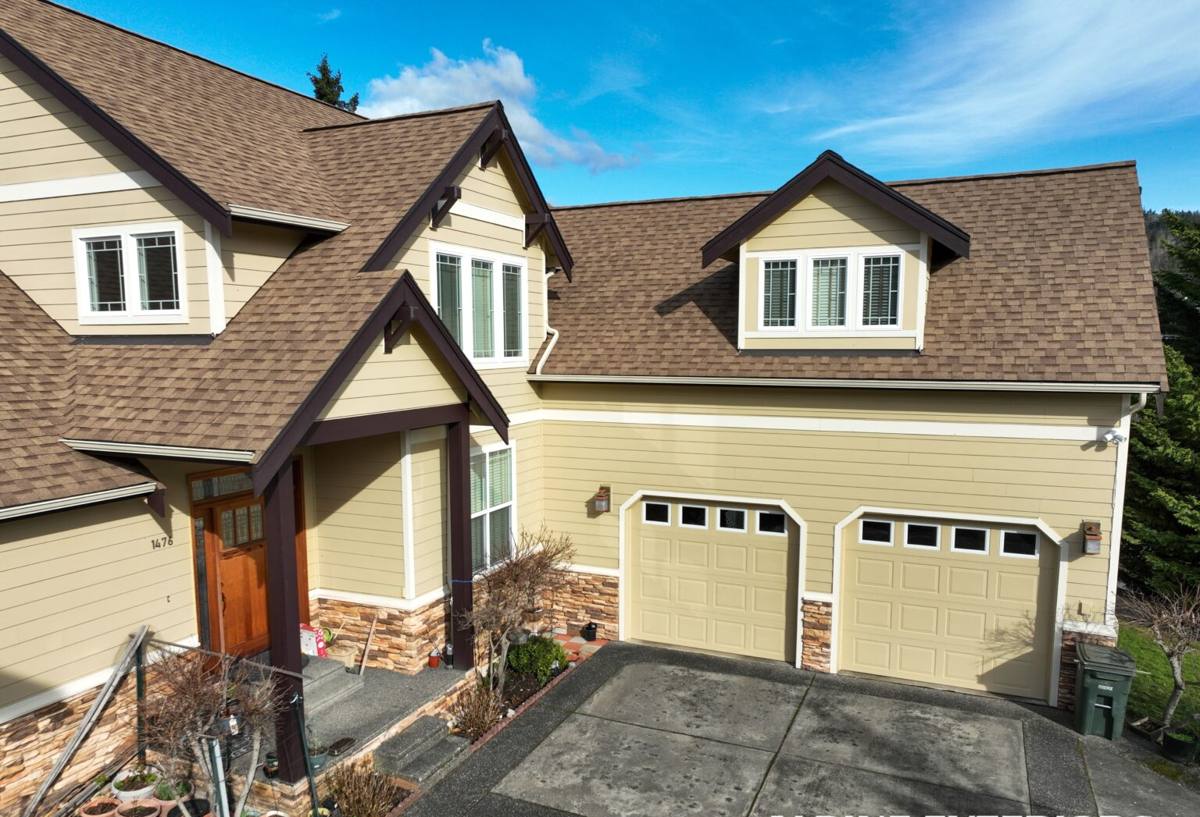
What Bellingham's Climate Actually Does to a Roof
Three things define roofing conditions in this part of Whatcom County, and all three show up in Columbia:
Salt Air
Proximity to Bellingham Bay means airborne salt is a slow, steady corrosive force on any exposed metal, including fasteners, flashing, panel edges, and cut edges where the protective coating has been compromised. Uncoated or poorly coated steel will show rust streaking at seams and fastener heads well before the panels themselves fail structurally. This is one of the biggest reasons material and coating choice matter more here than in an inland climate.
Driving Rain
Storms off the Sound often come in sideways, not straight down. That matters because a roof that only has to shed water moving vertically can get away with looser seams and less attention to lap direction. A roof that has to resist wind-driven rain pushing up under panel edges needs correct lap orientation, properly sealed seams or standing seam ribs, and underlayment that can handle incidental water intrusion without failing.
A Long Moss Season
Bellingham's wet season runs long, and shaded, tree-covered lots, common throughout Columbia, stay damp for extended stretches even between storms. That's ideal moss-growing weather. Moss holds moisture against a roof surface, and on shingles it works into the granule layer and lifts tabs. On metal, moss has a much harder time gaining a foothold on a smooth, properly sloped panel, but it can still take hold in valleys, at panel-to-wall transitions, or anywhere debris collects and doesn't dry out.
Panel Types: What Actually Fits a Columbia Home
Not every metal roofing product is the right fit for every house, and the two main categories perform differently under the conditions described above.
| Panel Type | How It's Attached | Best Fit | Trade-Offs |
|---|---|---|---|
| Standing Seam | Concealed clips, no exposed fasteners on the field of the panel | Most Columbia homes, especially anywhere salt air or driving rain is a concern | Higher material and labor cost; requires an experienced installer for clean seams |
| Exposed Fastener (Corrugated / Ribbed) | Screws driven through the panel face into the deck or purlins | Outbuildings, shops, budget-driven re-roofs where cost is the priority | Every fastener is a potential leak and corrosion point over time; gaskets wear and need eventual replacement |
We'll install either system depending on the home, the budget, and the roof's exposure, but for primary residences in this neighborhood we generally steer clients toward standing seam when it fits the budget. Fewer penetrations through the panel face means fewer long-term maintenance points, which matters more here than in a drier climate where an exposed fastener roof can go longer between issues.
The Details That Determine Whether a Metal Roof Lasts
The panel itself is only part of the system. Most metal roof problems we get called out to inspect trace back to details other than the panels: flashing, fasteners, underlayment, or ventilation that was rushed or skipped.
Coatings
The paint or coating system on a metal panel is what actually fights salt air corrosion and UV fading, not the base metal alone. Premium PVDF (Kynar-type) coatings hold color and resist chalking far longer than basic polyester coatings, which matters on a coastal-influenced roof that's going to be up there for decades. We'll walk through coating options and what each is warrantied for so you're choosing with real information, not a paint chip.
Fasteners and Flashing
Galvanic corrosion, where two dissimilar metals in contact accelerate each other's breakdown, is a real issue if fasteners, flashing, and panels aren't matched correctly. We match fastener and flashing metal to the panel system rather than mixing whatever's convenient, and every penetration such as vents, chimneys, and skylights gets proper metal flashing and sealant, not just caulk over a gap.
Underlayment
A synthetic, high-temp underlayment goes down under every metal roof we install. It's the backup layer that protects the deck if wind-driven rain ever gets past a seam or a fastener works loose over time, and given how often storms here come in sideways, that backup layer isn't optional.
Ventilation
Metal roofs need proper intake and exhaust ventilation just like any other roof system, and in a climate this damp, poor attic ventilation leads to condensation on the underside of the deck, which can cause rot and staining that has nothing to do with the roof surface itself. We check existing ventilation on every inspection and correct it as part of the job when it's inadequate.
Moss and Debris Management on a Metal Roof
Metal sheds moss far more readily than shingles, but the idea that metal roofs never get moss isn't quite accurate for a shaded lot in a long wet season. Needles, leaves, and organic debris still collect in valleys and at wall transitions, and if they're left to sit, they hold moisture against the panel finish and can eventually lead to localized moss growth or coating breakdown at those spots. The fix isn't complicated: periodic clearing of valleys and gutters, especially going into the wettest months, but it does need to happen. We'll walk you through what a realistic maintenance schedule looks like for your specific lot and tree cover so a low-maintenance roof stays that way.
Our Metal Roofing Process for Columbia Homes
- Inspection and consultation. We walk the existing roof, check the deck condition, look at ventilation, and talk through what's driving the decision: leak history, age, appearance, or planning ahead.
- Panel and coating selection. We go over standing seam versus exposed fastener, coating options, and color, with honest guidance on what fits the home and the budget rather than upselling the most expensive system by default.
- Deck prep and underlayment. Old roofing is removed down to the deck, damaged sheathing is replaced, and synthetic underlayment goes down across the full roof.
- Flashing and edge metal. Drip edge, valley metal, and penetration flashing go in before panels, matched to the panel system to avoid galvanic issues.
- Panel installation. Panels are installed with correct overlap direction for prevailing wind and rain exposure, with attention to seam alignment and clip spacing.
- Trim, ridge caps, and sealant details. Ridge, hip, and transition details are finished with matched trim rather than generic sealant patches.
- Final walkthrough. We review the finished roof with you, confirm ventilation and drainage are working as intended, and go over what maintenance, if any, to expect.
What Affects the Cost of a Metal Roof in This Area
Metal roofing costs more upfront than asphalt shingles, and the final number depends on several factors specific to the home and the job, not just square footage.
| Factor | Why It Matters |
|---|---|
| Panel type (standing seam vs. exposed fastener) | Standing seam costs more in material and labor but reduces long-term maintenance and penetration points |
| Roof pitch and complexity | Steeper roofs and multiple valleys, dormers, or transitions take longer to flash and panel correctly |
| Existing deck condition | Rot or damage found during tear-off adds material and labor to repair before panels go on |
| Coating grade | Premium PVDF coatings cost more than standard polyester but hold up longer against salt air and UV |
| Tear-off vs. overlay | Full tear-off costs more than overlay but lets us inspect and correct the deck and ventilation underneath |
We don't quote metal roofing off a square-footage guess. A real number comes from a physical inspection of your specific roof, and we'll give you a straightforward breakdown of what's driving the cost rather than a lump sum with no explanation.
Why Hiring a Crew That Already Works in Columbia Matters
Metal roofing rewards experience in a way asphalt shingle work doesn't punish as harshly for mistakes. A seam that's slightly off, a fastener pattern that's too tight or too loose, or flashing that wasn't matched to the panel metal can turn into a corrosion or leak problem years down the road, and by the time it shows up, it's a repair job instead of a simple fix. A crew that's installed metal roofs across Whatcom County's coastal-influenced weather knows how to detail a roof for driving rain and salt exposure specifically, not just how to install panels on a dry day.
Local experience also means we're familiar with the mix of home ages and roof styles common in established Bellingham neighborhoods like Columbia, from older homes with framing quirks to newer builds, and we adjust the install approach accordingly instead of treating every roof the same.
Signs It's Time to Talk About a Metal Roof
- Your current shingle roof is losing granules or showing bald spots, especially on slopes that stay shaded most of the day
- You're seeing recurring moss growth despite regular cleaning
- You've had leaks or staining at valleys, penetrations, or wall transitions
- You're planning to stay in the home long-term and want to stop thinking about roof replacement every 15 to 20 years
- Your current roof shows fastener rust, streaking, or corrosion at metal components like flashing or vents
- You want a roof that holds up better in wind-driven storms coming off the water
Questions Worth Asking Before You Commit
Whoever you hire for a metal roof in Columbia, these are worth asking directly:
- What panel type and gauge are you specifying, and why does it fit this roof?
- What coating system is included, and what's the manufacturer's warranty on color and finish?
- How are fasteners and flashing matched to the panel metal to avoid galvanic corrosion?
- Is this a full tear-off, and will the deck be inspected and repaired if needed?
- What does the workmanship warranty cover, separate from the manufacturer's material warranty?
If a contractor can't answer these clearly, that's worth noting before you sign anything.
If you're weighing a metal roof for your Columbia home, we're happy to walk your roof, answer these questions in person, and give you a straightforward, no-pressure estimate. Just fill out the form below to get started.