 Bellingham Roofing
 Roof Repair Built for Cordata's Climate
Cordata sits in north Bellingham, close enough to Bellingham Bay and the Salish Sea that salt-tinged marine air is a constant, low-grade presence on every roof in the neighborhood, not just something that shows up during a storm. Add in Whatcom County's habit of driving rain sideways under wind rather than letting it fall straight down, and a moss season that can run most of the year on shaded roof planes, and you have a specific combination of stresses that wears on a roof quietly for years before a leak ever shows up inside the house. A roof repair in Cordata isn't just patching a hole. Done right, it's addressing the actual cause of the damage so the same spot isn't leaking again in eighteen months.
This page is about roof repair specifically — not a full tear-off and replacement — for homes in and around Cordata. It covers what tends to go wrong here, what a correct repair actually involves, how we approach the job, and why hiring a crew that already works this part of Bellingham makes a practical difference.
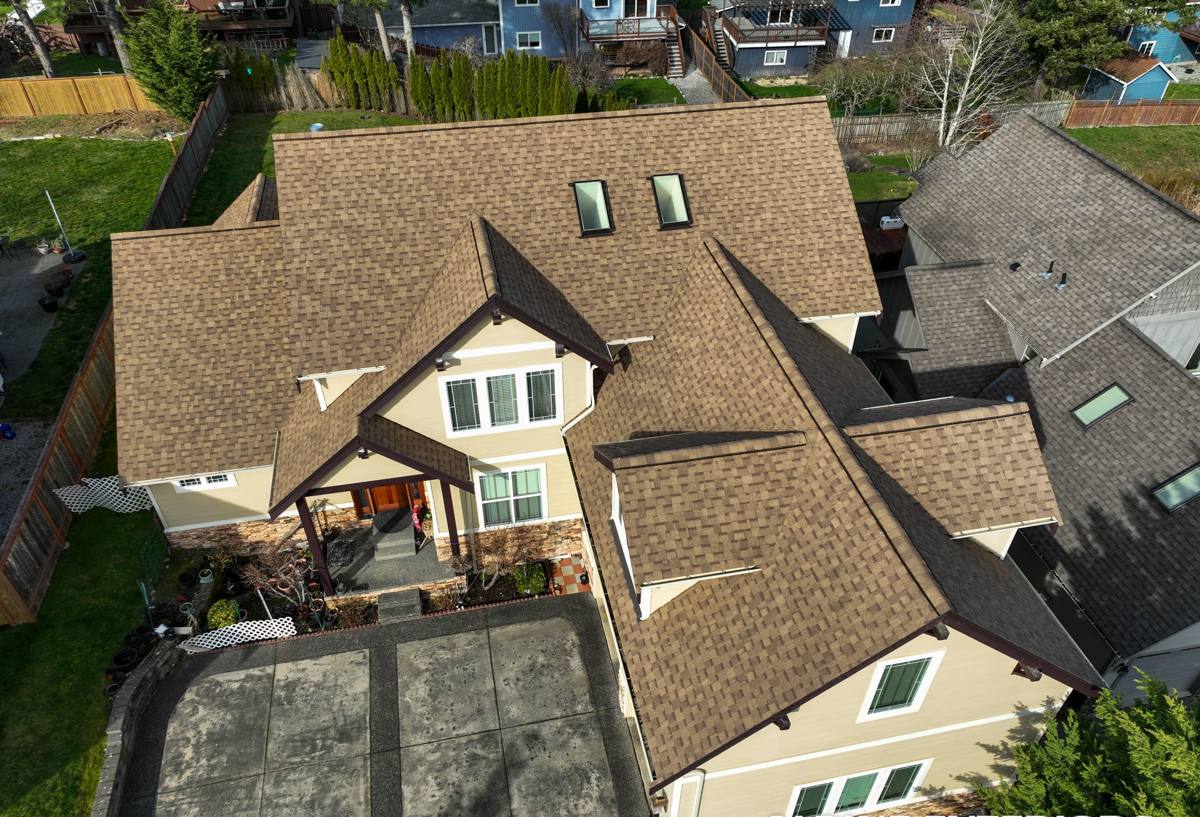
What Cordata's Weather Does to a Roof Over Time
Salt Air and Corrosion
Marine air moving inland off the bay carries enough salt content to speed up corrosion on exposed metal — nail heads, flashing, and fasteners that were never rated for it in the first place. This kind of damage is slow and easy to miss from the ground. A roof can look intact from the driveway while flashing metal is quietly thinning underneath, and by the time a leak actually shows up inside, the corrosion has usually been working for a while.
Driving Rain
Wind off the water pushes rain sideways and, on steeper pitches, even upward under the bottom edge of shingles or shakes. A roof detail that would hold up fine somewhere with calmer, straight-down rainfall can still let water in here specifically because the wind is forcing it into places a purely vertical rain model never accounts for — lapped seams, valley edges, and the transitions where a roof meets a wall or chimney.
A Long Moss Season
Mild temperatures, tree cover, and consistent dampness give moss a long runway in this part of Whatcom County. It tends to take hold first on north-facing and shaded slopes, where the roof surface rarely gets enough sun to dry out between rain events. Moss itself isn't just a cosmetic issue — as it spreads, it holds moisture directly against the roofing material and can work its way under shingle tabs and shakes, lifting them enough for water to get underneath.
Common Repair Calls We See in Cordata
Most roof repair calls in this neighborhood trace back to one of a handful of recurring problems. Recognizing them early is usually the difference between a straightforward repair and a much bigger job later.
- Flashing failure at valleys, chimneys, or skylights — corroded, improperly lapped, or under-sealed flashing is one of the most common sources of leaks that show up well after the original install.
- Lifted or cracked shingles from wind exposure or moss growth working underneath the tabs
- Moss-related shingle damage on shaded north-facing slopes, where growth has been left to spread instead of being managed early
- Clogged or damaged gutters causing water to back up under the roof edge instead of draining away from the house
- Nail pops and fastener failure where corrosion or settling has worked screws and nails loose over time
- Soft or sagging decking found once a smaller leak has been left unaddressed long enough to reach the plywood underneath
What a Correct Roof Repair Actually Involves
A repair that's done right starts with figuring out where the water is actually getting in, not just where it's showing up inside the house. Those two points are often several feet apart, since water tends to travel along the underlayment or decking before it finds a gap to drip through.
Finding the Real Source
We trace leaks back to their actual entry point before doing any repair work. Patching the spot where a ceiling stain appears, without tracing the water's path back to the actual failure, usually just moves the problem somewhere less visible for a while.
Matching Materials
A repair should use materials and fastening methods consistent with what's already on the roof, so the patched section performs the same way the surrounding roofing does under wind and rain. A mismatched repair can end up as its own weak point later, even if it looks fine at first.
Rebuilding Flashing, Not Just Caulking It
When flashing has failed, the fix is to properly lap and integrate new flashing with the surrounding underlayment and roofing material — not to smear sealant over the gap and call it done. Caulk is a short-term fix at best in a climate this wet; it dries out, cracks, and fails again within a season or two, and by then the underlying flashing problem is still there.
Checking the Deck
Any time we open up a section of roof for repair, we check the decking underneath for soft spots or moisture damage. Catching rot early, while it's still isolated to a small section, is a much smaller job than dealing with it after it's spread.
Repair Materials and Approach by Situation
| What's Failing | Typical Repair | What to Watch For in Cordata's Climate |
|---|---|---|
| Flashing at valleys or chimneys | Remove and rebuild flashing, integrated with underlayment | Corrosion-resistant metal matters more here given the salt air |
| Isolated shingle damage | Remove and replace matching shingles | Color and profile matching gets harder as shingles age and fade unevenly |
| Moss on shaded slopes | Careful removal plus root-level treatment, not just a surface sweep | Aggressive scraping can damage granules and shorten shingle life if not done carefully |
| Gutter or edge-related leaks | Gutter repair or replacement alongside roof edge inspection | Backed-up water under the roof edge is a common secondary cause of interior leaks |
| Soft decking found during repair | Cut out and replace the damaged section before re-roofing over it | Sustained dampness in this region means hidden rot is more common than homeowners expect |
How Our Repair Process Works
- Inspection: We walk the roof in person, not from a photo or a drone pass alone, and check the attic from the inside where access allows.
- Diagnosis: We trace the leak or damage back to its actual source and explain what we found in plain terms before recommending anything.
- Written estimate: You get a clear scope covering what's being repaired, what materials are being used, and what it costs — not a vague single line item.
- Repair: The work gets done to manufacturer specification, matched to the existing roofing where possible.
- Deck check: Any section we open up gets checked for hidden moisture damage before it's closed back up.
- Cleanup and walkthrough: We clear debris, do a magnetic nail sweep, and review the finished repair with you before we call the job done.
Repair vs. Replacement: How We Decide
Not every roof problem in Cordata means a full replacement, and we're not going to tell you it does. A lot of repair calls really are just that — a repair. But there's a point where patching a roof stops making financial sense, and it's worth understanding where that line generally falls.
| Factor | Leans Toward Repair | Leans Toward Replacement |
|---|---|---|
| Extent of damage | Isolated to one section, valley, or penetration | Spread across multiple areas of the roof |
| Age of roofing | Well within expected service life | Nearing or past the typical lifespan for the material |
| Deck condition | Solid decking found under the repair area | Soft or rotted decking found in multiple spots |
| Repair history | First real repair the roof has needed | Repeated repairs to the same or nearby areas |
| Moss and moisture pattern | Manageable with cleaning and targeted treatment | Widespread growth pointing to a systemic ventilation or moisture problem |
We'll give you a straight answer either way. If a repair is the honest call, that's what we'll recommend, even though a full replacement is the bigger job. If the roof is genuinely past the point where repair makes sense, we'll explain exactly why rather than just pushing for the larger project.
Living With Moss and Salt Air Between Repairs
A repair fixes what's already failed, but a few ongoing habits go a long way toward keeping the next call further out on the calendar. None of this requires climbing on the roof yourself — most of it is about knowing what to watch for and when to call someone.
- Keep gutters clear so water drains off the roof edge instead of backing up underneath it
- Have moss on shaded slopes treated or removed before it spreads and lifts shingle tabs
- Trim back tree limbs that keep sections of the roof shaded and damp longer than they need to be
- Have flashing and roof penetrations checked periodically, since corrosion from salt air is gradual and easy to miss from ground level
- Address small leaks as soon as they're noticed rather than waiting to see if they get worse
Why Hiring a Crew That Already Works in Cordata Matters
A crew that regularly repairs roofs in this part of Bellingham has already seen how salt air corrodes underspecified flashing, how wind-driven rain finds its way past a lapped seam that looked fine on the surface, and which roof orientations hold onto moss the longest through the wet months. That's the kind of practical knowledge that shows up in small decisions during a repair — where it's worth spending a little extra time on a flashing detail, or when a "quick patch" is actually going to need more than that to hold.
It also matters after the repair is finished. A workmanship warranty only means something if the company behind it is still around and reachable a few years later, which is easier to count on with a crew that has an established, ongoing presence in the area rather than one passing through for a single job.
A Quick Checklist Before You Hire a Roof Repair Contractor
- Do they inspect the roof and attic in person before quoting, rather than pricing from a photo?
- Does the estimate explain what's actually failing, not just what it'll cost to fix?
- Do they check the decking any time a repair area is opened up?
- Do they carry current Washington state contractor licensing and liability insurance?
- Will they tell you honestly if a repair isn't going to hold, instead of patching over a bigger problem?
- Can they point to ongoing, recent work in or near Cordata and north Bellingham?
If your Cordata home has a leak, storm damage, or a roof issue you'd like a straight opinion on, we're glad to come take a look. Use the form below to request a free, no-pressure estimate.