 Bellingham Roofing
 Building a Deck That Holds Up in Sudden Valley
Sudden Valley sits in a wooded, lake-adjacent pocket of Whatcom County east of Bellingham, and it presents a different set of conditions than a deck built on an open, sunny lot in town. Mature tree canopy means more shade on the structure through most of the day, which slows drying after every rain. Add the long, wet stretch of fall through spring that's typical of this part of Washington, and you get decks that stay damp longer than homeowners expect — even when the wood or composite itself is holding up fine on the surface. A deck built for Sudden Valley needs to be designed around moisture management from the ground up, not just picked for looks.
We've built and repaired decks throughout Whatcom County long enough to see which shortcuts show up as problems in year three, not year one. This page covers what actually matters for a deck in this specific setting: material selection, framing and ledger details, drainage, and the maintenance rhythm that keeps a deck looking and performing well for decades instead of one.
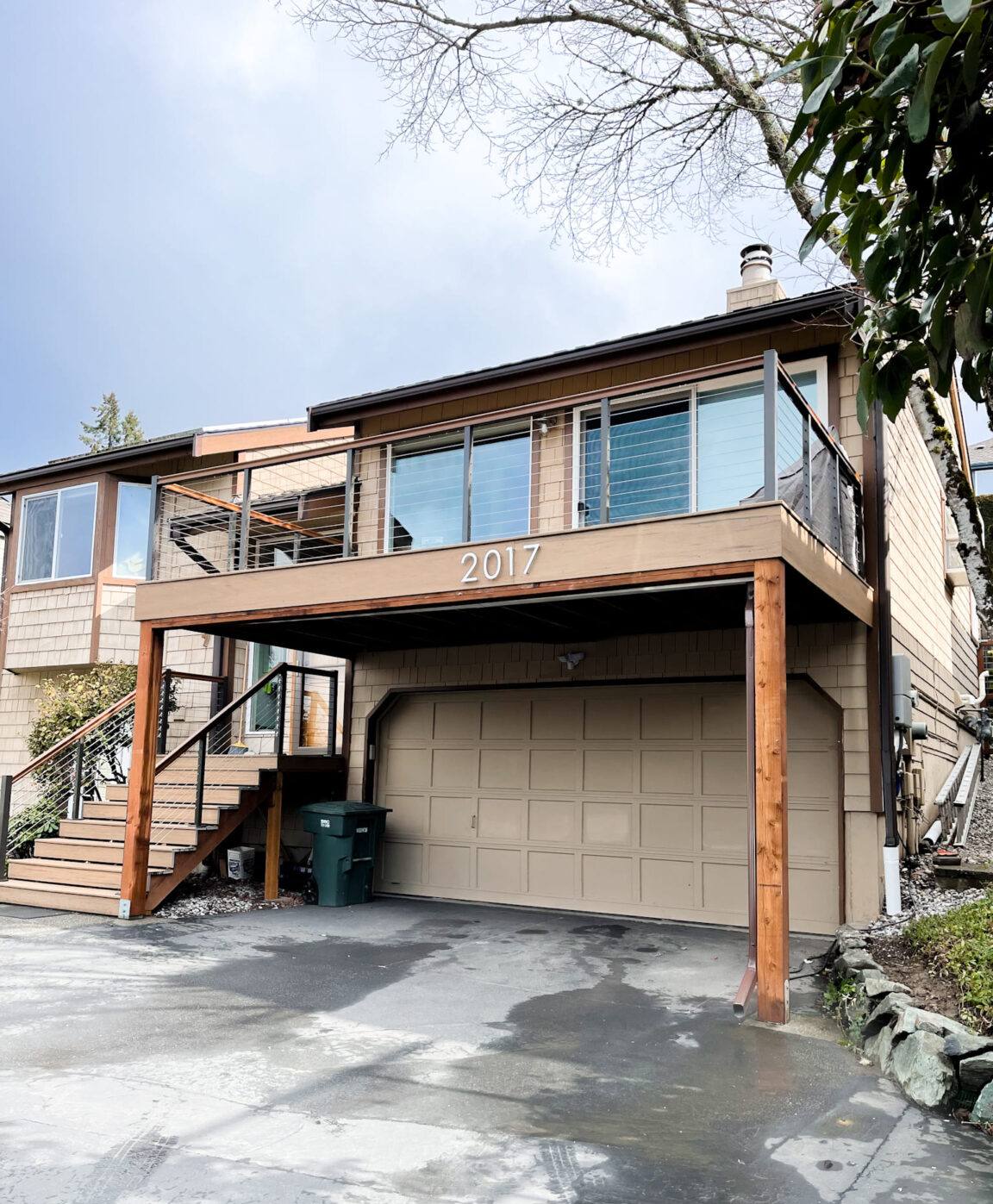
What Bellingham's Climate Does to a Deck Over Time
Whatcom County's marine climate means steady rainfall across most of the year, humidity that lingers, and a moss and algae season that can stretch from late fall well into spring. On a shaded lot like many in Sudden Valley, that season runs even longer, because sun and wind — the two things that actually dry a deck surface — reach the boards less often.
The three things we watch for
- Trapped moisture: boards, joists, and ledger connections that stay wet longer than they should because of poor spacing, poor slope, or blocked airflow underneath.
- Moss and algae growth: shaded, north-facing, and low-airflow decks grow a biofilm that holds water against the wood surface and makes boards slick and dangerous underfoot.
- Fastener and connector corrosion: screws, joist hangers, and structural hardware that aren't rated for constant damp exposure will rust and weaken well before the framing itself fails.
None of these are dramatic failures — they're slow ones. That's exactly why they get missed on decks that were built to look right on installation day rather than to perform over fifteen or twenty wet seasons.
Choosing the Right Decking Material for This Setting
There's no single "best" decking material — there's a best material for a given lot, budget, and maintenance appetite. On a shaded, damp site like a typical Sudden Valley lot, the trade-offs shift a bit compared to a sunny in-town lot, mainly around moss resistance and how forgiving the material is if maintenance slips for a season.
| Material | How it handles shade & moisture | Maintenance | General cost position |
|---|---|---|---|
| Pressure-treated lumber | Prone to moss/algae in shaded spots if not cleaned; moves and checks as it dries and re-wets | Annual cleaning, periodic sealing | Lowest upfront |
| Cedar | Naturally more rot- and insect-resistant, but still needs airflow and finish to resist graying and moss in deep shade | Sealing/staining every 1-3 years | Mid-range |
| Composite (capped) | Won't rot, but moss and algae can still grow on the surface film in low-sun areas and need washing | Occasional washing, no sealing | Higher upfront, lower ongoing labor |
| PVC decking | Fully moisture-resistant board, least prone to biological growth if kept clean, but still needs airflow underneath for the structure | Occasional washing | Highest upfront |
We'll walk a shaded lot honestly with you: composite and PVC reduce the surface maintenance burden, but they don't eliminate the need for correct drainage and airflow underneath — the framing still has to be protected, regardless of what decking sits on top of it.
What we generally steer clients away from — and why
We're cautious about decking products with limited moisture-handling track records or manufacturer specs that assume a drier, sunnier climate than Whatcom County actually delivers. That's not a knock on any specific brand — it's that a product's warranty terms and installation tolerances matter more in a shaded, high-humidity setting, and we'd rather steer a homeowner toward a system with clear, well-documented fastening and ventilation requirements than one where the manufacturer's guidance is thin on damp-climate installation.
Framing, Footings, and Ledger Attachment Done Right
The decking surface gets all the attention, but the framing underneath is what determines whether the deck is safe and long-lasting. A few things we treat as non-negotiable on every build:
- Footings sized for the soil: ground conditions on wooded, sloped lots vary more than on flat, cleared ones — footing depth and bearing get engineered to the actual site, not assumed from a standard plan.
- Ledger board flashing: where the deck attaches to the house is the single most common source of hidden rot on older decks. Proper flashing, and a gap or drainage plane behind the ledger, keeps water from tracking into the house framing.
- Joist protection: joist tape or an equivalent moisture barrier on top of every joist, so fastener penetrations don't become entry points for water into end grain.
- Corrosion-rated hardware: hot-dip galvanized or stainless connectors and fasteners throughout — not just at the ledger — given how much of the year framing stays damp under a shaded deck.
Drainage, Ventilation, and Moss Prevention
Board spacing, deck height above grade, and what's happening underneath the deck all affect how fast it dries after rain — which, in this climate, is most days.
Design choices that make a real difference
- Slight slope away from the house so water sheds off the surface instead of pooling near the ledger.
- Adequate clearance between deck framing and grade so air actually moves underneath, especially on lower decks close to the ground.
- Gutters or drip edges positioned so roof runoff isn't dumping directly onto the deck surface or into the space below it.
- Trimming back overhanging branches where practical — we can't move a tree line, but even a modest increase in sun and airflow slows moss growth noticeably.
On decks in tighter, shadier spots, we sometimes recommend a slightly wider board gap or a change in board orientation purely to improve drying time — small design decisions that don't show up in a quote line item but matter a lot ten years down the road.
Permits and Sudden Valley Considerations
Deck construction in unincorporated Whatcom County generally requires a building permit once the structure is attached to the house or exceeds a certain height and size — we handle that process as part of the job rather than leaving it to the homeowner. Sudden Valley is also a community with its own association, and like many planned communities, exterior projects can be subject to design review or guidelines beyond the county permit itself. We'd rather flag that early in the estimate conversation than have it surface as a delay once material is ordered.
Our Process for a Sudden Valley Deck Build
- On-site walk: we assess sun exposure, grade, existing structure (if it's a rebuild), and any permit or association steps specific to the property.
- Material and design conversation: honest trade-offs between wood, composite, and PVC based on the shade and maintenance appetite for that specific lot.
- Permitting: we pull the necessary county permit and coordinate any HOA-style approval steps before work begins.
- Demo and framing: old structure removed if applicable; footings, framing, ledger flashing, and hardware installed to the standards above.
- Decking and finish work: boards, railing, and any stairs installed with spacing and orientation chosen for drainage in this specific location.
- Walkthrough: we go over the maintenance schedule that fits the material you chose before we consider the job done.
Deck Maintenance Checklist for a Shaded, Wet-Climate Lot
- Sweep debris (needles, leaves, seed pods) off the deck regularly — trapped organic matter holds moisture and feeds moss.
- Wash the surface at least once a year, more often on heavily shaded sections, with a cleaner appropriate to your decking material.
- Check and clear the gap between boards so water can drain through instead of pooling.
- Inspect ledger flashing and the house-to-deck connection annually for gaps, cracking, or staining.
- Look underneath the deck once a year for standing water, blocked airflow, or hardware showing rust.
- Re-seal or re-stain wood decking on the schedule the product calls for — don't wait until it looks obviously gray or dry.
- Trim back vegetation that's shading or brushing against the deck surface where you're able to.
Why Hire a Crew That Already Works in Sudden Valley
A deck built by a crew that mainly works drier, sunnier climates will often look right on day one and start showing moss, soft spots, or hardware corrosion within a few seasons — because the details that matter here (flashing, spacing, airflow, hardware grade) aren't the same priorities everywhere. We build and repair decks across Bellingham and Whatcom County, including wooded and lake-adjacent lots like those in Sudden Valley, so the framing and drainage decisions above aren't theoretical — they're what we specify by default because we've seen what happens when they're skipped.
If you're planning a new deck or need an honest look at an existing one, we're happy to walk the property and talk through what it actually needs. Reach out for a free, no-pressure estimate using the form below.