 Bellingham Roofing
 Fiber Cement Siding in Ferndale: A Local Job, Not a Generic One
Ferndale sits in a part of Whatcom County where the exterior of a house works harder than most homeowners realize. Salt-tinged air moves in off the water, rain arrives sideways more often than straight down, and shaded or north-facing walls can stay damp long enough to grow moss for most of the year. Fiber cement siding is one of the few wall claddings built to take that combination without slowly losing the fight, but "fiber cement" as a category covers a lot of ground. This page is about one specific thing: installing James Hardie fiber cement siding correctly on Ferndale homes, and what that actually requires from the material, the installer, and the details in between.
We install James Hardie exclusively, in Ferndale and across the rest of our Bellingham-area service territory. That's a standard, not a sales pitch, and it's worth understanding why before you decide what goes on your walls.
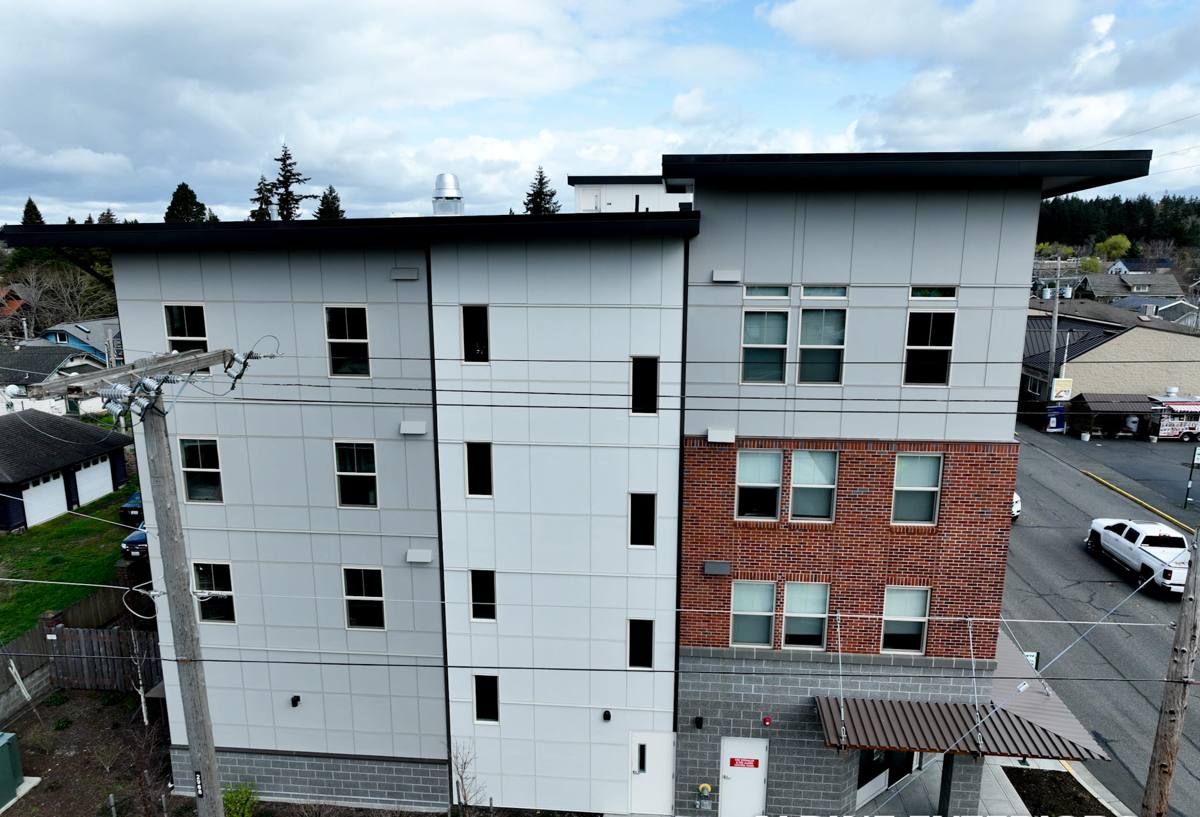
Why Ferndale's Climate Is Hard on Siding
Salt Air and Corrosion
Ferndale's proximity to the water means homes here take on more airborne salt than you'd get further inland. Salt speeds up corrosion in fasteners, flashing, and lower-grade trim hardware, and it can degrade a weak factory finish faster than a drier climate would. Any siding installation in this area needs corrosion-resistant fasteners and flashing as a baseline, not an upgrade.
Wind-Driven Rain
Rain in this part of Whatcom County rarely falls straight down. Wind pushes it into lap joints, trim edges, and butt seams from the side, which is a tougher test than a simple annual rainfall total suggests. Siding that would perform fine under calm, vertical rainfall can still fail here specifically because water is being driven sideways into details that weren't sealed with that in mind.
A Long Moss and Mildew Season
Mild temperatures, consistent moisture, and plenty of shaded wall area add up to a moss and mildew season that runs long in Ferndale, often longest on north-facing walls or sections shaded by trees and neighboring structures. Any siding surface that holds moisture against itself, or that's porous enough to stay damp between rain events, becomes a growth surface over time. That's a maintenance and appearance problem before it's a structural one, but it's usually the first visible sign that a wall assembly isn't shedding water the way it should.
Why We Only Install James Hardie in Ferndale
We used to carry a broader lineup of siding products. We narrowed it down after seeing, repeatedly, what actually holds up on tear-offs and service calls in this specific climate versus what looks fine in a showroom.
- Non-combustible core: Fiber cement doesn't feed a fire the way wood-based siding can, which matters for household safety and can matter for insurance underwriting.
- Factory-applied ColorPlus finish: The finish is baked on under controlled conditions rather than field-applied, so it holds color and resists moisture intrusion far longer than site-painted siding.
- Climate-engineered HZ product lines: Hardie's HZ5 formulation is built for regions with sustained moisture exposure and freeze-thaw cycling, which describes coastal Whatcom County accurately.
- Dimensional stability: Fiber cement holds its shape through repeated wet-dry cycles instead of swelling, cupping, or warping the way some engineered wood products can.
- A strong transferable warranty: Hardie's warranty structure is one of the stronger ones in the industry, provided the installation follows manufacturer spec.
We don't install LP SmartSide, vinyl siding, Cemplank, Allura, primed spruce, or cedar. Those are legitimate products and plenty of homeowners are satisfied with them elsewhere. Our decision isn't that they're bad products in every setting — it's that in a climate with this much sustained moisture and salt exposure, we'd rather stand fully behind one system than offer a cheaper option that quietly pushes maintenance risk back onto the homeowner a few years down the road.
What a Correct Installation Actually Involves
Buying the right material is maybe half the job. The other half is installation detail, and it's where most siding failures we get called out to actually start. A correct James Hardie installation on a Ferndale home includes:
- House wrap and flashing that integrate with the siding system rather than being treated as separate steps
- Correct nailing patterns and fastener spacing, using corrosion-resistant fasteners suited to salt-air exposure
- Proper clearance between the bottom of the siding and grade, decks, patios, and roof lines to keep splashback and standing water away from the board
- Lap joints and butt seams caulked and sealed to shed wind-driven rain rather than trap it
- Correct panel and trim spacing for expansion and contraction across seasonal temperature swings
Skip any one of those steps and you can end up with a product that has an excellent track record on paper but fails early on a specific wall, because the failure was in the labor, not the material.
Repair vs. Full Replacement
Not every Ferndale siding call ends in a full tear-off. Localized impact damage, a section that failed around a window, or trim that's come loose can often be repaired and matched into existing Hardie siding without redoing the whole wall. But if moisture has been tracking behind the siding for a while, or the existing material is an older product nearing the end of its service life, a patch usually just delays a bigger job by a season or two. We'll tell you plainly which situation applies rather than defaulting to whichever answer is more profitable for us.
Planning a Fiber Cement Project: What Drives Cost
| Factor | What It Affects | Why It Matters in Ferndale |
|---|---|---|
| Home size and wall complexity | Total material and labor hours | More corners, dormers, and trim joints mean more places for wind-driven rain to find a way in |
| Tear-off vs. installing over existing siding | Labor scope and access to the substrate | Tear-off exposes hidden moisture damage that's common under older siding in a climate this wet |
| Substrate and sheathing condition | Repair costs before new siding goes on | Trapped moisture behind failing siding can rot sheathing over time, especially on shaded or salt-exposed walls |
| Siding profile and trim selection | Material cost and long-term appearance | Lap width, panel texture, and trim detailing affect both price and how the wall sheds water |
| Site access and staging | Labor time and equipment needs | Larger lots, fencing, or tree cover can add setup time on either end of the job |
These are the variables that move a price up or down, not a substitute for an estimate. We walk the actual property before quoting, because a straightforward overlay and a full tear-off with substrate repair are different jobs with different price tags.
Signs a Ferndale Home Needs Siding Attention
- Moss or dark staining that comes back quickly after cleaning, especially on shaded or north-facing walls
- Soft, spongy, or bubbling siding, particularly low on the wall or around window and door trim
- Visible warping, cracking, or chipped sections, especially after storms or wind events
- Gaps opening up at seams, corners, or trim joints where wind-driven rain can track in
- Peeling or fading paint on older, field-finished siding compared to a factory finish
- Rising heating bills that may point to a wall assembly that's no longer sealing the way it should
How Our Ferndale Siding Process Works
We start with an in-person walk of the property, not a phone estimate, because moisture problems and substrate condition aren't visible from a photo. From there:
- Inspection and scope: We assess the existing siding, check for trapped moisture or substrate damage, and determine whether repair or full replacement makes sense.
- Written estimate: You get a clear scope and price before any work starts, with tear-off and substrate repair called out separately if they apply.
- Prep and substrate correction: Any rot, mold, or damaged sheathing gets addressed before new siding goes on, not covered up underneath it.
- Installation to spec: House wrap, flashing, fastening, and clearances are done to manufacturer specification, not shortcut to save labor hours.
- Final walkthrough: We go over the finished job with you before we consider it done.
Roofing, Windows, and Decks Often Tie Into Siding Problems
A lot of siding damage we're called out to inspect in Ferndale didn't start with the siding. A poorly flashed window, a roof valley that's been leaking quietly, or a deck ledger board trapping moisture against the house can all show up as rot or staining on the wall below or beside them. Because we handle roofing, windows, and decks in addition to siding, we can look at the whole exterior system on a Ferndale home instead of treating a wet wall as an isolated siding problem and missing where the water actually got in.
Why a Bellingham-Area Crew Matters for a Ferndale Job
A crew that works across Bellingham and the surrounding Whatcom County towns sees, year after year, how salt air, wind-driven rain, and a long moss season actually behave on real houses, not just how a product performs in a spec sheet. That shapes decisions on install day: which wall orientations stay wet longest, where flashing needs extra attention, and which shortcuts simply aren't worth the callback two winters later. Ferndale's mix of coastal exposure and open, lower-lying terrain isn't identical to every town in the county, and a crew that already works here regularly accounts for that instead of applying the same generic approach everywhere.
Get a Free, No-Pressure Estimate
If your Ferndale home needs new James Hardie siding, a repair, or an honest opinion on what's happening behind an aging wall, we're glad to take a look. Use the form below to schedule a free estimate — no pressure, no upsell script.