 Bellingham Roofing
 A Neighborhood That's Hard on Exterior Siding
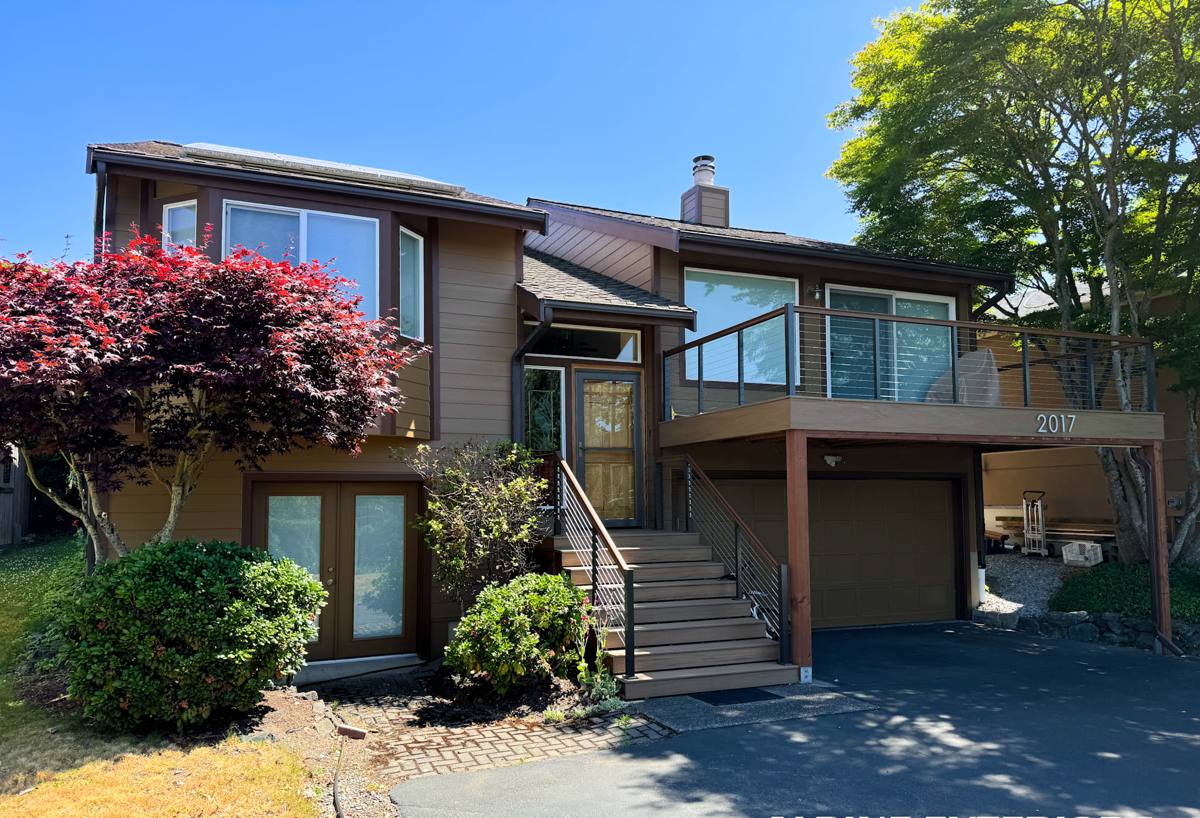
Sudden Valley sits in the wooded hills above Lake Whatcom, southeast of Bellingham in Whatcom County — a setting that's beautiful to live in and genuinely tough on a home's exterior. Heavy tree canopy keeps the neighborhood shaded and cool through the summer, but that same canopy keeps siding damp longer after every rain. Add in the driving rain and marine-influenced climate that moves across Whatcom County off Bellingham Bay, and you get a fall-through-spring stretch where wood-based exterior materials rarely get a real chance to dry out. That combination of shade, standing moisture, and a long wet season is the root cause behind most of the moss, mildew, and slow rot problems we see on Sudden Valley siding, more consistently than almost anywhere else we work.
This page is about one job: installing siding correctly on Sudden Valley homes, with the products and methods that actually hold up in this specific setting.
Why Moss Season Runs Long Here
Shade Changes the Math
A siding product that dries out fine on an open, sun-exposed lot in town can stay damp for days on a shaded Sudden Valley lot after the same rainfall. North-facing walls and anything tucked under mature trees lose direct sun for large stretches of the day, sometimes for entire winter months. That extended dampness is exactly what moss, algae, and mildew need to establish themselves, and once they take hold on a porous or poorly sealed surface, they're difficult to fully remove without damaging the material underneath.
What Moss Actually Does to Siding
Moss itself doesn't eat through most siding materials, but it holds water against the surface far longer than open air would, and its root structures work into any existing crack, seam, or failed caulk joint. On wood, engineered wood, and fiber cement installed without proper clearances, that trapped moisture is what eventually leads to soft spots, delamination, and rot at the bottom courses. Correct installation — proper ground clearance, drainage paths, and a factory-applied finish — doesn't stop moss from ever growing, but it keeps that moisture from getting behind the siding and doing structural damage.
What Failing or Wrong Siding Looks Like in Sudden Valley
Because of the tree cover and moisture here, siding problems tend to show up in patterns we don't see as often on more open lots elsewhere in Bellingham:
- Dark green-black streaking that keeps returning under mature trees, even after cleaning
- Soft or spongy spots along the bottom courses, especially near grade or under gutters
- Buckled or bowed panels where moisture has been trapped behind the surface
- Caulk that's cracked, shrunk, or pulled away at trim boards and corners
- Peeling or chalking paint on field-painted wood or engineered wood siding
- Visible gaps or warping at butt joints where boards were installed too tight
Any one of these on its own might just need a repair. Several at once, especially on a home more than fifteen or twenty years old, usually means the siding system itself has reached the end of what it can handle.
What a Correct Siding Installation Actually Involves
Weather-Resistive Barrier and Flashing
Everything starts underneath the siding, not with the siding itself. A continuous weather-resistive barrier, properly lapped and taped, combined with correct flashing at every window, door, and penetration, is what actually keeps bulk water out of the wall assembly. On a shaded, wet lot like most of Sudden Valley, this step matters more than usual — there's less margin for error when a wall doesn't dry out quickly between storms.
Clearances, Drainage, and Ventilation
Siding needs a gap above grade, above roof lines, and above decks and patios so water has somewhere to go and air can circulate behind the cladding. A drainage gap behind the siding lets any moisture that does get past the surface drain and evaporate instead of sitting against the substrate. This is one of the most common shortcuts we find on older installs in this neighborhood, and it's usually the reason bottom courses fail years before the rest of the wall does.
Fastening, Joints, and Caulking
Manufacturer-specified fastener spacing, proper butt joint treatment, and the right sealants at trim and penetrations are what keep a siding system watertight over decades, not just for the first few years. Installed to spec, with the gaps and clearances the manufacturer calls for, a well-built siding system sheds the driving rain this area gets on a regular basis instead of absorbing it.
Why We Install Only James Hardie Fiber Cement
We install one siding product on every home we work on: James Hardie fiber cement. That's a deliberate standard, not a limitation in what we're capable of installing. Vinyl siding is affordable and low-maintenance, but it's also a thin material that expands and contracts with temperature swings, and gaps that open at seams and corners can give moisture and pests a path behind the wall — a real liability on a shaded, wet lot where anything that gets behind the siding tends to stay wet. LP SmartSide and similar engineered wood products use a wood-strand core that performs well when installed and maintained correctly, but that core is inherently more sensitive to sustained moisture exposure than fiber cement, which matters in a neighborhood where siding rarely gets a long, uninterrupted dry stretch. Primed spruce and cedar can look excellent, but both demand an ongoing repainting and sealing schedule to keep moisture out — upkeep that's a bigger burden here than in a drier, sunnier location.
James Hardie fiber cement is non-combustible, holds a factory-applied ColorPlus finish that resists fading without needing the repainting schedule wood requires, and is engineered in climate-specific product lines built for exactly the wet, temperate conditions Western Washington sees. It's backed by a strong, transferable limited warranty when installed to the manufacturer's specifications. That combination is why it's the only product we put on homes, in Sudden Valley or anywhere else we work.
Hardie Product Lines We Use in Sudden Valley
| Product | Where It's Used | Why It Fits This Setting |
|---|---|---|
| HardiePlank lap siding (HZ5) | Primary field siding on most walls | Engineered for cold, wet climates with freeze-thaw cycles — the standard field product for Whatcom County homes |
| HardiePanel vertical siding | Accent walls, gables, shop or garage structures | Fewer horizontal seams for water to track along, plus a clean modern look |
| HardieShingle siding | Accent gables and dormers | Traditional shingle look without the ongoing upkeep of real wood shingles under tree cover |
| HardieTrim boards | Corners, window and door casing, fascia | Matches the siding's moisture resistance so trim doesn't fail before the field siding does |
| ColorPlus factory finish | All exposed product | Baked-on finish resists the fading and mildew growth that plagues field-painted surfaces in shaded, damp settings |
Our Installation Process, Step by Step
- On-site assessment. We walk the home, note shade patterns, drainage issues, and any existing moisture damage before quoting anything.
- Remove old siding and inspect sheathing. We check the wall assembly underneath for rot or damage that needs to be addressed before new siding goes on — covering a damaged wall just hides the problem.
- Repair sheathing and framing as needed. Any soft or damaged sheathing is replaced, not patched over.
- Install a continuous weather-resistive barrier. Properly lapped, sealed, and flashed at every penetration.
- Install a drainage gap where appropriate. Giving water a path to escape behind the siding rather than sit against it.
- Install James Hardie siding, trim, and flashing to manufacturer spec. Correct fastener spacing, clearances, and joint treatment throughout.
- Final caulking, touch-up, and site cleanup. Every seam and penetration checked before we call the job finished.
- Walkthrough with the homeowner. We go over the finished work and basic care before we consider the job done.
Signs Your Sudden Valley Home May Need New Siding
- Recurring moss or algae staining that comes back within a season of cleaning
- Soft, spongy, or discolored siding near the ground or under gutters
- Visible gaps, warping, or buckling at seams and corners
- Cracked or missing caulk at trim, windows, and doors
- Rising energy bills that suggest the wall assembly is no longer sealing properly
- Siding older than twenty to thirty years that hasn't been reassessed since it was installed
Why Local Experience in This Neighborhood Matters
Sudden Valley is a private residential community with its own access, roads, and character, and its homes were built across several different decades and construction standards. A crew that's worked here before knows to expect heavier tree cover, longer dry-out times, and older wall assemblies that may need more sheathing repair than a typical in-town remodel. That experience shows up in fewer surprises once the job starts and a finished install that's actually built for the conditions the home faces, rather than a generic install dropped onto a lot that doesn't behave like most others around Bellingham.
Caring for Your New Siding After Installation
Correctly installed James Hardie siding needs far less upkeep than wood or engineered wood, but a shaded, wet lot still benefits from basic seasonal attention:
- Rinse siding with a garden hose once or twice a year to clear pollen, dust, and early moss growth
- Keep gutters and downspouts clear so overflow doesn't run down the wall
- Trim back branches and shrubs where possible to improve airflow and sun exposure
- Check caulking at trim and penetrations annually and have any cracks resealed promptly
If you're weighing a siding replacement for a Sudden Valley home, we're happy to take a look and walk you through what your home actually needs — no pressure, and no generic estimate pulled from a formula. Reach out below for a free, no-obligation estimate.