 Bellingham Roofing
 Ferndale Roofs Face a Specific Kind of Weather
Ferndale sits close enough to Bellingham Bay and the Strait of Georgia that salt-laden air is a constant factor, not an occasional one. Add Whatcom County's long, wet fall-through-spring stretch and the moss season that comes with it, and a roof here is under a different kind of load than one inland. Salt air accelerates corrosion on exposed metal fasteners and flashing. Driving rain, often pushed sideways by coastal wind, finds every weak seam and gap in flashing that a calmer climate would never expose. And moss doesn't just look bad — it holds moisture against the roof surface for months at a time, working into shingle laps and granule loss long before a homeowner notices a leak.
A new roof installation in this area has to be built around those three stresses from the first nail. That means material choices, fastener grade, underlayment strategy, and ventilation design all get evaluated with Ferndale's climate in mind, not a generic spec sheet.
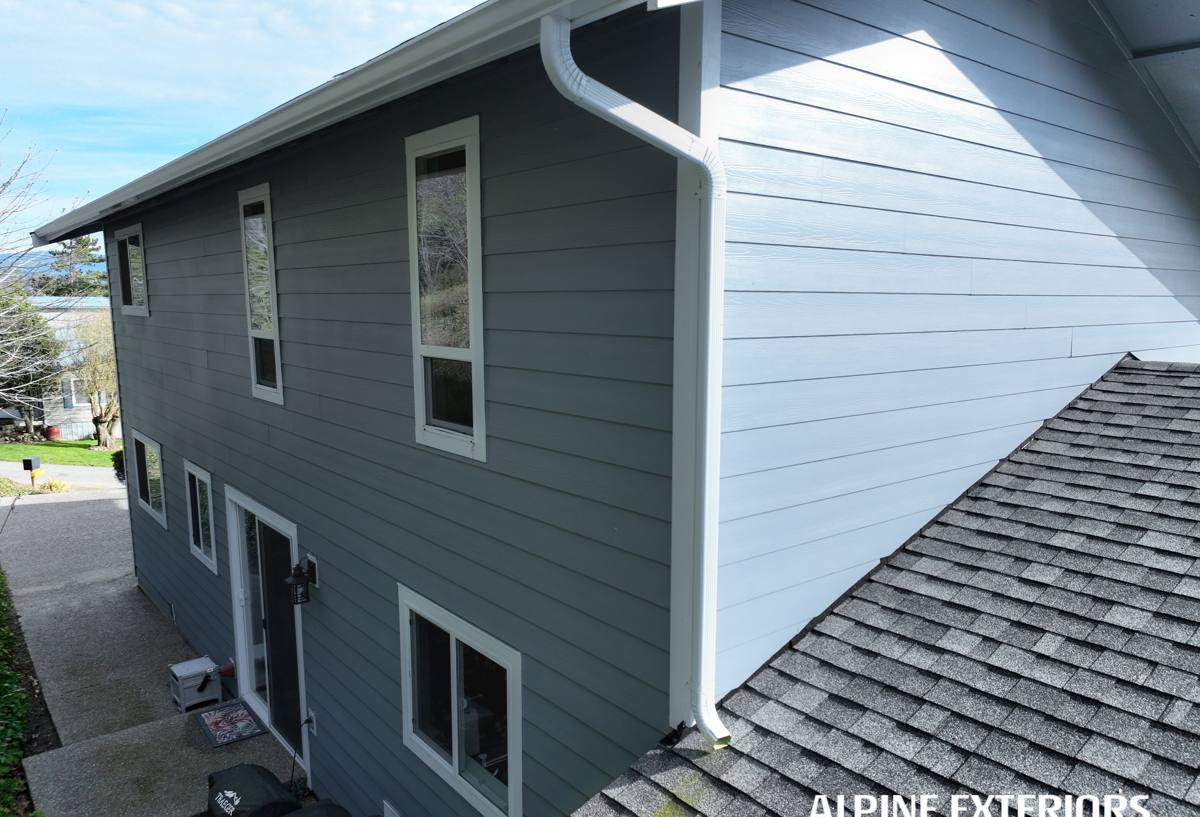
Signs a Ferndale Home Needs Replacement, Not Another Repair
Plenty of roofs get patched for years past the point where patching makes sense. Some signs point clearly toward full replacement rather than another repair visit:
- Granule loss heavy enough that shingles look bald in patches, especially on the south and west-facing slopes that take the most sun and rain
- Moss established in the shingle mat itself, not just sitting on the surface — this usually means the shingles underneath are already compromised
- Soft spots or sag in the decking when walked, a sign moisture has reached the wood
- Multiple past repairs in different areas, which usually means the roof as a system is past its useful life even if no single spot is failing badly
- Daylight visible through the attic roof deck, or water staining on attic framing
- A roof approaching or past 20-25 years old for asphalt shingle, especially if it was installed without upgraded underlayment
If a roof is showing two or more of these, a repair is usually a delay tactic rather than a fix. It's worth having a straight conversation about the real remaining life before spending money on patchwork.
What a Correct Installation Actually Involves
Full Tear-Off, Not Overlay
We tear off down to the decking rather than layering new shingles over old. Overlaying traps moisture between layers, hides decking problems, and voids most manufacturer warranties. It also adds weight the original framing wasn't designed to carry indefinitely. A tear-off is the only way to actually inspect the decking and catch rot before it's covered up again for another 20 years.
Decking Inspection and Repair
Once the old roofing is off, every sheet of decking gets checked. Soft, delaminated, or water-stained plywood or OSB gets replaced — not skimmed over. This is the step that gets skipped by crews trying to move fast, and it's the one that determines whether the new roof lasts its full rated life.
Underlayment Built for Wind-Driven Rain
Standard felt underlayment is not enough for a coastal-influenced climate like Ferndale's. We use synthetic underlayment across the full roof and self-adhered ice-and-water membrane at the eaves, valleys, and any low-slope transitions — the spots where wind-driven rain is most likely to get pushed backward under the shingle edge.
Flashing Done Right
Flashing failure, not shingle failure, is the most common cause of leaks in this region. Every penetration — chimneys, vents, skylights, sidewall intersections — gets new flashing, properly stepped and lapped, not caulked over old metal. Caulk is a temporary fix at best; it's not a substitute for correct flashing geometry.
Ventilation That Matches the Attic
Balanced intake and exhaust ventilation keeps the attic close to outdoor temperature and humidity, which reduces moisture buildup, ice-related issues, and premature shingle aging from below. We calculate net free ventilation area based on the actual attic square footage rather than assuming the existing setup was adequate — often it wasn't.
Choosing Materials for Whatcom County Conditions
There's no single "best" roofing material — the right choice depends on budget, roof style, and how much the homeowner wants to think about maintenance over the next 20-40 years. Here's how the common options stack up for a coastal Whatcom County property:
| Material | Typical Lifespan | Moss/Moisture Resistance | Coastal Air Considerations |
|---|---|---|---|
| Architectural asphalt shingle | 25-30 years | Good with proper algae-resistant granules | Standard choice; performs well with correct ventilation and flashing |
| 3-tab asphalt shingle | 15-20 years | Fair; more prone to granule loss over time | Lower upfront cost, shorter lifespan in wet climates |
| Standing seam metal | 40-60 years | Excellent; sheds moss and moisture readily | Requires marine-grade or coated fasteners to resist salt-air corrosion |
| Synthetic/composite shingle | 30-50 years | Very good | Higher material cost, low maintenance burden |
We don't push one product on every home. A steep-pitch roof with good sun exposure has different needs than a shaded, low-pitch roof tucked under mature trees — and Ferndale has plenty of both.
Our Installation Process, Start to Finish
- On-site assessment — full roof inspection, attic check for ventilation and moisture, and a written scope before any commitment
- Material selection — walk through options based on budget, home style, and how the roof is exposed to weather
- Permitting — pulled through Whatcom County or the City of Ferndale as applicable, before work starts
- Delivery and staging — materials and protection for landscaping, siding, and gutters set up before tear-off begins
- Tear-off and decking inspection — old roofing removed, decking checked and repaired as needed
- Underlayment and flashing installation — ice-and-water membrane, synthetic underlayment, and new flashing at every penetration
- Roofing material installation — installed to manufacturer specification, not shortcuts, to keep warranty coverage intact
- Ventilation verification — intake and exhaust checked against the calculated requirement for the attic
- Cleanup and final walkthrough — magnetic sweep for nails, debris hauled off, and a walkthrough before the job is called done
Timeline and What to Expect During the Job
Most single-family roof replacements in this area take one to three days of active work once tear-off starts, weather permitting. Whatcom County's rain pattern means scheduling has to build in flexibility — a crew that rushes to work through an open roof deck in a downpour is a crew making a decision that costs the homeowner later. Permitting timelines vary depending on the jurisdiction and time of year; we handle that paperwork rather than leaving it for the homeowner to chase down.
During the job, expect noise, some vibration through the house, and a work area roped off for safety. Vehicles should be moved clear of the driveway drop zone, and anything fragile in the garage or attic (stored items, light fixtures) is worth double-checking beforehand.
Cost Factors for a Ferndale Roof Replacement
Every roof is different, but the same variables tend to move the price up or down:
| Factor | Effect on Cost |
|---|---|
| Roof size and number of facets | More square footage and more complex cuts (valleys, dormers) increase labor time |
| Pitch and accessibility | Steep or hard-to-access roofs require more safety setup and slower work |
| Decking condition | Rot discovered during tear-off adds material and labor not visible from the ground |
| Material choice | Asphalt is the budget baseline; metal and composite cost more upfront but less over time |
| Layers of existing roofing | Multiple old layers add tear-off and disposal cost |
| Ventilation upgrades needed | Adding intake/exhaust vents where none existed adds modest cost but pays off in longevity |
We give a written estimate that breaks these out rather than a single lump number, so homeowners can see exactly what's driving the price.
Why a Crew That Already Works Ferndale Matters
A roofer who works this specific area regularly knows which flashing details actually hold up against wind-driven rain here, understands the moss growth pattern on shaded versus sun-exposed slopes, and has already dealt with the local permitting process. That familiarity shows up in fewer surprises during the job and a roof that's built for the conditions it will actually face — not a generic install that happens to be located in Whatcom County.
It also matters for warranty follow-through. A crew with a track record in the area is one that's still reachable years later if a question comes up, rather than one that moved on after a single job.
Protecting the Investment After Installation
A correctly installed roof still benefits from basic upkeep, especially in a moss-prone climate:
- Keep gutters clear so water doesn't back up under the roof edge, particularly during heavy fall rain
- Have moss growth removed gently before it establishes in the shingle mat, rather than waiting until it's visible from the street
- Trim back overhanging branches that keep sections of the roof shaded and damp longer than the rest
- Schedule a periodic visual inspection, especially after major windstorms common to the area
- Address any flashing or fastener issues promptly rather than letting small leaks become decking damage
None of this requires a maintenance contract or constant attention — just periodic checks so small issues get caught before they become expensive ones.
If your roof is showing its age or you're planning ahead rather than waiting for a leak, we're happy to take a look and put together a straightforward, no-pressure estimate. There's a form below to get that conversation started.