 Bellingham Roofing
 Board & Batten Siding for Ferndale Homes
Board and batten is one of the most requested siding styles in Ferndale, and it's easy to see why. The bold vertical lines suit the farmhouse and craftsman exteriors common throughout Whatcom County, and it gives a home a clean, tailored look that lap siding doesn't quite match. But board and batten is also one of the least forgiving styles to get wrong. It relies on more seams, more trim, and more exposed fastener lines than horizontal siding — and in a coastal climate like Ferndale's, every one of those details is a potential water entry point if the material or the installation isn't right.
This page focuses specifically on what board and batten siding needs to hold up in Ferndale's conditions, what a correct installation actually involves, and why we install this style exclusively in James Hardie fiber cement rather than vinyl, engineered wood, or traditional wood boards.
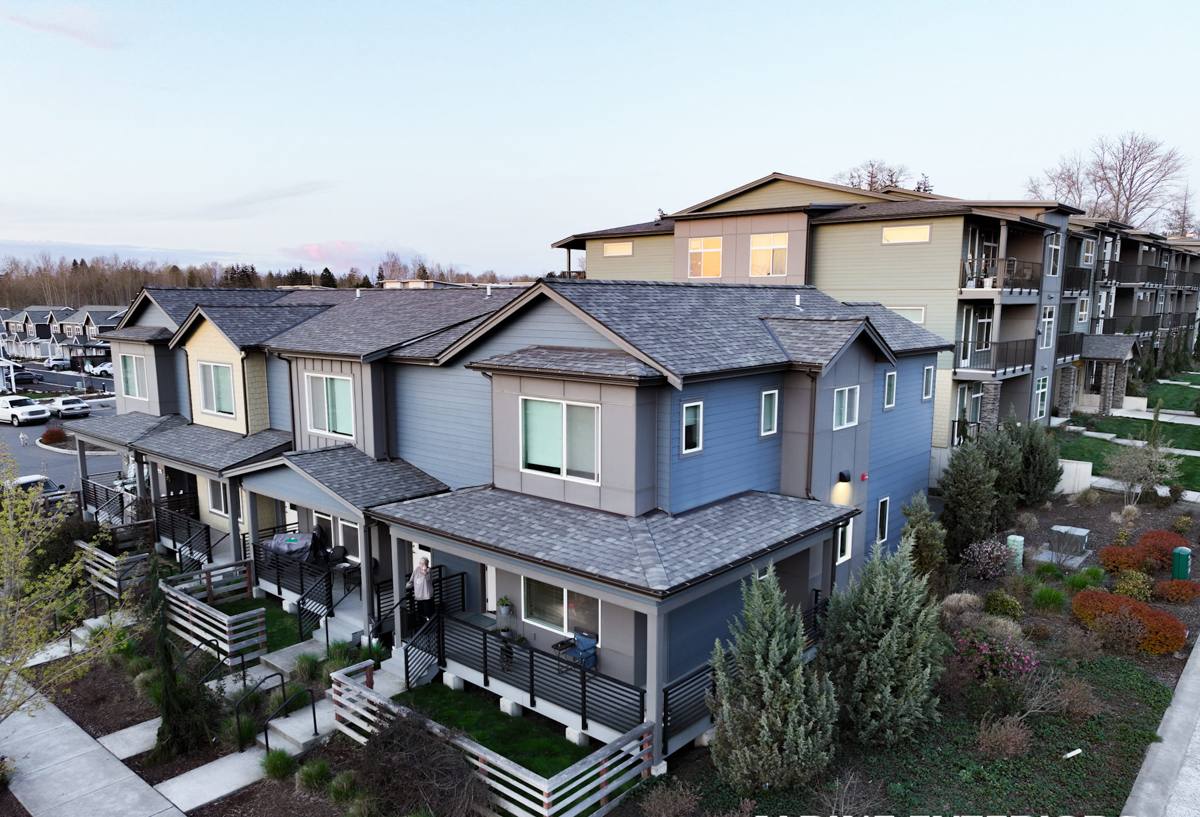
What Ferndale's Climate Actually Does to Vertical Siding
Ferndale sits close enough to Bellingham Bay and the Strait of Georgia that salt-laden air is a real factor on exterior materials, not just a coastal talking point. Salt air accelerates corrosion on fasteners and metal flashing, and it breaks down lower-grade paint and coatings faster than an inland location would. Combine that with the driving rain that comes through Whatcom County during fall and winter storms — rain that hits siding at an angle rather than falling straight down — and you get a climate that actively tests every seam, joint, and butt-splice in a vertical siding system.
Then there's moss season, which around here isn't a few weeks — it's a long stretch of the year where shaded, north-facing, and tree-sheltered walls stay damp for days at a time. Moss and algae don't just look bad; they hold moisture against the siding surface and, on wood or wood-based products, can accelerate rot in tight or poorly ventilated joints.
None of this means board and batten is a bad choice for a Ferndale home. It means the material and the installation both have to be built for these specific conditions, not just installed the way a catalog picture shows it.
Why Vertical Styles Are More Exposed Than Horizontal Lap
Horizontal lap siding is designed so each course overlaps the one below it, shedding water downward by design. Board and batten runs vertically, which means water traveling down the wall face meets horizontal breaks (butt joints where panels end) and vertical seams (where boards meet battens) far more directly. Done correctly, those joints are flashed and back-ventilated so any water that gets past the surface has somewhere to go. Done poorly, those same joints become the exact spot where water sits against the wall sheathing.
Why Material Choice Matters More With This Style
Because board and batten uses narrow battens and long vertical runs, the material itself is under more stress than it would be in a horizontal application. Wood and engineered wood battens are thin enough to cup, twist, or check (crack) with repeated wet-dry cycling, and once a batten checks, water can track behind it. Vinyl board and batten avoids rot but expands and contracts significantly with temperature, which stresses its fastening points over time and can leave visible waviness on long vertical runs.
Fiber cement doesn't share those failure modes. James Hardie panels and battens are made from cement, sand, and cellulose fiber, cured into a dense, dimensionally stable board. They don't rot, they don't provide the same food source for fungal decay that wood does, and they hold their shape through the wet winters and the way we get here in Whatcom County without the swelling or warping that shortens the life of wood-based board and batten.
The James Hardie Systems We Use for Board & Batten
We install two Hardie approaches for this style, and which one fits depends on the home's design and budget:
- HardiePanel vertical siding with HardieTrim battens — the traditional board and batten build-up: large-format vertical panels with trim battens fastened over the seams. This is the more cost-effective route and covers the classic look most Ferndale homeowners are after.
- Hardie Artisan V-Rustic Collection — a premium vertical product with a deeper, more dimensional reveal and a more refined factory finish, aimed at homeowners who want board and batten to be a design centerpiece rather than a background texture.
Both come with Hardie's ColorPlus factory finish — a coating baked on in multiple coats under controlled conditions, which holds color and resists fading and chalking far better than field-applied paint, and matters in a location where salt air and UV both work against a painted surface year-round.
What a Correct Installation Involves
Board and batten failures we get called to look at almost never trace back to the material — they trace back to installation shortcuts. In Ferndale's climate, these details aren't optional extras; they're what determines whether the siding lasts.
- A drainage gap behind the panel. Hardie's installation instructions for our climate zone call for a rainscreen or drainage plane behind the siding so any moisture that gets past the surface can drain and dry instead of sitting against the sheathing.
- Flashing at every horizontal break. Butt joints where vertical panels end, and the heads of every window and door, need proper flashing — not just caulk — to direct water outward.
- Corrosion-resistant fasteners. Given the salt air off the bay, we use fasteners rated for that exposure, set to the correct depth and spacing so the panel is secured without over-driving or splitting the material.
- Battens fastened into framing, not just face-nailed for looks. Battens need to be attached through the panel into solid backing, with the right nailing pattern — decorative-only fastening is a callback waiting to happen.
- Correct clearances from grade, decks, and roof lines. Keeping the bottom of the siding above grade and providing kick-out flashing at roof-wall intersections reduces splashback and the kind of standing moisture that feeds moss.
Comparing Board & Batten Material Options
| Material | Moisture & Rot Resistance | Salt Air Durability | Moss/Algae Resistance | Typical Maintenance |
|---|---|---|---|---|
| Vinyl board and batten | Won't rot, but seams can allow water behind panel | Fair — can fade and become brittle over time | Surface growth still occurs; can trap moisture behind panel | Low, but limited repair options if damaged |
| Cedar or primed wood | Vulnerable to rot without diligent upkeep | Poor to fair — needs regular refinishing | Higher risk — organic material feeds decay under growth | High — recoating and caulk maintenance every few years |
| Engineered wood (e.g. LP SmartSide) | Better than raw wood but still moisture-sensitive at cut edges | Fair | Moderate — edge sealing is critical | Moderate — edge and joint inspection needed |
| James Hardie fiber cement | Does not rot; stable in wet-dry cycling | Strong — engineered for coastal/marine climates | Doesn't decay from surface growth; washes clean | Low — periodic rinsing and caulk checks |
Why We Only Install James Hardie for This Style
We get asked from time to time why we won't quote vinyl or engineered wood board and batten, since both are cheaper up front. The honest answer is that board and batten concentrates a lot of seams and thin trim pieces into one wall system, and that's exactly where cheaper materials show their weaknesses first — cupping battens, faded vinyl panels, or edge swelling on engineered wood. We'd rather stand behind one system we know performs in this climate than install something we'd expect to be repairing in a few years. James Hardie's HZ product lines are engineered specifically for climate zones like ours, the ColorPlus finish holds up to UV and salt air better than field paint, and Hardie backs the product with a strong, transferable warranty. For a style that's this exposed to the elements, that combination is what we're willing to put our name on.
Our Process for a Ferndale Board & Batten Project
- Assessment. We inspect the existing wall assembly for moisture damage, check for adequate drainage, and evaluate trim, window, and roofline details that affect the new siding's performance.
- Design. We work out batten spacing, reveal width, and ColorPlus color selection to match the look you want while keeping the layout practical to flash and drain correctly.
- Installation. Drainage plane, flashing, corrosion-resistant fasteners, and correct batten attachment go in per Hardie's specifications for our climate zone — not shortcuts.
- Final walkthrough. We inspect the completed work, check caulk lines and flashing details, and clean up the site before we consider the job done.
What Affects Board & Batten Project Cost
| Cost Factor | Why It Matters |
|---|---|
| Existing siding removal and disposal | Tear-off adds labor, and hidden sheathing damage sometimes surfaces once old siding comes off |
| Wall prep and moisture repair | Rotted sheathing or framing found underneath old siding needs to be addressed before new siding goes on |
| Reveal and batten spacing | Narrower reveals and more battens mean more trim pieces, more fastening points, and more labor |
| Trim complexity around windows, doors, and rooflines | More corners and transitions mean more flashing detail work |
| HardiePanel vs. Hardie Artisan V-Rustic | The Artisan line carries a higher material cost for its deeper, more refined reveal |
| Color selection | Standard ColorPlus colors are typically more cost-effective than premium or custom finishes |
Keeping Board & Batten Siding Looking Right in Ferndale
- Rinse siding with a garden hose once or twice a year, focusing on shaded, north-facing walls where moss and algae are most likely to establish
- Trim back vegetation and tree limbs that keep any section of the wall in constant shade or contact
- Check caulk lines around windows, doors, and trim annually and have any cracked or missing caulk replaced promptly
- Keep gutters clear so overflow isn't running down the siding face during heavy Whatcom County rain events
- Have flashing and batten fastening spot-checked every few years, especially after major windstorms
Get a Straight Answer for Your Ferndale Home
Board and batten can be one of the best-looking and most durable siding choices for a Ferndale home when it's built with the right material and installed with the right details underneath. If you're weighing board and batten for a remodel or new build, we're glad to take a look at your home and walk you through what a correct installation would involve — no pressure, no upsell, just a straight answer. Use the form below to request a free estimate.