 Bellingham Roofing
 Ferndale's Siding Has a Harder Job Than People Realize
Ferndale sits close enough to Bellingham Bay and the Strait of Georgia that salt-laden air is a constant, low-grade presence on exterior surfaces — even on homes set back from the water. Add Whatcom County's long wet season, wind-driven rain off the Sound, and the shade and moisture that keep moss and algae active for most of the year, and you have a climate that is genuinely tough on siding. It's not dramatic weather. It's persistent weather, and persistent weather is what wears siding down over a decade or two.
Most siding failures we see in this area aren't from one bad storm. They're the slow result of moisture finding a way behind the cladding, paint film breaking down under salt and UV cycling, or a product that wasn't rated for this kind of exposure in the first place. A siding job that looks fine at year one can be a problem at year eight if it wasn't built for Ferndale's actual conditions.
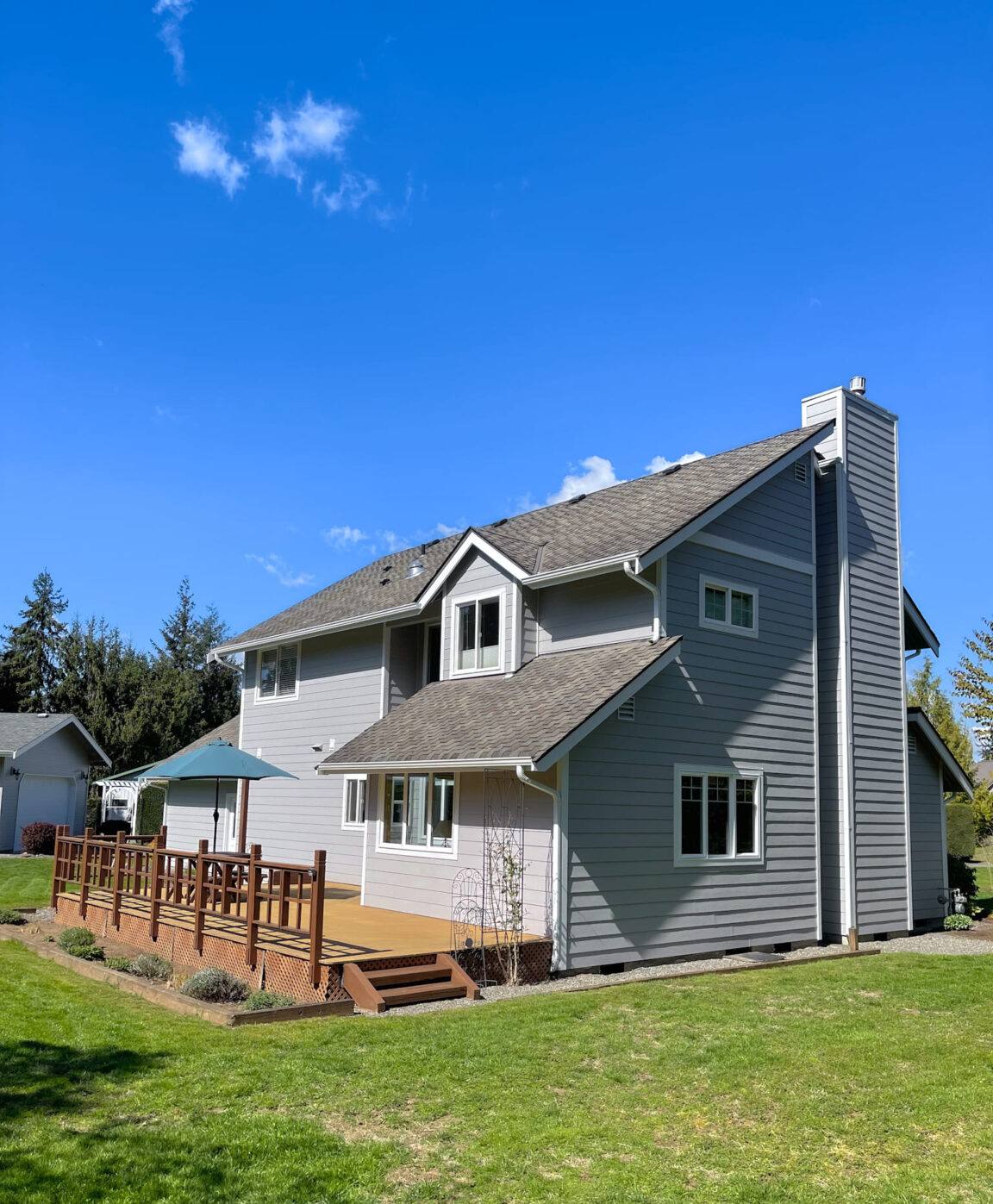
What Local Homes Actually Need From Their Siding
For a Ferndale property, siding has to do three things well, continuously, without much maintenance:
- Shed driving rain without letting moisture track behind the panels at seams, corners, and penetrations
- Resist the slow corrosive and staining effects of salt air on fasteners, trim, and finish
- Hold its color and film integrity through repeated wet-dry cycling and heavy moss/algae growth without chalking, peeling, or swelling
That's a specific set of demands, and it's a big part of why we don't treat siding material choice as a style decision. It's a performance decision first.
Why Moss Season Matters More Here Than People Expect
Whatcom County's moss and algae season runs long — shaded north walls and areas under tree cover can stay damp for months at a stretch. Siding that absorbs moisture, or that has seams and butt joints that trap water, gives moss and algae exactly the environment they need to take hold. Once organic growth is established, it holds moisture against the wall assembly even longer, which accelerates whatever underlying problem started it. Siding material and installation detailing that shed water cleanly are the real defense — pressure washing after the fact is a symptom treatment, not a fix.
Why We Install James Hardie and Nothing Else
We are a James Hardie-only siding contractor. We don't install vinyl, LP SmartSide, Cemplank, Allura, primed spruce, or cedar, and we're upfront about why: in our experience working exteriors in this climate, those products each carry a real trade-off — moisture sensitivity, maintenance burden, seam behavior, or finish longevity — that shows up over time in exactly the conditions Ferndale delivers year-round. That's a professional standard we hold, not a knock on every homeowner who has one of those products on their house today.
James Hardie's fiber cement is engineered specifically for regional climate demands through its HZ5 product line, built for the Pacific Northwest's wet, temperate conditions. It's non-combustible, doesn't swell or rot from moisture the way wood-based products can, and comes from the factory with a ColorPlus finish — baked-on, not field-applied — that's built to hold color and resist fading, chalking, and peeling far longer than a job-site paint job. It's also backed by a strong transferable warranty, which matters to homeowners who want assurance the investment holds value if they sell.
None of that guarantees a good outcome by itself. Hardie siding installed wrong will still fail wrong. The product is only half the equation — the other half is installation discipline, and that's where most siding problems in this region actually originate.
What a Correct Installation Actually Involves
Fiber cement siding is unforgiving of shortcuts in a way vinyl often isn't — it doesn't flex to hide a bad detail. A correct James Hardie install in a coastal, high-moisture area like Ferndale includes:
- Proper water-resistive barrier and flashing at every window, door, and penetration, lapped correctly so water is directed out, not trapped behind the cladding
- Correct fastener spacing and type — stainless or coated fasteners suited to salt-air exposure, driven per Hardie's engineering specs, not just "close enough"
- Proper clearances at grade, roof lines, and decks so siding isn't sitting in standing moisture or trapped against another surface
- Correctly sized gaps and sealant at butt joints and trim, since fiber cement expands and contracts with moisture and temperature
- Factory-cut and factory-primed edges wherever possible, since field-cut edges need to be properly sealed to maintain the product's moisture resistance
Skip any one of these and you can end up with a wall that looks right for a few years and then starts showing staining, cupping, or fastener bleed exactly where the detailing was weak — usually in the spots that take the most direct weather.
Our Process on a Ferndale Home
1. On-Site Assessment
We look at the existing siding, sheathing, and moisture barrier condition, note problem areas (north-facing walls, areas under tree cover, low-clearance spots near grade or decks), and identify anything that needs to be addressed before new siding goes on — not covered up by it.
2. Tear-Off and Substrate Check
Old siding comes off and we inspect the sheathing underneath for rot, soft spots, or prior water damage. Any of that gets repaired before anything new is installed — new siding over a compromised substrate just hides the problem.
3. Water-Resistive Barrier and Flashing
This is the step that determines how the house performs in ten years, not year one. We install and lap the moisture barrier and flashing correctly at every opening and penetration.
4. Hardie Panel Installation
Panels are installed to Hardie's fastening and clearance specifications, with attention to butt joint sealing and trim details that matter most in a wet, salt-air environment.
5. Finish and Walkthrough
Trim, caulking, and touch-up work are completed, the site is cleaned up, and we walk the job with the homeowner so they know what was done and what to expect going forward.
Cost Factors for a Ferndale Siding Job
Every home is different, but the same variables tend to drive cost on Hardie siding projects in this area:
| Factor | Why It Matters in Ferndale |
|---|---|
| Existing substrate condition | Long wet seasons mean hidden sheathing damage is more common under old siding, especially on north walls |
| Home size and wall complexity | More corners, penetrations, and trim details mean more flashing and detail work, which is where quality is won or lost |
| Siding profile and finish | Lap, shingle, and panel styles vary in material and labor cost; ColorPlus finish adds value versus field-painted |
| Access and site conditions | Tree cover, tight lots, and proximity to water can affect setup, drying time between steps, and scheduling |
| Removal and disposal | Tear-off scope depends on how many layers of prior siding are present and their condition |
We provide a detailed, itemized estimate after the on-site assessment rather than quoting broad numbers sight unseen — the substrate condition alone can shift scope significantly.
What to Expect After Installation
Correctly installed James Hardie siding with a factory ColorPlus finish holds up well against Ferndale's salt air and moss season, but "low-maintenance" doesn't mean "no maintenance." Homeowners should still plan on periodic gentle washing to keep organic growth from building up on shaded walls, and a visual check after major storms for any trim or caulk lines that need attention. What you shouldn't see, if the install was done right, is paint peeling, panel cupping, or staining streaking down from fasteners — those are signs of an installation issue, not a product issue.
Why It Matters That a Crew Already Works This Area
Salt air exposure, moss season timing, and drainage behavior around Whatcom County homes aren't things you learn from a manual — they're things you learn from doing the work here repeatedly. A crew that already installs siding across Bellingham and Ferndale knows which details get skipped by out-of-area installers, which wall orientations need extra attention, and how local conditions actually behave over a full year, not just during a install week with good weather.
Questions Worth Asking Any Siding Contractor
- Do you install to James Hardie's published fastening and clearance specifications, or a shortcut version?
- Who inspects the sheathing before new siding goes on, and what happens if damage is found?
- How is flashing detailed at windows, doors, and deck penetrations?
- What's covered under the material warranty versus the workmanship warranty, and who backs each one?
- Can you walk me through your process before work starts, not just after?
If you're weighing a siding replacement or repair in Ferndale, we're happy to take a look and put together a free, no-pressure estimate — no obligation, just a straight assessment of what your home actually needs.