 Bellingham Roofing
 Why Ferndale Homes Put Windows Through More Than Most
Ferndale sits close enough to Bellingham Bay and the Strait of Georgia that salt-laden air is a constant factor in how building materials age here, not an occasional nuisance. Add the wind-driven rain that comes through Whatcom County for a good chunk of the year and a moss season that can run from fall through spring, and you have a climate that finds every weak point in a window system — the seals, the frame corners, the flashing behind the trim. Windows that were fine when a house was built twenty or thirty years ago are often the first thing on a home to show real wear, well before the roof or siding start looking tired.
This page is specifically about replacing windows on Ferndale homes with energy-efficient units, and what that job actually requires in this environment. It's not the same conversation you'd have in a dry inland climate, and treating it that way is how homeowners end up with windows that look right for a year or two and then start fogging, sticking, or leaking.
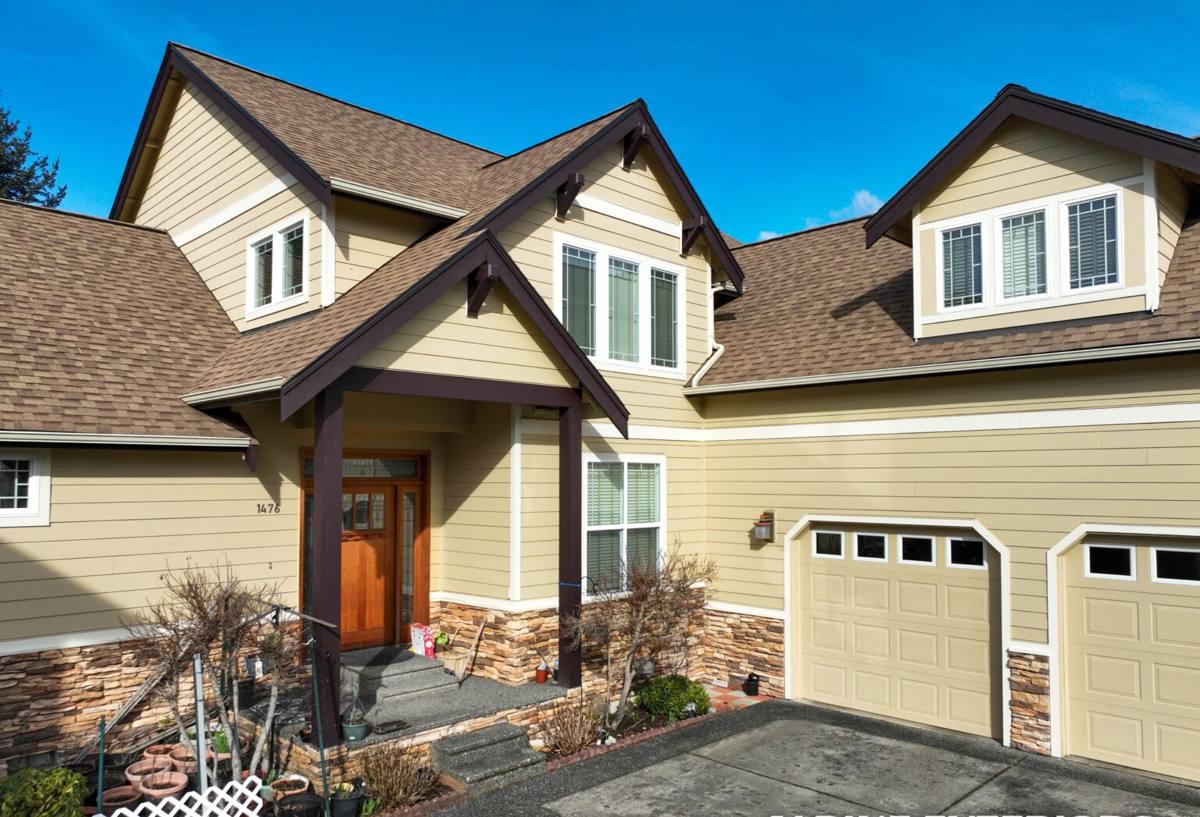
What "Energy-Efficient" Should Mean Here
Energy efficiency gets marketed as a single number, but for a Ferndale home it's really a combination of factors working together — insulating value, solar control, air sealing, and moisture management. Getting one of these right while ignoring the others is a common way homeowners overpay for a window that still underperforms.
U-Factor and Insulating Value
U-factor measures how well a window resists heat loss — lower is better. In a marine climate like Whatcom County's, where winters are damp and cold rather than brutally cold, a well-chosen U-factor keeps interior glass surfaces warmer, which matters as much for comfort and condensation control as it does for the heating bill.
Solar Heat Gain and Glare
Solar heat gain coefficient (SHGC) matters less here than in sunnier climates, but it's not irrelevant — south and west-facing rooms still benefit from glass that manages glare and summer heat without darkening the room on the region's already-gray days.
Air Sealing and Moisture Control
This is the part that gets skipped most often, and it's the part that matters most locally. A window can have excellent glass and still perform poorly if the frame isn't sealed and flashed correctly against driving rain. In this climate, installation quality affects long-term performance as much as the product spec sheet does.
Signs a Ferndale Home's Windows Are Underperforming
- Visible fog or moisture trapped between panes on double-pane units — the seal has failed
- Cold drafts near the frame even with the window fully latched
- Condensation forming on the inside of the glass regularly, especially in bedrooms and bathrooms
- Soft or discolored wood trim around the window, a sign moisture is getting behind the casing
- Windows that are difficult to open, close, or lock due to frame swelling or warping
- A noticeable temperature difference near windows compared to the rest of the room
- Green or black staining on the sill or frame — moss and mildew take hold quickly here once moisture has a foothold
Any one of these on its own might just mean a window needs adjustment or resealing. Several of them together, especially on windows original to the house, usually mean the units have reached the end of their useful service life.
Frame Materials and Glass Packages: What Holds Up in This Climate
Material choice matters more in a marine environment than it does in drier parts of the country, because salt air and constant moisture exposure accelerate wear on anything that isn't well suited to it. Here's how the common options generally compare for a Ferndale home:
| Frame Material | How It Handles Salt Air & Moisture | Maintenance | Typical Lifespan |
|---|---|---|---|
| Vinyl | Doesn't corrode or rot; performs well in coastal air | Low — occasional cleaning | 20-30+ years |
| Fiberglass | Very stable dimensionally, holds up well to moisture cycling | Low | 30+ years |
| Wood (unclad) | Handsome but vulnerable — needs diligent upkeep to resist rot in this climate | High — regular painting/sealing | Varies widely with maintenance |
| Wood-clad (aluminum or vinyl exterior) | Good — exterior cladding shields the wood from weather | Moderate | 25-30+ years with proper install |
| Aluminum | Prone to condensation and thermal transfer unless thermally broken | Low, but efficiency suffers | Varies |
For most Ferndale homes, vinyl or fiberglass frames hit the best balance of performance and upkeep. Wood-clad is a reasonable choice when the look matters and the budget allows for it, as long as the cladding and flashing details are done correctly. As a matter of professional standard, we're careful with unclad wood exposures on this side of the county — it's not that the material is bad, it's that it demands a level of ongoing maintenance many homeowners don't want to sign up for given how much moisture this area sees.
Glass Packages
Double-pane, low-E glass with argon fill is the practical baseline for this region and covers most homes well. Triple-pane adds incremental insulating value and sound dampening, which some homeowners value on busier roads or larger west-facing window walls, but it comes at a real cost premium that doesn't always pencil out for a mild coastal climate the way it might somewhere with harsher winters.
What a Correct Installation Actually Involves
The window unit itself is only part of the job. In a climate where wind-driven rain is routine, how the window is installed determines whether it actually stays watertight for the long haul.
Flashing and Weather Barrier Integration
Proper installation ties the window's flashing into the home's existing weather-resistive barrier so water is directed out and down, never behind the siding or into the framing. This is the single most common point of failure we see on older or poorly done replacements — a window that looks fine but was never properly integrated with the wall's drainage plane.
Sealing Without Trapping Moisture
Sealant matters, but sealant alone isn't a substitute for correct flashing. A window that's caulked heavily on the outside but not properly flashed can actually trap moisture that gets in through any small gap, leading to hidden rot behind the trim. We seal and flash as a system, not as a substitute for one another.
Shimming and Squaring
A window that isn't shimmed level and square won't operate smoothly and will develop uneven gaps over time — exactly the kind of gap that lets driving rain find its way in.
Our Process for a Ferndale Window Replacement
- On-site assessment — we look at each window opening individually, including the condition of the framing and any existing water damage, not just the glass.
- Product and glass recommendation — matched to the exposure of each wall (a west-facing wall catching driving rain gets treated differently than a sheltered side of the house).
- Precise measurement — every opening is measured on-site; older Ferndale homes often have openings that aren't perfectly standard.
- Removal and inspection — old units come out carefully so we can check the framing underneath for hidden moisture damage before anything new goes in.
- Installation with proper flashing and air sealing — done to shed water correctly, not just look finished from the outside.
- Final check and cleanup — every window is tested for smooth operation and a tight seal before we consider the job done.
Cost Factors Homeowners Should Understand
Window replacement pricing varies by opening size, frame material, glass package, and how much work is needed at the framing level — it's not a single flat number per window. Rather than quote figures that don't reflect your actual home, here's what tends to move the price:
| Factor | Why It Matters |
|---|---|
| Frame material (vinyl vs. fiberglass vs. wood-clad) | Material cost and expected lifespan vary significantly |
| Glass package (double vs. triple-pane, low-E coatings) | Better performance packages cost more upfront |
| Condition of existing framing | Hidden rot or water damage found during removal adds repair scope |
| Number and size of openings | Larger or custom-sized windows cost more than standard sizes |
| Full-frame vs. insert replacement | Full-frame replaces flashing and trim too — more thorough, more labor |
We'll never quote a whole-house number without seeing the actual openings — too much of the cost depends on what condition the existing framing is in, which only shows up once the old window comes out.
Why It Matters to Hire a Crew That Already Works This Area
A contractor who regularly works Ferndale and the surrounding Whatcom County communities has already seen how salt air, driving rain, and moss buildup affect window installations here over time — which flashing details hold up, which framing details tend to trap moisture, and which product choices are worth the extra cost in this specific climate versus which ones aren't. That local pattern recognition is hard to substitute with a generic install approach, and it's the difference between a window replacement that performs for decades and one that needs revisiting in a few years.
Living With Your New Windows in a Marine Climate
Even a correctly installed, high-quality window benefits from a little seasonal attention in this climate. Clearing debris and moss from sills and tracks, checking that weep holes stay open, and keeping exterior caulking intact go a long way toward getting the full lifespan out of a window investment. None of this is heavy maintenance — it's the kind of thing worth a look during the same walk-around you'd do for gutters and siding each fall.
If your Ferndale home has windows that are drafty, fogged, or original to the house, we're happy to take a look and walk you through honest options for your specific windows and exposures. Reach out for a free, no-pressure estimate using the form below.